
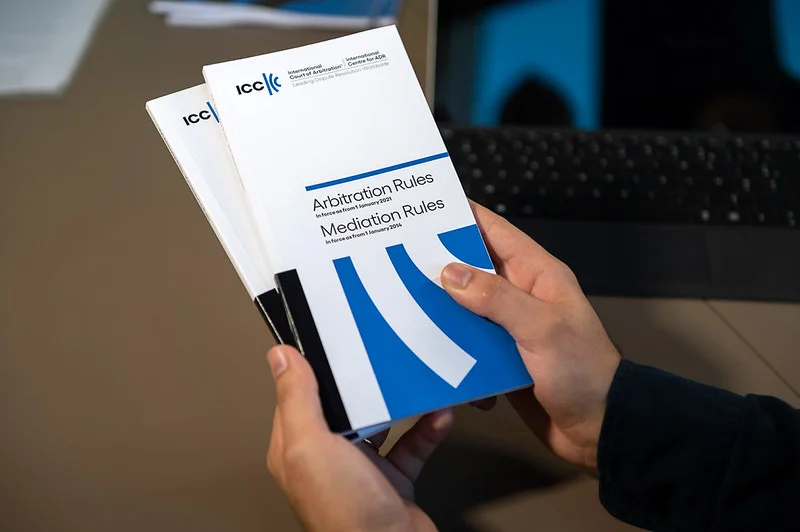
The integrity of international arbitration rests upon a foundation as fragile as it is essential: the absolute independence and impartiality of those tasked with resolving disputes. As the global landscape of commerce becomes increasingly complex, the mechanisms governing arbitrator conduct must evolve to maintain the legitimacy of the arbitral process. In this spirit, the International Chamber of Commerce (ICC) has unveiled its 2026 Rules of Arbitration, a comprehensive revision aimed at fortifying trust, enhancing transparency, and aligning procedural expectations with modern legal realities.
At the heart of these revisions lies a significant recalibration of the disclosure framework—the "gold standard" for ensuring that potential conflicts of interest are identified and managed long before they can threaten the sanctity of an award.
The Evolution of Independence: A Historical Context
The independence of an arbitrator is not merely a theoretical requirement; it is the bedrock of the parties’ "due process" rights. For decades, the ICC has maintained a rigorous standard, demanding that prospective arbitrators disclose any facts or circumstances that might reasonably call into question their neutrality.
Historically, this obligation was governed by a blend of the ICC Rules and supplementary guidance, such as the Note to Parties and Arbitral Tribunals on the Conduct of the Arbitration. However, the 2026 revision process, led by the ICC International Court of Arbitration and its Secretariat, identified a need to transition these practices from soft-law guidance into the mandatory text of the Rules. This shift is not a reaction to a crisis of integrity, but rather a proactive evolution designed to provide greater certainty to stakeholders operating in an increasingly scrutinised global environment.
The 2026 Milestone
The journey toward the 2026 Rules began with a granular review of case law, institutional practice, and user feedback. The goal was twofold: to reinforce confidence in the arbitral process and to provide procedural clarity. By codifying what was previously treated as "best practice," the ICC has essentially raised the floor for disclosure, ensuring that prospective arbitrators are guided by a clearer, more robust set of expectations.
The Core of the Reform: Disclosure as a Duty
Article 12(2) remains the cornerstone of the ICC’s disclosure philosophy. Under the 2026 Rules, the obligation persists: a prospective arbitrator must disclose, in writing, any circumstances that could lead to "reasonable doubts" regarding their impartiality or independence.
The "When in Doubt, Disclose" Principle
A transformative change in the 2026 Rules is the formal codification of the "resolution in favour of disclosure" principle. For years, arbitrators were informally advised that if they were unsure whether a connection—no matter how tenuous—warranted disclosure, they should err on the side of transparency.
By embedding this requirement directly into Article 12(2), the ICC has removed the ambiguity that often causes "disclosure anxiety." The message to the international legal community is clear: a disclosure is not an admission of guilt or a signal of an existing conflict. It is a procedural tool designed to facilitate transparency. Article 12(4) reinforces this by explicitly stating that a disclosure does not, by itself, establish a lack of independence or impartiality. This is a critical reassurance for practitioners, designed to de-stigmatize the process of flagging potential associations.
Proactive Participation: The New Role of Parties
Perhaps the most innovative aspect of the 2026 Rules is the shift from a purely arbitrator-led disclosure model to a collaborative, party-involved process. Article 12(5) introduces a mandatory requirement for parties to submit a list of persons and entities they believe the prospective arbitrator should consider when conducting their conflict checks.
A Structured Mechanism for Transparency
Previously, parties often relied on their own investigative efforts to identify potential conflicts, sometimes resulting in "surprise" challenges late in the proceedings. The 2026 Rules formalise this interaction:
- Timing: The list must be submitted at the time of filing the Request for Arbitration, the Answer, or any related joinder requests.
- Substance: Parties must not only identify the entities but also explain why these entities are relevant to the arbitrator’s assessment.
- Integration: These lists are incorporated into the "case information document" compiled by the ICC Secretariat and provided to the prospective arbitrator.
This mechanism serves several purposes. First, it ensures that the arbitrator has the benefit of the parties’ perspective regarding relevant commercial relationships. Second, it creates an early-warning system, allowing for the resolution of potential conflicts at the outset of the case, thereby saving time and legal costs that would otherwise be incurred by mid-arbitration challenges.
Supporting Data and Procedural Mechanics
The implementation of the 2026 Rules relies on a refined workflow within the ICC Secretariat. The process is designed to be streamlined:
- Secretariat Oversight: Upon receipt of the parties’ lists, the Secretariat updates the case information dossier.
- Prospective Assessment: The arbitrator reviews the dossier, including the parties’ lists, alongside their own independent conflict search.
- Statement of Acceptance: The arbitrator provides a formal statement.
- Clarification Phase: Parties retain the right to request further information or clarification, maintaining the adversarial balance.
This procedural chain ensures that while the burden of disclosure rests with the arbitrator—who remains the ultimate arbiter of their own independence—the process is now informed by the specific, articulated concerns of the parties.
Implications for the Global Arbitral Community
The implications of these changes are profound. By moving these principles into the Rules, the ICC is setting a benchmark for other arbitral institutions.
Reducing Late-Stage Disruptions
The primary implication is a likely reduction in late-stage challenges. By requiring parties to disclose relevant entities at the outset, the "gotcha" tactic of revealing a conflict only after an adverse procedural ruling is made becomes significantly less viable. This enhances the overall efficiency of the arbitral process.
Strengthening Institutional Trust
For the end-users of arbitration—multinational corporations and sovereign states—the 2026 Rules offer increased peace of mind. The institutional stamp of approval on a transparent, disclosure-heavy process provides a layer of protection against allegations of bias. It signals that the ICC is not merely a venue for dispute resolution, but a steward of procedural fairness.
Impact on Legal Counsel
For law firms, the 2026 Rules demand a more rigorous approach to case preparation. Legal teams can no longer afford to be passive observers of the arbitrator appointment process. They must now invest time early in the proceedings to conduct thorough "conflict mapping" to populate the lists required by Article 12(5). This will undoubtedly increase the front-end workload for counsel but will likely lead to more stable, challenge-proof proceedings.
Official Stance and Future Outlook
The ICC’s vision for the 2026 Rules is one of evolution, not revolution. By formalising existing best practices, the ICC aims to provide a stable, predictable framework that respects the autonomy of the parties while upholding the authority of the arbitral tribunal.
As the entry-into-force date of 1 June 2026 approaches, the global legal community is advised to integrate these new disclosure protocols into their standard operating procedures. The transition is not merely a change in the text; it is a shift in the culture of arbitration—moving toward a model where transparency is the default, and collaboration between parties and the tribunal is the key to maintaining the legitimacy of the process.
Key Takeaways for Practitioners
- Article 12(2) Clarification: Doubts must be resolved in favour of disclosure; disclosure is not an admission of bias.
- New Procedural Duty: Parties are now formally required to provide lists of relevant persons/entities to assist the arbitrator’s conflict check.
- Integration of Guidance: The ICC has elevated key provisions from its "Note to Parties" directly into the Rules to enhance legal certainty.
- Focus on Efficiency: These measures are designed to preemptively address conflict issues, reducing the likelihood of costly and time-consuming challenges during the life of the case.
- Timeline: The 2026 Rules come into effect on 1 June 2026.
This article is part of a seven-part series analysing the 2026 ICC Rules of Arbitration. Stay tuned for further insights as we approach the implementation date.