Welcome to this week’s edition of the South Asia Brief. As the geopolitical landscape of the subcontinent shifts under the weight of new defense alliances and evolving U.S. foreign policy, we examine the critical developments reshaping the region. This week, we analyze Secretary of State Marco Rubio’s tactical pivot away from New Delhi, the unveiling of a consequential trilateral defense pact, and the devastating public health emergency unfolding in Bangladesh.
I. The Rubio Pivot: Business Over Bureaucracy in India
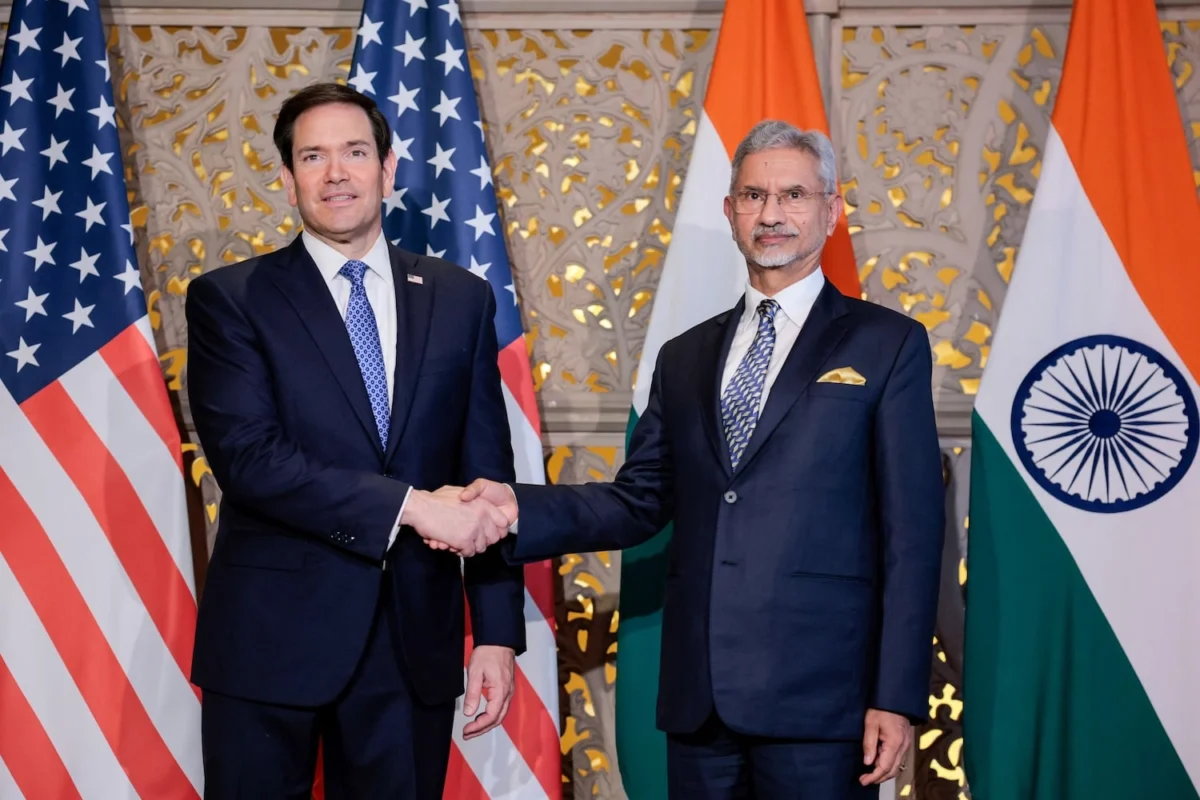
U.S. Secretary of State Marco Rubio’s three-day visit to India this week has been characterized by its distinct lack of traditional diplomatic theater. Eschewing the customary protocol of visiting the capital, New Delhi, Rubio has instead focused his itinerary on Mumbai and Jamnagar—a move that underscores a deliberate "business-first" strategy in the ongoing U.S.-India relationship.
Main Facts and Strategic Context
Rubio’s decision to bypass New Delhi—despite having met Prime Minister Narendra Modi in the capital as recently as May—has raised eyebrows among diplomatic observers. However, behind the scenes, this strategic exclusion may serve as a calculated effort to bypass the "trust gap" that currently defines the bilateral relationship. New Delhi remains deeply skeptical of the Trump administration’s transactional approach, specifically regarding punitive tariff regimes and the perceived U.S. preference for cozying up to Pakistan. By keeping the visit focused on financial and energy hubs, Rubio avoids the uncomfortable political friction that a formal New Delhi summit would inevitably trigger.
Chronology of the Visit
- Tuesday: Rubio arrived in Mumbai, immediately laying a wreath to honor the 166 victims of the 2008 Mumbai terrorist attacks. This act of remembrance serves as a nod to the shared history of counterterrorism cooperation. Later, he met with Indian External Affairs Minister S. Jaishankar in Mumbai, a move that required Jaishankar to navigate significant domestic political pressure.
- Wednesday: Rubio traveled to Jamnagar to meet with Mukesh Ambani, the chairman of Reliance Industries. The dialogue centered on the global energy landscape and potential commercial synergies, including Reliance’s interests in refining Venezuelan crude and its ambitious plans for oil infrastructure in Texas.
Implications
The meeting with Ambani is a textbook example of Trump-era "commercial diplomacy." By leveraging personal relationships with corporate titans, the administration aims to bypass governmental gridlock to achieve economic goals. Furthermore, the U.S. decision to pause sanctions on nations purchasing Russian oil provides a vital "diplomatic buffer," allowing India to diversify its energy portfolio without facing immediate American reprisal. This confidence-building measure may prove essential if the two nations are to finalize a stalled trade deal.
II. The Mecca Pact: A New Security Architecture
The release of the full text of the Mecca pact—a mutual defense agreement between Pakistan, Saudi Arabia, and Turkey—marks a profound shift in regional security. Submitted to the Turkish parliament for ratification this week, the pact has officially entered the public consciousness as a "NATO-like" security framework.
Supporting Data and Structural Intent
The agreement is not merely a symbolic gesture; it is a long-term commitment, with signatories pledged to remain parties to the accord for at least a decade. The inclusion of an "attack on one is an attack on all" clause provides a significant deterrent, yet the text remains intentionally ambiguous regarding specific adversaries. This lack of specificity is likely designed to allow Pakistan—which shares a volatile border with Iran—to maintain its role as a mediator without being explicitly labeled as an anti-Iran bloc.
Official Responses and Regional Mediation
Pakistan’s position is increasingly precarious. As it fulfills its obligations to the Mecca pact—which Riyadh has already invoked to counter Houthi rebel activity—its role as a neutral mediator in the ongoing U.S.-Iran conflict is being tested. Army Chief Asim Munir’s visit to Tehran this week serves as a damage-control mission, intended to reassure Iranian leadership that Islamabad’s new security commitments do not preclude its role as a credible, neutral broker for peace.
III. The Measles Crisis: A Public Health Catastrophe in Bangladesh
While political and defense headlines dominate the wires, a quiet tragedy is unfolding in Bangladesh. A recent investigation, corroborated by World Health Organization (WHO) data, has revealed a catastrophic measles outbreak that has gripped the nation since March.
Supporting Data
- Case Volume: Between mid-March and October 9, 2026, Bangladesh registered 202,000 suspected cases of measles.
- Mortality: The outbreak has claimed 1,147 lives, with a staggering 94 percent of these deaths occurring among children under the age of five.
Causes and Systemic Failures
The crisis is the result of a "perfect storm" of administrative instability and poor planning. The political upheaval following the ouster of Prime Minister Sheikh Hasina in 2024 severely disrupted established vaccination infrastructure. Furthermore, the current government’s attempt to fast-track emergency inoculation campaigns resulted in a lack of necessary readiness checks. Millions of children were left behind in the data-gathering process, rendering the initial vaccination strategy ineffective. This crisis serves as a grim reminder that political instability carries direct, lethal costs for the most vulnerable populations.
IV. The Saudi-Bangladesh Relationship: Executions and Economic Dependency
The geopolitical complexity of the region is further highlighted by the recent execution of two Bangladeshi nationals in Saudi Arabia. The incident, which involved charges of cybercrime and adultery, has sparked domestic outcry in Bangladesh.
Implications for Dhaka
The Bangladeshi government faces an impossible balancing act. The families of the deceased are demanding accountability, yet Dhaka cannot afford to alienate Riyadh. Saudi Arabia is not only a primary source of crude oil for Bangladesh—which is currently grappling with energy shortages exacerbated by the Iran war—but is also the host to over 3.5 million Bangladeshi workers whose remittances are a pillar of the nation’s economy. The fact that the Bangladeshi Embassy in Riyadh received no warning of the executions suggests a lack of diplomatic leverage that Dhaka is currently ill-equipped to address.
V. Regional Voices: Perspectives from the Ground
As the region grapples with these high-level challenges, local media continues to provide essential context on the issues that matter to the average citizen.
- Environmental Policy: In The Print, BJP politician Meenakashi Lekhi argues that the cleaning of the Yamuna River requires more than just superficial efforts. She suggests adopting the "Sabarmati Riverfront" model to combine ecological restoration with public urban development.
- Climate Economics: Writing in Prothom Alo, journalist Shahiduzzaman posits that the conversation surrounding climate change has evolved. The question is no longer whether climate change is harming Bangladesh, but rather "how much we are losing, who is paying the price, and whether the country is doing enough to mitigate these catastrophic losses."
- Animal Welfare: A scathing editorial in the Daily Mirror highlights the "shameful reality" of elephant treatment in Sri Lanka. It argues that a nation’s moral standing can be measured by its treatment of its wildlife, calling for an urgent overhaul of conservation policies to stop the annual, human-induced death toll of the island’s iconic species.
Conclusion: A Region in Flux
The events of this week demonstrate that the South Asian region is in a state of rapid transition. From Secretary Rubio’s pragmatic, profit-oriented diplomacy in India to the hardening of security alliances in the Middle East and South Asia, the old paradigms are being rewritten. Meanwhile, the human costs of these shifts—seen in the health crisis in Bangladesh and the vulnerability of migrant workers abroad—underscore the reality that for millions in the region, the geopolitical "big picture" is often secondary to the immediate, daily struggle for safety, health, and economic survival. As we move into the final quarter of the year, the stability of the region will depend heavily on how these nations navigate the tension between international alliances and domestic necessity.