In a significant milestone for the renewable energy sector, San Francisco-based power electronics company Optivolt has successfully closed a $32 million Series A funding round. The investment signals a growing appetite among venture capital firms for "hard tech" solutions that move beyond traditional hardware to create intelligent, adaptive power systems. By integrating advanced electronics directly into solar panels, Optivolt aims to transition the global energy market from passive energy capture to a dynamic, "thinking" infrastructure capable of maximizing output in the most challenging real-world conditions.
The Core Innovation: Moving Beyond Passive Hardware
For decades, the solar industry has relied on relatively static technology. While photovoltaic (PV) cell efficiency has improved, the way these panels interact with their environment has remained largely unchanged. Conventional solar systems often suffer from significant energy bottlenecks; if a single cell or a small portion of a panel is shaded by debris, cloud cover, or structural obstruction, the performance of the entire string of panels can be dragged down.
Optivolt, founded in 2017 by CEO Rohit Kalyanpur, has spent the last nine years reimagining solar technology from "first principles." Rather than treating solar panels as passive receptors, the company is embedding aerospace-grade power electronics directly into the panel architecture.
The centerpiece of this technology is the Power Balancer. Unlike traditional systems that rely on external, bolted-on optimizers, Optivolt’s solution functions as an internal nervous system. It redistributes energy among groups of cells in real-time, bypassing the performance degradation caused by localized shade, dirt, or uneven weather conditions. By integrating power management, monitoring, and safety functions—such as rapid shutdown protocols—directly into the hardware, Optivolt reduces the physical complexity of installations while simultaneously boosting net energy yield.
Chronology: A Nine-Year Journey to Series A
The path to this $32 million injection was not an overnight success but the result of nearly a decade of rigorous R&D.
- 2017: Rohit Kalyanpur launches Optivolt in San Francisco with a vision to revolutionize solar power electronics.
- 2017–2025: The company enters a prolonged "stealth and development" phase, focusing on perfecting the aerospace-grade electronics required to withstand harsh environmental conditions while maintaining a compact footprint.
- 2026 (October): Following successful internal testing—which revealed that their technology could produce up to six times more power than standard panels with external optimizers under specific shade scenarios—Optivolt announces its $32 million Series A round.
- Total Capitalization: With this latest round, Optivolt has raised a total of $42 million, marking a transition from a research-heavy startup to a scaling manufacturing and deployment powerhouse.
The Data: Why "Smart" Solar Matters
The economic and technical arguments for Optivolt’s platform are rooted in the limitations of current solar deployments. In utility-scale solar farms and residential rooftop arrays, energy loss due to environmental variables is a multi-billion-dollar problem.
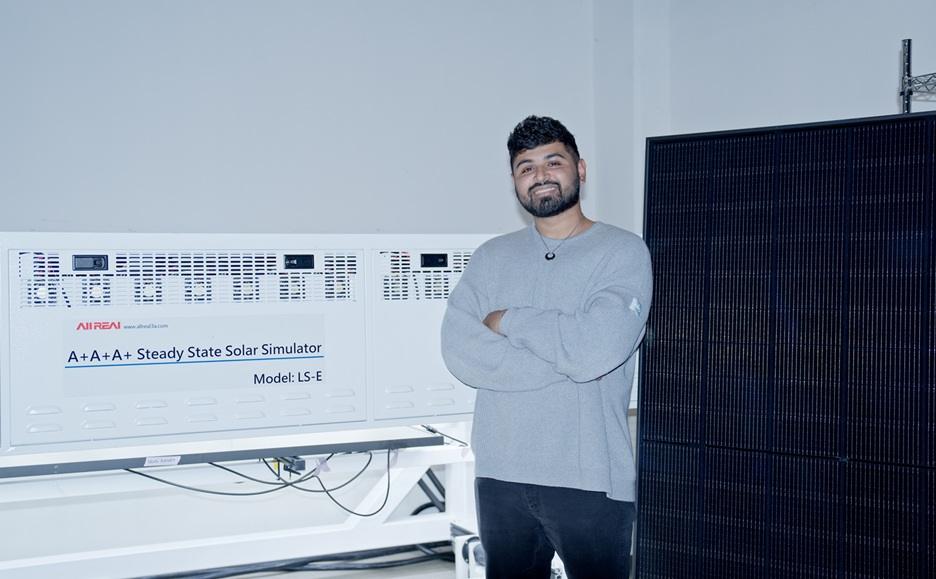
According to the company’s internal benchmarks, the difference between a "dumb" panel and an "intelligent" panel is stark. In scenarios defined by partial shading—a common issue in urban environments and complex terrain—Optivolt’s panels achieved a sixfold increase in power output compared to conventional panels utilizing standard bolted-on power optimizers.
This is not merely a marginal gain; it is a fundamental shift in energy economics. By increasing the kilowatt-hour (kWh) yield per square foot, developers can reduce the total surface area required for solar projects. This efficiency is critical for projects where land footprint is limited or where the cost of land acquisition is high.
Strategic Implications: Powering the AI Era
The timing of this funding is particularly strategic. As the global economy undergoes a massive digital transformation, the demand for electricity is surging, driven primarily by the energy-intensive nature of Artificial Intelligence (AI) data centers.
Large-scale tech companies are currently scouring the globe for reliable, clean energy sources to power their hyperscale data centers. Optivolt’s ability to maximize output from existing solar installations makes it a prime candidate for these projects. By deploying "smarter" solar, data center operators can potentially optimize their onsite energy generation, reducing reliance on the grid and lowering their carbon footprint.
The company has explicitly identified the power needs of AI data centers as a key market for its expansion, positioning itself as a critical layer in the infrastructure of the future.
Official Perspectives: The Vision for Energy 2.0
The Series A round was led by VXI Capital, a fund led by the former Chief Technology Officer of the U.S. Military’s Defense Innovation Unit. This leadership choice highlights the "hard tech" focus of the investment—an endorsement of the company’s rigorous, engineering-first approach.

Rohit Kalyanpur, CEO of Optivolt, articulated the company’s philosophy during the funding announcement:
"For nine years, we’ve rebuilt the solar panel from first principles, embedding aerospace-grade power electronics so it can respond to Earth as it actually is, not the ideal conditions of a lab. The result is the first solar panel system that thinks for itself—one that adapts to shade, weather, dirt, and degradation in real-time, recovering energy conventional solar leaves behind."
Orin Hoffman, Managing Director at VXI Capital, emphasized that the investment is about more than just solar panels; it is about building the foundation of the global power grid.
"The next era of energy will not be built by simply installing more of the same passive solar panels we already have. It will be built by making solar intelligent enough to become the backbone of the global power system. Optivolt has spent nine years building the architecture for that future."
The Competitive Landscape and Market Challenges
While Optivolt’s technology appears groundbreaking, the company enters a highly competitive and established market. Major players in the solar power electronics space, such as Enphase Energy and SolarEdge, have long dominated the market with microinverters and power optimizers.
However, Optivolt’s value proposition is distinct: it aims to eliminate the "bolted-on" nature of these current solutions by baking intelligence into the panel itself. The challenge for Optivolt will be supply chain integration. To achieve widespread adoption, they must partner effectively with major solar panel manufacturers to ensure their "intelligence layer" is a standard feature rather than an expensive, aftermarket add-on.

Furthermore, the company must prove that its "aerospace-grade" electronics can maintain their reliability over the 20-to-25-year lifespan of a standard solar panel. In the utility-scale sector, long-term durability is the ultimate metric for success.
Future Outlook: A Catalyst for Growth
The influx of $32 million will be directed toward scaling manufacturing and accelerating the deployment of these systems across residential and utility-scale projects. By moving from a technical breakthrough to a commercial platform, Optivolt is signaling that it is ready to challenge the status quo of the renewable energy industry.
As the world pivots toward a net-zero future, the "Energy Transition" category in private equity is witnessing a shift. Investors are moving away from simple solar project financing and toward the technological underpinnings that make those projects more efficient and resilient.
If Optivolt succeeds in its mission, it will not just be selling a better solar panel; it will be providing the software-defined intelligence that allows solar energy to compete more effectively with fossil fuels in terms of reliability and output. By turning the panel into a responsive, autonomous system, Optivolt is ensuring that the "energy of tomorrow" is not just clean, but also highly intelligent.
In the coming months, the industry will be watching closely to see how Optivolt scales its production and whether it can successfully capture the interest of the large-scale solar developers who are currently looking for any efficiency advantage to meet the insatiable power demands of the modern digital age. The era of the "dumb" solar panel may finally be drawing to a close.