
Polish Crypto Exchange Collapse Exposes Links to Organized Crime and Political Entanglements
Warsaw, Poland – The spectacular implosion of Zondacrypto, once a prominent Polish cryptocurrency exchange, has plunged thousands of investors into financial ruin and ignited a firestorm of controversy. What began as a sudden inability to access funds has rapidly escalated into a scandal of unprecedented proportions, revealing deeply troubling connections between the exchange, Russian organized crime, and far-right political factions within Poland. This unfolding crisis has not only shattered investor confidence but has also thrown a harsh spotlight on the volatile and largely unregulated nature of the cryptocurrency market, raising critical questions about financial security and political influence.
The collapse, with estimated losses reaching 350 million zloty (approximately 83 million euros), has left ordinary Poles, like 25-year-old social media manager Krystian Wesolowski, facing devastating financial setbacks. Wesolowski, who had diligently saved 40,000 zloty (9,435 euros) on the Zondacrypto platform with aspirations of funding a future home, is now among the many who find their life savings effectively frozen.
Main Facts: A Rapid Descent into Crisis
Zondacrypto, formerly known as BitBay until 2021, was a well-established name in the Polish cryptocurrency landscape. Its widespread advertising and perceived reliability led many, including Wesolowski, to entrust it with their savings. However, the facade of stability began to crumble in April when reports of withdrawal issues emerged. Initially dismissed as technical glitches, these problems quickly escalated into a full-blown liquidity crisis.
The situation intensified on April 16th when the exchange’s CEO, Przemyslaw Kral, issued a statement on X (formerly Twitter). He claimed the company held 4,500 Bitcoin in a "cold wallet" – a significant reserve valued at over a billion zloty – as a security measure. The critical flaw in this assertion, however, was that the private key to access these funds was allegedly held by Sylwester Suszek, the exchange’s co-founder. Suszek reportedly disappeared under mysterious circumstances in March 2022 and is now presumed dead. Compounding the intrigue, Kral himself is believed to have left Europe and is reportedly in Israel, failing to provide public proof of his claims.
Wesolowski’s experience mirrors that of countless others. "I knew investing in cryptocurrency carried risk," he stated, his voice tinged with disillusionment. "But I never imagined they would simply stop people from accessing their money while assuring everyone that everything was under control. It turned out to be a scam."
The exchange’s operational history adds another layer of complexity. After being placed on a warning list by the Polish financial regulator in 2018, the company moved its operations abroad, first to Malta and then to Estonia. This relocation now presents significant legal hurdles, as the Estonian registration limits the direct intervention capabilities of Polish authorities.
Chronology of Collapse and Controversy
The unraveling of Zondacrypto has been swift and dramatic, punctuated by a series of alarming developments:
- Early 2022: Sylwester Suszek, co-founder of the exchange, disappears under unclear circumstances and is later presumed dead.
- 2018-2021: The company, then operating as BitBay, faces scrutiny from Polish regulators and relocates its operations to Malta and subsequently Estonia.
- April 2025: Reports of withdrawal difficulties begin to surface among Zondacrypto users.
- Mid-April 2025: Krystian Wesolowski and other users attempt to withdraw funds, only to find them inaccessible, with the platform citing technical issues.
- April 16, 2025: CEO Przemyslaw Kral claims the company holds substantial Bitcoin reserves but reveals the private key is held by the deceased co-founder.
- December 2025: Prime Minister Donald Tusk reveals that Polish security services had provided intelligence linking Zondacrypto to Russian organized crime. Tusk requests a closed parliamentary session to share this information.
- December 2025: President Andrzej Duda vetoes a government bill aimed at strengthening state oversight of the crypto market and intervention capabilities in suspicious transactions.
- February 2026: A second version of the regulatory bill also faces an uncertain fate shortly before Zondacrypto’s collapse.
- Early April 2026: Prime Minister Tusk publicly discloses that Zondacrypto’s CEO made significant payments to organizations linked to the right-wing Law and Justice (PiS) party shortly before a parliamentary vote on overcoming the president’s veto.
- May 2026: The full extent of the Zondacrypto scandal begins to emerge, with revelations of alleged ties to Russian organized crime and political interference.
Supporting Data and Unfolding Revelations
The financial scale of the Zondacrypto collapse is staggering, with initial estimates placing the total losses at around 350 million zloty. This figure underscores the significant impact on individuals and the broader Polish economy.
Beyond the financial devastation, the scandal is increasingly intertwined with allegations of political maneuvering and foreign influence. Investigations by Polish media and government officials have raised claims of suspicious links between Zondacrypto, Russian organized crime, and segments of the Polish right-wing political spectrum.

The exchange’s previous name, BitBay, and its relocation history are crucial details. The company’s move to Estonia, a member of the European Union, has complicated regulatory oversight, as Polish authorities possess limited direct jurisdiction over an Estonian-registered entity.
The narrative surrounding the private key to the substantial Bitcoin holdings adds a chilling layer of mystery and suspicion. The presumed death of co-founder Sylwester Suszek, coupled with CEO Przemyslaw Kral’s reported departure from Europe, paints a picture of clandestine activities and potential evasion.
Official Responses and Political Entanglements
The Polish government, led by Prime Minister Donald Tusk, has been vocal in its condemnation of the unfolding events and has sought to strengthen regulatory oversight of the cryptocurrency market. However, these efforts have been significantly hampered by political opposition, particularly from President Andrzej Duda.
President Duda has twice vetoed government-backed legislation designed to enhance the supervision of crypto assets and empower authorities to intervene in dubious transactions. In his official justifications, Duda argued that the proposed laws were overly burdensome, exceeding the requirements of EU regulations and potentially stifling innovation by making the Polish crypto market one of the most restrictive in the bloc. He contended that such stringent measures would discourage businesses and drive them towards more lenient jurisdictions.
However, critics, including political journalist Mateusz Mazzini of Gazeta Wyborcza, view President Duda’s actions as driven more by political expediency than by a coherent regulatory philosophy. "His default position is to block almost everything coming from the government," Mazzini observed, suggesting that Duda’s vetoes are often ideological or simply a response to proposals originating from the opposing political camp. Mazzini further posits that Duda may be particularly susceptible to pressure from influential allies who benefit from an unregulated crypto sector.
The revelation that Zondacrypto’s CEO allegedly made substantial payments to organizations associated with the right-wing Law and Justice (PiS) party, including a significant sum to the Sovereign Poland Institute led by former Justice Minister Zbigniew Ziobro, has intensified the political dimension of the scandal. Prime Minister Tusk highlighted these payments, suggesting a deliberate effort to influence political discourse and legislative outcomes.
Implications and Future Outlook
The Zondacrypto crisis extends far beyond a simple financial collapse; it has exposed deep-seated vulnerabilities within Poland’s financial regulatory framework and highlighted the complex interplay between emerging technologies, organized crime, and political power.
Crypto-Fascism and Foreign Influence:
The article draws a stark parallel between Zondacrypto’s actions and the broader political landscape, noting the exchange’s sponsorship of the Polish edition of the US Conservative Political Action Conference (CPAC) in May 2025. Attendees included President Andrzej Duda and then-candidate Karol Nawrocki, alongside prominent American conservatives. Nawrocki’s subsequent pledge against regulating cryptocurrencies, stating, "Poland needs innovation, not regulation," and his commitment to preventing "draconian laws" from limiting freedom, were echoed by Zondacrypto’s sponsorship of events during his visit to the US in 2025. This suggests a calculated alignment between the exchange’s business interests and a specific political ideology that favors deregulation.
The alleged ties to Russian organized crime, specifically the Tambov group, are particularly alarming. Intelligence reports suggest Russian actors were involved in the company’s ownership structure after 2018, a period marked by international sanctions against Russia following its annexation of Crimea. This timing implies that cryptocurrencies may have been utilized as a means to circumvent traditional financial controls and move capital illicitly.
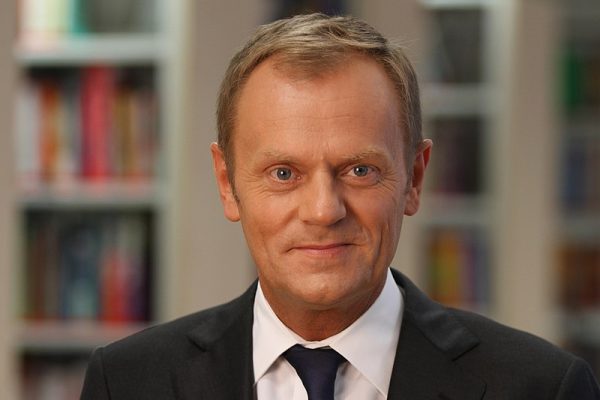
Prime Minister Tusk described the situation as a "criminal thriller," emphasizing how a company with such a background then proceeded to sponsor political events and promote specific political forces. This raises profound questions about the integrity of the political process and the potential for foreign entities to influence domestic policy through financial means.
Regulatory Stalemate and Systemic Weaknesses:
While President Duda’s vetoes have stalled immediate legislative action, the underlying issues remain. Experts like Damian Dejewski, a forensic crypto investigator, argue that even the proposed legislation might not have been sufficient to prevent the Zondacrypto debacle, citing the company’s Estonian license which placed it largely outside Polish jurisdiction. Dejewski points to the more fundamental problem: the limited investigative capacity and a lack of effective international mechanisms for tracing crypto assets across jurisdictions.
Jacek Harasimowicz, a lawyer specializing in financial fraud, warns against overly restrictive regulations that could disadvantage the European crypto sector compared to the US and Asia. However, he firmly asserts the necessity of some form of regulation. The absence of clear legal frameworks, he argues, creates legal uncertainty for Polish companies, fewer protection channels for consumers, and diminished state intervention capabilities.
Poland, like other EU member states, faces a June 30 deadline to implement the EU’s Markets in Crypto-Assets Regulation (MiCA). While the government has submitted a third draft of its legislative proposal, President Duda has presented a rival proposal advocating for a more lenient regulatory approach with lower costs for crypto companies and greater judicial oversight of state intervention.
The Dual Nature of Cryptocurrency:
The article concludes by highlighting the inherent tension in the public perception of cryptocurrencies. While often portrayed as decentralized and democratic, their primary advantage often lies in anonymity, making transactions harder to trace and enabling the movement of large sums outside formal banking systems. This anonymity, the article argues, makes cryptocurrencies a valuable tool not only for criminal networks but also for states operating in the shadows, citing Russia’s alleged use of crypto for influence operations and North Korea’s use of hacks to finance its regime.
The current situation leaves investors like Krystian Wesolowski in a precarious position. While hope for recovery may be slim, his plea for greater state protection for individuals investing through platforms like Zondacrypto resonates deeply. His advice to potential crypto investors is stark: "Better to buy gold." This sentiment underscores a profound loss of trust and a yearning for tangible, secure assets in an increasingly complex and uncertain financial world. The Zondacrypto scandal serves as a potent reminder that in the frontier of digital finance, the line between innovation and exploitation can be perilously thin.