OSLO, NORWAY – World football’s governing body, FIFA, finds itself embroiled in a deepening controversy as the Norwegian Football Federation (NFF) is poised to file a formal complaint with FIFA’s Ethics Committee. The NFF’s action stems from a highly contentious decision to suspend the punishment initially levied against U.S. national team striker Folarin Balogun, a ruling that has sent shockwaves through the international football community and ignited fierce debate over the integrity and independence of sports governance.
At the heart of the scandal lies an unprecedented direct phone call between then-U.S. President Donald Trump and FIFA President Gianni Infantino, which Trump himself publicly acknowledged. This intervention, coupled with the subsequent reversal of Balogun’s sanction, has prompted accusations of political interference at the highest levels of the sport, threatening to undermine FIFA’s credibility and its ongoing efforts to reform its image.
Main Facts: A Crisis of Confidence
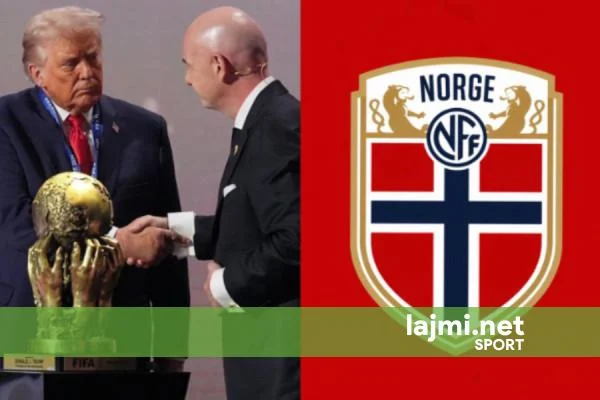
The Norwegian Football Federation has expressed "great concern" over the decision concerning Folarin Balogun, viewing it as a dangerous precedent that compromises the fundamental principles of fair play and judicial independence in football. The NFF’s president, Lise Klaveness, has explicitly stated that the Balogun case is deemed pertinent to an existing ethics investigation concerning a controversial "peace prize" reportedly awarded by FIFA to Donald Trump during a draw event in Washington.
This convergence of events has drawn sharp condemnation from other major footballing bodies. UEFA, European football’s governing body, has accused FIFA of having "crossed the red line" with a decision it labeled "unprecedented, incomprehensible, and unjustifiable." Belgium, another prominent football nation, echoed these sentiments, expressing deep concern and vowing to uphold ethics and fair play.
The controversy has even extended beyond football, with potential implications for the International Olympic Committee (IOC), given Infantino’s membership since 2020. The Olympic Charter strictly prohibits the acceptance of orders from governments, raising questions about Infantino’s conduct and the wider governance of global sports. The NFF’s board is scheduled to convene next week to make a final decision on pursuing the formal ethics complaint.
Chronology of a Controversial Decision
The unfolding saga began with an on-field incident involving Folarin Balogun, the specifics of which have not been publicly detailed by the original source, but which resulted in a disciplinary sanction being imposed on the U.S. striker. While the nature of the alleged foul and the initial punishment remain somewhat shrouded, the subsequent events have cast a long shadow over FIFA’s decision-making processes.
The Incident and Initial Sanction:
Details surrounding the specific match and the exact nature of Balogun’s alleged infraction are scarce. However, it is understood that the incident warranted disciplinary action, leading to a punishment being handed down by the relevant FIFA judicial body. Such decisions are typically the culmination of a thorough review process, often involving video evidence and referee reports, designed to ensure fairness and consistency across competitions.
The Intervention from the White House:
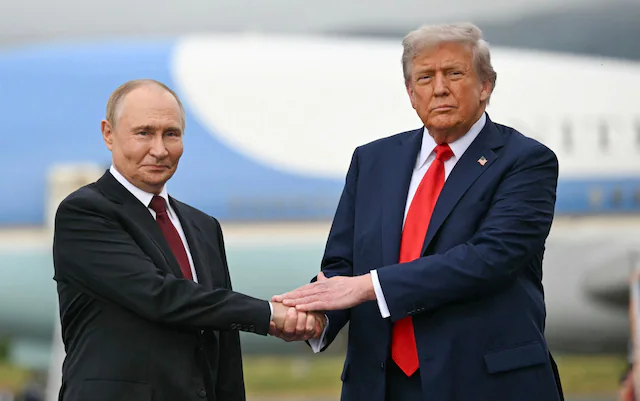
The pivotal moment in this escalating controversy occurred when then-U.S. President Donald Trump engaged in a direct telephone conversation with FIFA President Gianni Infantino. Trump himself confirmed this interaction on July 6 from the White House, stating: "I spoke with Gianni. It wasn’t a foul. I asked for a review, I didn’t tell him what to do." This public admission immediately raised red flags, as direct communication between a head of state and the president of a global sports federation regarding an active disciplinary case is highly irregular and, for many, deeply problematic.
The Suspension of Punishment:
Following this telephone call, a decision was made by FIFA to suspend Balogun’s punishment. This reversal, occurring in such close proximity to Trump’s intervention, created an immediate perception of political influence. Critics argue that regardless of Trump’s explicit disclaimer – "I didn’t tell him what to do" – the very act of a sitting U.S. President raising concerns about a specific player’s disciplinary outcome with the FIFA President could be construed as undue pressure, especially given the significant political and economic leverage the U.S. holds in global sports.
Immediate Backlash and Official Reactions:
The controversial suspension of Balogun’s punishment was met with swift and strong condemnation from various corners of the football world. The Norwegian Football Federation was among the first to react decisively, with President Lise Klaveness voicing profound concerns. UEFA and the Belgian Football Association quickly followed suit, issuing scathing critiques that underscored the gravity of the situation and the perceived breach of established ethical boundaries. These reactions collectively signaled a significant loss of trust in FIFA’s judicial independence and its ability to resist external pressures.
Supporting Data: Context and Concerns
The NFF’s intent to pursue a formal ethics complaint is not an isolated reaction but rather a reflection of deeper, systemic concerns regarding FIFA’s governance and its susceptibility to external influence. The Balogun case, therefore, becomes a critical juncture, testing the resolve of football’s guardians to uphold integrity against powerful political and economic forces.
The Principle of Judicial Independence in Sports:
A cornerstone of credible sports governance is the absolute independence of its judicial and disciplinary bodies. These entities are designed to operate free from political, commercial, or personal interference, ensuring that decisions are based solely on rules, evidence, and established procedures. Any perceived breach of this independence, especially through direct communication between a head of state and a sports federation president, strikes at the very heart of fair play and the rule of law within sport. The NFF, like many other federations, views this principle as non-negotiable for maintaining the public’s trust in football.
Folarin Balogun’s Profile and Significance:
Folarin Balogun is a prominent U.S. international striker, a player whose talent and potential are significant for the U.S. national team. While the specifics of the incident leading to his original sanction are not detailed in the provided text, it is clear that his standing as a key player for a nation that will co-host the upcoming FIFA World Cup in 2026 adds another layer of complexity to the intervention. The U.S. is a crucial market for FIFA, both commercially and strategically, making any perceived favoritism towards its players particularly sensitive.
The "Peace Prize" Controversy:
The NFF’s decision to link the Balogun case to an "existing investigation in the Ethics Committee for the so-called peace prize that FIFA gave to Trump during the draw in Washington" is highly strategic. This alleged "peace prize" – the details of which remain somewhat nebulous but were reportedly conferred upon Trump during a FIFA event – has been a source of quiet discomfort and scrutiny within football circles. Linking the two incidents suggests a pattern of behavior where FIFA, under President Infantino, might be perceived as cultivating undue political favor or making decisions that serve political rather than purely sporting interests. By connecting the Balogun ruling to this broader alleged pattern, the NFF aims to demonstrate that this is not an isolated lapse but potentially indicative of a deeper ethical malaise. This existing investigation provides a ready-made channel for the NFF’s concerns to be heard within FIFA’s own ethics framework.
FIFA’s History of Governance Challenges:
FIFA’s past is unfortunately marred by significant corruption scandals, particularly the widespread arrests and indictments of 2015, which led to a major overhaul of its leadership and governance structures. Gianni Infantino was elected on a platform of reform and restoring FIFA’s image. Accusations of political interference, particularly involving such a high-profile figure as a former U.S. President, directly undermine these reform efforts and evoke painful memories of a past where ethical boundaries were routinely blurred. For many, this incident represents a dangerous backslide, threatening to erode the fragile trust that FIFA has slowly begun to rebuild.
The International Olympic Committee (IOC) Connection:
Gianni Infantino’s dual role as FIFA President and an elected member of the International Olympic Committee (IOC) since 2020 introduces another critical dimension. The Olympic Charter, which governs the Olympic Movement, explicitly emphasizes the autonomy of sports organizations and prohibits political interference. Specifically, Rule 2.10 states that "The Olympic Movement must preserve its autonomy and resist all pressures of any kind, including but not limited to political, legal, religious, economic or other pressures." If Infantino is found to have acquiesced to political pressure in a disciplinary matter, it could potentially violate the spirit, if not the letter, of the Olympic Charter, leading to serious consequences for his standing within the IOC. The IOC’s acknowledgment that "complaints are confidential" indicates that they are aware of the situation and may be monitoring it closely.
Official Responses: A Chorus of Criticism
The controversial decision regarding Folarin Balogun has triggered a cascade of strong reactions from key stakeholders in international football, highlighting a significant divergence of opinion and a deep-seated concern over FIFA’s governance.
Norwegian Football Federation (NFF):
The NFF has emerged as the leading voice of dissent. President Lise Klaveness articulated the federation’s profound unease, telling the BBC that the NFF has reacted with "great concern" to the decision. Klaveness did not mince words, calling the ruling a "dangerous line" that risks undermining the integrity of the sport. Her statement regarding the Balogun case’s inclusion in the existing ethics investigation into the "peace prize" for Trump indicates a deliberate strategy to frame this incident not as an isolated error but as part of a potentially broader pattern of ethical compromises. The NFF’s commitment to taking such a serious step underscores the gravity with which they view the situation, placing principle above political expediency.
FIFA’s Official Stance:
In response to the growing criticism, FIFA has maintained its official position that its "judicial bodies are independent." This statement, however, has been met with widespread skepticism, particularly given the public acknowledgment by Donald Trump of his phone call with President Infantino regarding the very matter under review. Critics argue that merely stating independence is insufficient when the actions surrounding a decision suggest otherwise. FIFA has yet to provide a detailed explanation for the suspension of Balogun’s punishment that effectively addresses the perceived influence of the presidential phone call, leaving many unconvinced by its assertions of autonomy.
UEFA’s Vehement Condemnation:
The Union of European Football Associations (UEFA), a powerful confederation within FIFA, reacted with particular ferocity. UEFA declared that FIFA "crossed the red line" with the decision, branding it as "unprecedented, incomprehensible, and unjustifiable." This unusually strong language from UEFA highlights the depth of frustration and anger within the European football establishment. As a significant stakeholder in global football, UEFA’s public rebuke carries substantial weight and indicates a potential rift or at least a significant disagreement between the continental body and FIFA’s central leadership. Such sharp criticism from a major confederation points to fundamental questions being raised about FIFA’s governance model.
Belgium’s Call for Ethics and Fair Play:
Adding its voice to the chorus of criticism, the Belgian Football Association expressed that it is "deeply concerned" by the developments. Furthermore, Belgium stated its commitment to "fight for ethics and fair-play," signaling its solidarity with Norway and UEFA in upholding the foundational values of the sport. The participation of another national federation in publicly challenging FIFA’s decision-making adds to the mounting pressure on the world governing body and demonstrates a collective desire to safeguard the sport’s integrity.
International Olympic Committee (IOC):
The IOC’s response has been more circumspect, stating that "complaints are confidential." While non-committal, this statement confirms that the IOC is aware of the allegations and potential implications for its member, Gianni Infantino. The confidential nature of such processes means that any internal review or investigation by the IOC would not be immediately publicized, but the fact that the issue has reached the IOC’s radar underscores the seriousness of the allegations of governmental interference.
Implications: A Test of FIFA’s Integrity
The unfolding scandal surrounding the Balogun ruling and the NFF’s potential ethics complaint carries profound implications for FIFA, its leadership, and the broader landscape of international sports governance.
Erosion of FIFA’s Credibility:
Despite concerted efforts post-2015 to rebuild its reputation and establish itself as a transparent and ethical organization, this incident threatens to severely damage FIFA’s credibility. Accusations of political interference at the highest level directly undermine the trust of national federations, players, and fans. If a head of state can influence disciplinary outcomes, it suggests that sporting justice is not truly blind, leading to cynicism and disengagement. This crisis could set back years of reform work and reinforce negative perceptions of FIFA as an organization susceptible to external pressures and influence peddling.
Pressure on Gianni Infantino’s Leadership:
The controversy places immense pressure on FIFA President Gianni Infantino. His leadership is under scrutiny, not only for the decision itself but for the perceived proximity to a political leader during an active disciplinary process. His statement about FIFA’s judicial bodies being independent rings hollow to many in light of Trump’s public admission. Furthermore, his position as an IOC member is now precarious. Should the IOC deem his actions a violation of the Olympic Charter’s principles of autonomy and resistance to governmental interference, it could lead to sanctions or even the loss of his IOC membership, which would be a significant blow to his standing in the global sports arena.
Threat to Sports Governance and Autonomy:
The principle of autonomy for sports organizations is fundamental. This incident, if unaddressed effectively, could set a dangerous precedent, inviting future governmental interventions in sporting matters. It risks normalizing the idea that powerful political figures can bypass established judicial processes through direct appeals, thereby politicizing disciplinary decisions. This would undermine the authority of independent tribunals and erode the foundation of fair competition across all sports. Federations worldwide look to FIFA for leadership in upholding these principles, and a failure to do so decisively here could have far-reaching negative consequences.
The Future of the Ethics Committee:
The NFF’s decision to route its complaint through FIFA’s Ethics Committee is a critical test for that body. Established in the wake of past corruption scandals, the Ethics Committee is meant to be a bulwark against wrongdoing within FIFA. Its handling of this complaint will be closely watched. A robust and independent investigation that delivers a credible outcome could help restore some faith in FIFA’s internal mechanisms. Conversely, any perceived whitewash or failure to thoroughly address the allegations would further diminish the committee’s standing and exacerbate the crisis of confidence in FIFA’s governance structures. The outcome of this investigation could redefine the role and perceived effectiveness of FIFA’s internal ethical oversight.
Impact on U.S. Football and the 2026 World Cup:
While the U.S. is poised to co-host the 2026 FIFA World Cup, this controversy introduces an unwelcome element of political intrigue. The perception of undue influence by a U.S. President, even a former one, in a FIFA disciplinary matter could lead to resentment and questions about the fairness of future decisions involving the host nation. It could cast a shadow over the preparatory stages of the World Cup, drawing attention away from the sporting spectacle and towards governance issues.
The Road Ahead:
The NFF’s board meeting next week will be a pivotal moment. Should they proceed with the formal complaint, it will initiate a potentially lengthy and complex process within FIFA’s Ethics Committee. The outcome will not only determine the future course of the Balogun case but will also serve as a crucial indicator of FIFA’s commitment to its stated values of independence, integrity, and fair play in the face of significant political pressure. The international football community, and indeed the wider sporting world, awaits FIFA’s response with bated breath, recognizing that the stakes extend far beyond a single player’s punishment.