By Foreign Policy Staff
Welcome to this week’s edition of the Foreign Policy Situation Report. Today, we navigate the complex intersection of private industry and global power, tracking how the whims of the world’s wealthiest individuals—specifically Elon Musk—are increasingly shaping the battlefield of international relations. From the precarious stability of Ukraine’s defense infrastructure to the regulatory gridlock in India, we examine the shifting landscape of global influence. We also turn our attention to the latest fallout from the Trump administration, including a high-profile diplomatic resignation and the dubious efficacy of the recently announced “diesel deal” with the Kremlin.
The Musk Factor: Sovereign Influence in the Private Sector
Elon Musk continues to redefine the boundaries of private enterprise, proving that his corporate decisions now carry the weight of state-level foreign policy. This reality has reached a boiling point in the ongoing conflict between Ukraine and Russia, where SpaceX’s Starlink satellite internet service has transitioned from a philanthropic gesture into a critical component of national security.
The Starlink Standoff in Ukraine
This week, reports emerged suggesting that SpaceX had restricted access to Starlink for Ukrainian military operations. These restrictions reportedly capped the data speeds necessary for Kyiv’s frontline weaponry to remain effective in the face of Russian advances.
Musk has publicly denied personal involvement, stating via his social media platform, X, that the Ukrainian military utilizes a specific, hardened version of the service known as "Starshield." According to Musk, this system is managed by the U.S. government, implying that any operational throttling was a directive from the Trump administration rather than a unilateral decision by his company. The White House, meanwhile, has been pressuring Kyiv to curb its strikes on Russia’s energy infrastructure, citing concerns over global oil price volatility and the potential impact on U.S. midterm election optics.
Dependence on the Unpredictable
The controversy underscores a growing anxiety among global leaders: the danger of relying on infrastructure owned by a single individual who frequently signals sympathy for Kremlin narratives. As Sharon Weinberger, author of Valley of Death: How Big Tech Is Fueling the Future of War, noted: “The problem is right now there just isn’t that much of an alternative. Elon Musk, by virtue of having done things pretty well from a business standpoint, is in a dominant market position.”
The implications are profound. When the head of a private company begins to publicly advocate for the removal of a sovereign leader—as Musk did recently by suggesting President Volodymyr Zelensky “must go”—the distinction between commercial service provider and political actor vanishes. While Starlink access was reportedly restored late Thursday, the episode has left Ukrainian officials reconsidering their long-term reliance on external, private-sector support.
Regulatory Gridlock: Musk’s Indian Ambitions
While Ukraine fights to maintain its connection to the digital frontline, India remains a bastion of resistance against Musk’s expansionist goals. Despite repeated efforts to secure a license to operate Starlink in the world’s most populous nation, Musk faces a wall of bureaucracy and powerful domestic interests.
The “Oligarch” Accusations
Last Wednesday, tensions flared when Musk accused “certain oligarchs” in India of obstructing his entry into the market. He specifically targeted Mukesh Ambani, the billionaire head of Reliance Jio, India’s largest telecommunications provider. Musk characterized Ambani’s influence as a “de facto monopoly,” sarcastically referring to the industrialist as the “real boss of India.”
The irony is not lost on market observers: Starlink and Reliance Jio previously discussed a partnership to bring satellite internet to the subcontinent. However, without a formal sign-off from Prime Minister Narendra Modi’s government, the deal remains in purgatory.
Security and Sovereignty
The Indian government has responded with a measured, albeit firm, defense of its regulatory framework. In a statement issued by the Ministry of Communications, officials denied claims of discriminatory practices, emphasizing that all service providers—regardless of their ownership—must strictly adhere to “security conditions.”

Given that India has one of the highest frequencies of government-mandated internet shutdowns globally—often used to quell domestic protests—the government is understandably wary of a satellite network that could bypass state-controlled kill switches. As the geopolitical landscape shifts, New Delhi is clearly signaling that its national sovereignty takes precedence over the rapid deployment of global tech infrastructure.
Diplomatic Fallout: The Resignation of Kimberly Guilfoyle
The diplomatic sphere saw a significant shake-up this week with the resignation of Kimberly Guilfoyle, the U.S. Ambassador to Greece. Her departure follows a cascade of negative press and allegations of financial impropriety.
The most damaging claim involves an incident where she allegedly pressured a Republican donor to cover a $100,000 credit card balance at American Express just weeks before her Senate confirmation. While President Trump publicly noted that Guilfoyle had been “doing a good job,” he conceded that the optics of the situation had become untenable. The resignation serves as a stark reminder of the challenges inherent in political appointments that bypass traditional diplomatic channels, often leading to internal administrative friction and reputational damage for the host country’s relationship with the United States.
Energy Policy: The Mirage of the "Diesel Deal"
In an attempt to stabilize fuel prices ahead of the midterm elections, the Trump administration announced a surprise diesel trade agreement with Vladimir Putin. However, the move has drawn sharp condemnation from both sides of the Atlantic.
Why the Deal Fails to Deliver
Economic analysts, including Foreign Policy’s Keith Johnson, have pointed out the glaring flaws in this strategy. The agreement is unlikely to result in a meaningful reduction in fuel prices for the American consumer. Furthermore, critics argue that any concessions granted to Moscow provide a lifeline to the Russian war machine at a time when Europe is attempting to enforce stricter sanctions.
The administration’s focus appears to be almost entirely performative, aimed at appeasing key constituencies—namely farmers and truckers—rather than addressing the structural complexities of global energy markets. As the war in Ukraine drags on, the disconnect between U.S. energy rhetoric and the reality of the global supply chain continues to widen.
Chronology: The Week in Global Affairs
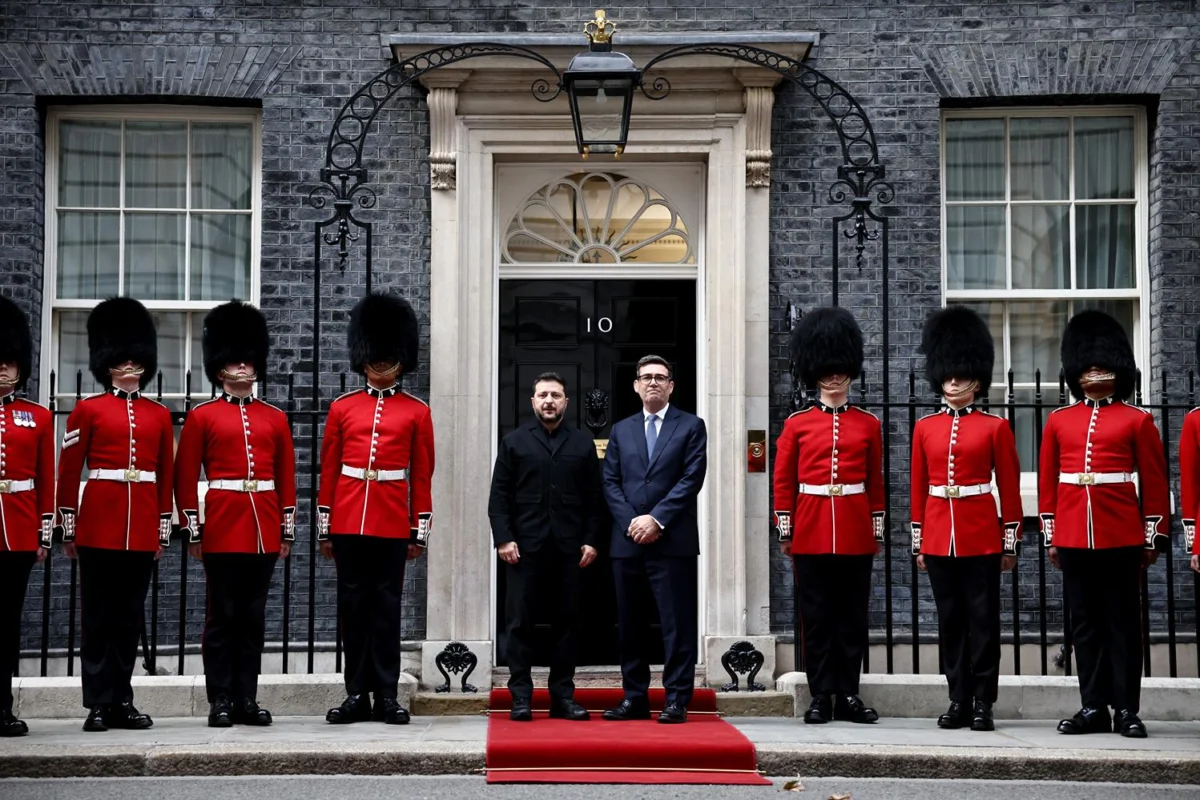
- Oct. 14: British Prime Minister Andy Burnham meets with Ukrainian President Volodymyr Zelensky at 10 Downing Street, reaffirming the UK’s commitment to providing defensive aid.
- Oct. 15: Spanish Foreign Minister José Manuel Albares addresses the friction between Madrid and Washington, emphasizing Spain’s adherence to international law over transactional diplomacy.
- Oct. 19: The United Nations Biodiversity Conference is scheduled to commence in Yerevan, Armenia, marking a critical moment for global environmental conservation efforts.
- Forthcoming: The province of Alberta, Canada, is set to hold a nonbinding referendum on its status within the Canadian confederation, a vote that has drawn significant interest from regional political analysts.
Implications: A World in Flux
As we look toward the remainder of the month, the themes of this week’s report suggest a period of deepening instability. The reliance on tech billionaires to manage the digital backbone of warfare, the persistence of state-sanctioned sabotage in Europe, and the failure of short-term economic fixes like the diesel deal suggest that the current international order is under immense strain.
In his interview with Foreign Policy, Spanish Foreign Minister Albares captured the essence of the current moment: “We believe in international law. We believe that war shouldn’t be a tool used to achieve foreign-policy objectives.” Yet, as we see with the rise of hybrid warfare and the influence of private actors in sensitive theaters of conflict, the mechanisms of international law are increasingly being bypassed by entities that operate in the shadows of the digital and corporate worlds.
As the White House navigates a transition in its communications team—highlighted by the recent slip-up where new Press Secretary Katie Zacharia referred to her husband as “my president”—the administration faces an uphill battle in maintaining both domestic credibility and international alignment.
For our subscribers, we encourage you to dig deeper into these developments. Whether it is the ongoing saga of Starlink or the shifting sands of European security, the Foreign Policy team remains committed to providing the, in-depth analysis required to navigate this increasingly complex geopolitical era.
Not an FP Insider yet? Subscribe here for your all-access pass to exclusive content, ad-free web browsing, and more perks. Stay informed, stay ahead.