Brussels, Belgium – May 13, 2026 – A stark warning has been issued regarding the deteriorating environment for civil society organizations (CSOs) across the Western Balkans. The Balkan Civil Society Development Network (BCSDN), in partnership with the European Citizen Action Service (ECAS), presented its annual report on civil society at the European Parliament today, revealing a deeply concerning trend of diminishing civic space and increased hostility towards critical voices in the region.
While Western Balkan nations formally uphold civil liberties, the report paints a grim picture of a reality where an increasingly adversarial climate is taking root. CSOs are reportedly facing significant pressure, stigmatization, and pervasive insecurity, prompting urgent calls for open civic space to be recognized as a non-negotiable prerequisite for European Union accession, rather than a secondary consideration.
The report categorizes the state of civic space in Albania, Kosovo, North Macedonia, and Montenegro as "narrowed." Bosnia and Herzegovina’s situation is described as "obstructed," while Serbia is characterized as facing an "oppressed" environment for its civil sector. This stark assessment underscores a systemic challenge affecting the region’s democratic development and its aspirations for closer ties with the European Union.
The Shifting Landscape: A Crisis of Civic Engagement
The annual report, a comprehensive analysis of the civil society landscape, dedicates a significant chapter to the Western Balkans. It meticulously details the multifaceted challenges that have plagued CSOs over the past year, painting a consistent picture of regression.
Key challenges identified in the report include:
- Financial Instability and Dependence: A primary concern is the precarious financial health of many CSOs. The report highlights a drastic cut in funding from organizations like USAID, which has significantly hampered the operational capacity of numerous CSOs. This funding reduction has forced many organizations to curtail or completely halt essential programs and activities, directly impacting their ability to serve their constituents and advocate for change.
- Political Interference in Public Funding: While external funding sources face cuts, domestic public funding often remains insufficient and, more critically, subject to political influence. This dependency on state-controlled funds can compromise the independence and impartiality of CSOs, making them vulnerable to pressure and manipulation.
- Coordinated Attacks and Smear Campaigns: CSOs and the individuals who champion their causes are increasingly becoming targets of coordinated attacks. These often manifest as public smear campaigns, designed to discredit their work, undermine their credibility, and sow public distrust. Such tactics are not only damaging to the organizations themselves but also create a chilling effect on broader civic participation.
- Legal Uncertainty and Bureaucratic Hurdles: A persistent challenge is the atmosphere of legal uncertainty that surrounds CSOs. This can include ambiguous legislation, cumbersome registration processes, and a lack of clear operational frameworks. In Albania, for instance, concerns have been raised about new registration requirements for CSOs and delays in establishing a functional registry, creating ongoing apprehension.
- Shrinking Safe Spaces for Advocacy: Perhaps the most alarming trend is the palpable shrinking of safe civic space. This is a complex phenomenon driven by a confluence of factors, including fear, self-censorship, persecution, and a conspicuous absence of effective protection measures for activists, journalists, and other civil society actors. The report notes that disinformation campaigns, even impacting legislative support for reforms like gender equality in Albania, contribute to this erosion of trust and safety.
- Digital Vulnerabilities: In the digital realm, Albanian citizens have reportedly faced financial fraud attempts, identity theft, and misleading health-related information circulating on online platforms. These digital threats further compromise the security and integrity of civic space in the online environment.
A Chronology of Concern: Escalating Pressures
The issues highlighted in the report are not sudden developments but rather an intensification of existing trends over the past year. The BCSDN and ECAS have been meticulously tracking these shifts, providing a chronological context to the current crisis.
- Early 2025: Initial reports emerged of increased scrutiny and bureaucratic delays for CSOs in several Western Balkan countries, particularly concerning access to government information and participation in policy consultations.
- Mid-2025: Significant funding cuts from international donors, notably USAID, began to be felt across the region, forcing many CSOs to downsize operations or suspend vital projects. This created immediate financial precarity for many organizations.
- Late 2025: A noticeable increase in coordinated online and offline attacks against journalists and civil society activists was documented. These often involved targeted harassment, defamation, and attempts to delegitimize their work, particularly concerning sensitive issues like corruption and human rights.
- Early 2026: The report notes that the legal frameworks governing CSOs remained in flux, with some countries introducing legislation that raised concerns about potential restrictions on advocacy and public participation. For example, in Albania, a draft law on lobbying, while intended to increase transparency, was met with apprehension due to its broad definition of "lobbying" and lack of clear exclusions for public interest advocacy.
- May 2026: The presentation of the BCSDN/ECAS annual report at the European Parliament served as a formal culmination of these year-long observations, bringing the severity of the situation to the attention of European policymakers.
Supporting Data: Quantifying the Contraction
The report’s findings are not merely anecdotal; they are backed by extensive monitoring and data collection. The categorization of civic space – "narrowed," "obstructed," and "oppressed" – is a qualitative assessment derived from a range of quantitative and qualitative indicators.
- Narrowed Civic Space (Albania, Kosovo, North Macedonia, Montenegro): This classification suggests that while formal avenues for participation exist, they are becoming increasingly restrictive. This can manifest as fewer opportunities for meaningful consultation, increased bureaucratic hurdles for registration and operation, and a heightened risk of reprisal for critical engagement.
- Obstructed Civic Space (Bosnia and Herzegovina): This category indicates more significant impediments. CSOs in BiH may face active resistance from authorities, legal challenges designed to stifle their work, and a more pronounced climate of intimidation, making it difficult to operate effectively.
- Oppressed Civic Space (Serbia): This is the most severe classification, suggesting that CSOs in Serbia are under intense pressure, potentially facing systematic suppression of their activities, severe limitations on freedom of assembly and expression, and a high risk of persecution for their advocacy.
The report also points to specific issues:
- Financial Strain: The impact of funding cuts from organizations like USAID has been substantial. While exact figures are not provided in the excerpt, the report explicitly states that these cuts led to the non-functioning of core programs for CSOs, forcing the cessation of many activities. This indicates a significant reduction in operational capacity and outreach.
- Public Funding Ineffectiveness: The observation that public funding "remains often weak and politically controlled" suggests a qualitative issue. This implies that even where public funds are available, their distribution may be politicized, favoring certain organizations or projects, thereby undermining fair competition and independent advocacy.
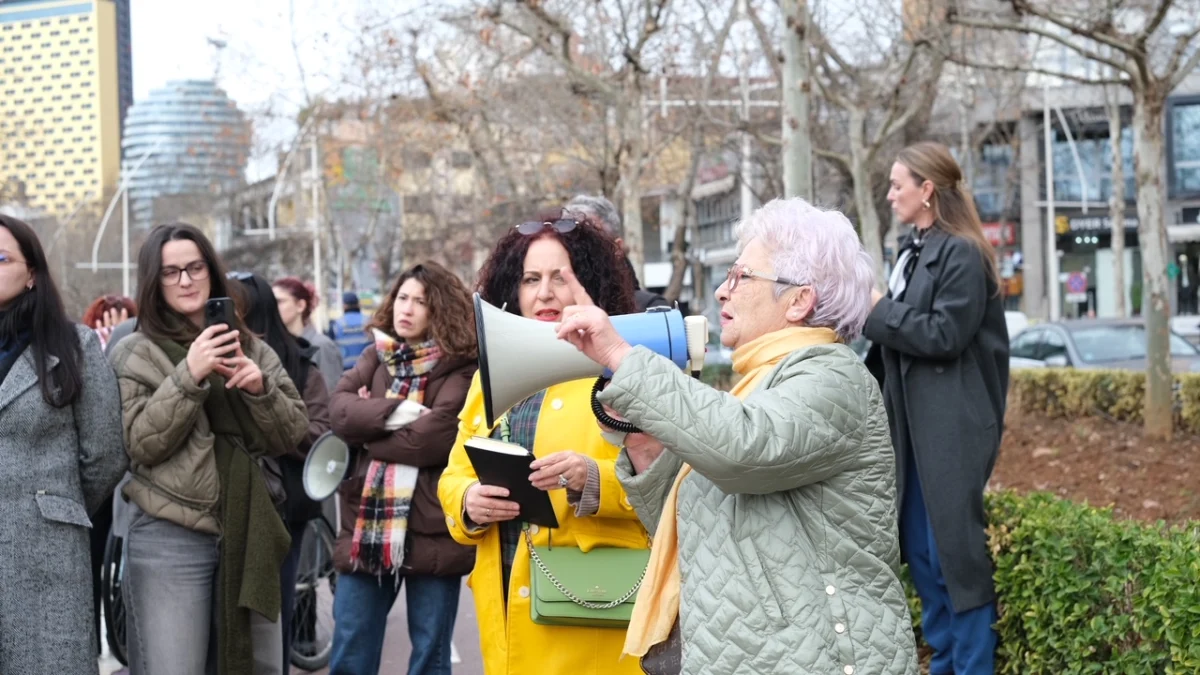
- Attacks on Journalists and Activists: The report specifically notes that in Albania, journalists face "public pressure and coordinated attacks." It also highlights that these attacks are "not effectively followed up," implying a lack of accountability for perpetrators and a resulting "censorship effect on critical voices." The mention of gender-based hate speech and harassment against female journalists further illustrates the multifaceted nature of these attacks.
Official Responses and Reactions
While the provided text focuses on the report’s findings, the presentation at the European Parliament itself signifies a crucial step in eliciting official responses. The fact that the report was presented in the European Parliament suggests an engagement with EU institutions, which are increasingly vigilant about the state of democracy and rule of law in accession candidate countries.
- European Parliament: The hosting of the report’s presentation within the European Parliament indicates that EU lawmakers are aware of and concerned by the findings. This platform can be used to exert political pressure on Western Balkan governments and to advocate for policy changes.
- BCSDN and ECAS: As the presenting organizations, BCSDN and ECAS are actively advocating for the recognition of open civic space as a core component of EU integration. Their role is to continuously monitor, report, and lobby for policy reforms that strengthen civil society.
- Western Balkan Governments: The report implicitly calls for action from the governments of the Western Balkan nations. The specific categorizations suggest that targeted interventions are needed in each country to address the identified challenges. Formal responses from these governments to the report’s findings would typically involve statements of commitment, acknowledgments of challenges, or proposed policy adjustments. However, these are not detailed in the provided text.
Implications for Democracy and EU Integration
The shrinking space for civil society in the Western Balkans carries profound implications for the region’s democratic trajectory and its aspirations for EU membership.
- Undermining Democratic Accountability: A vibrant civil society is a crucial pillar of democratic accountability. When CSOs are pressured and their space is limited, their ability to monitor government actions, advocate for citizens’ rights, and hold power to account is severely diminished. This can lead to increased corruption, decreased transparency, and a weakening of democratic institutions.
- Hindering EU Accession: The European Union has consistently emphasized the importance of good governance, rule of law, and respect for fundamental rights as prerequisites for membership. The deteriorating conditions for civil society directly contradict these core values. As the report states, open civic space must become a "fundamental condition for access to the EU," not a secondary issue. Failure to address these challenges could significantly slow down or even halt the accession process for these countries.
- Erosion of Public Trust: When critical voices are silenced or marginalized, it can lead to a decline in public trust in both government institutions and the democratic process itself. This can create fertile ground for populism and anti-democratic sentiments, further destabilizing the region.
- Impact on Social and Economic Development: CSOs often play a vital role in delivering essential services, promoting social inclusion, and advocating for sustainable development. The financial and operational constraints they face directly impact their ability to contribute to these crucial areas, potentially hindering broader social and economic progress in the Western Balkans.
The BCSDN and ECAS’s report serves as a critical wake-up call. The international community, particularly the European Union, must intensify its efforts to support and protect civil society in the Western Balkans. Without a robust and independent civil sector, the region’s path towards democracy and European integration will remain fraught with peril. The time for decisive action to reverse this alarming trend is now, before the space for critical voices is irrevocably closed.