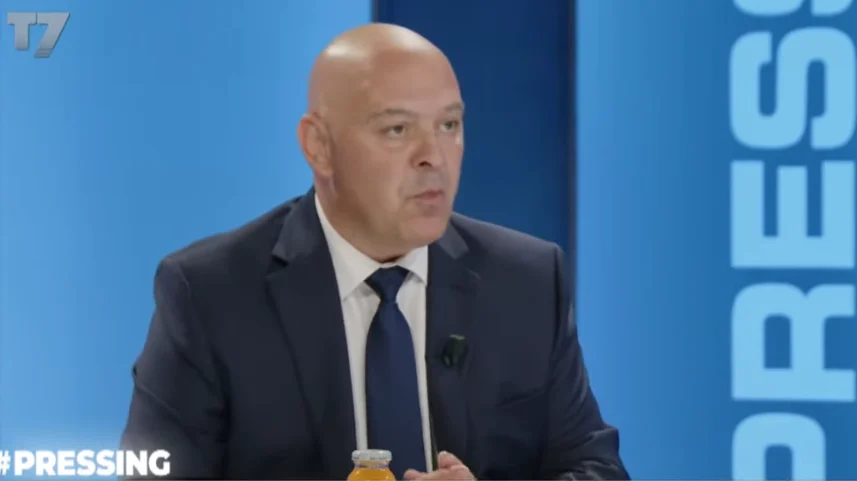
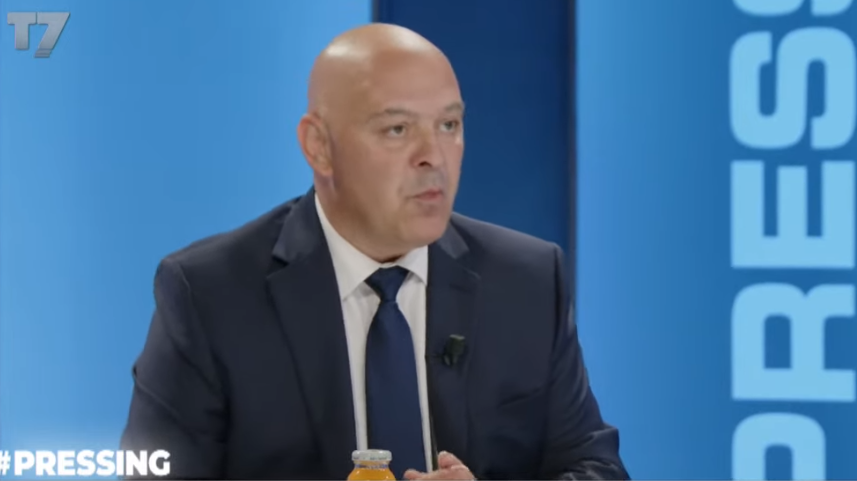
Pristina, Kosovo – May 13, 2026 – Ardian Gjini, the candidate for Prime Minister from the Alliance for the Future of Kosovo (AAK), issued a sobering assessment of the nation’s trajectory during an interview on "Pressing" on T7, sending ripples through Kosovo’s political landscape. Gjini articulated a profound concern that Kosovo is not only stagnating but actively falling behind its regional counterparts, which are reportedly developing at a significantly faster pace. His remarks underscored a critical juncture for the young nation, highlighting "serious problems" exacerbated by what he termed "political abuse" within the current environment.
Gjini’s statements serve as a stark warning: "Countries in the region have started to increase their distance from us; they are developing faster than us, which means we have serious problems, all the more so the situation is aggravated when politics abuses the situation we are in." This strong condemnation of the current state of affairs was further compounded by his critique of short-term populist measures. He emphasized that "citizens must be told that occasional gifts bring us temporary joy but do not eliminate dissatisfaction or resentment; they are not the solution to long-term problems." These pronouncements from a prominent opposition figure and prime ministerial hopeful have ignited a vital debate about Kosovo’s economic health, governance, and its path towards European integration.
Gjini’s Candidacy and AAK’s Stance
Ardian Gjini, a seasoned politician with a background that includes serving as Mayor of Gjakova and holding ministerial positions, brings a significant level of experience to his prime ministerial bid. As a key figure within the AAK, a party that has historically positioned itself as a pragmatic force advocating for state-building and economic development, Gjini’s words carry weight. The AAK’s platform often emphasizes strong institutions, economic growth through private sector development, and a clear Euro-Atlantic orientation. Gjini’s current critique aligns with a common opposition narrative that the incumbent government has failed to deliver on core promises of economic prosperity and good governance, instead resorting to populist tactics that offer ephemeral relief without addressing systemic issues.
His decision to voice such a candid and critical assessment on a widely watched political show like "Pressing" indicates a strategic move to frame the upcoming election as a choice between genuine, long-term development and continued stagnation. By drawing direct comparisons with regional peers, Gjini aims to highlight a perceived failure of leadership that risks isolating Kosovo further in an increasingly competitive Western Balkan environment.
The Widening Regional Gap: A Stark Reality
Gjini’s assertion that regional countries are "increasing their distance" from Kosovo is not merely political rhetoric but resonates with concerns widely held by economists, civil society, and international observers. While Kosovo has made strides since its declaration of independence in 2008, its pace of development, particularly in key economic and governance indicators, often lags behind its neighbors.
Economic Disparity
Kosovo’s economic growth, while positive, has struggled to translate into widespread prosperity or significant job creation. Analysts frequently point to a persistent dependence on remittances from the diaspora, a small domestic market, and a relatively underdeveloped private sector. When compared to countries like Albania, North Macedonia, or even Montenegro, Kosovo often shows lower levels of foreign direct investment (FDI) per capita. For instance, while neighboring countries have attracted significant investments in sectors like energy, tourism, and manufacturing, Kosovo’s appeal has been hampered by issues related to the rule of law, bureaucratic hurdles, and unresolved political disputes.
This disparity is particularly evident in the diversification of economies. While some regional states have successfully nurtured nascent IT sectors, expanded their tourism offerings, or strengthened their agricultural exports, Kosovo’s economy remains heavily reliant on trade and services, with limited high-value-added production. The lack of robust industrial bases or innovative tech hubs means that opportunities for skilled labor are scarce, contributing significantly to the alarming rates of youth unemployment and the exodus of qualified professionals – often referred to as "brain drain." This outflow of human capital further stifles long-term development prospects, creating a vicious cycle of underdevelopment.
Integration and Reforms
Beyond economic metrics, the pace of Euro-Atlantic integration offers another lens through which to view Gjini’s concerns. While all Western Balkan countries aspire to join the European Union, Kosovo’s path has been particularly arduous, complicated by the non-recognition of its statehood by five EU member states and the ongoing dialogue with Serbia. Although Kosovo achieved visa liberalization with the Schengen Area in January 2024 – a monumental step and a source of national pride – progress on other crucial integration fronts, such as obtaining EU candidate status or opening accession chapters, has been slower compared to some of its neighbors.
The implementation of key reforms, particularly in justice, public administration, and the fight against corruption, has also faced scrutiny. While reforms are ongoing, their effectiveness and speed of implementation are critical for demonstrating Kosovo’s readiness for deeper integration. Any perceived slowdown or backsliding in these areas can indeed contribute to a "widening distance" in terms of European alignment and institutional maturity.
Chronology of Development: A Path Marked by Challenges
Kosovo’s journey since the end of the 1999 conflict has been one of extraordinary resilience and persistent challenge. Understanding the historical context is crucial to appreciating the gravity of Gjini’s current warnings.
Post-War Reconstruction and State-Building
Following the devastation of the war, Kosovo embarked on an ambitious project of reconstruction and state-building. With significant international assistance, new institutions were established, infrastructure was rebuilt, and a democratic framework began to take shape. The declaration of independence in 2008 marked a pivotal moment, ushering in an era of sovereign governance. Initial optimism was high, with a strong belief that Kosovo would rapidly catch up with its neighbors and integrate into European structures.
However, the path has been fraught with difficulties. The challenges of building a new state from scratch, often under the shadow of unresolved political status and regional tensions, proved immense. Issues such as establishing a robust rule of law, fostering a diverse economy, and attracting sustainable investment were compounded by internal political instability and external pressures.
Economic Transition and Missed Opportunities
The transition from a centrally planned economy to a market-based system was particularly complex. Privatization processes, while intended to stimulate growth and efficiency, were often marred by controversies, allegations of corruption, and a lack of transparency, leading to the sale of state assets without necessarily fostering long-term industrial development or job creation.
Furthermore, Kosovo’s economy has struggled to diversify beyond a heavy reliance on remittances from its vast diaspora and a relatively informal service sector. The potential of sectors like agriculture, renewable energy, and tourism remains largely untapped due to insufficient investment, inadequate infrastructure, and a challenging business environment. Political instability, frequent government changes, and a lack of consistent long-term economic strategies have meant that many opportunities for sustainable growth have been either missed or poorly executed, contributing to the current predicament Gjini describes.
The Peril of Political Abuse and Short-Termism
Gjini’s critique extends beyond economic figures to the very nature of political governance in Kosovo, particularly his strong condemnation of "political abuse" and the offering of "temporary gifts." This part of his statement cuts to the core of concerns about populism and the erosion of good governance practices.
Gjini’s Critique of "Temporary Gifts"
When Gjini speaks of "occasional gifts" that provide "temporary joy" but fail to address "long-term problems," he is likely referring to a range of populist policies that have become common in Kosovo’s political landscape. These might include:
- One-off financial aid or subsidies: While seemingly beneficial in the short term, these often lack a strategic economic rationale and can strain public finances without creating sustainable growth or employment.
- Poorly planned infrastructure projects: Large-scale projects initiated for political visibility rather than genuine economic need, sometimes without proper cost-benefit analysis or environmental impact assessments.
- Inflated public sector employment: Creating jobs in the state apparatus to appease constituents, leading to an overblown and inefficient bureaucracy.
- Unrealistic promises: Pledges made during election campaigns that are difficult to implement or would require unsustainable levels of spending.
Such "gifts," while potentially winning votes in the short run, divert attention and resources from fundamental reforms needed to tackle systemic issues like corruption, high unemployment, weak institutions, and an uncompetitive economy. They foster a culture of dependence rather than empowerment and ultimately contribute to public dissatisfaction and resentment, precisely as Gjini points out.
Corruption and Rule of Law
The issue of political abuse is inextricably linked to the broader challenges of corruption and the rule of law. International reports and local civil society organizations consistently highlight corruption as a major impediment to Kosovo’s development and its European integration aspirations. When political decisions are influenced by patronage networks or self-interest rather than public good, it undermines trust in institutions, deters foreign investment, and distorts market competition.
A weak rule of law, characterized by an overburdened judiciary, insufficient enforcement mechanisms, and a perception of political interference, further exacerbates these problems. Without robust, independent institutions capable of enforcing laws fairly and transparently, the environment for economic growth and social justice remains fragile. Gjini’s warning implicitly calls for a departure from this cycle, advocating for a governance model that prioritizes long-term strategic development over short-sighted political gains.
Supporting Data: A Deeper Dive into the Metrics
While specific 2026 data is not available, we can extrapolate from existing trends and common analytical points to understand the context of Gjini’s claims. Analysts and international financial institutions frequently publish reports that compare Western Balkan economies, providing a backdrop for such statements.
GDP Growth Rates
According to various economic forecasts and historical data, Kosovo’s GDP growth rates, while respectable in some years, often trail behind regional leaders or fail to generate sufficient job growth to absorb its young population. For instance, while a country like Albania or North Macedonia might achieve consistent growth driven by tourism or manufacturing, Kosovo’s growth is often more volatile and reliant on consumption, fueled by remittances. If, by 2026, Kosovo’s average annual GDP growth remains below 3.5-4% while some neighbors consistently achieve 4-6%, Gjini’s point about widening distance becomes demonstrably true.
Foreign Direct Investment (FDI)
FDI is a crucial indicator of investor confidence and economic dynamism. Kosovo has historically struggled to attract significant FDI compared to its potential and in relation to its neighbors. Reasons cited include political instability, an often-complex bureaucratic environment, challenges in property rights enforcement, and concerns about the rule of law. A low FDI inflow means less capital for new businesses, fewer jobs, and slower technology transfer, directly hindering economic development and making it harder to "catch up."
Unemployment and Youth Unemployment
One of Kosovo’s most pressing socio-economic challenges is its persistently high unemployment rate, particularly among youth. While official figures vary, youth unemployment frequently hovers above 30%, and often much higher for young women, according to World Bank and local agency reports. This demographic bulge, combined with a lack of job opportunities, fuels emigration and creates significant social pressure. Gjini’s concern about "dissatisfaction and resentment" is directly tied to this lack of economic prospects for a large segment of the population.
Governance Indicators
International indices, such as Transparency International’s Corruption Perception Index or the World Bank’s Worldwide Governance Indicators, often place Kosovo in the lower tiers among European nations for metrics like control of corruption, government effectiveness, and rule of law. These scores, even if showing incremental improvements, suggest that structural issues persist, making the business environment less attractive and public services less efficient. These underlying governance weaknesses are precisely what Gjini refers to as "serious problems" exacerbated by "political abuse."
Education and Healthcare
While not explicitly mentioned by Gjini, the quality of public services, particularly education and healthcare, is a critical component of a nation’s development and citizen satisfaction. Underfunded and often politicized, these sectors in Kosovo have faced significant challenges in meeting European standards, further contributing to the "resentment" and "dissatisfaction" that temporary measures cannot alleviate.
Official Responses and Political Fallout
Gjini’s statements, delivered by a prime ministerial candidate, are unlikely to go unanswered by the incumbent government and other political actors. The "Pressing" interview will likely trigger a flurry of reactions across the political spectrum.
Government’s Counter-Arguments
The ruling party would likely issue a robust defense of its record. Their response might include:
- Highlighting achievements: Citing specific legislative reforms, infrastructure projects completed, or social programs implemented.
- Attributing challenges to global factors: Blaming international economic downturns, the impact of the war in Ukraine, or persistent regional political issues (e.g., relations with Serbia) for any perceived slowdown.
- Accusing the opposition of fear-mongering: Dismissing Gjini’s warnings as opportunistic electioneering and painting a more optimistic picture of Kosovo’s progress.
- Challenging the data: Presenting alternative economic figures or interpreting existing data in a more favorable light.
They might argue that Gjini’s critique overlooks the significant progress made in institution-building, the fight against organized crime, and the strengthening of Kosovo’s international partnerships.
Other Opposition Voices
Other opposition parties, while sharing some of Gjini’s concerns, might offer nuanced or distinct critiques. Some might echo his alarm about the regional gap and short-term policies, reinforcing the narrative of governmental underperformance. Others might criticize Gjini himself, perhaps arguing that AAK, having been part of previous governments, also bears responsibility for some of the issues. There could be a strategic alignment among opposition parties on the diagnosis of problems, even if their proposed solutions or historical narratives differ.
Civil Society and Expert Opinions
Independent civil society organizations, think tanks, and economic experts would likely weigh in, offering data-driven analyses that either corroborate or challenge aspects of Gjini’s claims. Economists might provide detailed comparisons of Kosovo’s economic performance with regional peers, analyzing FDI trends, unemployment figures, and the effectiveness of government spending. Governance experts might assess the state of the rule of law and anti-corruption efforts. Their perspectives would be crucial in providing an objective backdrop against which to evaluate the political rhetoric, often confirming the existence of systemic challenges that require more than superficial solutions.
Implications for Kosovo’s Future
Ardian Gjini’s powerful statements carry significant implications for Kosovo’s socio-economic stability, its international standing, and its very future trajectory. His warning is a call to action, emphasizing the urgency of shifting away from a path that risks further marginalization.
Socio-Economic Stability
If Kosovo continues to lag behind its neighbors, the socio-economic consequences could be severe. A persistent lack of economic opportunity, particularly for the youth, could lead to increased social unrest, further emigration of skilled labor, and a demographic crisis. The "brain drain" already poses a significant threat to Kosovo’s long-term development capacity, depriving the country of its most dynamic and educated citizens. Moreover, a populace disenchanted by broken promises and systemic issues becomes fertile ground for populism and radicalization, threatening the delicate social fabric and democratic institutions.
International Standing and EU Path
Kosovo’s international standing is directly tied to its internal reforms and its ability to demonstrate progress towards European standards. If the "distance" between Kosovo and its neighbors continues to widen in terms of economic development, governance, and the rule of law, it could significantly hamper its EU integration prospects. International partners, including the EU and the US, consistently emphasize the importance of reforms, good governance, and a functioning market economy. A perception of stagnation or political backsliding could lead to reduced international support, diminished investment, and a slower pace towards full Euro-Atlantic integration, pushing Kosovo further to the periphery of European aspirations.
Call for a New Vision
Ultimately, Gjini’s intervention serves as a demand for a new vision for Kosovo. It underscores the critical need for a long-term, strategic approach to national development that transcends short-term political cycles and populist temptations. This vision must prioritize genuine reforms in justice, public administration, and education; foster a competitive and diversified economy; attract sustainable foreign investment; and create meaningful opportunities for all citizens. It requires political leadership committed to transparency, accountability, and the difficult but necessary decisions that ensure sustainable growth and a brighter future. The alternative, as Gjini warns, is a future where Kosovo finds itself increasingly isolated and economically disadvantaged within its own region.
Conclusion
Ardian Gjini’s candid assessment on "Pressing" has brought to the forefront a critical debate about Kosovo’s current state and its future direction. His warning that regional countries are "increasing their distance" from Kosovo, coupled with his critique of "political abuse" and "temporary gifts," resonates deeply with the anxieties of many citizens and analysts. The challenge for Kosovo now is to confront these "serious problems" head-on, moving beyond superficial solutions to embrace comprehensive reforms and a strategic vision for sustainable development. The choices made by its political leaders and its citizens in the coming period will undoubtedly determine whether Kosovo can bridge the widening gap and secure its rightful place within the European family of nations, or if it risks further isolation and disillusionment. The urgency of this moment cannot be overstated.