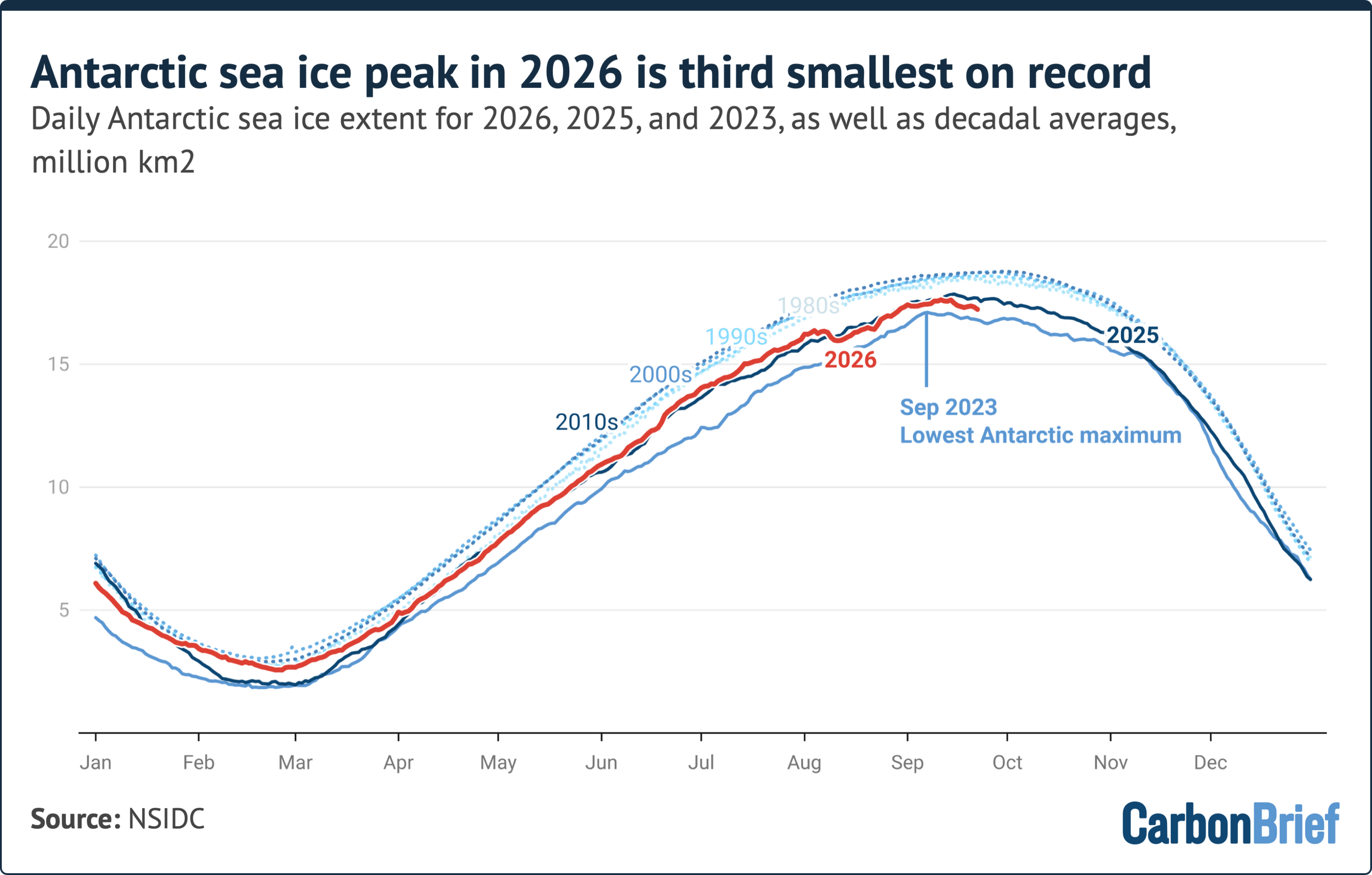
The Earth’s polar regions, which serve as the world’s primary climate regulators, are exhibiting signs of profound and potentially irreversible instability. New data from the US National Snow and Ice Data Center (NSIDC) reveals that Antarctic sea ice reached its annual winter maximum on September 14, 2026, at a meager 17.59 million square kilometers (km²). This figure marks the third-smallest winter peak since satellite monitoring began 48 years ago, raising urgent questions among the scientific community regarding the resilience of the Southern Ocean’s cryosphere.
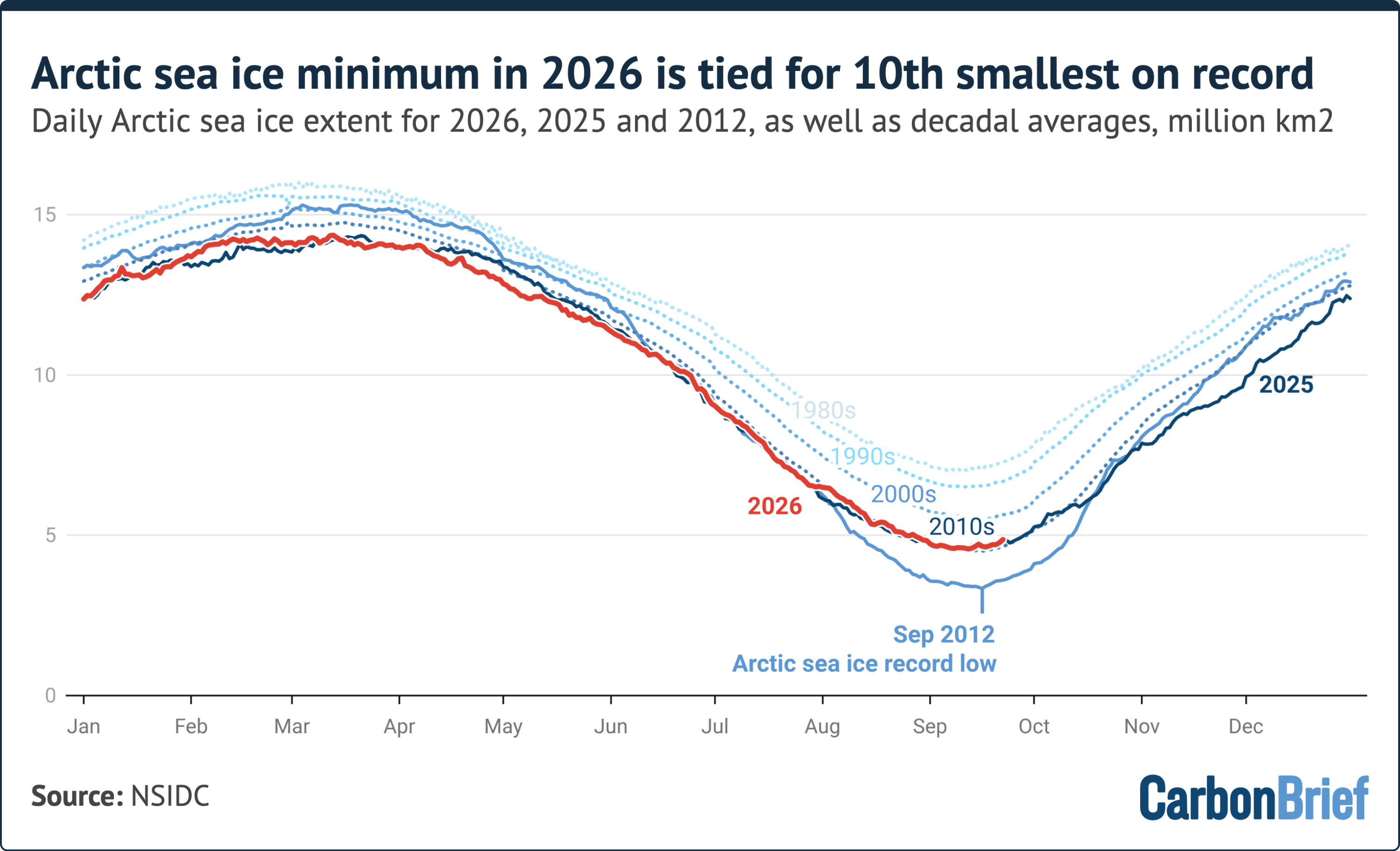
Simultaneously, at the northern pole, Arctic sea ice hit its annual minimum on September 12, covering only 4.60 million km². This ties with 2025, 2010, and 2008 for the 10th-lowest summer minimum on record. While these figures may fluctuate due to regional weather patterns, the broader trend remains clear: the last 20 years have accounted for the 20 lowest Arctic sea ice extents ever recorded, underscoring a consistent, long-term decline driven by human-induced climate change.
The Shrinking South: A Structural Shift?
Antarctic sea ice has long been characterized by its extreme volatility, with massive seasonal swings between summer minimums and winter maximums. However, the current trend of persistent, low-extent winters has moved beyond typical variability.
Dr. Lettie Roach, a polar climate scientist at the Alfred Wegener Institute (AWI) in Germany, notes that the 2026 winter maximum was "well below average for the season." For decades, Antarctic sea ice remained relatively stable—and even showed modest growth in certain periods—but the recent string of record-low years has shattered that stability.
"After several decades of stable or increasing winter Antarctic sea ice conditions, it is concerning to see these low values persisting," Dr. Roach says. "Compared with the Arctic, it is less clear how recent changes in Antarctic sea ice are attributable to human-caused warming versus natural variability. We need more years of observations to better understand whether this is truly a structural shift."
The concern is echoed by Dr. Clare Eayrs, a postdoctoral researcher at the Korea Polar Research Institute (KOPRI). She points out that the "near-average February minimum" earlier this year offered a brief glimmer of hope, but the region quickly relapsed into a pattern of unusually low coverage. The statistics are stark: all five of the lowest recorded July extents have occurred since 2022, and every one of the four lowest August extents has been recorded since 2023.
A Chronology of Instability: The Growth Season
The path to the 2026 winter maximum was far from uniform, characterized by shifting regional deficits and surpluses driven by atmospheric pressure and wind patterns.
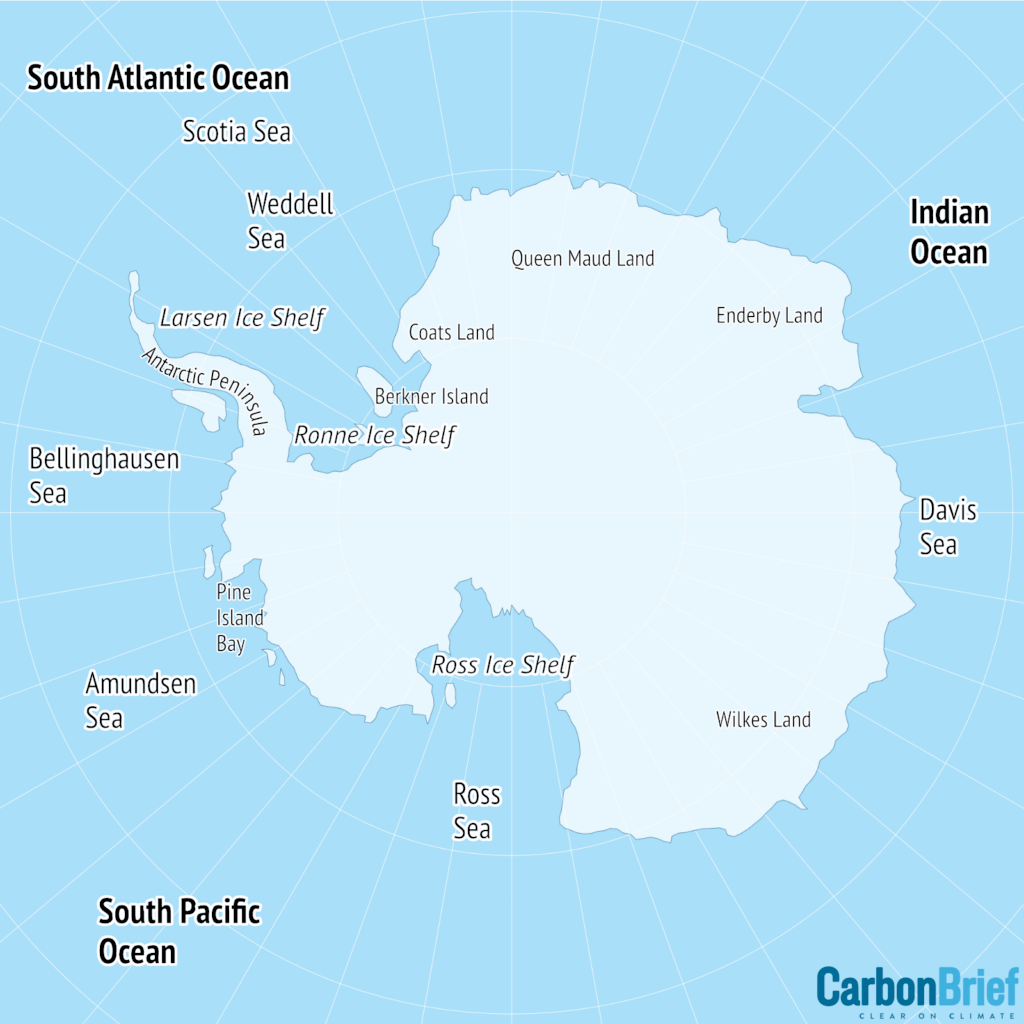
In the early part of the 2026 growth season, the regional distribution of ice was anomalous. During April, the Bellingshausen Sea—a critical sector for ice formation—remained almost entirely ice-free. Conversely, the neighboring Amundsen Sea experienced higher-than-usual ice coverage.
By late August, however, the dynamic reversed. Changes in atmospheric circulation patterns pushed the ice deficit from the Bellingshausen Sea to the Amundsen Sea, while simultaneously causing ice scarcity across much of East Antarctica. This geographic "seesaw" effect highlights the sensitivity of the Southern Ocean to atmospheric pressure anomalies, yet the cumulative result remains a net loss that is becoming increasingly difficult to dismiss as mere noise.
The Arctic Minimum: A Region Fundamentally Changed
While the South struggles with new, downward trends, the Arctic continues its decades-long retreat. At 4.60 million km², the 2026 summer minimum is not a record-breaker in its own right, but Dr. Roach emphasizes that it remains "lower than any sea ice minimum before 2007."
The Arctic is a region that has been fundamentally altered. The loss of multi-year, thick sea ice has left the remaining ice pack vulnerable to even minor fluctuations in summer temperatures. The impact of human-caused climate change is evident in both the reduction of surface area and the thinning of the ice volume.
The PIOMAS Data Gap
A significant hurdle in current research is the loss of critical monitoring tools. Scientists have long relied on the Pan-Arctic Ice Ocean Modeling and Assimilation System (PIOMAS) to track ice thickness. However, in March 2026, the National Oceanic and Atmospheric Administration (NOAA) terminated a key global air pressure dataset, which was the backbone of the PIOMAS model.
The developers of PIOMAS have stated that resuming the series will require "considerable effort and time," and it remains uncertain whether funding and data availability will permit the restoration of these critical updates. This creates a dangerous blind spot in our ability to monitor the thickness of the remaining Arctic ice, which is arguably more important than extent when measuring the overall health of the ice pack.
Expert Analysis: Weather vs. Climate
Dr. Zack Labe, a scientist at Climate Central, cautions against viewing the absence of a new record-low in the Arctic as evidence of "resilience." Instead, he highlights the role of localized weather.
"Local weather patterns across the Arctic play a really important role in year-to-year sea-ice extent, even as the long-term trend is clearly downward," Labe explains.
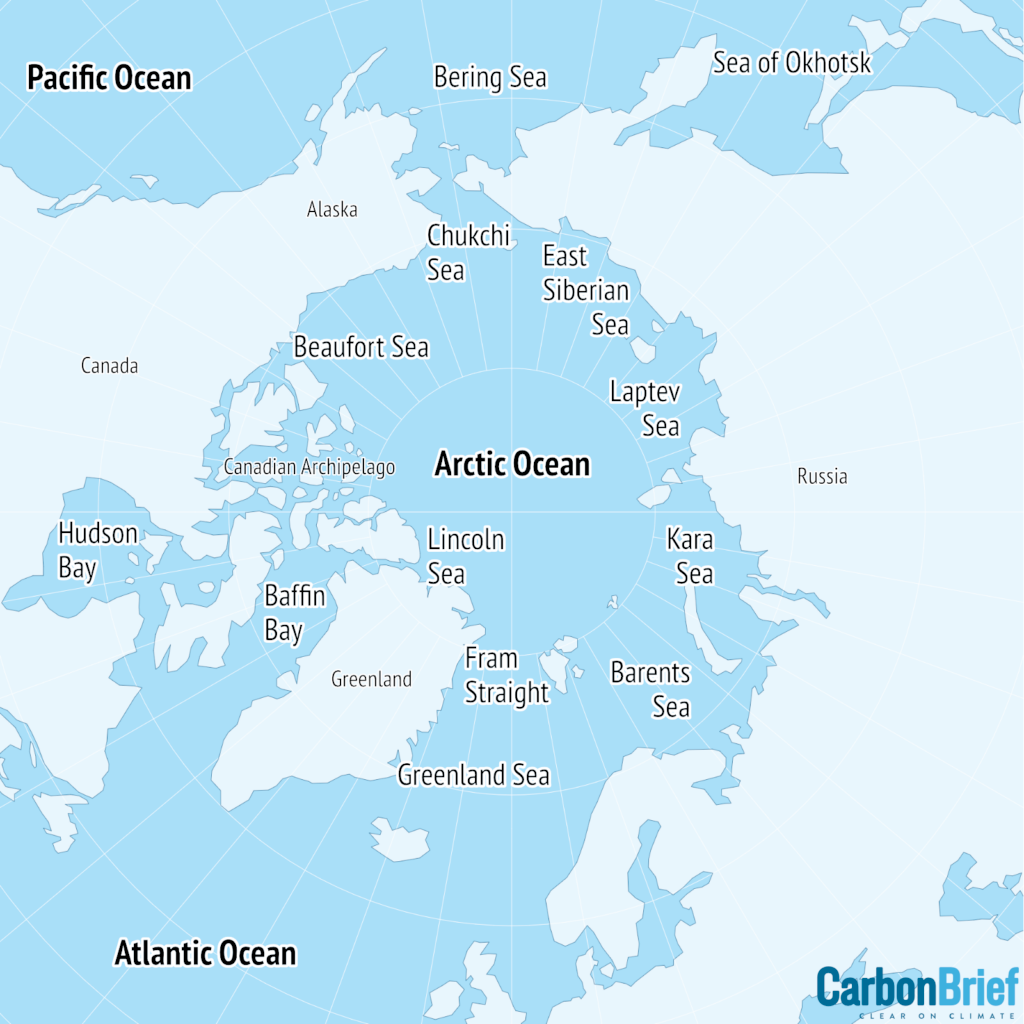
During the 2026 summer, the central Arctic experienced lower-than-average pressure, which brought cool, cloudy weather that limited surface melting. In the Beaufort and Chukchi seas, this delayed the start of the melt season by over two weeks. However, this regional respite was not universal. The Atlantic side of the Arctic experienced an extreme summer; the Barents Sea hit its earliest melt-out on record. This was fueled by persistent heatwaves—with temperatures over 5°C above the 1981–2010 average—which caused substantial ice loss in the Kara Sea.
Implications for the Global Climate System
The simultaneous decline of ice at both poles carries profound implications for the global climate. Sea ice acts as a reflective shield, bouncing incoming solar radiation back into space. As this white cover disappears, it is replaced by dark, heat-absorbent ocean water—a feedback loop known as the "albedo effect" that accelerates local warming.
Furthermore, the loss of sea ice affects ocean currents, marine ecosystems, and global weather patterns. The Antarctic, in particular, has seen a shift that many scientists now view with high levels of concern. If the Southern Ocean is indeed undergoing a structural shift, the rate of sea-level rise and the stability of the Antarctic ice shelves could be impacted far sooner than models previously predicted.

Moving Forward: The Need for Holistic Metrics
The scientific consensus is that we are in a period of unprecedented observation. While satellite imagery provides an excellent "bird’s-eye view" of extent, it does not tell the whole story.
"We need more data and observations of other sea-ice metrics, like ice thickness, which may give us better insight into the overall condition of the ice pack, especially during years like 2026 when it is very fragmented," says Dr. Labe.
As we look toward the next decade, the research community is calling for a more robust integration of air, sea, and ice monitoring. The 2026 figures—while not always hitting new record lows—serve as a testament to a system that is no longer behaving within its historical norms. Whether this represents a new, lower-ice baseline or a temporary fluctuation remains the central question for polar scientists, but the urgency to understand these changes has never been greater.

The poles are the "canaries in the coal mine" for the planetary climate. With the Arctic showing consistent long-term decline and the Antarctic showing an alarming, potentially structural, shift, the evidence suggests that the Earth’s cryosphere is entering a new, less stable era.