
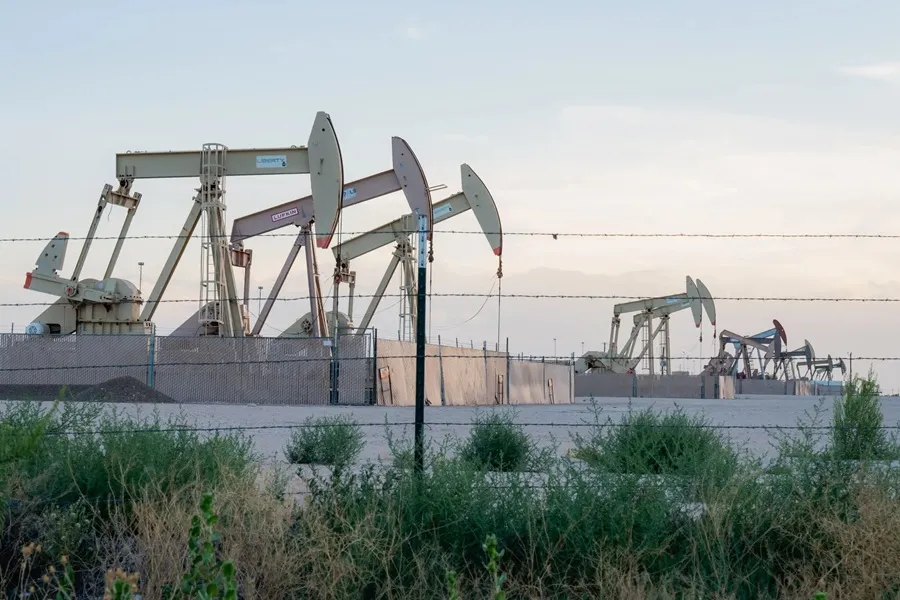
RIYADH/LONDON – October 22, 2026 – Global oil prices surged by more than two percent today, reigniting acute concerns over energy supply disruptions, after a drone attack targeted Saudi Aramco’s critical Shaybah oil field. The incident, which tragically claimed two lives, has been swiftly followed by a directive from the United States for some diplomatic personnel and their families to depart Saudi Arabia, underscoring a rapidly escalating regional security crisis. This Middle Eastern flashpoint coincides with continued uncertainty in global energy markets stemming from a new wave of Ukrainian drone attacks on Russian oil infrastructure this week.
The Brent crude international benchmark soared to $111.40 per barrel, marking a robust 2.4 percent increase, while West Texas Intermediate (WTI), the U.S. benchmark, climbed 2.22 percent to reach $99.30 per barrel. The sudden spike underscores the market’s extreme sensitivity to geopolitical instability, particularly in key oil-producing regions.
The Shaybah Attack: A Catalyst for Concern
The attack on the Shaybah oil field represents a significant escalation in regional hostilities, sending immediate ripples through the global energy landscape. Located in the remote Empty Quarter desert near the border with the United Arab Emirates, Shaybah is one of Saudi Aramco’s most vital and well-protected assets.
Details of the Incident
Early reports indicated that multiple drones struck facilities within the Shaybah complex. While Saudi Aramco quickly initiated emergency response protocols, the attack unfortunately resulted in two fatalities and an unspecified number of injuries. Initial assessments from Saudi authorities suggested that production was not significantly or permanently impacted, with Aramco engineers reportedly working to assess the full extent of the damage and restore any affected operations. However, the psychological impact on market sentiment was immediate and profound. Responsibility for the attack was swiftly claimed by Houthi rebels in Yemen, a frequent perpetrator of such assaults against Saudi infrastructure, though official confirmation and independent verification remain ongoing. The Houthi statement, circulated through their media channels, warned of further attacks should Saudi Arabia not cease its involvement in the Yemen conflict.
Strategic Importance of Shaybah
Shaybah is an integral component of Saudi Arabia’s vast oil infrastructure, known for its high-quality Arabian Extra Light crude. Discovered in 1968, the field began production in 1998 and has since been expanded multiple times. It boasts a production capacity of approximately 1 million barrels per day (bpd) and is accompanied by a gas plant, making it a crucial hub for both oil and natural gas liquids (NGLs) extraction and processing. The remote location of Shaybah, deep within the desert, usually provides a layer of security, making the success of the drone attack particularly alarming and raising questions about the sophistication of the capabilities employed by the assailants. Any disruption, however minor or temporary, to a field of Shaybah’s magnitude has the potential to tighten global supply significantly and immediately impact price benchmarks.
Immediate Market Reaction and Price Surge
The rapid ascent of oil prices today highlights the precarious balance of supply and demand in the global energy market, where even the threat of disruption can trigger significant volatility. The market had previously seen some losses, but the news of the Shaybah attack acted as a powerful corrective, pushing prices sharply upwards.
Brent and WTI Benchmarks
The international Brent crude futures, a benchmark for over two-thirds of the world’s traded oil, saw its price per barrel jump to $111.40. This figure represents a considerable rebound from earlier trading, reflecting heightened risk premiums. Similarly, the U.S. West Texas Intermediate (WTI) crude futures, which typically trades at a discount to Brent due to logistical factors and crude quality, surged to $99.30 per barrel. These price movements indicate a market bracing for potential supply shortages and repricing the geopolitical risk associated with Middle Eastern oil production.
Broader Market Context
The oil market has been on edge for several months, grappling with a complex interplay of factors including robust demand recovery, cautious supply management by OPEC+ nations, and persistent geopolitical flashpoints. Prior to today’s attack, prices had experienced some fluctuations, partly due to concerns over global economic slowdowns in certain regions and the potential for reduced demand. However, the drone strike fundamentally shifted market sentiment, underscoring that supply security remains a paramount concern overriding demand fears. Analysts are now closely watching inventory data and assessing the likelihood of further escalations that could genuinely impact crude export volumes.
A Chronology of Escalation
The Shaybah attack does not occur in isolation but is rather the latest in a series of events contributing to a highly volatile global security landscape, with direct implications for energy markets.

Regional Tensions in the Middle East
The Middle East has been a crucible of geopolitical tension for years, with the conflict in Yemen serving as a primary source of instability impacting Saudi Arabia. Houthi rebels, backed by Iran, have repeatedly targeted Saudi infrastructure, including oil facilities, airports, and urban centers, using drones and ballistic missiles. These attacks are typically framed as retaliation for the Saudi-led coalition’s military intervention in Yemen. The Shaybah attack, however, signifies a potential escalation in the range and sophistication of Houthi capabilities, or a renewed willingness to strike deep within Saudi territory, despite previously intensified Saudi and international efforts to intercept such threats.
U.S. Diplomatic Response
In a stark indicator of mounting concern, the U.S. State Department issued an order for some non-essential government employees and family members to depart its diplomatic missions in Saudi Arabia. While a common precautionary measure in times of heightened security threats, this directive signals a significant escalation in the perceived risk level in the Kingdom. The move follows similar advisories issued in the past and reflects Washington’s apprehension regarding the safety of its citizens amidst the escalating regional volatility. This action, often interpreted as a precursor to broader diplomatic or military responses, further fuels investor anxiety about the potential for wider conflict in the region.
The Ukrainian Front: Echoes of Instability
Adding another layer of complexity and uncertainty to the global energy outlook, Ukraine has launched a series of massive drone attacks targeting Russian oil infrastructure this week. These strikes, reportedly aimed at disrupting Russia’s capacity to fund its war efforts, have hit refineries, oil depots, and other energy facilities deep within Russian territory. While the immediate impact on global oil supply has been limited – as Russia often prioritizes exports over domestic refining capacity – these attacks contribute to a pervasive sense of insecurity in energy markets. They demonstrate the vulnerability of critical energy infrastructure to modern asymmetric warfare tactics and raise questions about the potential for retaliatory actions that could further destabilize global energy flows. The dual threats emanating from the Middle East and Eastern Europe present an unprecedented challenge to global energy security.
Supporting Data and Historical Precedent
The current oil price surge and market anxiety are rooted in the fundamental importance of Saudi Arabia to global energy supplies and historical patterns of geopolitical events dictating market movements.
Saudi Arabia’s Pivotal Role in Global Energy Supply
Saudi Arabia is the world’s largest oil exporter and a pivotal member of OPEC+. Its vast reserves and spare capacity often act as a crucial buffer against global supply shocks. Saudi Aramco, the national oil company, is the world’s largest integrated oil and gas company, playing an unparalleled role in meeting global energy demand. Any perceived threat to its production capabilities, even if quickly mitigated, triggers an immediate and substantial market reaction due to the sheer volume of oil it brings to the market daily. The reliability of Saudi supply is a cornerstone of global energy security, and any challenge to it is treated with utmost gravity by international markets.
The Specter of Supply Disruptions
History is replete with instances where geopolitical events in the Middle East have dramatically impacted oil prices. From the Arab oil embargoes of the 1970s to the Persian Gulf Wars and more recent attacks on Saudi oil facilities (such as the 2019 Abqaiq-Khurais attacks), the region’s stability is inextricably linked to global energy costs. The 2019 attacks, also attributed to Houthi rebels, temporarily halved Saudi Arabia’s oil output, demonstrating the devastating potential of such assaults despite robust defenses. While the Shaybah attack’s immediate impact on production is reportedly less severe, it serves as a potent reminder of this vulnerability and the ever-present risk of substantial, prolonged disruptions.
Economic Ramifications of Surging Prices
Elevated oil prices carry significant economic ramifications globally. They act as a direct inflationary pressure, increasing the cost of transportation, manufacturing, and consumer goods. For energy-importing nations, higher oil prices lead to larger import bills, potentially straining national budgets and impacting trade balances. Businesses face increased operational costs, which can be passed on to consumers or lead to reduced profitability. Central banks, already grappling with inflationary pressures from other sources, may find themselves under renewed pressure to tighten monetary policy, potentially slowing economic growth or even risking recession in vulnerable economies.
Official Responses and International Condemnation
The drone attack on Shaybah has elicited strong reactions from various stakeholders, underscoring the gravity of the incident and the widespread concern over regional stability.
Saudi Arabia’s Stance
The Saudi Arabian government promptly condemned the attack as an act of terrorism and a clear violation of international law. Official statements emphasized the Kingdom’s unwavering commitment to securing its vital infrastructure and ensuring the continuity of global energy supplies. Saudi Aramco released its own statement confirming the incident, detailing immediate response measures, and reassuring markets that operations were being restored rapidly. Saudi officials vowed to investigate the attack thoroughly and hold those responsible accountable, while reiterating calls for international support against such acts of aggression. The Kingdom’s defense ministry is expected to provide further details on enhanced security measures and potential retaliatory actions against the perpetrators.
U.S. Denunciations and Security Posture
The United States swiftly denounced the drone attack, with the State Department issuing a statement condemning the act and reiterating its support for Saudi Arabia’s security. While the evacuation order underscores Washington’s concern for its personnel, it also sends a clear message of heightened vigilance. U.S. officials are likely engaging in high-level diplomatic discussions with Saudi counterparts to assess the threat landscape, coordinate intelligence, and discuss potential responses. The incident places renewed pressure on the Biden administration to balance its strategic interests in the Middle East, including regional stability and oil supply, with its broader human rights agenda and efforts to de-escalate regional conflicts.
International Calls for De-escalation
International bodies and numerous countries have voiced their concerns, calling for de-escalation and respect for international law. The United Nations Secretary-General’s office issued a statement expressing alarm over the attack and urging all parties to exercise maximum restraint to prevent further regional destabilization. Major energy-consuming nations, such as those in the European Union and Asia, have expressed particular anxiety, emphasizing the critical importance of ensuring the free flow of oil from the Middle East to maintain global economic stability. These calls highlight a broad international consensus on the need to protect critical energy infrastructure and avoid actions that could plunge the region into wider conflict.
Far-Reaching Implications
The drone attack on Shaybah, coupled with the broader geopolitical volatility, carries profound implications across geopolitical, economic, and energy security dimensions.
Geopolitical Fallout and Regional Stability
The incident risks further exacerbating the already fragile geopolitical landscape of the Middle East. It could embolden non-state actors, escalate proxy conflicts, and test diplomatic efforts aimed at regional de-escalation. The interplay between the Yemen conflict, Saudi-Iranian tensions, and broader U.S. foreign policy objectives in the region will be subject to renewed scrutiny. The potential for miscalculation or unintended escalation looms large, threatening to destabilize global alliances and force major powers to recalibrate their engagement in the region.
Global Economic Headwinds
Beyond the immediate inflationary pressures, sustained high oil prices could act as a significant drag on global economic growth. Businesses might defer investment, consumer spending could retract, and the cost of living could rise further, disproportionately affecting lower-income households. This economic headwind comes at a time when many economies are still recovering from previous shocks, making them particularly vulnerable to new stressors. Central banks will face difficult choices between combating inflation and supporting economic activity, potentially leading to diverging monetary policies globally.
The Future of Energy Security
The Shaybah attack serves as a stark reminder of the inherent vulnerabilities of centralized energy infrastructure. It will likely intensify discussions on energy security strategies, including diversification of energy sources, investment in renewable technologies, and the strengthening of strategic petroleum reserves. Nations may accelerate efforts to reduce their reliance on volatile regions for energy supplies, potentially boosting investment in domestic production or alternative energy projects. However, the transition to cleaner energy sources is a long-term endeavor, and in the interim, the world remains heavily reliant on fossil fuels from regions prone to geopolitical instability.
Market Outlook and Analyst Perspectives
Energy analysts are now revising their price forecasts upwards, anticipating that geopolitical risk premiums will remain elevated for the foreseeable future. While the immediate impact on production from Shaybah may be contained, the heightened risk of future, more impactful attacks will likely keep prices buoyant. Some analysts suggest that oil could sustainably breach the $120 mark if tensions continue to escalate, potentially even reaching higher thresholds in the event of a significant, prolonged supply disruption. Investors will be closely monitoring geopolitical developments, OPEC+ decisions, and global economic indicators to navigate this increasingly complex and uncertain market environment.
The drone attack on Saudi Aramco’s Shaybah field, against a backdrop of wider geopolitical unrest, underscores the enduring fragility of global energy security. As the world grapples with both immediate market volatility and the longer-term implications of these escalating tensions, the imperative for de-escalation and robust international cooperation has never been more critical.