The backbone of the North American supply chain is currently under immense strain as Mexican trucking organizations and federal officials have entered a high-stakes negotiation phase following a massive, nationwide strike. The protests, which mobilized hundreds of vehicles across 19 states, have brought into sharp focus the deteriorating security environment for commercial drivers and the mounting operational costs threatening the viability of cross-border trade.
As the Interior Ministry (Segob) opens the floor for dialogue, industry leaders and global supply chain experts are questioning whether these talks will yield substantive reforms or merely offer a temporary reprieve from a crisis that has become a permanent feature of doing business in Mexico.
The Genesis of the Crisis: Security and Sustainability
The nationwide strike, which launched on Monday, was not an impulsive act but the culmination of years of frustration. Mexican freight operators, led by major organizations including the National Chamber of Freight Transport (CANACAR), the Honorable Mexican Alliance of Transport Organizations (AMOTAC), and the Mexican-American Federation of Transporters (FEMATRAC), have reached a breaking point.
Their demands are multifaceted, rooted in the visceral reality of daily operations on Mexican highways:
- Violent Cargo Theft: The frequency and intensity of armed robberies have surged, leaving drivers fearful for their lives and companies grappling with skyrocketing insurance premiums.
- Extortion: Beyond criminal elements, operators frequently cite systemic corruption and extortion at various regulatory checkpoints.
- Rising Operating Costs: Inflation, volatile fuel prices, and the cost of security measures have compressed profit margins to the point of insolvency for many independent owner-operators and small-to-mid-sized fleets.
These protests were designed to be impossible to ignore. By targeting key logistics arteries, truckers aimed to compel the federal government to move beyond rhetoric and implement tangible highway security protocols.
Chronology of the Disruption
The events of the past 48 hours underscore the organizational capacity of the trucking unions and the vulnerability of Mexico’s logistics infrastructure.
Monday: The Shutdown Begins
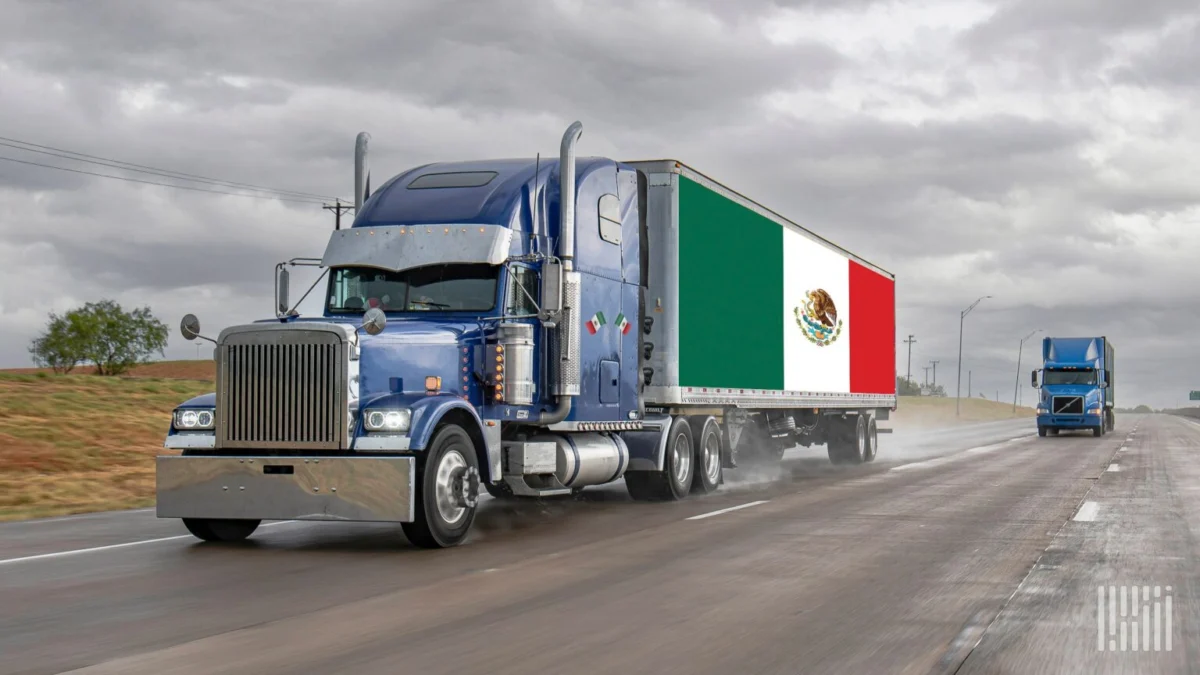
By early Monday morning, the Interior Ministry reported significant disruptions at 38 strategic locations across 19 states. The government’s initial assessment accounted for approximately 691 vehicles and 858 participants. However, industry groups contested these figures, claiming the movement was far more widespread, potentially reaching all 32 Mexican states. The protests utilized a mix of coordinated truck convoys, stationary blockades, and roadside demonstrations, effectively paralyzing freight movement in critical industrial hubs.
Tuesday: The Pivot to Negotiation
Recognizing the economic stakes, the federal government moved to open a formal channel for dialogue. Augusto Ramos Melo (CANACAR), Carlos García Álvarez (AMOTAC), and Lauro Rincón Hernández (FEMATRAC) met with high-level officials from the Interior Ministry. The parties reached a preliminary agreement to establish four high-level working sessions. These sessions are tasked with addressing specific pillars of the industry’s grievances: highway security, infrastructure maintenance, tax incentives for transport companies, and a comprehensive review of existing freight regulations.
The Current State of Play
While a framework for negotiation exists, the situation remains fluid. As of mid-week, organizers had not definitively called for an immediate end to all demonstrations. Many local groups maintained their presence on key highways, signaling that until concrete results are produced, the pressure on the government will remain constant.
Supporting Data: Mapping the Impact
The geographical scope of the protests highlights the critical nature of the affected routes. Significant activity was reported in Nuevo León, Tamaulipas, Veracruz, Guanajuato, Jalisco, and the State of Mexico.
The northern corridors, particularly those surrounding Nuevo Laredo and Reynosa in Tamaulipas, are of paramount importance to the global economy. These routes serve as the primary gateways for the transit of automotive components, manufactured goods, and agricultural products destined for the U.S. market. Any delay in these regions creates a "bullwhip effect," where a minor delay at a Mexican highway blockade manifests as a production stoppage at an assembly plant in the American Midwest or a stockout at a retail distribution center in Texas.
Government data acknowledges 38 major disruption sites, but the qualitative impact—measured in lost hours, missed shipping windows, and the psychological toll on drivers—far exceeds the raw numbers provided by federal authorities.
Official Responses and Stakeholder Positions
The federal government finds itself in a delicate position. While the Interior Ministry seeks to restore order and ensure the fluidity of the supply chain, it must also address the legitimate security concerns of a sector that is vital to Mexico’s GDP. The commitment to four high-level working sessions is an attempt to institutionalize the complaints of the truckers, moving the debate from the highway shoulder to the conference table.
Conversely, the trucking unions remain skeptical. Their insistence on maintaining "peaceful demonstrations" during the negotiation period serves as a leverage point. They are signaling that the protests are merely "paused," not abandoned. The industry’s leadership is acutely aware that similar promises of reform in the past have failed to yield significant decreases in cargo theft or extortion, fueling a deep-seated distrust of government oversight.
Implications for the North American Supply Chain
The implications of these protests extend far beyond Mexican borders. The recurrence of such events—this being the third major mobilization in roughly a year—is forcing global manufacturers to re-evaluate their North American logistics strategies.
The "Cost of Doing Business" Paradigm
Supply chain experts have noted a dangerous shift in the perception of risk. Andrew Rader, managing director at the consulting firm Maine Pointe, noted that when protests occur at this frequency, they cease to be "events" and evolve into a fixed "cost of doing business." For companies relying on just-in-time manufacturing, this creates an untenable environment. The immediate financial burden—expedited shipping costs, idle line charges, and security premiums—is becoming a permanent tax on cross-border trade.
The Strategic Rethink
Perhaps most concerning for the Mexican government is the erosion of the "safe harbor" assumption. For two decades, North American supply chains were designed under the premise that Mexico was a stable, low-cost manufacturing hub. Joseph Esteves, CEO of Maine Pointe, argues that this foundation is no longer solid.
"Products crossing the border in either direction need the math rerun," Esteves stated. Companies are now tasked with recalculating the total landed cost of their goods, factoring in not just the price of labor or logistics, but the rising risk premium of supply chain disruption. If the current instability persists, it could prompt a strategic shift in where firms choose to locate their manufacturing and distribution assets, potentially leading to a decoupling of certain supply chains from the Mexican corridor.
Conclusion: A Path Forward or a Standoff?
The upcoming four working sessions will serve as a bellwether for the future of the Mexican freight industry. If the government can deliver on security—specifically by providing more robust police presence on highways and dismantling criminal extortion networks—it may succeed in stabilizing the sector.
However, if the negotiations stall or fail to produce tangible, verifiable improvements, the trucking industry is poised to escalate its tactics. For the global economy, the message is clear: the era of assuming seamless, low-risk transit through Mexico is over. Stakeholders across the US-Mexico trade corridor must prepare for a future defined by increased volatility, necessitating more resilient, agile, and diversified supply chain designs.
The immediate task for officials and union leaders is to bridge the gap between promises and results, before the next wave of protest does irreparable damage to the industrial heart of North America.