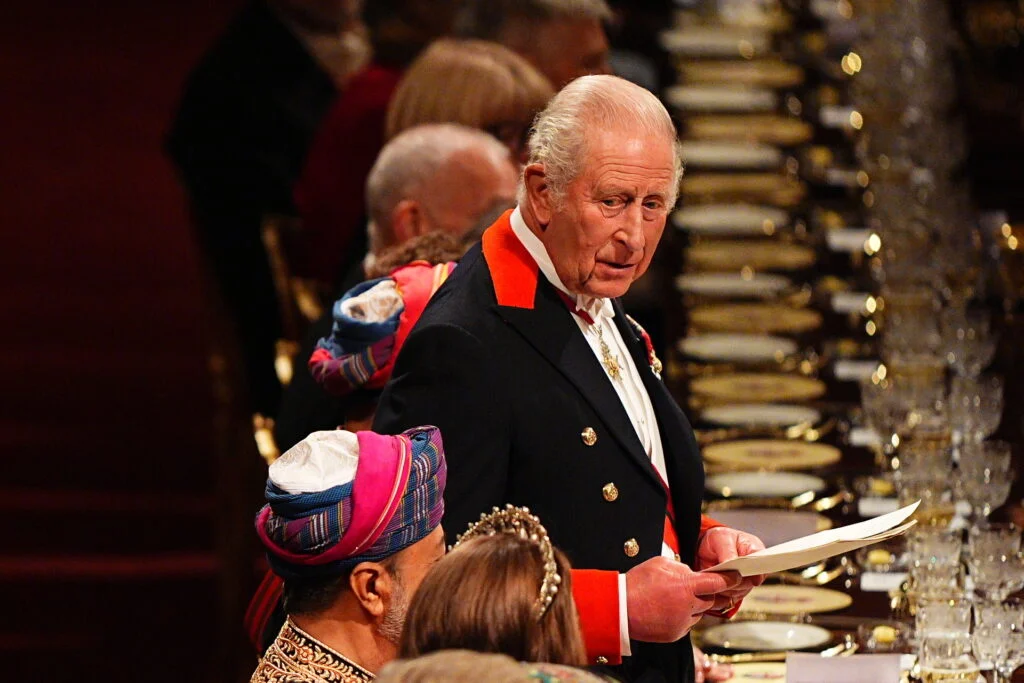
King Charles III departed for the Bahamas today, marking the beginning of a high-stakes diplomatic tour across the Caribbean. The itinerary, which includes stops in Guyana and concludes in Antigua and Barbuda for the biannual Commonwealth Heads of Government Meeting (CHOGM), is set to be one of the most challenging diplomatic assignments of his reign. As the monarch steps onto Caribbean soil, he does so under the shadow of intensifying, historical demands for an official apology and financial reparations for Britain’s central role in the trans-Atlantic trade in enslaved Africans.
The tour represents a pivotal moment for the House of Windsor. While the King has previously displayed a talent for navigating geopolitical friction with charm and wit—most notably during his diplomatic outreach in Washington this past April—the gravity of the reparations debate suggests that humor will no longer suffice as a shield. The Caribbean nations of the Commonwealth are no longer seeking symbolic gestures; they are seeking structural acknowledgement and restorative justice.
The Core Conflict: A Legacy of Enslavement
At the heart of the tension lies the brutal legacy of the 16th through 19th centuries, during which Britain presided over the forced migration and exploitation of millions of Africans. For the Caribbean nations now calling for accountability, this is not merely a historical grievance but an active, ongoing trauma that has stifled economic development and perpetuated systemic inequality.
The Diplomatic Tightrope
The King finds himself in an impossible position: he is personally sympathetic to the narratives of history, having acknowledged the "appalling suffering" of the past during previous visits to the region, yet he is constitutionally bound to the directives of the British government. Downing Street has remained steadfast in its refusal to issue a formal apology. The rationale is as much legal as it is political; British officials fear that an apology would serve as an admission of guilt, potentially opening a "floodgate" of litigation for damages that could reach into the billions of pounds.
Chronology of the Reparations Movement
To understand the pressure facing the King, one must view the current diplomatic tour through the lens of a decades-long movement that has moved from the periphery of international discourse to the center of the Commonwealth agenda.
- 1990s–2000s: The Rise of CARICOM Advocacy: The Caribbean Community (CARICOM) began formalizing its stance, establishing the Reparations Commission to quantify the economic cost of slavery and colonial exploitation.
- 2013: The Ten-Point Plan: CARICOM adopted a comprehensive 10-point plan for reparatory justice, which includes calls for a formal apology, repatriation, indigenous peoples’ development programs, and debt cancellation.
- 2022: The Royal Visit: During the Duke and Duchess of Cambridge’s tour of the Caribbean, they were met with protests and public letters demanding an apology, signaling a shift in public sentiment and a decrease in deference toward the monarchy.
- 2026 (Present): The Summit Crisis: As the Commonwealth gathers in Antigua and Barbuda, the discourse has shifted from "requests for dialogue" to "demands for action." The summit is expected to be the venue for a unified push by Caribbean leaders to force a change in the British government’s stance.
Supporting Data: The Economic Toll of Colonialism
The arguments for reparations are rooted in rigorous economic analysis. Proponents argue that the wealth generated by the British Empire—which fueled the Industrial Revolution—was built directly on the backs of enslaved laborers who received no compensation for their labor.
The "Cost of Underdevelopment"
Economic historians note that the extraction of resources from the Caribbean left these nations with monoculture economies designed for export, lacking the infrastructure for self-sustaining growth.
- Wealth Transfer: Estimates from various academic institutions suggest that the transfer of wealth from the Caribbean to Britain between 1600 and 1830 reached astronomical figures in today’s currency, creating a "development gap" that persists today.
- Socio-Economic Indicators: Many former British colonies in the Caribbean continue to struggle with high debt-to-GDP ratios, exacerbated by the need to invest in social services that were never properly funded during the colonial era.
- The Debt of Slavery: Supporters of the reparation movement point to the 1833 Slavery Abolition Act, which famously compensated slave owners for their "loss of property" while providing nothing to the enslaved people who were freed. This debt, they argue, remains unpaid.
Official Responses: A Tale of Two Narratives
The chasm between the British government and the Caribbean nations is widening. The official narrative from London is one of "looking forward," focusing on modern partnerships, trade, and climate change resilience. Conversely, the narrative from the Caribbean is one of "addressing the root cause," asserting that modern partnerships cannot flourish until the foundational injustices of the past are reconciled.
The British Stance
The U.K. government’s current policy is one of deliberate silence on the matter of formal reparations. Whitehall maintains that:
- Current generations should not be held responsible for the actions of their ancestors.
- Legal precedent makes a formal apology dangerous for the national treasury.
- The Commonwealth should focus on future prosperity rather than historical grievances.
The Caribbean Stance
Caribbean leaders, bolstered by civil society organizations, contend that:
- The Crown and the British state are continuous entities; if the state can claim the benefits of its historical successes, it must also accept the liabilities of its historical crimes.
- Reparations are not merely about cash, but about "restorative justice," including educational programs, cultural heritage support, and debt forgiveness.
- The legitimacy of the Commonwealth as an association of "equals" is undermined if the former imperial center refuses to address its role in the subjugation of its partners.
Implications: An Existential Threat to the Commonwealth
The implications of this diplomatic tour extend far beyond the immediate itinerary of King Charles III. The Commonwealth, once touted as a "family of nations," faces an existential crisis.
The Republican Wave
The trend toward republicanism—exemplified by Barbados’ decision to remove the King as its head of state in 2021—is gaining momentum. Jamaica, the Bahamas, and other nations are actively debating similar constitutional changes. Should the King fail to navigate this tour with a degree of empathy that acknowledges the historical pain of his hosts, he risks accelerating the transition of these nations into republics.
The Future of the Commonwealth
If the Commonwealth is to remain relevant in the 21st century, it must prove that it is more than a vestigial organ of the British Empire. Failure to address the reparations issue at the summit could lead to a fracturing of the organization. Caribbean nations may seek to form stronger regional blocs or look toward other global partners (such as China or the BRICS nations) who are less burdened by the historical baggage of the British colonial past.
The Burden on the Monarch
For King Charles, this is a test of his ability to evolve the monarchy. He has long advocated for environmental sustainability and interfaith dialogue, proving he is a man of his time. However, the reparations issue requires him to be a man of history. He must decide whether to remain a silent figurehead for the British government’s status quo or to act as a bridge-builder who validates the suffering of those his predecessors once ruled.
Conclusion
As the King touches down in the Caribbean, he is not merely visiting Commonwealth member states; he is stepping into a courtroom of history. The demands for reparations are not going away; they are becoming more organized, more articulate, and more influential. Whether the outcome of this tour is a breakthrough in diplomatic relations or a further erosion of the Commonwealth’s unity will depend on the King’s willingness to listen. In a world where historical truth is increasingly inseparable from modern governance, silence is no longer an option. The Commonwealth stands at a crossroads, and the decisions made in the coming days will likely determine whether it survives as a coherent global entity or fades into the history books alongside the empire that birthed it.