Executive Summary: A Cooling Landscape
As the housing sector navigates the early months of 2026, the latest data from Calculated Risk paints a complex picture of a market in flux. With housing starts dipping to an annual rate of 1.246 million in October, industry analysts are closely scrutinizing the intersection of high interest rates, shifting consumer behavior, and the cooling of rental demand.
The most recent insights from the Calculated Risk Real Estate Newsletter reveal a multifaceted slowdown. From the closing of the "Home ATM"—the period where homeowners frequently tapped into home equity to fund consumption—to a notable year-over-year decline in asking rents, the housing market is currently defined by a cautious recalibration rather than the frenetic activity that characterized the post-pandemic years. This report examines the critical data points defining the current housing environment and what they signal for the broader economy.
The Core Data: Housing Starts and Construction Trends
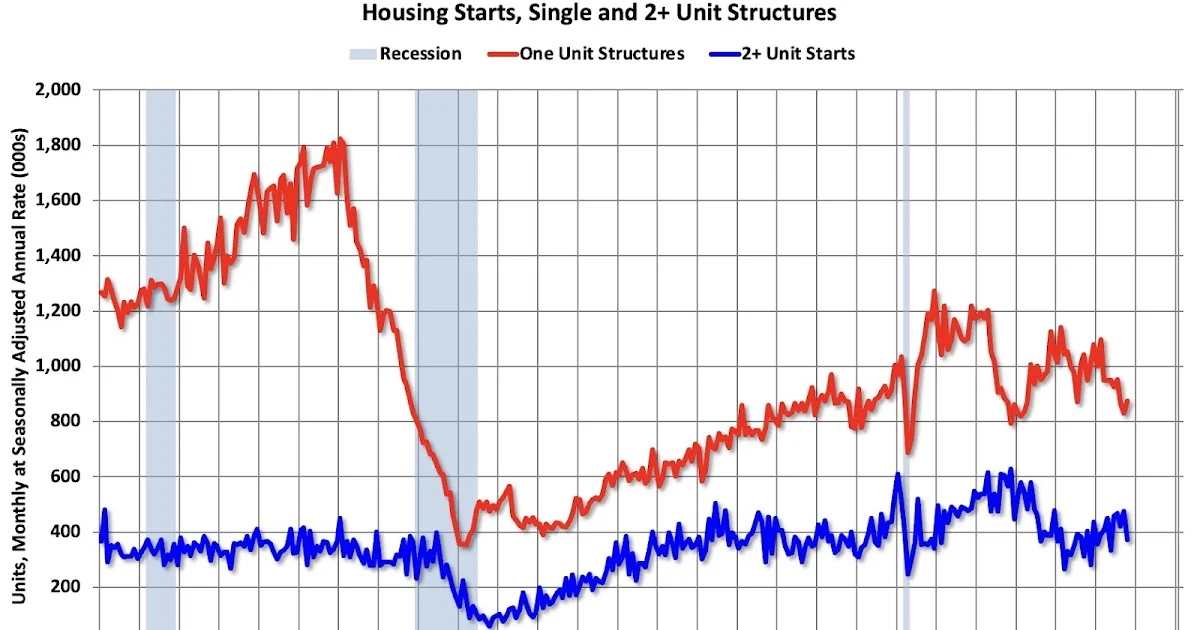
The headline figure—a decrease in housing starts to a 1.246 million annual rate—serves as a primary indicator of developer sentiment and capital availability. Housing starts, which measure the number of new residential construction projects that have begun, are highly sensitive to mortgage rates and the cost of debt for builders.
Understanding the 1.246 Million Rate
Construction projects are the lifeblood of housing supply. When starts fall, it suggests that developers are becoming more risk-averse, likely due to a combination of high financing costs and the uncertainty regarding future demand. While 1.246 million is a significant figure, it represents a cooling from the peaks observed in previous years.
This slowdown is not happening in a vacuum. Developers are balancing the need to satisfy a housing shortage with the reality that potential buyers are sidelined by sustained high mortgage rates. The graph provided by Calculated Risk highlights the divergence between multi-family and single-family housing starts, a distinction that is crucial for understanding how the rental market versus the homeownership market is being addressed.
Chronology of a Market Pivot
To understand where the market stands in January 2026, we must look at the progression of key metrics over the final months of 2025.
- Q3 2025 – The Closing of the Home ATM: Historically, rising home values allowed homeowners to treat their residences like ATMs, utilizing cash-out refinances and home equity lines of credit (HELOCs) to fuel consumer spending. By the third quarter of 2025, data suggested that this practice had largely ceased. This implies that the wealth effect—where homeowners feel richer and thus spend more—has been dampened, contributing to a more restrained consumer economy.
- Late Q4 2025 – Rental Market Deflation: The final quarter of 2025 saw a pivot in the rental sector. After years of record-breaking rent increases, asking rents began to show year-over-year declines. This shift suggests that the supply of new multi-family units, which surged in previous years, is finally catching up to or exceeding demand.
- January 2026 – Assessing the Damage: The release of the October starts data (published in January 2026) confirms that the broader trend of deceleration is entrenched across both new construction and equity extraction behaviors.
Supporting Data: Debt, GDP, and Equity
A critical aspect of the Calculated Risk analysis is the long-term view of housing debt relative to the Gross Domestic Product (GDP). Understanding this ratio is vital for determining the stability of the housing market in the event of an economic downturn.
The Debt-to-GDP Perspective
By tracking mortgage debt as a percentage of GDP, analysts can identify if the housing market is over-leveraged. If debt levels are historically high relative to the size of the economy, the market is more vulnerable to shocks. The current update indicates that while the housing bubble of the mid-2000s left deep scars, the current market dynamics are structurally different. The deleveraging process has been a hallmark of the 2020s, and as of early 2026, the debt levels remain a subject of intense focus to ensure that household balance sheets are not overly exposed to falling property values.
The "Home ATM" Phenomenon
The reliance on home equity as a secondary income stream was a major factor in the consumption patterns of 2021 and 2022. The fact that this has "mostly closed" signifies that the economy is moving toward a more organic, income-based spending model. This is a painful transition for sectors reliant on luxury and discretionary spending, as the "easy money" from home appreciation has evaporated.

Official and Industry Responses: A Climate of Caution
While there is no singular "official" response from the Federal Reserve or the Department of Housing and Urban Development (HUD) regarding the specific January 2026 data points, the broader consensus among economists is one of "watchful waiting."
Industry leaders in homebuilding have noted that while demand remains "stable," it is not "robust." The narrative from major construction firms suggests a focus on smaller, more affordable floor plans to attract the entry-level buyer, who has been disproportionately affected by current mortgage rates. Furthermore, the decline in asking rents has been a welcome relief for policymakers concerned about inflation, as housing costs are a massive component of the Consumer Price Index (CPI).
Implications: What Does This Mean for the Future?
1. The Rental Market Outlook
The year-over-year decline in asking rents is perhaps the most immediate takeaway for the average citizen. As the supply of apartment units continues to hit the market—a byproduct of the construction boom in 2023 and 2024—renters may find themselves with more leverage in 2026. This trend is expected to continue throughout the first half of the year as new projects reach completion.
2. Construction Sector Volatility
The decrease in housing starts to 1.246 million implies that employment in the construction sector may face headwinds. If developers stop breaking ground on new projects, the demand for construction labor, materials, and specialized services will inevitably plateau. This could lead to a localized cooling in the labor market within the housing sector.
3. The End of the Equity-Driven Consumer
The closure of the "Home ATM" has profound implications for the national economy. With less liquidity being pulled out of homes, the aggregate demand for goods and services may slow down. Retailers and service providers who thrived on the excess cash flow of the 2021–2023 era should prepare for a consumer base that is increasingly budget-conscious and reliant on traditional wage growth rather than home equity.
4. Housing Affordability vs. Market Stability
The current environment presents a paradox: housing is becoming less "expensive" in terms of rent growth, yet remains unaffordable for many due to high interest rates. The market is attempting to find a floor where price discovery can occur without a systemic collapse. Analysts remain cautiously optimistic that the current trajectory—a controlled slowing rather than a crash—is the most likely scenario for the remainder of 2026.
Conclusion
The data provided by Calculated Risk as of January 10, 2026, serves as a vital reminder that housing markets do not turn on a dime. The transition from an equity-fueled, high-growth environment to a more conservative, supply-adjusted market is a process that takes years.
While the headline reduction in housing starts may appear concerning to some, it reflects a necessary alignment between supply, demand, and the broader economic reality of high-interest rates. As we look ahead, the interplay between rental market softening, the health of household balance sheets, and the ongoing construction cycle will determine whether the housing sector serves as a drag on the economy or a stabilizing force. Stakeholders, from homebuyers to policymakers, must pay close attention to these indicators, as they will likely dictate the tone of the financial landscape for the remainder of the year.
For those looking for a granular understanding of these shifts, the Calculated Risk newsletter remains an essential resource, offering the in-depth analysis necessary to navigate this complex and evolving sector. As the market moves deeper into 2026, the focus will undoubtedly remain on whether the current cooling trend is a precursor to a wider recovery or a long-term period of stagnation.