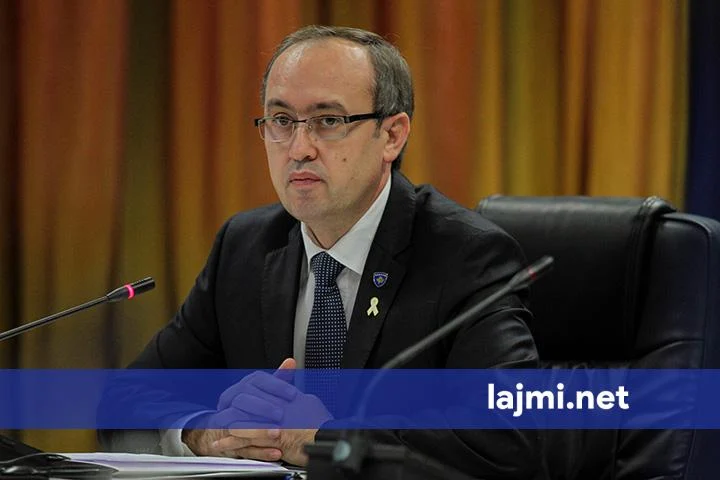
Pristina, Kosovo – [Date of publication, e.g., October 26, 2023] – The delicate balance of press freedom and political discourse in Kosovo has once again been thrust into the spotlight, following a sharp condemnation from Avdullah Hoti, a prominent deputy of the Democratic League of Kosovo (LDK) and former Prime Minister. Hoti publicly denounced what he termed "lynching language" directed at journalist Fidan Jupolli, pointing an accusing finger at Prime Minister Albin Kurti and his ardent followers for fostering an environment hostile to critical voices. The incident has ignited a crucial debate on the boundaries of political criticism, the role of media, and the health of democratic institutions in Kosovo.
In a strongly worded statement, Hoti emphasized that the true measure of a democracy lies in its capacity to respect differing opinions. He asserted that journalists must operate without fear of reprisal or intimidation, free to scrutinize those in power without the looming threat of being publicly "lynched." This incident, according to Hoti, serves as a stark reminder of the challenges confronting independent media in a political landscape often characterized by intense partisanship and fervent loyalties.
The Core of the Controversy: A Challenge to Free Expression
The essence of Hoti’s intervention revolves around the alleged systematic use of aggressive rhetoric, or "lynching language," against critics of the current government, particularly targeting journalist Fidan Jupolli. Hoti’s critique is not merely a defense of an individual journalist but a broader alarm about the potential erosion of democratic norms and the chilling effect such rhetoric can have on the media landscape.
Jupolli, known for his often critical and satirical commentary on political developments and figures, has historically been a vocal observer of Kosovo’s political scene, regardless of who holds power. Hoti drew a direct comparison to his own tenure as Prime Minister, recalling that Jupolli had frequently criticized and satirized his LDK-led government without facing any form of "lynching" or coordinated attacks. This, Hoti argued, underscores a fundamental difference between a democratic mindset that tolerates dissent and an authoritarian one that seeks to silence or discredit it.
"The language of lynching against critics, fanatically promoted by Kurti and his followers, has these days been directed against journalist Fidan Jupolli," Hoti stated. He continued, reflecting on his party’s past: "We were in power, Fidan Jupolli criticized us and satirized us every day, but it never occurred to any of us to lynch him. Because the difference between democracy and the authoritarian mentality lies precisely in the way we treat those who disagree with us."
Hoti’s remarks serve as a poignant reminder that democratic governance, by its very nature, must be resilient enough to withstand criticism. He stressed that democratic power should embrace scrutiny, and journalists do not require official permission to exercise their fundamental right to free speech. Crucially, he concluded, "Free speech is protected especially when we don’t like what is being said!" This statement encapsulates the liberal democratic principle that the protection of uncomfortable or dissenting speech is paramount for a healthy public sphere.
Chronology of Events and Escalating Tensions
The recent controversy surrounding Fidan Jupolli and the subsequent reaction from Avdullah Hoti is not an isolated incident but rather emerges from a persistent pattern of strained relations between the current government and segments of the independent media, particularly those perceived as critical.
Pre-existing Political Climate: Kosovo’s political scene has long been characterized by robust, often confrontational, public discourse. The rise of the Vetëvendosje (VV) movement, led by Albin Kurti, ushered in a new era of political engagement, marked by a strong base of loyal supporters and a fervent ideological commitment. While this energy has been praised for mobilizing citizens, it has also, at times, led to an "us versus them" mentality, where critics are sometimes viewed not merely as opponents but as obstacles to a greater cause.
Fidan Jupolli’s Consistent Role: Fidan Jupolli has established himself over the years as a sharp, often provocative, voice in Kosovar journalism. His style, blending critical analysis with satire, has made him a recognizable figure. His consistent willingness to challenge authority, regardless of political affiliation, means he has drawn both praise and ire from various political camps at different times. In the period leading up to Hoti’s statement, Jupolli’s reporting or commentary likely touched upon sensitive government policies, decisions, or figures, prompting a reaction from supporters of the ruling party.
The Triggering Incident (Inferred): While the original article does not detail the specific content of Jupolli’s work that provoked the "lynching language," it can be inferred that a recent piece, social media post, or broadcast by Jupolli contained criticism or satire directed at the Kurti government or its leadership. This content, perceived as an attack by fervent government supporters, likely triggered a wave of online harassment, personal insults, attempts to discredit his professionalism, or even veiled threats. This digital onslaught, characterized by its intensity and coordinated nature, constitutes what Hoti describes as "lynching language."
Hoti’s Intervention: Observing this escalating pattern of attacks against Jupolli, and perhaps recalling similar incidents targeting other journalists or critics, Avdullah Hoti chose to intervene. His public statement, likely disseminated via social media platforms such as Facebook, served as a direct challenge to the government’s perceived tolerance, or even encouragement, of such rhetoric. By drawing on his own government’s past interactions with Jupolli, Hoti aimed to highlight a perceived regression in the political culture under the current administration. His statement was thus a direct response to what he saw as a dangerous precedent being set for press freedom and democratic values.
The Dynamics of "Lynching Language" and its Dangers
Hoti’s use of the term "lynching language" is deliberate and carries significant weight. It implies more than just robust criticism or disagreement. It refers to a concerted effort to publicly shame, discredit, dehumanize, or incite hatred against an individual, often leading to their professional and social isolation. This type of rhetoric typically manifests through:
- Personal Attacks: Shifting focus from the content of a journalist’s work to their character, motives, or personal life.
- Dehumanization: Portraying journalists or critics as enemies of the state, traitors, or agents of foreign powers, thereby justifying hostility against them.
- Incitement of Public Anger: Mobilizing a base of supporters to flood a journalist’s platforms with negative comments, threats, or disinformation.
- Discrediting Professionalism: Baselessly accusing journalists of bias, corruption, or incompetence, aiming to undermine their credibility with the public.
- Online Harassment: Utilizing social media as a weapon, where anonymity or perceived anonymity emboldens individuals to engage in aggressive and abusive behavior.
The dangers of such language are profound. It creates a "chilling effect," where journalists, fearing for their safety, reputation, or even livelihoods, may resort to self-censorship. This stifles investigative journalism, limits the diversity of opinion, and ultimately deprives the public of crucial information and alternative perspectives necessary for informed decision-making. Moreover, it normalizes aggressive behavior in public discourse, making it harder to engage in constructive debate and deepening societal polarization.
Broader Context: Press Freedom in Kosovo and International Scrutiny
Avdullah Hoti’s concerns are not isolated; they resonate with broader anxieties about the state of press freedom in Kosovo, as frequently highlighted by international organizations and local civil society groups. While Kosovo’s Constitution guarantees freedom of expression (Article 40), the practical implementation and protection of this right remain a constant challenge.
International Assessments:
- Reporters Without Borders (RSF): Kosovo’s ranking in the RSF World Press Freedom Index, while generally respectable compared to some regional neighbors, often points to persistent challenges. Reports frequently highlight political pressure on public media, lack of transparency in media ownership, and online harassment of journalists as areas of concern. The index emphasizes that verbal attacks from political leaders contribute significantly to a hostile environment for journalists.
- Freedom House: Similar concerns are echoed in Freedom House’s "Nations in Transit" reports, which analyze democratic progress in post-communist countries. These reports often note that while legal frameworks for press freedom exist, political interference, economic pressures, and verbal attacks from officials can undermine journalistic independence and encourage self-censorship.
- European Commission Progress Reports: As a country aspiring for EU membership, Kosovo’s progress in upholding fundamental rights, including press freedom, is meticulously monitored by the European Commission. These annual reports consistently urge Kosovo to ensure a safe and enabling environment for journalists, free from political pressure and intimidation. Incidents involving "lynching language" or targeted harassment directly contradict the spirit of these recommendations.
Challenges Faced by Journalists in Kosovo:
- Political Pressure: Journalists often face overt and subtle pressure from political actors, including direct calls, public statements, and the withholding of information.
- Economic Vulnerability: Many media outlets and individual journalists operate with limited financial resources, making them susceptible to political or business interests that might offer funding in exchange for favorable coverage or silence.
- Online Harassment and Threats: The digital space has become a significant battleground. Journalists, particularly women, are frequently subjected to severe online abuse, including misogynistic attacks, threats of violence, and doxing (publishing private information).
- Lack of Transparency in Media Ownership: Opaque ownership structures can obscure conflicts of interest and make it difficult to ascertain the true influences behind certain media narratives.
- Self-Censorship: Fear of economic repercussions, legal battles, or physical harm can lead journalists to avoid sensitive topics or critical reporting on powerful figures.
The incident with Fidan Jupolli, as highlighted by Hoti, fits into this broader pattern of challenges. When political leaders, or their devoted followers, resort to aggressive tactics to counter criticism, it sends a dangerous signal throughout the media landscape, potentially normalizing such behavior and further eroding the space for independent journalism.
Official Responses and the Imperative for Leadership
Following Avdullah Hoti’s direct accusation, the absence of an immediate, direct, and comprehensive official response from the Prime Minister’s office or the Vetëvendosje party regarding the specific allegations of "lynching language" directed at Fidan Jupolli is notable. While governments often issue general statements affirming their commitment to press freedom, a specific acknowledgment and condemnation of targeted harassment against a journalist is crucial in such situations.
Typical Government Stance (General): The Kurti government, like any democratic administration, generally articulates a commitment to democratic values, including freedom of speech and press. They would likely argue that they uphold these principles and that their actions are always within legal bounds. They might also differentiate between legitimate criticism and what they perceive as politically motivated attacks or misinformation.
The Need for Specific Condemnation: However, the particular nature of Hoti’s criticism calls for more than a generic defense. When an opposition leader explicitly points to a pattern of "lynching language" from the ruling party and its supporters, and when a journalist is specifically named as a target, a responsible government would ideally:
- Condemn all forms of harassment and threats against journalists, unequivocally.
- Affirm the right of journalists to criticize the government without fear.
- Call upon their own supporters to engage in respectful discourse, even when disagreeing with media reports.
- Investigate any credible threats or acts of intimidation.
A lack of such a specific and forceful condemnation can be interpreted as tacit approval or, at best, a disregard for the severity of the issue. It can also embolden those engaging in aggressive rhetoric, reinforcing the idea that such behavior is acceptable or even encouraged.
The Role of Civil Society: In the absence of a strong official response, civil society organizations, media associations (like the Association of Journalists of Kosovo, AJK), and the Ombudsman’s office typically step in to fill the void. These organizations play a vital role in monitoring press freedom violations, advocating for journalists’ rights, and publicly condemning attacks, thereby putting pressure on political actors to uphold democratic standards.
Ultimately, the onus lies on political leadership to set the tone for public discourse. Leaders have a moral and political responsibility to foster an environment where debate is robust but respectful, and where critical voices are seen as an essential component of democracy, not as enemies to be silenced or "lynched."
Implications for Kosovo’s Democratic Future
The incident highlighted by Avdullah Hoti carries significant implications for Kosovo’s democratic trajectory and its standing on the international stage.
Erosion of Public Trust: When journalists are subjected to "lynching language" and political figures are perceived as condoning or even instigating such attacks, it inevitably erodes public trust – not only in the media but also in political institutions themselves. A public that distrusts its news sources and believes its leaders are silencing dissent is a public less equipped to make informed decisions and hold power accountable.
Deepening Polarization: The use of aggressive, divisive rhetoric exacerbates political polarization. It fosters an environment where compromise becomes difficult, and opposing views are demonized rather than debated. This "us vs. them" mentality can fracture society and undermine the cohesion necessary for national progress.
International Image and EU Integration: Kosovo’s aspirations for full integration into the European Union are heavily dependent on its adherence to democratic principles, including the rule of law, respect for human rights, and press freedom. Incidents of journalists being targeted with "lynching language" directly contradict the Copenhagen criteria and can significantly harm Kosovo’s international image, making it harder to convince partners of its commitment to European values.
Impact on Future Generations of Journalists: The environment created by such rhetoric can deter young, aspiring journalists from entering the profession, especially if they perceive it as dangerous, thankless, or subject to overwhelming political pressure. This risks a future deficit of critical and independent reporting, further weakening the fourth estate.
The Call for Responsibility: The incident serves as a crucial reminder of the responsibility that rests on the shoulders of political leaders. Their words and actions have a profound impact on the public sphere. Cultivating a culture of respectful debate, even amidst strong disagreements, and unequivocally condemning any form of intimidation against journalists, are fundamental duties of democratic leadership. It is through such actions that Kosovo can truly demonstrate its commitment to a vibrant, pluralistic democracy where free speech is not just a constitutional right but a lived reality.
Conclusion
Avdullah Hoti’s condemnation of the "lynching language" directed at Fidan Jupolli stands as a significant warning about the current state of press freedom and political discourse in Kosovo. His invocation of past experiences and his direct challenge to the current government’s approach underscore a critical juncture for the young democracy. The incident is not merely about a single journalist or a single political figure; it is a litmus test for Kosovo’s commitment to its foundational democratic principles.
Safeguarding press freedom means protecting the right of journalists to scrutinize, criticize, and even satirize those in power, without fear of intimidation or targeted harassment. It means political leaders must actively foster a culture of tolerance for dissent and unequivocally condemn any rhetoric that seeks to silence critical voices. As Kosovo continues its journey towards consolidating its democratic institutions and integrating into the European family, its capacity to uphold and defend the fundamental right to free expression will remain a paramount indicator of its democratic health and maturity. The future of its democracy hinges on its willingness to embrace, rather than suppress, the uncomfortable truths revealed by an independent press.