By Patrick Commins
A significant shift in the Australian retail landscape has sparked a fresh debate over the true cost of consumer transactions. Since the implementation of a landmark Reserve Bank of Australia (RBA)-led reform on October 1, which banned businesses from charging customers specific transaction surcharges for credit card payments, a new economic trend has emerged. According to leading economists at UBS, the policy, intended to bolster transparency and reduce financial friction for shoppers, is being repurposed by merchants as a convenient smokescreen for broader, more substantial price hikes.

The RBA’s original assessment suggested that the abolition of these surcharges would be broadly neutral for the consumer. The central bank anticipated that merchants would simply absorb or incorporate the historical 1.5% average bank fee into their sticker prices, projecting a negligible 0.1 percentage point contribution to national inflation. However, fresh data and market observations suggest that the actual inflationary impact may be double that figure, with analysts now estimating a 0.2% boost to the Consumer Price Index (CPI).
The Mechanics of the "Surcharge Cover"
The phenomenon, which analysts describe as using the ban as "cover," involves businesses masking general cost increases—such as rising wages, fuel, and utility overheads—under the guise of adjusting to the new payment regulations.

UBS economists, in a recent advisory note to clients, highlighted that the RBA’s initial projections represent a "lower bound" estimate. They argue that the current economic environment, characterized by resilient consumer demand and lingering, elevated inflation expectations, has provided a perfect window for retailers to push through larger price increases. Following years of sustained, above-target inflation, consumers have become conditioned to rising costs, making them potentially more accepting of further, subtle price adjustments.
The trend is particularly visible in the hospitality sector. Data from "Small Flat White," an independent online coffee price tracker, reveals that approximately 17% of surveyed cafes have hiked their prices since the October 1 deadline. The average increase recorded is 50 cents per cup. Given the typical price of a standard coffee, this represents an increase of more than 10%—a figure that dwarfs the 1.5% transaction fee that the surcharge ban sought to eliminate.

A Chronology of the Reform
- June 2026: Regulatory bodies and the RBA finalize the framework for the abolition of merchant-applied credit card surcharges, emphasizing the need for greater price transparency at the point of sale.
- September 2026: Retail industry groups express concerns regarding the transition, noting that operational costs were already under pressure due to wage growth and supply chain volatility.
- October 1, 2026: The ban on transaction surcharges officially takes effect. Consumers are promised a "no-hidden-fee" shopping experience.
- Early October 2026: Initial reports from consumer advocacy groups and data trackers begin to flag discrepancies between the removal of surcharges and the concurrent rise in base menu prices.
- Mid-October 2026: UBS economists publish a formal note identifying the "cover" strategy, warning that the policy may be inadvertently fueling the very inflation it aimed to simplify.
Supporting Data and Market Observations
The discrepancy between the cost of processing a payment and the retail price increases being implemented is stark. If a cafe previously charged a 1.5% surcharge on a $5.00 coffee, the added cost was roughly 7.5 cents. An increase of 50 cents represents a markup nearly seven times the value of the removed surcharge.
This behavior suggests a psychological pricing strategy often referred to as "round-up" pricing. In inflationary periods, businesses often feel more empowered to round up prices to the nearest 50 cents or dollar. The removal of the surcharge provides a legitimate regulatory reason to alter prices, and retailers are seizing this opportunity to reset their price points to accommodate broader margin compression caused by non-payment-related expenses, such as energy costs and staff retention.
Official Responses and Economic Debate
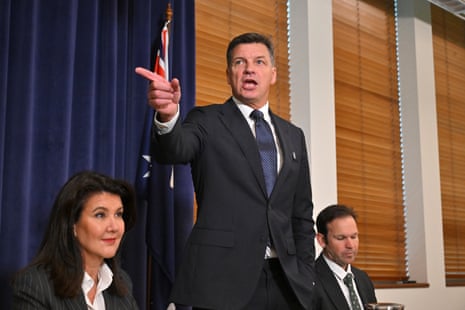
The RBA has yet to formally comment on the specific "cover" claim by UBS, but the debate has already permeated the halls of Parliament. During recent sessions, opposition figures have used the trend to critique the government’s broader economic management.
"If the government intended to lower costs for families, they have fundamentally misunderstood how small businesses respond to regulation," said one opposition spokesperson. "When you force a change in how a business processes its revenue, you don’t just eliminate a fee; you create an administrative and pricing event that, in a high-inflation environment, will always be used to protect the bottom line."
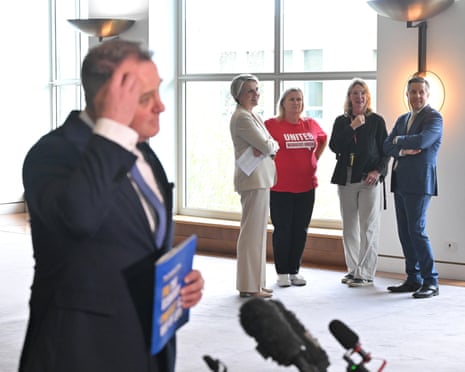
Conversely, government ministers maintain that the reform is a long-term win for transparency. They argue that once the market stabilizes and the "adjustment period" passes, the removal of the confusing, varying surcharges will allow for better price competition between retailers, ultimately benefiting the consumer.
Implications for the Consumer and the Economy
The implications of this trend are multi-faceted:

- Inflationary Stickiness: If businesses use regulatory changes to "reset" prices at higher levels, it contributes to the "stickiness" of inflation. Once prices move up, they rarely return to their previous levels, regardless of whether the original cost pressure (in this case, the surcharge fee) was small or temporary.
- Consumer Sentiment: There is a risk of a "bait-and-switch" perception. If consumers feel that the promise of lower, transparent pricing has been replaced by disguised, larger price increases, trust in regulatory reform could erode. This could lead to more cautious spending habits, potentially softening the "resilient demand" that currently supports the retail sector.
- Monetary Policy Alignment: If the RBA’s forecasts for inflation are consistently met with higher-than-expected price adjustments by the private sector, it may force the central bank to maintain higher interest rates for longer. If businesses are successfully passing on costs to consumers, the "cooling" effect of monetary policy takes longer to manifest in the real economy.
- Small Business Viability: It is important to note that many small businesses are not necessarily "profiteering" in a malicious sense. For many, the surcharge ban arrived at a time when they were already struggling with the cumulative effects of post-pandemic labor shortages and energy price hikes. The "cover" provided by the ban may be a survival mechanism to ensure business continuity in an increasingly expensive operating environment.
Conclusion
The attempt to streamline transaction costs in Australia has highlighted a classic economic lesson: the law of unintended consequences. While the policy was designed with the consumer’s interest at its heart—targeting transparency and fee reduction—the reality of the marketplace is far more complex.
As UBS economists have pointed out, businesses operate within a holistic ecosystem of costs. When one regulatory lever is pulled, the ripple effects are often dictated by the broader economic climate. For now, the "surcharge ban" stands as a case study in how regulatory policy, when introduced into an already strained economy, can be utilized by the private sector to manage wider cost pressures. Whether this leads to a permanent shift in price levels or eventually settles into a more competitive equilibrium remains to be seen. In the interim, Australian consumers are left to navigate a marketplace where the "free" transaction is, in fact, carrying a hidden, inflationary weight.