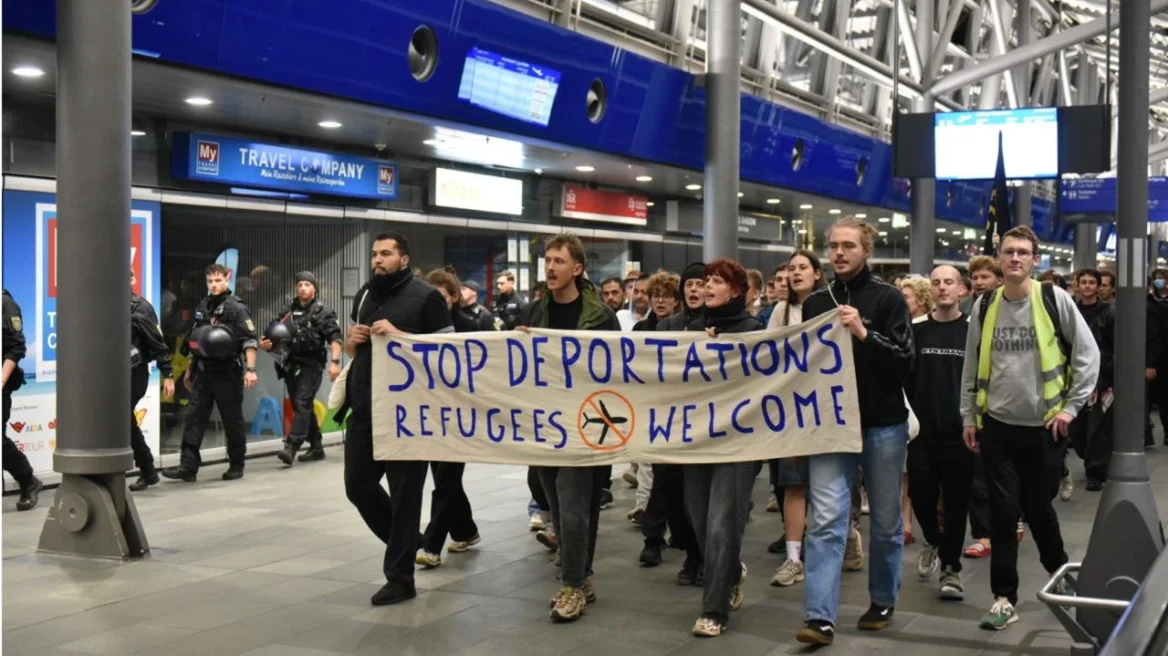
Munich, Germany – October 25, 2026 – Hundreds, and by some estimates thousands, of protestors converged on major German airports and cities this past Saturday, October 25, 2026, to voice their vehement opposition to the government’s increasingly stringent deportation policies. Demonstrations, organized by a broad alliance of human rights groups and migrant advocacy networks, targeted the perceived harshness of the state’s approach to rejected asylum seekers, particularly focusing on the practice of detaining individuals pending removal and the expansion of deportation infrastructure.
The coordinated nationwide actions underscore a deepening societal rift over Germany’s migration strategy, pitting humanitarian concerns against the government’s emphasis on upholding the rule of law and managing national borders. While police estimates placed the total number of participants in the hundreds across various airport locations, organizers claimed several thousand took to the streets, including in cities without major airports, signifying a broader base of dissent.
A Nationwide Outcry: Main Facts of the Demonstrations
The protests unfolded simultaneously across a minimum of six major German airports, effectively transforming key travel hubs into focal points of social and political contention. The largest gathering was reported at Munich Airport, where over 700 individuals, according to police assessments, assembled to protest not only current deportation practices but also a proposed "deportation terminal" that activists fear could cement Bavaria’s capital as a central hub for expulsions. The sentiment was echoed in an Anadolu English tweet, highlighting concerns that Munich could become Germany’s "deportation capital."
Leipzig Airport, a significant cargo and logistics hub, saw approximately 400 protestors. Here, the demonstrations took on a specific focus, targeting special charter flights used for deporting migrants to Afghanistan. This particular aspect drew sharp criticism from activists, who question the safety and stability of Afghanistan as a country of return, despite official assertions that most individuals deported to the nation have committed criminal offenses.
Further demonstrations included approximately 300 participants at Frankfurt Airport, Germany’s busiest, and around 150 at Berlin-Brandenburg (BER). Smaller but equally determined groups of about 50 protestors each gathered at Cologne/Bonn and Düsseldorf airports. Beyond these aviation centers, the organizing alliance confirmed that solidarity protests and related actions also took place in other cities such as Bielefeld and Hanover, demonstrating a widespread, coordinated effort to challenge the government’s stance.
The core demands articulated by the protestors were clear: an immediate halt to the deportation of migrants whose asylum claims have been rejected, a cessation of the practice of detaining individuals solely for the purpose of deportation, and a rejection of any further expansion of facilities or infrastructure dedicated to facilitating expulsions. Slogans and banners carried messages of solidarity with asylum seekers, advocating for humane treatment and the right to stay for those seeking refuge.
The Road to Saturday: A Chronology of Growing Discontent
The October 25th protests did not emerge in a vacuum but rather represent the culmination of escalating tensions and a sustained campaign by civil society organizations against what they perceive as an increasingly harsh and depersonalized approach to migration management in Germany.
Precursors to Protest: Shifting Migration Policies
For years, Germany has grappled with the complex challenges of migration, particularly since the influx of refugees in 2015. While initially lauded for its welcoming culture, the political discourse has gradually shifted towards a more restrictive stance, driven by concerns over integration capacity, security, and public order.
In the period leading up to 2026, the federal government, often pressured by conservative factions and regional governments, had intensified efforts to increase the rate of deportations, particularly for individuals deemed a security risk or those whose asylum applications were definitively rejected and who had exhausted all legal avenues. This push manifested in various ways: more streamlined administrative processes for deportation, increased funding for return programs, and the negotiation of bilateral agreements with countries of origin to facilitate returns. The debate around these policies has been continuous, with human rights groups consistently raising alarms about due process, the conditions in detention facilities, and the safety of return to certain countries.
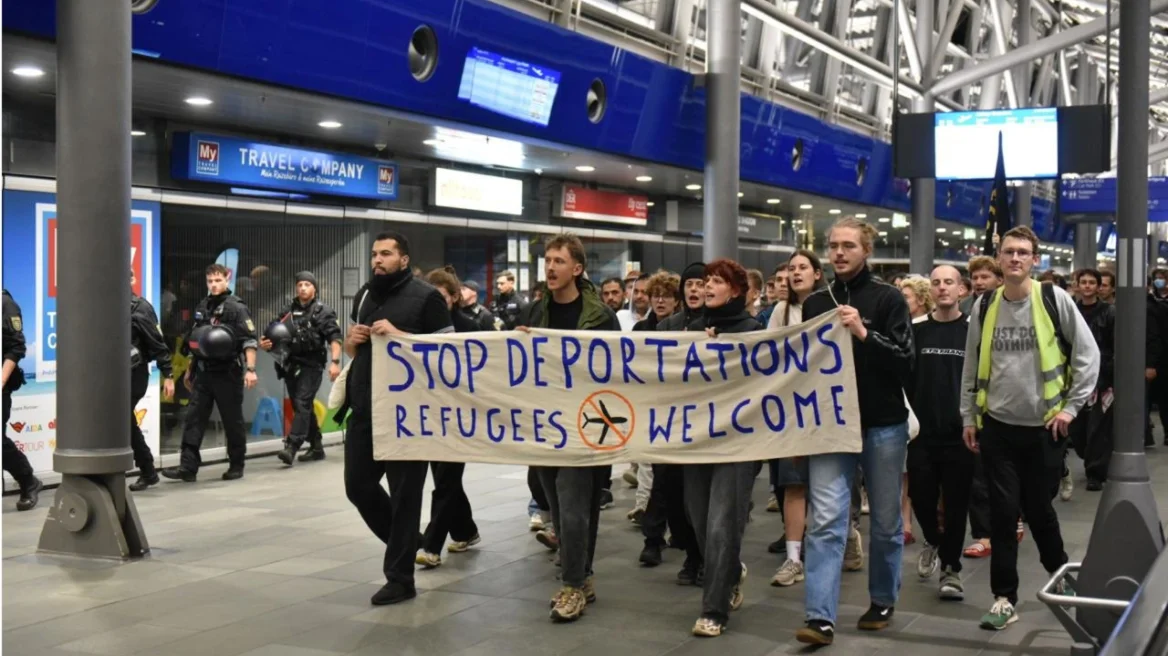
Moreover, plans for dedicated "deportation terminals" or specialized facilities at airports have been contentious topics for several years. The proposal for such a terminal at Munich Airport, specifically mentioned in the Anadolu English report, had already sparked local opposition and became a symbol for activists of the government’s commitment to prioritizing expulsion over integration. This continuous political pressure and the implementation of stricter measures set the stage for the widespread discontent that erupted into Saturday’s coordinated demonstrations.
The Day Unfolds: Coordinated Action Across Germany
The planning for the October 25th protests was meticulous, involving an alliance of various groups including "Pro Asyl," "Seebrücke," local anti-deportation initiatives, and several left-leaning political youth organizations. The choice of airports as protest sites was strategic, aiming to directly confront the operational hubs of deportation flights and maximize visibility.
From early morning, protestors began to gather, often forming vibrant, yet peaceful, assemblies. In Munich, demonstrators carried signs proclaiming "No Human is Illegal" and "Stop Deportation Flights," while chanting slogans calling for solidarity with refugees. The atmosphere was largely peaceful, with local police maintaining a visible presence but reporting no significant clashes. Organizers utilized social media extensively, providing live updates and encouraging broader participation.
In Leipzig, the focus on Afghanistan-bound flights brought a particular intensity to the protest. Activists distributed flyers detailing alleged human rights abuses in Afghanistan and highlighting the risks faced by returnees, directly challenging the government’s narrative that returns to certain regions of the country are safe, especially for those with criminal records. The demonstrations, though disruptive to some extent due to their presence near airport perimeters, were primarily designed to raise awareness and exert moral pressure rather than cause widespread operational paralysis.
The consistent message across all locations was a demand for a more humane and rights-based asylum policy, urging the government to reconsider its approach and prioritize the dignity and safety of individuals seeking protection.
Beneath the Surface: Supporting Data and Context
The protests illuminate a deeper struggle over Germany’s identity as a welcoming nation versus its responsibilities as a sovereign state. Understanding the context requires delving into the statistics, legal frameworks, and humanitarian arguments surrounding asylum and deportation.
Germany’s Asylum Landscape: Numbers and Policies
Germany remains one of the primary destinations for asylum seekers in Europe. In the hypothetical year preceding 2026, Germany likely processed hundreds of thousands of asylum applications, with a significant proportion ultimately being rejected. According to reports from the Federal Office for Migration and Refugees (BAMF), while many individuals are granted protection, a substantial number receive negative decisions, requiring them to leave the country.
The legal basis for deportation stems from the German Asylum Act (Asylgesetz) and the Residence Act (Aufenthaltsgesetz). Once an asylum application is definitively rejected, and all appeals are exhausted, the individual is legally obliged to leave Germany. If they do not comply voluntarily, authorities can initiate deportation proceedings. The law distinguishes between "Duldung" (tolerated stay), which grants a temporary suspension of deportation, and mandatory departure. The German government emphasizes that deportations are a necessary component of a functioning asylum system, ensuring that only those genuinely in need of protection remain and that the system is not exploited.
However, the actual number of deportations often lags behind the number of individuals legally obliged to leave. Factors such as a lack of valid travel documents, health issues, or non-cooperation from countries of origin can impede returns. This discrepancy often fuels public debate, with some arguing for stricter enforcement and others highlighting the practical and ethical complexities.

The Plight of the Deported: Voices from Advocacy Groups
Human rights organizations and refugee advocacy groups like Pro Asyl consistently highlight the severe challenges faced by individuals subjected to deportation. They argue that:
- Safety Concerns: Return to countries like Afghanistan, even for individuals with criminal records, can expose them to significant risks, including violence, persecution, and lack of basic services. These groups often cite reports from international bodies and their own on-the-ground research contradicting official government assessments of "safe" regions.
- Detention Conditions: The detention of individuals pending deportation is a major point of contention. While legally permissible, activists argue that conditions in some detention centers are inadequate, resembling prisons, and can cause significant psychological distress, especially for vulnerable individuals. They advocate for alternatives to detention, such as community-based support and reporting duties.
- Lack of Due Process: Critics sometimes raise concerns about the speed and fairness of asylum procedures, arguing that insufficient time or resources are allocated for complex cases, leading to erroneous rejections.
- Social and Economic Reintegration: Many individuals slated for deportation have spent years in Germany, building social networks and even acquiring German language skills. Their sudden removal, often to a country they barely remember or have no ties to, poses immense challenges for reintegration, potentially exacerbating humanitarian crises.
The Controversy of ‘Deportation Terminals’
The concept of a dedicated "deportation terminal" or specialized facility, as highlighted by the Munich protest, is particularly contentious. While proponents argue that such facilities streamline the process, ensure security, and provide a clear logistical pathway for returns, opponents view them as symbolic of a dehumanizing approach. They argue that these terminals further institutionalize and normalize the act of expulsion, creating a factory-like process that distances the state from the human impact of its policies. The fear is that such infrastructure signals a long-term commitment to high deportation numbers, rather than a focus on integration or voluntary returns.
Economic and Social Dimensions
The debate also touches upon economic and social dimensions. Deportations incur significant costs, including legal processes, detention, security escorts, and charter flights. Activists often argue that these funds could be better utilized in integration programs for those allowed to stay or in voluntary return support. Conversely, proponents of stricter policies argue that uncontrolled migration places undue strain on public services and social welfare systems, making effective border management and deportation of rejected asylum seekers economically necessary in the long run. The social fabric of Germany is also a key consideration, with ongoing debates about the limits of multiculturalism and the cohesion of society under diverse populations.
Official Stance and Political Reactions
The German government’s response to the protests, while acknowledging the right to peaceful assembly, generally reaffirms its commitment to current migration policies.
Government’s Justification: Upholding the Rule of Law
The Federal Ministry of the Interior, often represented by the Interior Minister, consistently defends the policy of deportations as an indispensable component of a rule-of-law state. Their arguments typically revolve around several key points:
- Credibility of the Asylum System: The government asserts that a credible asylum system must include the consistent return of individuals who do not qualify for protection. Failure to do so would undermine public trust and encourage irregular migration.
- Security Concerns: For individuals deemed a security threat or those convicted of serious crimes, deportation is presented as a necessary measure to protect public safety and maintain order within Germany. This argument was explicitly used in the context of deportations to Afghanistan, where authorities stated that most individuals being returned had criminal records.
- Integration Limits: While emphasizing efforts to integrate those granted asylum, the government also highlights the limits of Germany’s capacity to integrate all who arrive, particularly in areas like housing, education, and the labor market.
- Voluntary Returns: The government often stresses its preference for voluntary returns, offering financial and logistical support to individuals who choose to leave Germany willingly. However, for those who do not comply, forced deportation remains the final option.
Divergent Political Voices
The protests also elicited a spectrum of reactions from Germany’s political landscape:
- Ruling Coalition (e.g., SPD, Greens, FDP): While the Social Democrats (SPD) and Greens, typically more aligned with humanitarian concerns, might express understanding for the protestors’ motivations, they are bound by coalition agreements to uphold the government’s overall policy. They might emphasize the legal framework and the balance between human rights and state responsibility. The Free Democrats (FDP) often lean towards stricter enforcement and efficiency in administrative processes, supporting the current approach to deportations.
- Opposition (e.g., CDU/CSU, AfD, Left Party):
- The conservative CDU/CSU opposition would likely criticize the protests as undermining the rule of law and advocate for even stronger, more efficient deportation mechanisms, often calling for increased efforts to deport those with criminal backgrounds.
- The far-right Alternative for Germany (AfD) would likely use the protests to reinforce their anti-immigration narrative, perhaps portraying protestors as out of touch with mainstream public opinion and advocating for significantly reduced immigration and accelerated deportations.
- The Left Party (Die Linke) would unequivocally support the protestors, calling for an immediate moratorium on all deportations, advocating for broader asylum rights, and criticizing the government’s policies as inhumane and unjust.
Airport Authorities and Local Police Response
Airport authorities generally issued statements reiterating their commitment to maintaining operational integrity and ensuring passenger safety, while acknowledging the right to peaceful protest. Local police forces, responsible for managing the demonstrations, typically reported that the protests were largely peaceful, with minimal disruptions to airport operations, save for increased security presence. Their role was primarily to facilitate the protests while preventing any escalation or unlawful acts.
Looking Ahead: Implications and Future Outlook
The nationwide protests on October 25, 2026, are more than just a fleeting moment of dissent; they carry significant implications for Germany’s ongoing migration debate, its policy trajectory, and its standing within the broader European context.
Potential Policy Shifts and Public Discourse
It is unlikely that a single day of protests, however widespread, will immediately trigger a dramatic overhaul of Germany’s deportation policies. The current government’s stance is often a careful balancing act, influenced by domestic political pressures, security considerations, and European Union frameworks. However, sustained public pressure, particularly from well-organized alliances of civil society groups, can contribute to a gradual shift in public discourse and potentially influence future policy decisions or amendments.

The protests serve as a powerful reminder to policymakers that a significant segment of the population holds deep ethical concerns about the current approach. They force the government to continually justify its actions and engage with the humanitarian dimensions of its policies. In a democratic society, such vocal opposition cannot be entirely ignored, especially as general elections approach. The debate will likely continue to center on finding a humane yet effective way to manage migration flows and integrate newcomers while upholding legal principles.
The Broader European Context
Germany’s migration policies are intrinsically linked to the broader European context. The European Union has been grappling with a common asylum and migration policy for years, with member states often divided on issues of responsibility-sharing, border control, and deportation. Germany, as a major player, influences and is influenced by these EU-level discussions.
The protests in Germany reflect similar debates and social movements across other European countries that are also struggling with the balance between national sovereignty, security, and humanitarian obligations towards migrants and refugees. The push for more efficient deportations is a shared goal for many EU governments, but so is the opposition from human rights advocates. Any significant shift in Germany’s policy could have ripple effects across the EU, either strengthening calls for more humane approaches or reinforcing the trend towards stricter enforcement.
A Continuing Humanitarian Debate
Ultimately, the protests underscore a fundamental and continuing humanitarian debate: how does a wealthy, democratic nation balance its legal right to control its borders and determine who resides within them, with its moral obligations to those seeking safety and a better life? The question of "who gets to stay" is deeply complex, intertwined with international law, human rights conventions, economic realities, and societal values.
The activists behind the October 25th demonstrations believe that Germany’s current deportation regime falls short of its humanitarian responsibilities, particularly when individuals are sent back to precarious situations or when the process itself is deemed inhumane. The government, conversely, maintains that its policies are within legal bounds and necessary for maintaining societal order and the integrity of the asylum system.
As 2026 draws to a close, these protests serve as a stark indicator that the issue of migration and deportation will remain a central, often contentious, topic in German public life. The dialogue between state authority and civil society activism will continue to shape the narrative and potentially the future direction of Germany’s approach to human mobility.