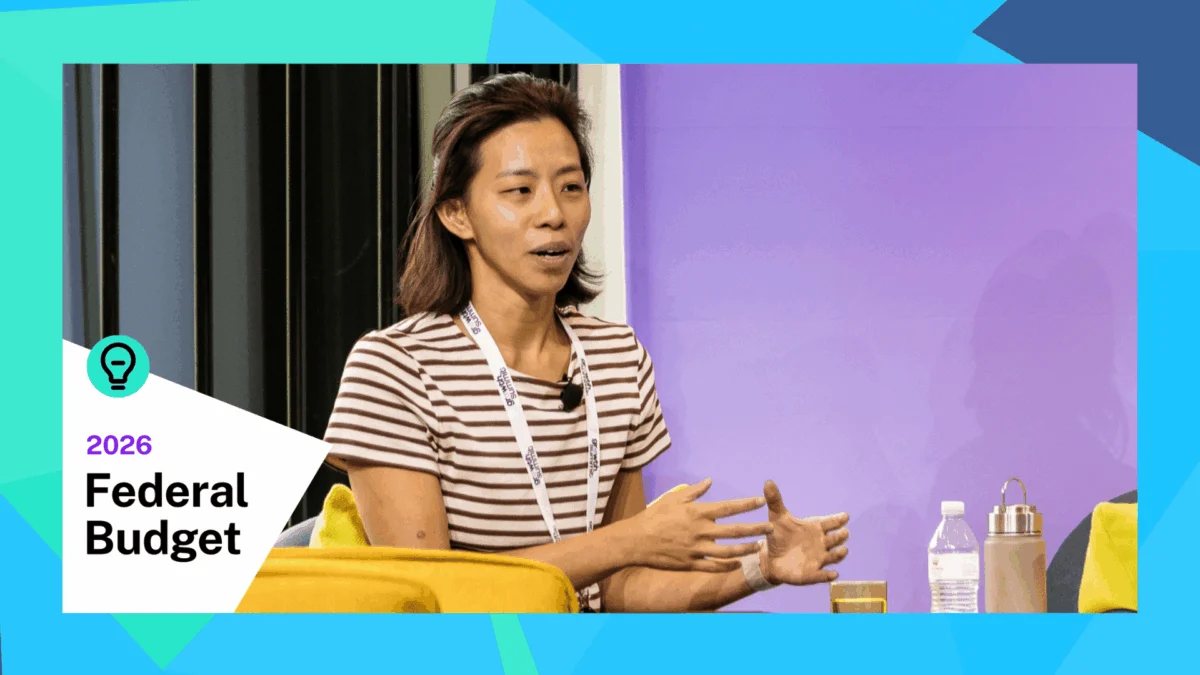

Leila Hormozi is not a typical Silicon Valley darling, nor did she follow the traditional path of a business school prodigy. Today, she stands as the co-founder of Acquisition.com, an empire generating over $250 million in annual revenue. Yet, to understand the precision with which she now scales companies, one must look at the wreckage of her early twenties—a period defined by six arrests in eighteen months, addiction, and a profound, bone-deep sense of aimlessness.
In a candid, wide-ranging interview with Foundr CEO Nathan Chan, Hormozi dismantles the "overnight success" myth. She reveals that the same intensity and capacity for excess that once nearly destroyed her life were the very tools she eventually repurposed to build a business juggernaut. Her journey is not merely a tale of entrepreneurial triumph; it is a masterclass in self-leadership, the radical acceptance of truth, and the ruthless execution required to dominate a market.
The Catalyst: When Pain Outweighs Potential
The trajectory of Hormozi’s life changed on the day of her sixth arrest. She woke up at her father’s home with no recollection of the previous night’s events. Expecting a volatile confrontation, she instead found her father sitting quietly on the couch, the television turned off.
"I’m not going to tell you what to do," he told her. "I just want to tell you that I really think you’re going to kill yourself if you keep doing this."
For Hormozi, this was the pivot point. It was the moment she ceased being a victim of her circumstances and took full, agonizing responsibility for her actions. She recalls looking in the mirror and realizing she no longer wanted to be the person she had become. When asked by Chan why this specific moment triggered change where others hadn’t, Hormozi offers a stark insight into human psychology: "It was at the point where the pain of change was less than the pain of remaining the same."

She didn’t rely on "discipline" in the traditional sense; she relied on the visceral, burning necessity of survival. She purged her life of toxic influences, unhealthy habits, and the environment that enabled her decline, replacing them with the foundational teachings of personal development icons like Tony Robbins and Jim Rohn.
The Crucible: Building the Operator’s Mindset
Following her decision to turn her life around, Hormozi moved across the country to start from scratch. With only $5,000 in her bank account and a rent payment of $1,500, she faced a survival situation that would either break her or forge her into an elite operator.
She became a personal trainer, systematically walking to every gym within reach to secure work. This period of "survival-level" business—managing client rosters from zero, handling sales, and ensuring she could cover basic living expenses—became the bedrock of her professional capability.
"I am such a fanatic about leadership, starting with self-leadership, because you cannot lead others unless you can lead yourself," Hormozi notes. Her early, desperate struggle for professional stability taught her that business is not just about profit; it is a vehicle for personal growth and a mechanism to assist others in improving their lives.
The Partnership: Scaling Gym Launch
When she met Alex Hormozi on Bumble, their connection was as professional as it was personal. On their first date, Alex pitched her on the concept of Gym Launch. Her decision to say "yes" was calculated through a lens of risk mitigation: "The worst-case scenario is I end up right back where I am now… And when else in my life can I do this with very little consequences?"
The early days of Gym Launch were a series of high-stakes disasters. They navigated fraudulent business partners who drained their accounts, merchant processors freezing funds on major holidays, and the pressure of employing friends whose livelihoods depended on a company that was, at times, effectively broke.
Despite the chaos, they scaled from zero to $50 million in revenue in just twenty months. However, this explosive growth brought its own set of challenges, most notably in the realm of company culture.
The Glassdoor Lesson
Hormozi admits that in the early stages, she prioritized "being liked" over "being an effective leader." This led to a catastrophic hiring projection error where they hired 35 people when only five were needed. The resulting layoffs were handled poorly, and the company’s Glassdoor rating plummeted from a 4.9 to a 2.2.
"I had all of the same desire that I do now. I just want to make an amazing place for people to work. I had the desire. I didn’t have the skill," she reflects. The experience forced her to reconcile her empathetic nature with the cold, hard truths of management. She realized that by trying to be "too nice," she was actually being deceptive—avoiding the uncomfortable conversations that her team members needed to grow.
The Philosophy of Execution
Hormozi’s current success at Acquisition.com is built on the belief that most business failures are not due to flawed strategy, but to poor execution.

The Four Pillars of Capacity
According to Hormozi, a business must have excess capacity in four key areas before it can successfully scale:
- Financial Capacity: Capital to weather volatility.
- Personnel Capacity: The right talent to handle the workload.
- Systems Capacity: Processes that ensure repeatability.
- Thinking Capacity: Leadership that is focused and clear-headed.
She argues that founders often focus exclusively on the "offer" and the "money model" while completely underestimating the operational infrastructure required to fulfill those promises. "Most businesses don’t fail because of a bad strategy," she says. "They fail because they have poor execution, and they have nobody to tell them what good execution looks like."
Culture as a Competitive Advantage
Hormozi’s approach to talent is arguably her most distinct differentiator. She treats the "employee experience" with the same level of rigor as the "customer experience." In a market where high-growth companies often burn through staff, Hormozi maintains a large, dedicated people team.
She believes that the founder is the heartbeat of the organization. "I realized that every single thing I did was heard through a megaphone and seen through a microscope by my team. They modeled all of my behavior."
To attract top-tier talent without relying solely on massive compensation, she focuses on "growth" as the primary offering. By positioning her companies as environments where high-performers are pushed to evolve, she attracts individuals who view inflection points as challenges rather than threats.
Implications for the Future
The story of Leila Hormozi is a powerful reminder that professional pedigree is not a prerequisite for massive success. Her rise from community college graduate to a $250 million operator proves that grit, self-awareness, and the ability to pivot under pressure are the true indicators of potential.
For aspiring entrepreneurs, her message is clear: failure is not a bug in the system; it is a feature. The same intensity that leads to massive failure is often the same force that, when harnessed and directed, leads to massive success.
"Do you think we would have had the massive success without the massive failures?" she asks. "No. The same muscle that allows you to succeed at that level and take those risks also means you’re going to fall on your face. It’s a rite of passage."
Ultimately, Leila Hormozi’s legacy is still being written. Her focus has shifted from mere revenue milestones to building a team capable of scaling to the "50 billion" mark. By mastering the art of coaching, prioritizing brutal honesty over comfort, and understanding that the founder is the primary architect of culture, she has cemented her position as one of the most significant operators in the modern business landscape.
As she continues to scale her portfolio, her journey stands as a testament to the idea that no matter how deep the hole, the capacity for transformation is always within reach—provided you are willing to face the truth of who you are, and who you intend to become.