
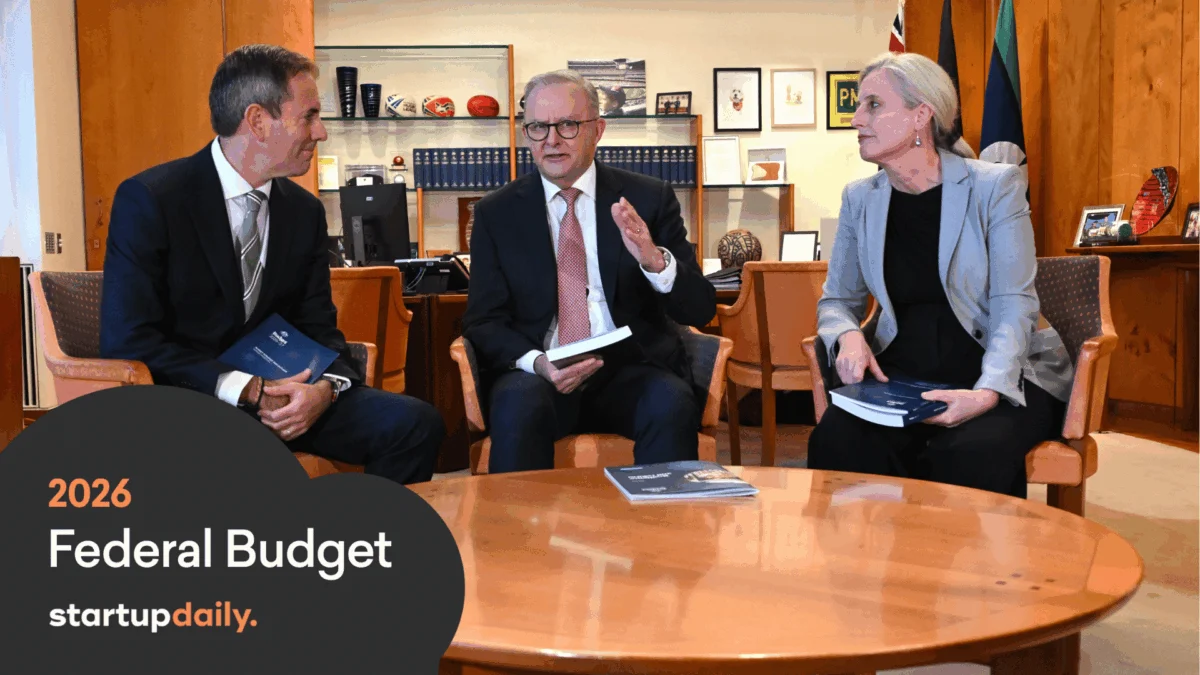
The 2026 federal budget, unveiled this week by Treasurer Jim Chalmers, has arrived as a defining moment for Australia’s burgeoning innovation economy. For a sector that has spent the last decade clamouring for structural stability, the budget represents a significant—if imperfect—victory. While the government has delivered long-awaited reforms to Research and Development (R&D) incentives and venture capital (VC) frameworks, the mood among founders and investors remains one of cautious optimism, heavily tempered by lingering anxieties over proposed capital gains tax (CGT) adjustments.
The Structural Overhaul: A Win for R&D and Venture Capital
The centrepiece of the 2026 budget is a comprehensive suite of reforms designed to cement Australia’s position as a regional hub for technology and artificial intelligence. The government has clearly signalled that it views high-growth startups as the engine room of the national transition to a productivity-led economy.
Key legislative shifts include a significant modernisation of the Research and Development Tax Incentive (RDTI). By refining the eligibility criteria and increasing the intensity of the benefit for R&D-heavy startups, the government aims to encourage longer-term investment in deep-tech projects that were previously deemed too risky or capital-intensive.
Furthermore, the expansion of VC tax settings is designed to unlock stagnant capital. By providing clearer pathways for institutional investors to deploy funds into early-stage ventures, the government is hoping to bridge the "valley of death" that often plagues Australian startups moving from seed to Series A and B funding rounds. Coupled with the permanent extension of the $20,000 instant asset write-off, the budget provides a tangible liquidity boost for smaller hardware-focused startups and tech-enabled businesses looking to scale their infrastructure.
Chronology of the Policy Shift
The road to the 2026 budget has been anything but smooth. Following the "innovation slump" of 2024, industry bodies—including the Tech Council of Australia and various startup advocacy groups—began a concerted lobbying effort in early 2025.
- Q1 2025: Initial roundtable discussions were held between Treasury officials and key venture capital firms. The primary focus was on the erosion of Australia’s competitive advantage relative to the US and Singapore.
- Q3 2025: The government commissioned an independent review into the "productivity gap," which highlighted that domestic investment in innovation had stalled.
- January 2026: Leaks regarding potential CGT changes began to circulate, sparking immediate alarm across the startup sector.
- March–April 2026: A sustained lobbying campaign took place, with founders arguing that changing the tax treatment of equity would discourage the "sweat equity" model upon which the startup ecosystem relies.
- May 11, 2026: Prime Minister Anthony Albanese and Treasurer Jim Chalmers formally presented the budget, confirming both the positive R&D incentives and the contentious CGT proposals.
Supporting Data: The Case for Targeted Incentives
The rationale for these reforms is backed by stark economic data. Recent analysis indicates that for every dollar of government support channelled into R&D, there is a multiplier effect of nearly 3.5x in private sector output over a five-year horizon. However, the data also shows that the "churn rate" of Australian startups remains high, largely due to a lack of follow-on funding.
The new VC tax settings are specifically targeted at increasing the participation of superannuation funds in the venture asset class. Currently, less than 0.5% of Australia’s $3.9 trillion superannuation pool is invested in venture capital. Even a marginal increase—moving this figure to 1%—would inject billions of dollars into the innovation pipeline, potentially creating thousands of high-value jobs.
The $20,000 instant asset write-off, while seemingly small, serves a critical function for "asset-light" startups transitioning into physical manufacturing or robotics. By lowering the tax burden on capital expenditure, the budget lowers the barrier to entry for firms attempting to integrate AI-driven physical systems into their business models.
Official Responses and Political Maneuvering
The reaction from Canberra has been a mix of triumphalism and defensive posturing. Treasurer Jim Chalmers has framed the budget as a "balanced approach," arguing that the government must maintain fiscal discipline while fostering the industries of the future.
"We are building an economy that is built to last," Chalmers noted during his post-budget address. "We have listened to the startup sector, and we have acted on the most critical structural barriers to their growth, specifically in how we treat R&D and venture capital investment."
However, the opposition and some cross-bench members have criticised the government for what they term "tax ambiguity." The primary point of contention is the proposed CGT changes. While the government has framed these as a move towards "tax equity," the startup sector perceives them as a direct threat to the employee share option plan (ESOP) model.
Founders argue that by taxing gains more aggressively, the government is effectively slashing the "startup premium"—the potential for significant equity returns that justifies the high risk of joining a pre-revenue company.
Implications for the Future: Innovation vs. Tax Policy
The long-term implications of this budget are complex. On one hand, the R&D and VC reforms are likely to provide a short-term stimulus to the sector, potentially leading to a surge in new company registrations and increased early-stage investment activity in the latter half of 2026.
However, the looming uncertainty surrounding CGT changes acts as a psychological ceiling on growth. If investors perceive that the government is willing to adjust capital gains settings without a clear long-term strategy for the innovation sector, they may pivot their capital toward more "stable" asset classes, such as real estate or traditional equities.
The ESOP Dilemma
The most pressing implication concerns talent retention. Australian startups rely on the ability to offer equity to attract world-class talent, often when they cannot compete with the cash salaries offered by major multinational corporations. If the tax burden on that equity increases, the value proposition for potential employees vanishes. This could lead to a "brain drain," where top-tier engineering and AI talent migrates to jurisdictions with more favourable tax environments.
The Productivity Mandate
The federal government has staked its reputation on lifting Australia’s flagging productivity. By tying AI adoption and R&D spend to budget incentives, they are betting that the startup sector will be the primary driver of this growth. If the CGT changes are implemented in their current form, it may inadvertently sabotage the government’s own goals by making the risk-reward ratio of startup founding and investing unattractive.
Conclusion: A Delicate Balance
The 2026 federal budget is a testament to the fact that the startup ecosystem has finally reached a level of maturity where its needs are being addressed at the highest levels of government. The reforms to R&D and VC frameworks are a genuine attempt to foster a high-tech, high-productivity nation.
Yet, the tension surrounding CGT remains a critical test of the government’s sincerity. If the administration continues to ignore the sector’s warnings regarding equity taxation, the structural gains made this year risk being negated by a decline in investor confidence and talent mobility. For the startup sector, the next six months will be defined by an intense period of consultation as they attempt to reconcile these new tax realities with their ambitions for growth. As it stands, the 2026 budget is a significant step forward, but one that is walking a precarious tightrope.