By Industry Analysis Desk
Updated: August 10, 2026
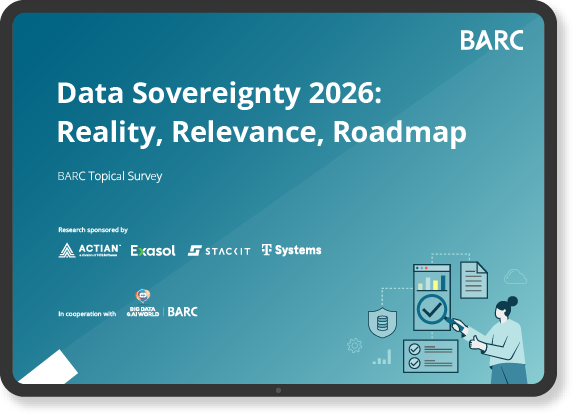
In an era where artificial intelligence and machine learning define the competitive landscape, the management of data has shifted from a back-office administrative chore to the very heart of corporate strategy. According to the latest research from BARC, “Data Sovereignty 2026: Reality, Relevance, Roadmap,” the narrative surrounding data has undergone a tectonic shift. No longer viewed merely as a legal checkbox for GDPR or local regulatory compliance, data sovereignty has matured into a strategic precondition for organizations attempting to deploy AI-driven processes at an acceptable risk profile.
The Core Shift: Why Sovereignty Matters Now More Than Ever
For years, “data sovereignty”—the concept that data is subject to the laws and governance structures of the nation where it is collected—was treated as a hurdle. IT departments viewed it as an obstacle to cloud migration and global data pooling. However, as the 2026 BARC survey of 320 global organizations reveals, that perception has been flipped on its head.
Today, data sovereignty is a competitive asset. Organizations that master the ability to control, secure, and verify the provenance of their data are finding themselves better equipped to train proprietary AI models. By ensuring data is sovereign, companies avoid the "black box" risks of public LLMs, protecting their intellectual property while maintaining the agility required to innovate in highly regulated industries like finance, healthcare, and manufacturing.
Chronology of a Paradigm Shift: From Regulation to Strategy
The evolution of data sovereignty has not happened in a vacuum. It is the result of a multi-year convergence of regulatory pressure, technological maturation, and geopolitical instability.
- 2020–2022: The Compliance Era. The focus was primarily on "data protection." The primary goal was to avoid fines under frameworks like GDPR and to manage the initial rush to public cloud providers. Sovereignty was a defensive strategy.
- 2023–2024: The Geopolitical Awakening. As global tensions rose, supply chain dependencies became a primary concern. The realization that data could be held hostage by foreign jurisdictional changes led many European and Asian firms to prioritize "Digital Autonomy."
- 2025–2026: The AI Integration Phase. With the explosion of Generative AI, the "data-first" approach became the industry standard. Organizations realized that without sovereign, high-quality, and controlled data, their AI investments were fundamentally flawed. Sovereignty became an offensive strategy for building defensible AI moats.
Supporting Data: The 2026 Survey Insights
The BARC survey, which polled 320 organizations worldwide, provides a quantitative backbone to this narrative. The data highlights a distinct divide between "Leaders" and "Laggards."

The "Sovereignty-Performance" Correlation
Organizations that reported high levels of data sovereignty maturity were 40% more likely to report successful AI project deployments. This is not coincidental. When an organization has a clear grasp of its data lineage—knowing exactly where data resides, who has access to it, and how it is being transformed—the path to "Production-Ready AI" becomes significantly shorter.
The Cost of Inaction
The survey indicates that 68% of organizations identified "Data Fragmentation" as their biggest barrier to scaling analytics. By failing to implement a unified sovereignty framework, these companies are effectively trapping their data in silos, preventing the very cross-functional insights that drive modern business intelligence.
Official Perspectives: The Expert View
Timm Grosser, Senior Analyst for Data & Analytics at BARC, emphasizes that the human and organizational components of data sovereignty are often more critical than the technical ones. "It isn’t just about where the server is located," Grosser notes. "It’s about who has the authority to make decisions regarding that data. When you have a clear strategy, the architecture follows. Without it, you are just layering complex technology over a foundation of organizational confusion."

Dr. Carsten Bange, Founder and CEO of BARC, adds context to the broader transformation: "Over the last 25 years, we have seen the shift from basic reporting to advanced predictive analytics. But the current era is different. We are moving toward ‘Trusted Intelligence.’ Data sovereignty is the bedrock of that trust. If a CEO cannot verify the integrity and the jurisdictional safety of the data powering their automated systems, they are betting their company on a house of cards."
Implications: Building the Roadmap for 2027 and Beyond
What does this mean for the enterprise of tomorrow? The implications are three-fold:
1. The Death of the "One-Size-Fits-All" Cloud
The era of blind "cloud-first" strategies is ending. Organizations are moving toward "Sovereign Clouds" and hybrid architectures. The goal is to retain control over the metadata and governance layers, even if the compute power is outsourced to a global provider.
2. The Rise of the "Data Governance Officer" (DGO)
The DGO is rapidly becoming a C-suite role, often reporting directly to the CDO or CIO. This role is no longer just about cleaning databases; it is about managing jurisdictional risk and ensuring that data pipelines meet the ethical and legal standards required for AI training.
3. Investment in Provenance and Metadata
Future competitive advantage will be measured by how well an organization can prove the "pedigree" of its data. As AI regulations begin to mandate the disclosure of training data, companies that have invested in rigorous metadata management will be the only ones capable of complying with these new transparency requirements without incurring massive legal costs.
Conclusion: A Strategic Imperative
The findings of the 2026 survey serve as a wake-up call. Data sovereignty is not a project that can be completed and forgotten. It is a continuous state of operation. For organizations, the path forward is clear: integrate data sovereignty into the core of your digital transformation roadmap.
As we look toward the remainder of the decade, the winners will be those who can successfully navigate the balance between global scale and local control. The organizations that treat their data with the same level of protection and strategic intent as their physical assets are the ones that will define the market in 2027 and beyond.
About the Authors
Timm Grosser
Senior Analyst, Data & Analytics
Timm Grosser specializes in the intersection of data strategy, governance, and management. With a deep focus on the organizational architecture required to support modern analytics, he is a primary voice in helping firms transition from legacy environments to agile, data-driven structures.
Dr. Carsten Bange
Founder and CEO, BARC
A visionary in the data and analytics sector, Dr. Bange has spent two decades guiding global enterprises through the complexities of digital transformation. His expertise in the technological and strategic shifts of the market makes him a key advisor to industry leaders navigating the evolving landscape of AI and data management.

For further reading on this topic and to access the full findings of the "Data Sovereignty 2026" study, visit the BARC Research portal. To stay updated with the latest insights from the world of data and analytics, join over 25,775 professionals in subscribing to the BARC community.