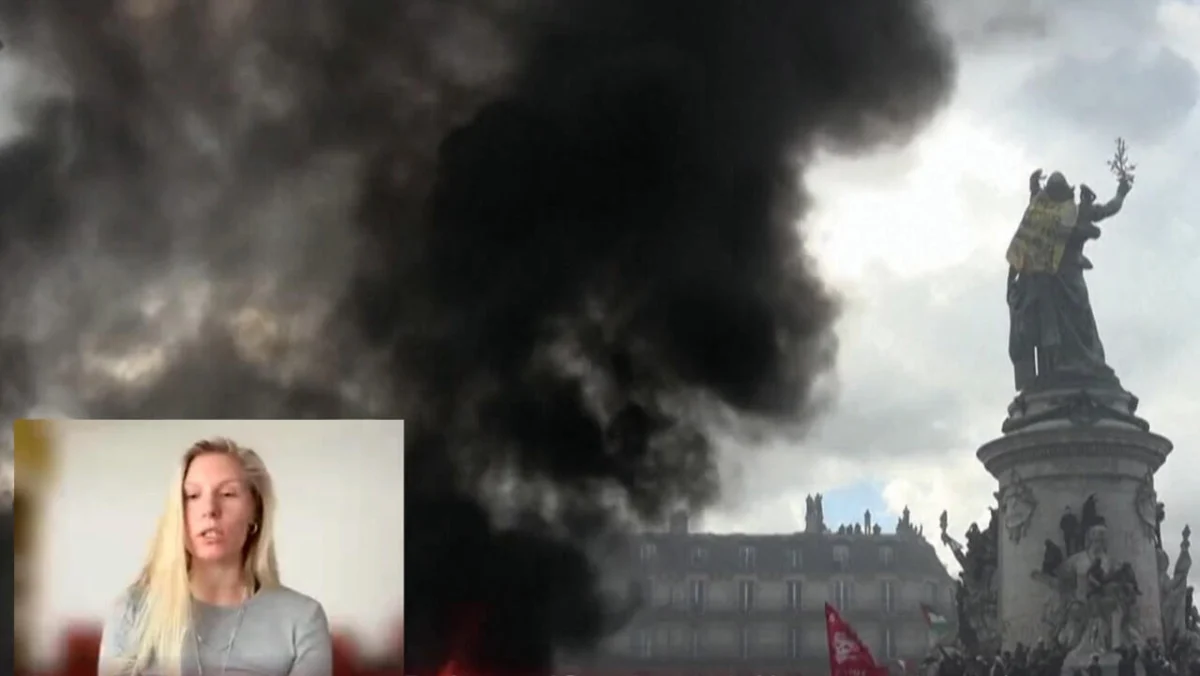
PARIS – As of October 22, 2026, the French Republic finds itself once again at a precarious social crossroads. Major labor unions, student organizations, and grassroots activists have mobilized for a series of nationwide demonstrations, signaling a significant escalation in public discontent. The atmosphere in major urban centers—Paris, Lyon, Marseille, and Bordeaux—is heavy with the anticipation of potential civil disobedience and police intervention, echoing historical movements that have periodically reshaped the French political landscape.
Main Facts: The Catalyst for Dissent
The current wave of protests, scheduled to peak in the coming days, is fueled by a confluence of systemic issues that have left large swaths of the French population feeling disenfranchised. While the grievances are multifaceted, they primarily center on the government’s latest fiscal tightening measures, which critics argue unfairly burden the working and middle classes while offering tax leniency to multinational corporations.
At the heart of the unrest is a controversial legislative package aimed at curbing public spending to address a widening budget deficit. The administration argues that these austerity measures are essential to maintain France’s credit rating and ensure long-term fiscal sustainability within the European Union. However, unions maintain that the measures—which include a restructuring of social security benefits and a shift in retirement age parameters—constitute an assault on the "social contract" that defines the French Republic.
The mobilization is expected to be comprehensive, involving not only the traditional industrial sectors, such as transportation and energy, but also a significant turnout from the healthcare and education sectors. Analysts suggest that the breadth of the mobilization is indicative of a deep-seated frustration with the perceived elitism of the central government.
Chronology of Escalation: From Rhetoric to Resistance
The path to this moment of tension has been paved over several months of deteriorating dialogue between the Élysée Palace and the social partners.
- Mid-August 2026: The Ministry of Economy releases a preliminary draft of the "Fiscal Resilience Act," signaling the intent to reduce public spending by approximately €30 billion over the next two years.
- September 5, 2026: Initial meetings between labor leaders and the government end in a stalemate. The government refuses to walk back the proposed cuts to public services.
- September 20, 2026: The first "warning strikes" occur across the national rail network (SNCF), causing significant disruptions in regional and intercity travel.
- October 10, 2026: A coalition of seven major unions signs a joint manifesto, calling for a "General Day of Action" on October 24.
- October 20, 2026: Interior Ministry officials announce a "high-alert status" for law enforcement, citing intelligence reports suggesting that extremist elements may seek to infiltrate peaceful protests to incite violence.
- October 22, 2026: As of this afternoon, the government has officially rejected an ultimatum from union leaders to delay the vote on the fiscal package, effectively setting the stage for the planned nationwide demonstrations.
Supporting Data: The Economic Context
To understand the intensity of the current protests, one must look at the data underpinning the public’s frustration. According to recent reports from the National Institute of Statistics and Economic Studies (INSEE), the French cost-of-living index has seen a cumulative increase of 14% over the last 30 months, significantly outpacing wage growth for the bottom 60% of income earners.
Furthermore, the unemployment rate, which had seen a period of decline, has begun to stagnate. Youth unemployment, in particular, remains a flashpoint, hovering near 17%. When combined with the rising costs of energy—a sector still reeling from global supply chain shifts—the financial pressure on the average household has reached a breaking point.
Data from recent polling institutes indicates that over 62% of the French population "sympathize" with the protesters’ goals, even if a segment of that group remains concerned about the impact of strikes on public infrastructure. This widespread social sympathy is a critical indicator that the government is losing the "narrative war," making it increasingly difficult for them to frame the protesters as a fringe minority.
Official Responses: The Government’s Dilemma
The official response from the government has been one of resolute, if increasingly isolated, determination. The Prime Minister, in a televised address earlier today, underscored the necessity of the reforms, stating, "We cannot live beyond our means indefinitely. Responsibility demands that we make difficult choices today to ensure the prosperity of our children tomorrow."

The government has adopted a two-pronged strategy:
- Diplomatic Outreach: Attempting to peel off the more moderate labor unions from the broader coalition by offering sector-specific concessions, such as temporary subsidies for public transport workers.
- Security Posture: The Interior Minister has authorized the deployment of the CRS (Compagnies Républicaines de Sécurité) in key protest zones. The government has also reminded the public that while the right to protest is enshrined in the constitution, acts of vandalism or the occupation of public buildings will be met with "zero tolerance."
Critics, however, argue that this "iron fist" approach is counterproductive. Opposition leaders in the National Assembly have accused the executive branch of governing through executive decree rather than parliamentary debate, further eroding democratic trust.
Implications: A Nation at Risk
The implications of the upcoming protests are vast, reaching far beyond the immediate disruption of daily life.
The Political Future
If the government succeeds in pushing through the legislation despite the protests, it may lead to a permanent fracturing of the relationship between the presidency and the unions. Such a rupture would make future policy implementation nearly impossible without constant social conflict. Conversely, if the government is forced to retract its plans, it would signal a significant weakening of the executive’s authority, potentially triggering a cabinet reshuffle or a motion of no confidence.
Economic Consequences
Economically, prolonged strikes will have an immediate impact on GDP growth for the fourth quarter. Foreign investment, which is sensitive to political stability, may be reassessed by international markets. The image of a paralyzed France—with garbage piling up on streets and rail networks halted—is a powerful deterrent for tourism and business travel.
Social Cohesion
Perhaps most concerning is the long-term impact on social cohesion. The divide between the rural "peripheral" France and the metropolitan centers is widening. The current protests are acting as a mirror for these deeper societal fractures. The sense of being "left behind" is not merely an economic sentiment but a cultural one, and the government’s inability to address this existential anxiety is the real crisis behind the headlines.
Conclusion: Looking Ahead
As the nation prepares for the protests, the eyes of Europe are fixed on Paris. France has long been a country where policy is forged not just in the halls of the National Assembly, but on the streets. Whether this week marks the beginning of a genuine negotiation or a descent into prolonged civil strife remains to be seen.
The government remains committed to its fiscal path, but it is clear that the public is equally committed to its right to challenge that path. The coming days will be a testament to the resilience of French democracy. For the citizens of France, the question is no longer just about taxes or retirement ages; it is about the very direction of the country and who gets to define its future. As the clock ticks toward the planned demonstrations, the nation holds its breath, hoping for a peaceful expression of dissent, yet fearing the volatility that has become the hallmark of this turbulent era.