TIRANA, ALBANIA – The heart of Albania’s capital, Tirana, was engulfed in plumes of smoke and the roar of confrontation on Wednesday, as student-led protests against Prime Minister Edi Rama’s government escalated into violent clashes for the second consecutive day. The demonstrations, initially focused on improving university conditions and demanding government reform, devolved into fierce confrontations with law enforcement, attacks on state institutions, and the destructive burning of public and private property. The unrest has left at least 21 people injured, including 14 police officers, and resulted in the detention of 35 individuals.
The Spark of Unrest: From Campuses to the Streets
The protests commenced on Wednesday morning outside the Ministry of Education, where hundreds of students, having boycotted their lectures, gathered to voice their grievances. Their demands centered on tangible improvements within the university system and a clear call for the resignation of the current administration. However, what began as a peaceful assembly quickly transformed into a volatile standoff.
A Night of Fire and Fury: Chaos Grips the Capital
As dusk settled, Tirana’s city center became a battlefield. Firefighters battled blazes that consumed parts of the Ministry of Education and a nearby branch of Iute Credit. The violence, which had been brewing throughout the day, spilled into the surrounding streets, paralyzing traffic and creating a palpable sense of unease.
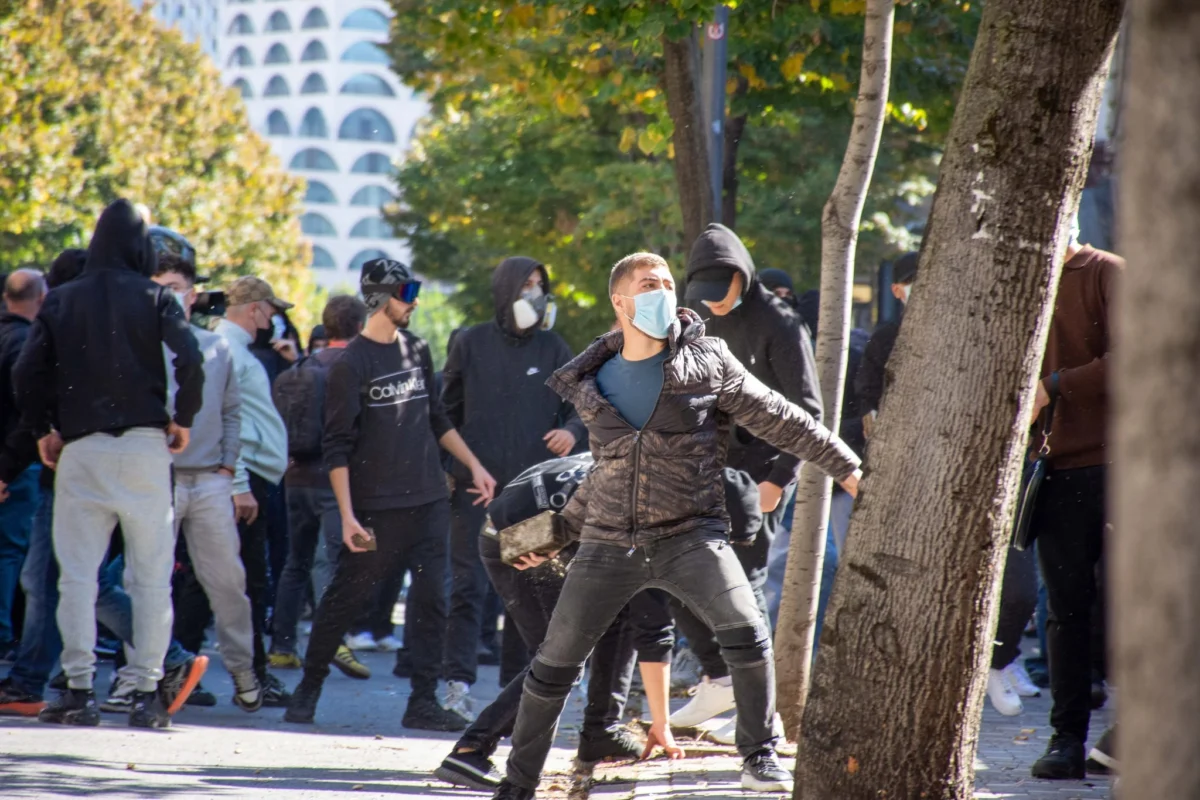
The confrontations intensified as protesters, seemingly determined to express their discontent through forceful means, began to dismantle metal railings, overturn garbage bins, and erect makeshift barricades. This destructive behavior was met with a robust response from the police, who deployed water cannons and tear gas in an attempt to disperse the crowds. However, a segment of the protesters retaliated fiercely, hurling stones, bricks, and other projectiles at law enforcement and government buildings.
The images emerging from the scene were stark: flames licking at the facade of the Ministry of Education, the acrid smell of tear gas hanging in the air, and the constant thrum of emergency sirens. The scale of the destruction underscored the depth of frustration and anger among the demonstrators.
The Human Cost: Injuries and Arrests Mount
The clashes were not without their casualties. Official reports confirm that 21 individuals sustained injuries during the unrest, a figure that includes 14 police officers who were on the front lines of the confrontation. Furthermore, 35 people were apprehended by law enforcement authorities during the extended periods of rioting that gripped the capital’s streets for hours. The full extent of the injuries and the legal ramifications for those detained are still being assessed.
Official Responses: Condemnation and Calls for Dialogue
In the immediate aftermath of the escalating violence, the State Police issued two swift statements, urging participants to distance themselves from masked individuals and acts of violence. They issued a stern warning of criminal prosecution for those responsible, emphasizing that while the right to protest is legally guaranteed, it does not grant impunity for violence, attacks on law enforcement, or the destruction of public and private property. The police also highlighted that the Penal Code prescribes penalties of up to seven years imprisonment for specific offenses related to violence and arson.

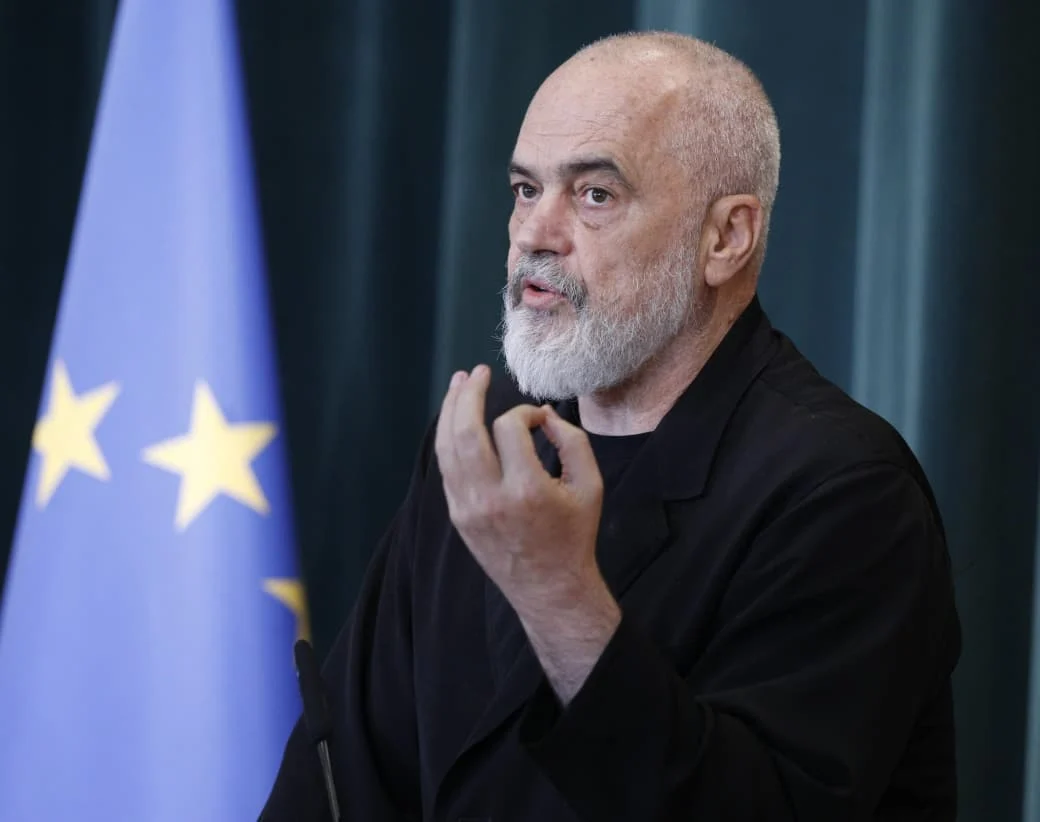
Prime Minister Edi Rama remained publicly silent for the entirety of the two days of intense clashes, despite the protesters escalating their demands for his resignation. According to media reports close to the government, Rama stated during a cabinet meeting on Wednesday that those engaging in violence were not genuine students and called for the grievances and demands of the students to be heard.
The Speaker of Parliament, Niko Peleshi, unequivocally condemned the acts of violence and vandalism, urging protesters to adhere to the law. He stated, "The right to protest is a constitutional right, but it must be exercised in a peaceful and lawful manner." He further asserted, "Any act of violence or vandalism is unacceptable and serves neither dialogue nor the public interest." Peleshi underscored the importance of civic responsibility and dialogue, particularly in the context of Albania’s European Union integration process.
The Minister of Education, Mirela Kumbaro, also denounced the attacks on institutions, while reiterating that the ministry’s doors remained open for dialogue with students. "Student protests and violence against public buildings and property, violence against the workplace of public employees, especially against education employees, are not related to each other!" she declared.
President Bajram Begaj appealed to all parties for restraint and respect for the law, stressing that the right to peaceful protest must be guaranteed, while police interventions should be proportionate. "The right to peaceful protest is a cornerstone of democracy and a state obligation to guarantee it," he said. "But violence cannot be a means of expressing dissatisfaction, nor should the use of force by the police go beyond the limits of law and proportionality," Begaj added.
International Scrutiny and Calls for De-escalation
The escalation of violence also drew reactions from the European Union and the British Embassy in Tirana. Both entities condemned the attacks on institutions and property, while simultaneously expressing concern over allegations of excessive force by the police.
The EU stated, "We are aware of allegations of excessive use of force by the police against protesters and journalists," urging that these cases be investigated with priority. "We expect police actions to be proportionate and respect fundamental rights," the statement continued, calling for a de-escalation of tensions and dialogue between the parties.
The British Embassy echoed a similar sentiment, emphasizing that the right to peaceful protest and freedom of expression are protected by the Albanian Constitution. "The right to protest does not legitimize the use of violence or the damage of public and private property. Likewise, it should not be met with disproportionate police actions," the embassy declared.

A History of Unrest: The "Flamingo Revolution"
The violent clashes of the past two days mark a significant and troubling shift for a protest movement that had, for nearly four months, largely maintained a peaceful demeanor. Known as the "Flamingo Revolution," these demonstrations initially erupted in late May as a response to a controversial tourism project linked to Jared Kushner, the son-in-law of former U.S. President Donald Trump, slated for the protected Zvërnec area on the Adriatic coast.
What began as a localized protest by residents, environmental activists, and civil society organizations gradually broadened into a wider anti-government movement. Students and young people joined, amplifying demands for Rama’s resignation, an end to corruption, and the protection of public assets.
Throughout the summer, protesters regularly marched through the streets of Tirana. The flamingo, a characteristic bird of the Narta lagoon, became the symbol of a movement that united opposition to tourism development in protected areas with widespread dissatisfaction with the government’s performance.
This discontent has been further fueled by a series of corruption investigations involving ministers, members of parliament, and high-ranking officials within the Socialist Party. Allegations of links to organized crime, exposed in judicial dossiers, have intensified the pressure on Rama’s administration, which has been in power since 2013.
Prominent cases include former Deputy Prime Minister Belinda Balluku, who is facing charges for violating equality in tenders, and the socialist mayor of Tirana, Erion Veliaj, who is battling accusations of corruption and money laundering. Both deny the charges leveled against them.
Furthermore, investigations by the Special Prosecution Office (SPAK), bolstered by decrypted communications from the Sky ECC application, have revealed connections between political figures and members of criminal groups. One notable case involves former socialist MP Jurgis Çyrbja, convicted for electoral corruption, aiding crime, and revealing state secrets.
These ongoing issues have exacerbated the political pressure on Prime Minister Rama, with protesters accusing the socialist majority of widespread corruption, clientelism, and ties to organized crime. The recent eruption of violence raises serious questions about the future trajectory of these protests and the potential for a peaceful resolution to the deeply entrenched political and social grievances in Albania. The events of the past few days have undeniably cast a shadow over the nation’s political landscape, prompting urgent calls for de-escalation, accountability, and a return to constructive dialogue.