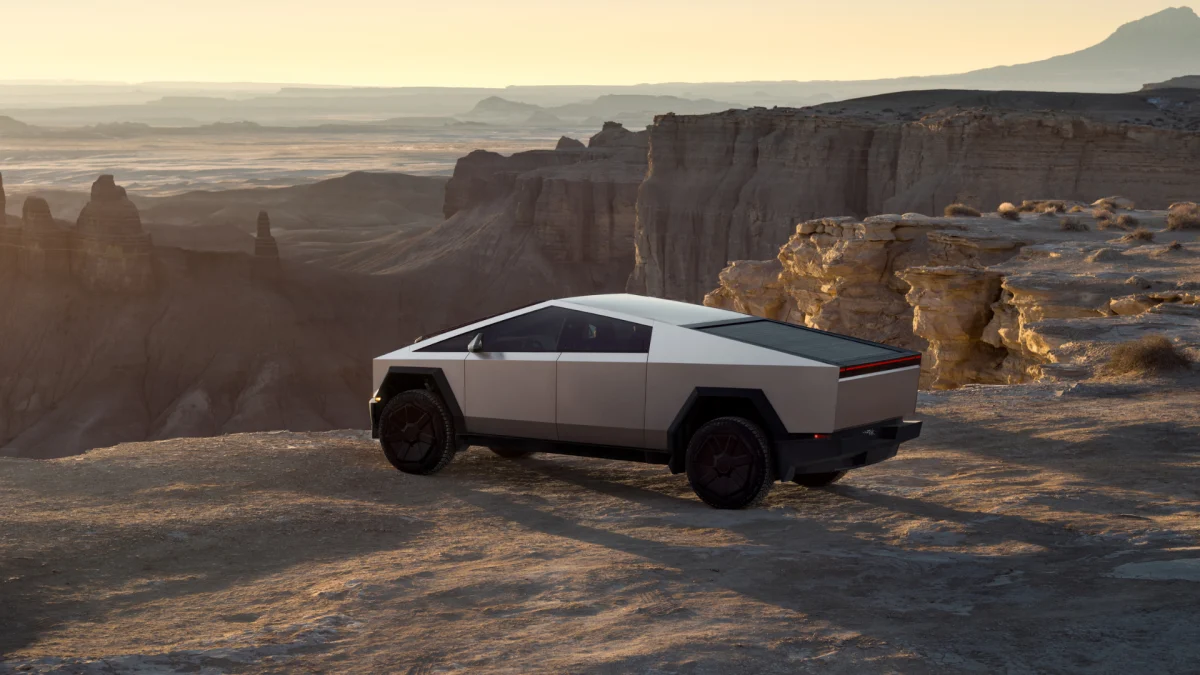
The long-standing anticipation surrounding Tesla’s polarizing Cybertruck has officially hit a dead end in the Southern Hemisphere. In a move that brings years of speculation to a definitive close, Tesla has confirmed that it will no longer pursue the production or distribution of the stainless-steel electric pickup in Australia and New Zealand. The announcement, delivered via direct email to reservation holders this past Friday, marks a significant shift in Tesla’s regional product strategy and signals the end of a five-year waiting game for thousands of hopeful enthusiasts.
The Official Word: A Quiet Cancellation
The communication sent to customers was concise, reflecting the company’s pragmatic—if abrupt—approach to regional market pivots. "After careful consideration, plans to produce the Cybertruck for Australia and New Zealand have been discontinued," the email stated. "As a result, we’re unable to fulfil your reservation and it will be cancelled."
For those who had placed a deposit, the news is a mixture of financial closure and lost opportunity. Tesla has moved to scrub the Cybertruck from its Australian and New Zealand digital storefronts, leaving the Model 3, Model Y, and the long-awaited Roadster as the primary pillars of the brand’s local portfolio. To mitigate the fallout, Tesla is offering full refunds of the $150 (AUD/NZD) reservation deposit.
As a gesture of goodwill, the company is attempting to pivot disappointed reservation holders toward their existing lineup, offering a one-year subscription to its "Full Self-Driving (Supervised)" software for those who opt to purchase a new Model 3 or Model Y instead. This incentive, while notable, comes with a caveat: the system remains a driver-assistance suite, not an autonomous driving platform, requiring the user to remain fully attentive and in control at all times.
A Chronology of Expectation and Delay
The journey of the Cybertruck in the Pacific region has been defined by a protracted timeline of promise and frustration. The vehicle’s conceptual roots trace back to 2013, when CEO Elon Musk first teased the idea of a futuristic, pickup-style electric vehicle. However, the true fervor began in 2019, when the angular, brutalist prototype was unveiled to a stunned global audience.
At that time, Tesla’s roadmap was aggressive, with plans to initiate production by late 2021. For Australian and Kiwi drivers, the pre-order window opened almost immediately following the unveiling, allowing early adopters to stake their claim on the "future of trucks" with a relatively modest deposit.
However, the "late 2021" target proved to be the first of many missed milestones. As Tesla grappled with the complexities of manufacturing the vehicle’s unique stainless-steel exoskeleton and the logistical hurdles of a global pandemic, production dates were pushed back repeatedly. By the time the vehicle finally reached U.S. customers in late 2023, the initial excitement in international markets had begun to wane, replaced by a growing skepticism regarding the truck’s design, utility, and build quality. Five years after the initial reveal, the decision to cancel the program suggests that Tesla’s internal cost-benefit analysis—likely factoring in the high cost of engineering a right-hand-drive variant for these specific markets—simply could not justify the investment.
Analyzing the Market Implications
The decision to abandon the Australian and New Zealand markets is not merely a logistical choice; it is a commentary on the realities of global automotive manufacturing. The Cybertruck is a notoriously difficult vehicle to export. Its design, which prioritizes a unique, non-traditional aesthetic, poses significant challenges for global safety regulations and mass production.
For Australia and New Zealand, the "Right-Hand Drive" (RHD) problem is the primary hurdle. Converting a vehicle as structurally complex as the Cybertruck to RHD would require an overhaul of the steering, dashboard, and pedal assembly, as well as significant changes to the front-end crash structure. Given that the U.S. market has struggled with its own production bottlenecks, it is highly probable that Tesla determined that the capital expenditure required to re-engineer the vehicle for the relatively smaller Australian and Kiwi markets was not a prudent allocation of resources.
Furthermore, the local market dynamics for pickups—or "utes," as they are known in Australia—are incredibly competitive. Australia is a nation of dedicated pickup truck users, but the market is dominated by rugged, diesel-powered vehicles from manufacturers like Toyota, Ford, and Isuzu. These vehicles are designed for long-distance towing, off-road durability, and repairability in remote areas. The Cybertruck’s high-tech, computer-integrated design represents a departure from the traditional "ute" utility that Australian consumers have come to rely on, potentially limiting its mass-market appeal even if it had reached local showrooms.
Public Sentiment: From Anticipation to Relief
The reception to the news has been, quite unexpectedly, polarized. While a segment of the EV enthusiast community has expressed legitimate disappointment, the broader reaction on social media and automotive forums has been one of indifference, or in many cases, relief.
The Cybertruck has been a lightning rod for criticism since its debut. Detractors have frequently mocked its design, comparing it to "low-poly" graphics from early 2000s video games or a child’s crude drawing. However, the criticism extends beyond the aesthetic. Recent reports coming out of the United States—the only market where the vehicle is currently sold—have painted a concerning picture of early ownership.
The vehicle has been subject to multiple recalls, including issues with the accelerator pedal, windshield wiper motor, and various software-related glitches. These reports have been widely circulated in Australian and New Zealand automotive circles, leading many prospective buyers to question the build quality of a vehicle that commands a premium price.
On platforms like the r/TeslaAustralia subreddit, the sentiment has been largely pragmatic. Many users, even those who admire Tesla’s impact on the transition to sustainable energy, have suggested that the Cybertruck was never a good fit for the unique driving conditions of the Australian outback. The lack of infrastructure for charging such a large battery in remote areas, combined with the aforementioned quality concerns, has led many to characterize the cancellation as a "dodged bullet."
The Path Forward for Tesla in the Region
Despite the cancellation of the Cybertruck, Tesla remains a dominant force in the electric vehicle transition for Australia and New Zealand. The Model 3 and Model Y consistently rank among the best-selling EVs in the region, providing a reliable, well-understood, and mass-market option for consumers.
The focus now shifts to what comes next. With the Roadster still pending and the company’s broader global efforts focused on scaling production of the Model Y and potentially lower-cost models, the exclusion of the Cybertruck is unlikely to dent Tesla’s overall market share in the Pacific.
However, the event serves as a cautionary tale for the automotive industry. It highlights the tension between the hype generated by high-profile, "futuristic" product reveals and the harsh realities of global manufacturing, regulatory compliance, and market-specific demand.
For the thousands of customers who held their reservations for half a decade, the refund is a final acknowledgement that the promise of the future does not always translate into a product that can be parked in the driveway. While the Cybertruck will remain a fixture of American highways, it has officially been relegated to the annals of "what could have been" in Australia and New Zealand.
Conclusion: Lessons Learned
The exit of the Cybertruck from these markets is a significant event, yet it is a logical one. Tesla, a company known for its disruptive approach to business, has demonstrated an increasing willingness to kill off projects that do not align with its broader efficiency goals. By trimming the fat and focusing on its core, high-volume products, Tesla is signaling a maturation phase.
For the consumers who were waiting, the experience underscores the volatility of the EV market and the risks associated with long-term pre-orders for vehicles that have yet to hit full-scale production. As the automotive industry continues its rapid transformation toward electrification, the story of the Cybertruck’s failed launch in the Pacific will likely be studied as a case study in managing product expectations versus manufacturing capabilities.
As for the Australian and New Zealand roads, they will remain the domain of traditional utes and, increasingly, more conventional electric vehicles. The "Cyber" revolution, it seems, will not be televised—at least, not in the Southern Hemisphere.