As the United States barrels toward the 2026 midterm elections, a pervasive sense of economic malaise has taken hold of the American electorate. New data from the Pew Research Center reveals that voters are increasingly pessimistic about the state of the national economy, with concerns over the rising cost of living—specifically fuel, food, and housing—dominating the public discourse. This shift in sentiment mirrors the anxiety seen four years ago during the previous midterm cycle, suggesting that pocketbook issues remain the primary driver of political decision-making in the current climate.
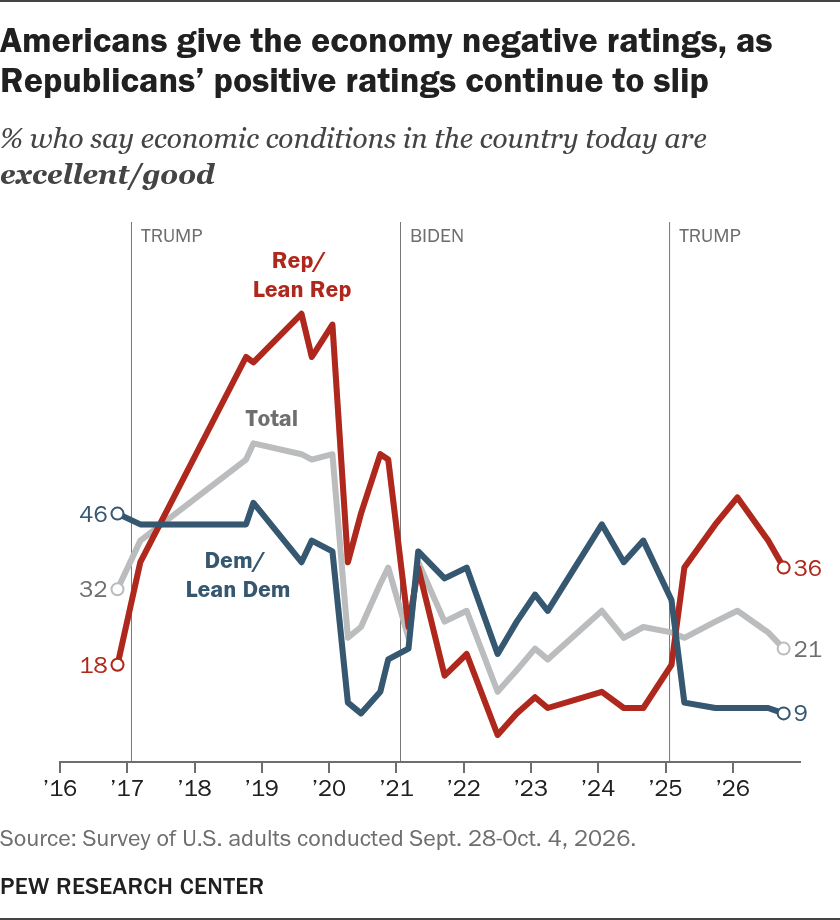
According to a survey of 5,062 U.S. adults conducted between September 28 and October 4, 2026, just 21% of Americans now rate the current economic conditions as "excellent" or "good." This represents a significant decline from the 28% who held a positive view at the beginning of the year and marks one of the lowest approval ratings for the economy during President Donald Trump’s second term.

The Cost of Living Crisis: A Chronology of Concern
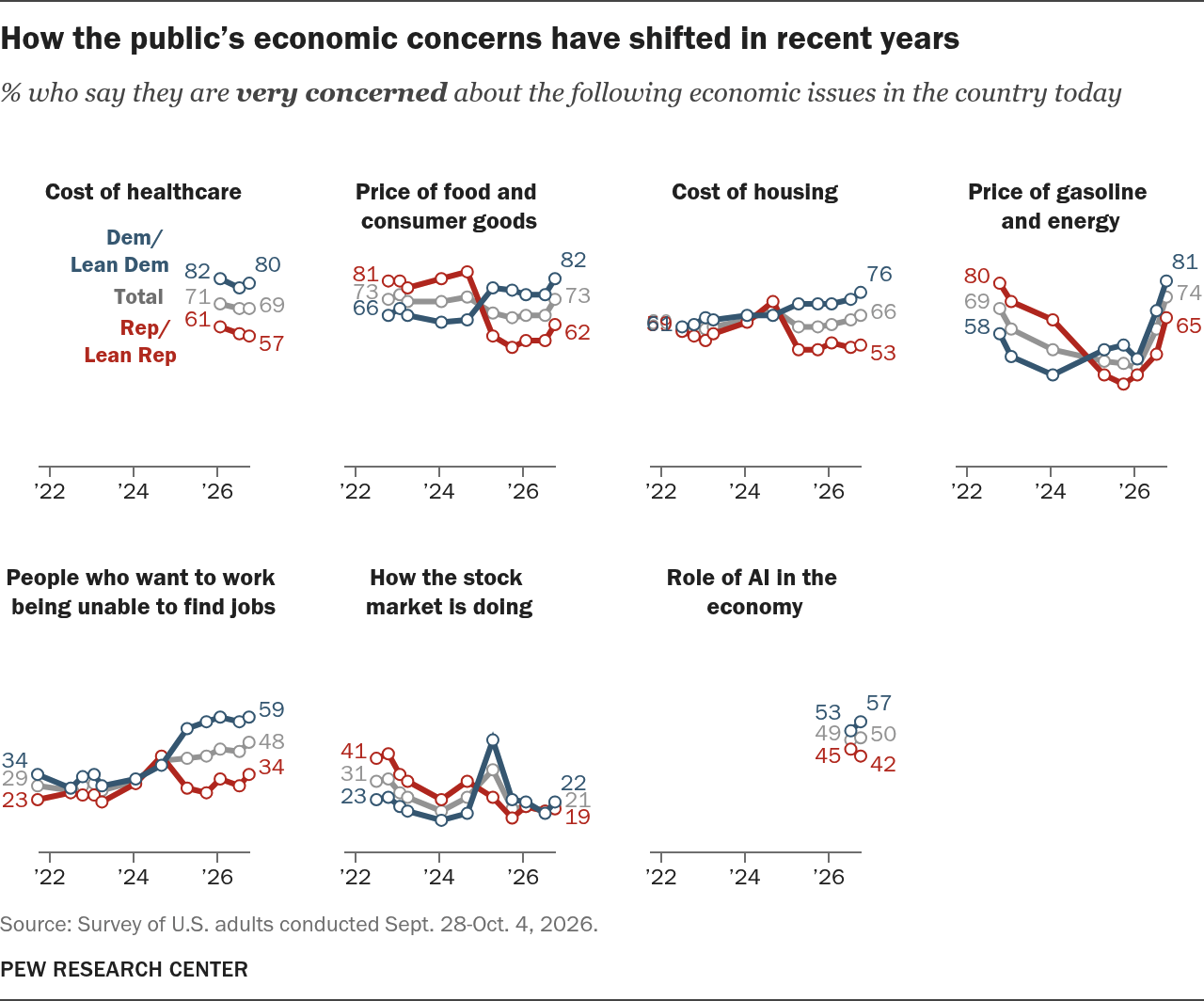
The primary engine behind this negative sentiment is the unrelenting pressure of inflation on essential goods. The data suggests that public concern has been on a volatile, upward trajectory since 2022.
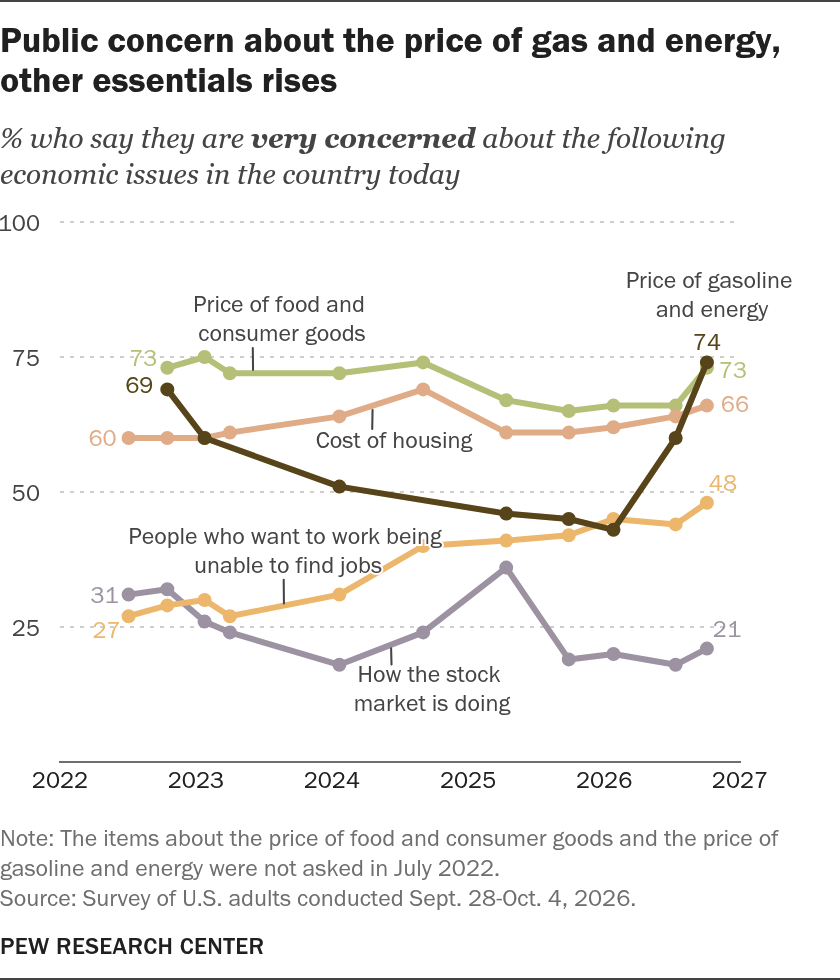
- Mid-2022: As inflation began to accelerate, the public identified housing costs (60%) and gasoline prices (69% by October) as significant stressors.
- 2023–2024: Throughout this period, the price of food and consumer goods remained a consistent point of "very high concern" for roughly 72% to 75% of the population.
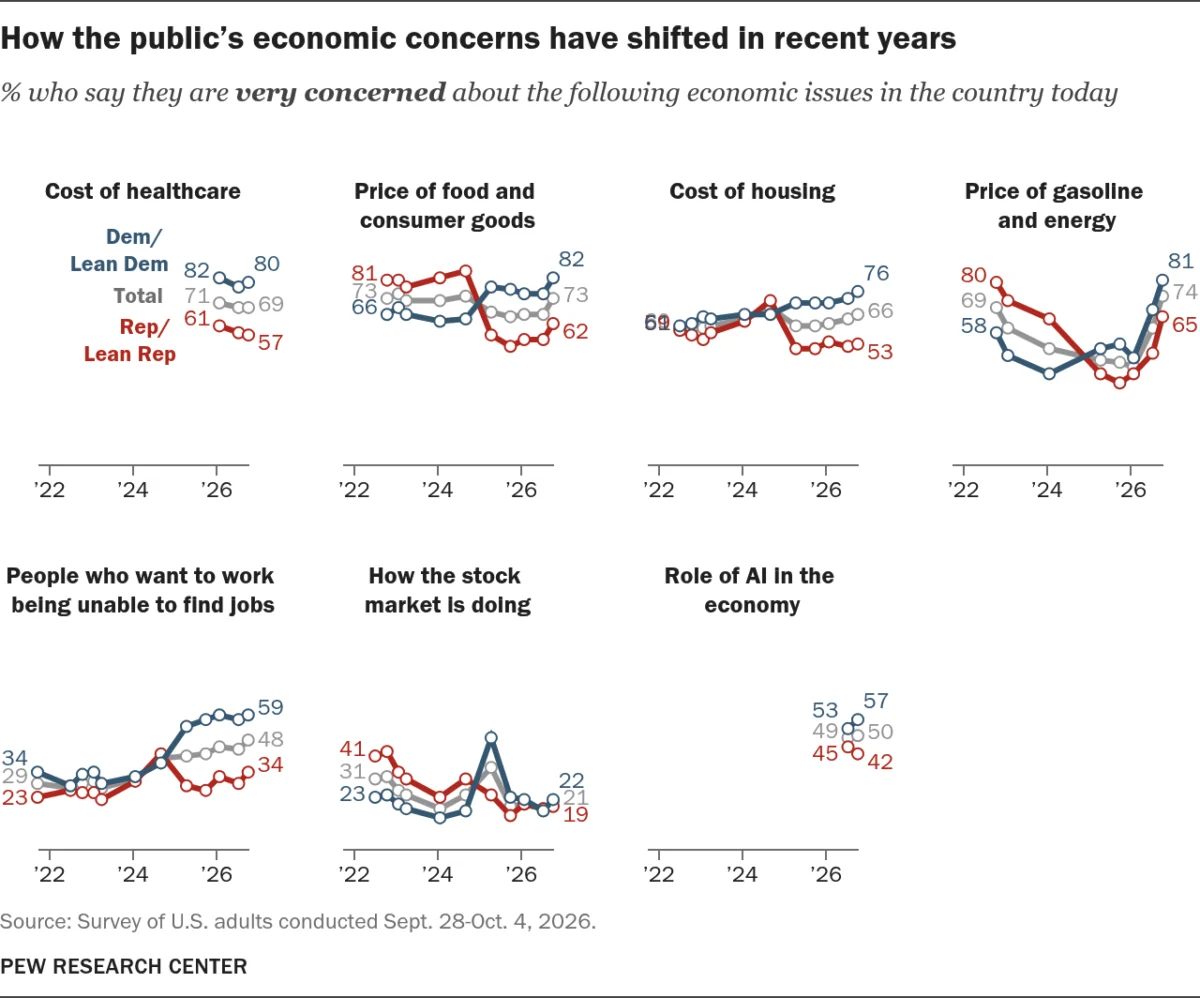
- The 2026 Inflection Point: The current year has seen a sharp resurgence in anxiety. After a brief period of relative stability, concern over gas and energy prices surged from 43% in January to 74% by early October 2026. This spike correlates with increased geopolitical instability, including the military conflict with Iran, which has sent shockwaves through energy markets.
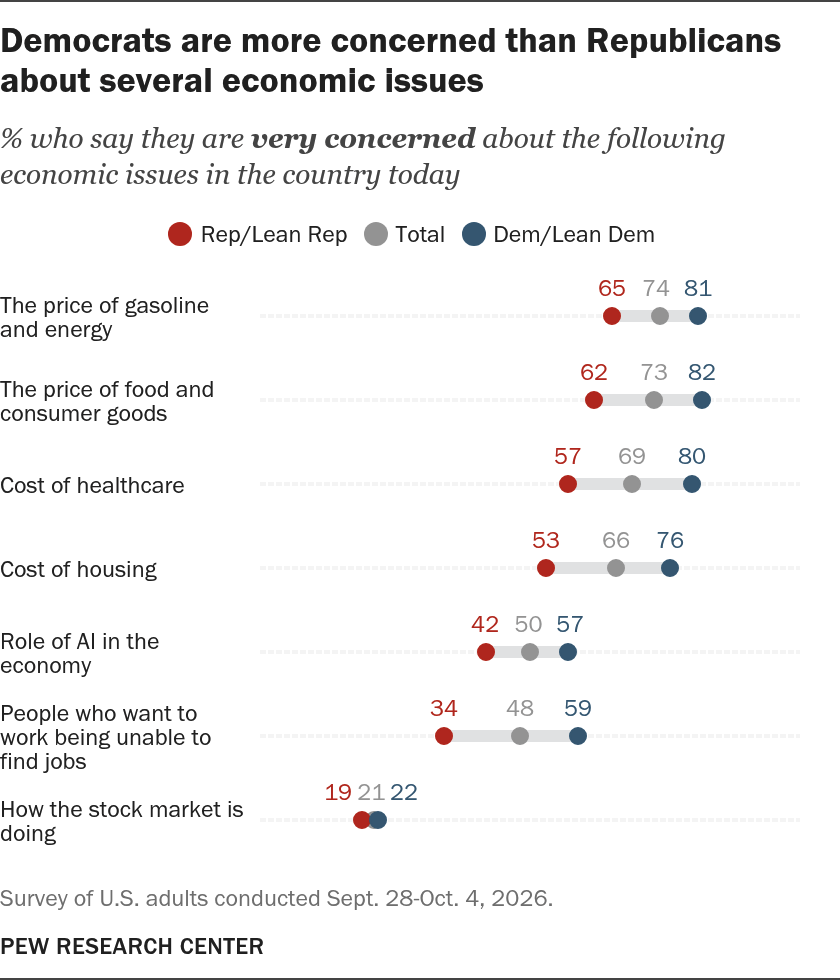
This trend is not merely a reflection of the current moment but a culmination of years of fiscal and supply-side pressures. When asked about specific economic threats, 73% of respondents reported being "very concerned" about the price of food and consumer goods, while 66% expressed similar levels of alarm regarding the cost of housing.
Supporting Data: Dissecting the Economic Mood
The economic landscape is not viewed through a monolithic lens; however, the consensus across partisan lines is increasingly bleak. While Democrats have historically been more critical of President Trump’s economic stewardship, the recent data shows a notable erosion of confidence among Republicans as well.
Partisan Shifts in Economic Ratings
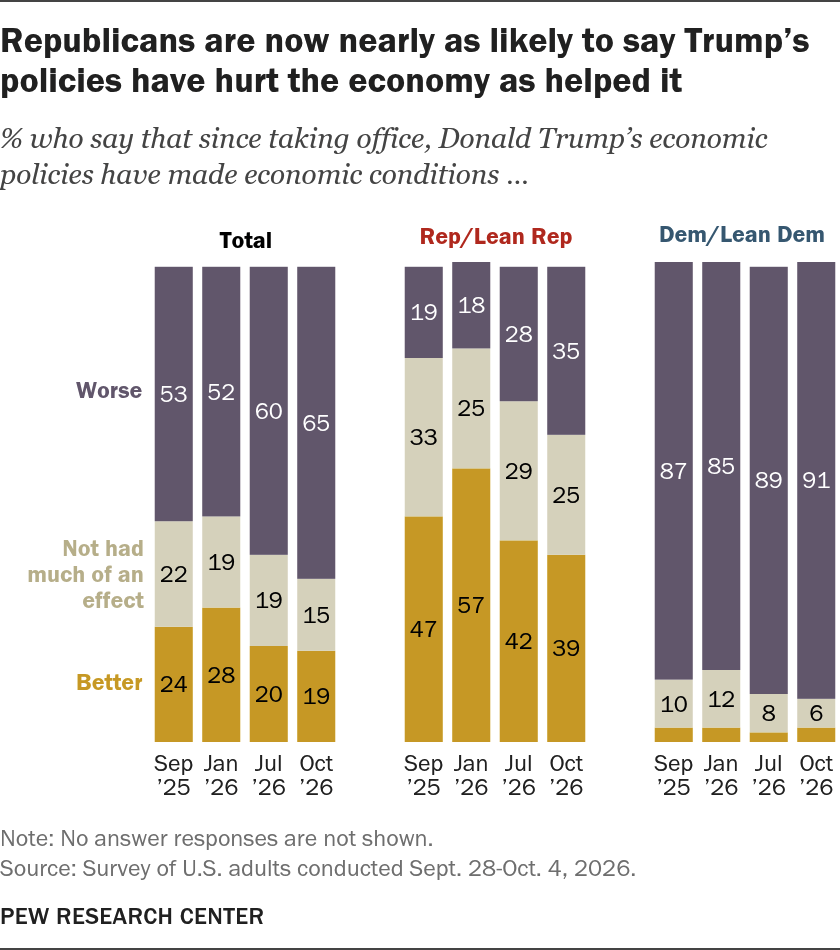
The decline in national economic ratings is, in part, driven by a cooling of sentiment among the president’s own party. In January 2026, 49% of Republicans viewed the economy as "excellent" or "good." By October, that number had slipped to 36%. Conversely, Democratic opinion remains deeply pessimistic, with only 9% offering a positive rating of current conditions.
The Employment and Technology Factor
While the labor market has historically been a point of stability, it is no longer immune to public anxiety. Nearly half of the public (48%) now reports being "very concerned" about the ability of those who want to work to find suitable employment. This represents a substantial rise from the 29% who expressed such concerns in October 2022.
Furthermore, the rise of artificial intelligence has introduced a new layer of uncertainty into the workforce. Half of the American public (50%) now expresses significant concern regarding the role of AI in the economy, signaling widespread anxiety over job displacement and the rapid transformation of the labor market. In stark contrast, the performance of the stock market appears to be a secondary concern, with only 21% of Americans stating they are "very concerned" about market fluctuations, suggesting that the public is far more focused on immediate, tangible costs than on abstract financial indicators.
Evaluating the Impact of Policy: The Tariff Debate
A central theme in the current economic debate is the impact of the Trump administration’s aggressive tariff policies. By a margin of more than two-to-one, Americans view these policies as having a negative rather than a positive effect on the country.
Among the general public, 56% anticipate that the administration’s tariff strategy will have a "mostly negative" impact in the coming years, while only 20% believe the effect will be positive. This skepticism has permeated even the Republican base. In August 2025, 52% of Republicans viewed the tariffs as "mostly positive"; by October 2026, that figure had plummeted to 40%. The percentage of Republicans who view the tariffs as detrimental has risen from 21% last year to 26% today.
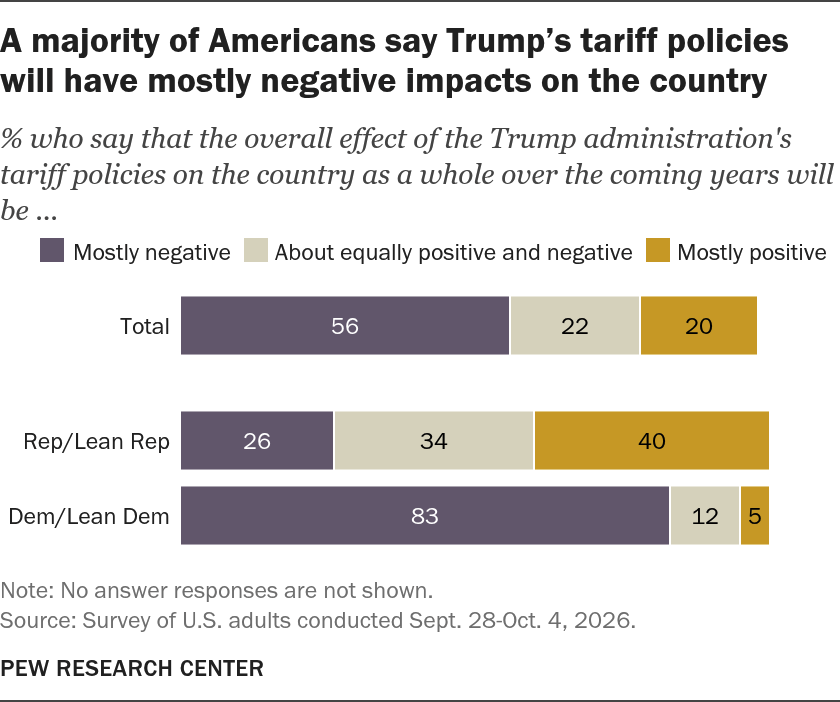
Among Democrats, the verdict is nearly universal: 83% believe the tariffs will have a negative impact on the nation’s economic future. These findings suggest that the administration’s trade policy is not only failing to gain traction as a successful electoral issue but is actively contributing to the overall sense of economic instability felt by voters across the spectrum.
Official Responses and Political Implications
The implications for the upcoming congressional elections are profound. The prevailing "sour mood" of the electorate has created a highly volatile environment for incumbents. With inflation remaining a top-tier issue, political strategists on both sides of the aisle are grappling with how to address the widening gap between macroeconomic policy and the lived experience of the average household.
Political analysts note that the current data aligns with the findings in the companion report, "With Americans in a Sour Mood, Democratic Voters Are More Engaged in Midterms." The combination of economic pessimism and high voter engagement suggests that the 2026 midterms could see a historic turnout driven by a desire for a change in fiscal direction.
The administration has, to date, maintained that its policies are necessary for long-term economic sovereignty and industrial protection. However, the disconnect between this narrative and the public’s perception of "very high concern" regarding daily essentials suggests a messaging crisis. For the opposition, the challenge lies in providing a credible alternative that addresses the cost-of-living crisis without exacerbating the existing inflationary pressures.
Future Outlook: A Landscape of Uncertainty
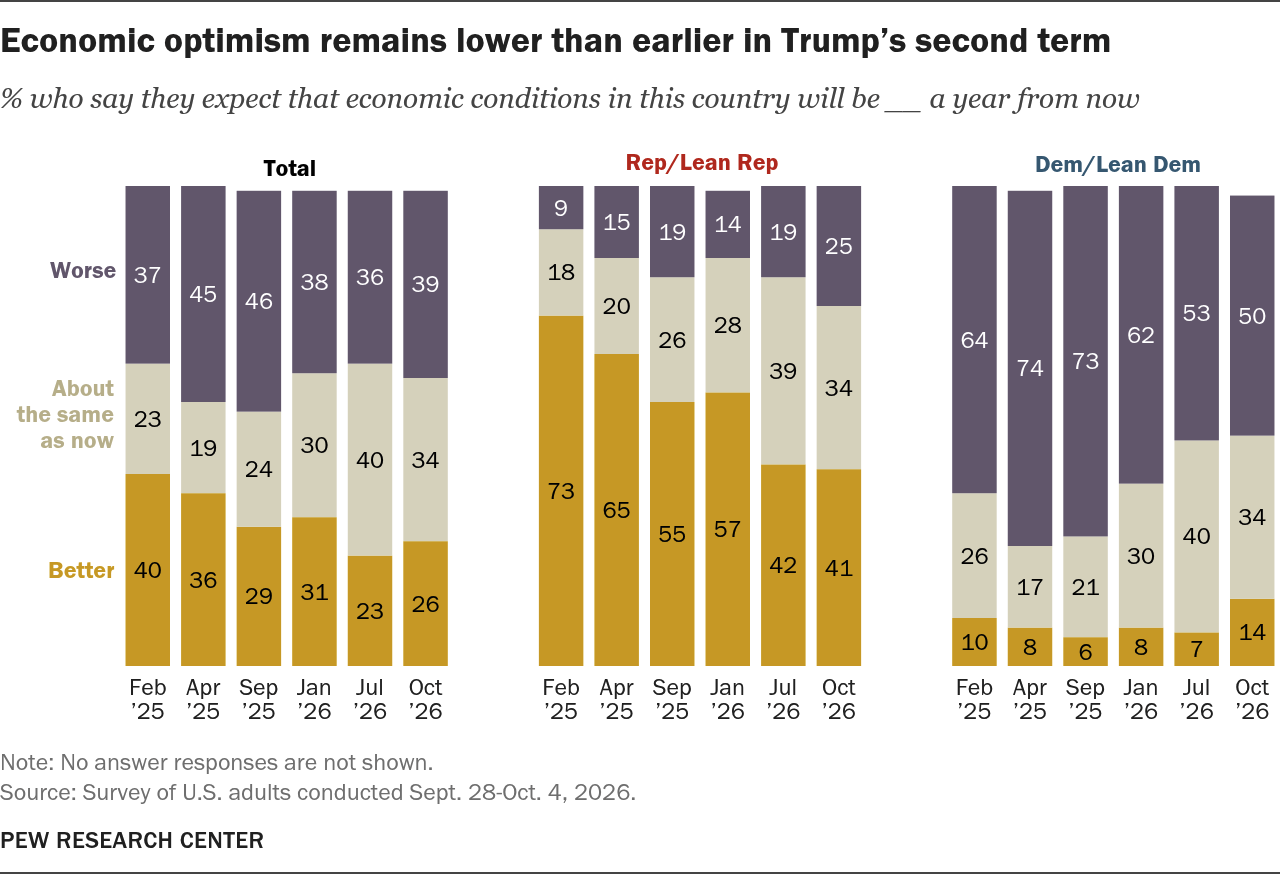
Looking toward the year ahead, the public remains deeply divided and largely pessimistic. Roughly 39% of Americans expect economic conditions to worsen over the next 12 months, while only 26% expect an improvement.
The partisan divide on the economic future is sharp. Republicans remain more optimistic than their Democratic counterparts, with 41% of Republicans expressing hope for a better economic climate within a year. In contrast, only 14% of Democrats share that optimism, with half of the party’s base anticipating further decline.
As the countdown to the midterms continues, the economic data serves as a stark warning to policymakers: the American public is hyper-focused on the tangible costs of their daily existence. From the price of a gallon of gasoline to the rising cost of basic groceries and the looming uncertainty of AI-driven labor shifts, the voter’s perspective is grounded in a desire for immediate, effective relief. Whether the political establishment can shift this narrative in the final month before the election remains the defining question of the 2026 cycle.
Ultimately, the Pew Research Center’s analysis underscores a fundamental truth in American politics: when the price of survival becomes the primary topic of conversation at the dinner table, it inevitably becomes the primary issue on the ballot. With the electorate feeling the squeeze of both domestic policy and global instability, the 2026 midterms are shaping up to be a referendum on the perceived failure of the current economic status quo.