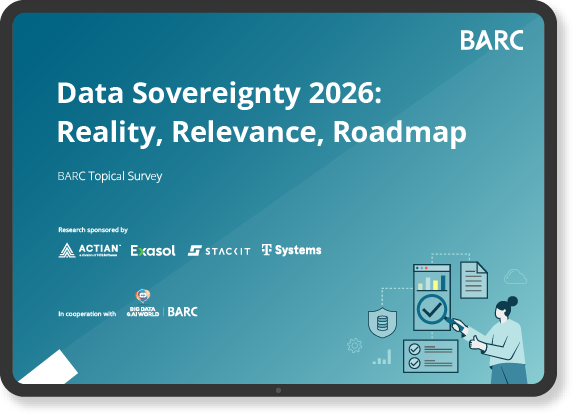
In the rapidly evolving landscape of global data management, the concept of "data sovereignty" has undergone a profound metamorphosis. Once viewed primarily as a checkbox exercise for legal compliance—a defensive measure against regulatory overreach—it has matured into a cornerstone of competitive strategy. According to the latest findings from BARC’s Data Sovereignty 2026 report, which surveyed 320 organizations worldwide, the paradigm has shifted: data sovereignty is no longer merely about following the law; it is now a critical condition for mitigating risk while scaling data- and AI-driven processes.
The Evolution of the Sovereignty Landscape
For years, multinational corporations struggled to reconcile the need for global data flow with the fragmented nature of international privacy regulations. From the European Union’s General Data Protection Regulation (GDPR) to emerging localized data residency laws in Asia and the Americas, the legal environment became a labyrinth.
However, the 2026 survey highlights a decisive turning point. As organizations lean heavily into generative AI and automated decision-making systems, the stakes of data mismanagement have escalated. Sovereignty is now recognized as a prerequisite for trust—both from customers and regulatory bodies. By maintaining control over where data resides, who has access to it, and how it is processed, firms are creating the foundational stability required to deploy high-stakes AI models without fear of catastrophic data leakage or regulatory sanctions.
Chronology: The Road to Data Maturity
The path to the current state of data sovereignty has been marked by distinct phases of corporate response:

- 2020–2022: The Compliance Awakening: Following the widespread adoption of cloud services, businesses realized they had lost visibility into their data geography. Initial efforts focused on "data mapping" and basic contractual safeguards.
- 2023–2024: The Infrastructure Pivot: Driven by the surge in AI development, organizations moved toward "sovereign cloud" initiatives. Companies began demanding that cloud service providers offer localized data storage and encryption keys held by the client, rather than the vendor.
- 2025: The Integration Phase: Sovereignty became embedded in the Data & Analytics (D&A) lifecycle. Instead of a standalone legal concern, it was integrated into DevOps and data pipelines.
- 2026: The Strategic Equilibrium: As outlined in the current BARC report, companies are now leveraging sovereignty as a competitive advantage. Firms with robust sovereignty frameworks are finding it easier to partner with international entities, as their data governance is transparent and verifiable.
Supporting Data: Insights from the Global Survey
The BARC survey provides a quantitative look at how 320 organizations are handling this transition. The data reveals a stark contrast between "data-mature" organizations and those still in the developmental phase:
- Risk Mitigation: 68% of respondents identified "mitigation of legal risk" as the primary driver for their current sovereignty initiatives, up from 42% in 2023.
- AI Readiness: 54% of firms stated that they would not move their proprietary AI training data to a public cloud environment without explicit "sovereignty guarantees" (e.g., local residency and data sovereignty-certified infrastructure).
- Economic Impact: Organizations that have successfully implemented a unified data sovereignty policy report a 22% reduction in time-to-market for new cross-border data products, largely due to pre-cleared legal and technical frameworks.
Expert Perspectives: Timm Grosser and Dr. Carsten Bange
Timm Grosser, Senior Analyst for Data & Analytics at BARC, emphasizes that the "technical side of sovereignty is finally catching up with the legal theory." According to Grosser, the focus has moved from abstract policies to practical architecture. "The implementation of data governance is no longer just about who can see the data, but where the physical bits and bytes reside and who holds the keys to the kingdom," Grosser notes.

Dr. Carsten Bange, founder and CEO of BARC, takes a broader view of the organizational impact. "Over the past 25 years, I have seen companies struggle with the tension between innovation and control. Data sovereignty is the bridge that allows them to have both. When a company masters its own data footprint, it stops being a liability and starts becoming a high-value asset that can be safely utilized for AI innovation," Bange explains.
The Implications for the Future of AI
The shift identified in the 2026 survey carries significant implications for the global tech sector:
1. The Rise of Federated AI
Because centralizing data in a single, non-sovereign location is becoming a liability, businesses are increasingly looking toward federated learning and decentralized analytics. This allows AI models to learn from distributed datasets without the data ever leaving its country of origin or a secure, private perimeter.
2. Vendor Accountability
Cloud providers and software vendors are being held to a higher standard. The "one size fits all" approach to cloud storage is effectively dead. Vendors who cannot provide clear, auditable documentation regarding data sovereignty are losing out on enterprise contracts, particularly in highly regulated sectors like banking, healthcare, and government.
3. Cultural Transformation
The report underscores that sovereignty is as much about culture as it is about technology. "It requires a shift in mindset," says the research team. "Employees at all levels must understand that data is not a free-flowing resource to be handled carelessly. It is a strategic asset subject to sovereign boundaries."
Conclusion: A New Era of Data Governance
As we look toward the remainder of 2026 and into 2027, the message from the BARC research is clear: the era of "data-at-any-cost" is over. Sovereignty is the mechanism by which organizations earn the right to innovate. By investing in the architecture of control today, businesses are ensuring they remain resilient in the face of tomorrow’s regulatory and technical shifts.

For the modern enterprise, the path forward involves a rigorous, ongoing audit of data flows, an uncompromising demand for technical sovereignty from vendors, and the integration of these principles into the very DNA of their AI strategy. Those who succeed will not only avoid the pitfalls of non-compliance but will unlock the ability to innovate at scale in a globalized, yet increasingly regulated, digital economy.
For those seeking a deeper dive into these findings, Chapter 4 of the "Data Sovereignty 2026: Reality, Relevance, Roadmap" survey provides comprehensive guidance on implementing these strategies. BARC+ subscribers can access the full report, which includes detailed case studies and technical implementation roadmaps for businesses looking to formalize their approach to data governance.