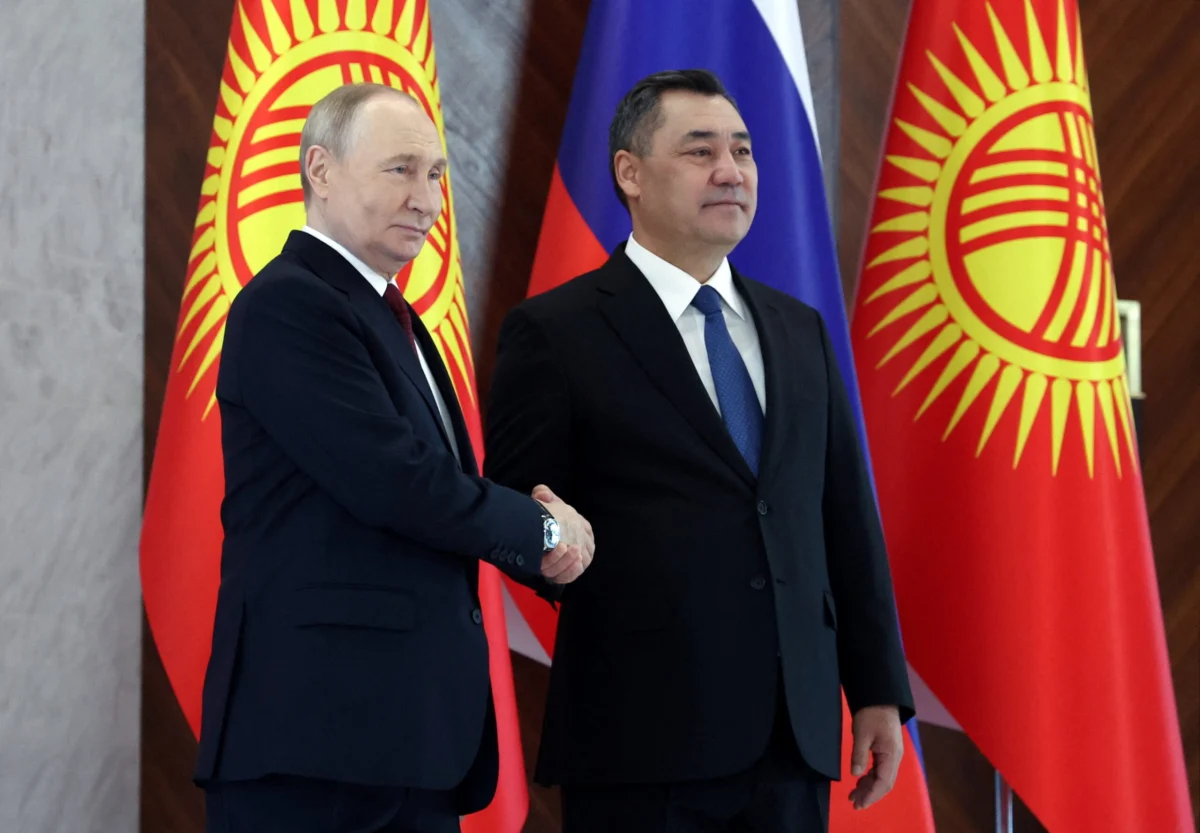
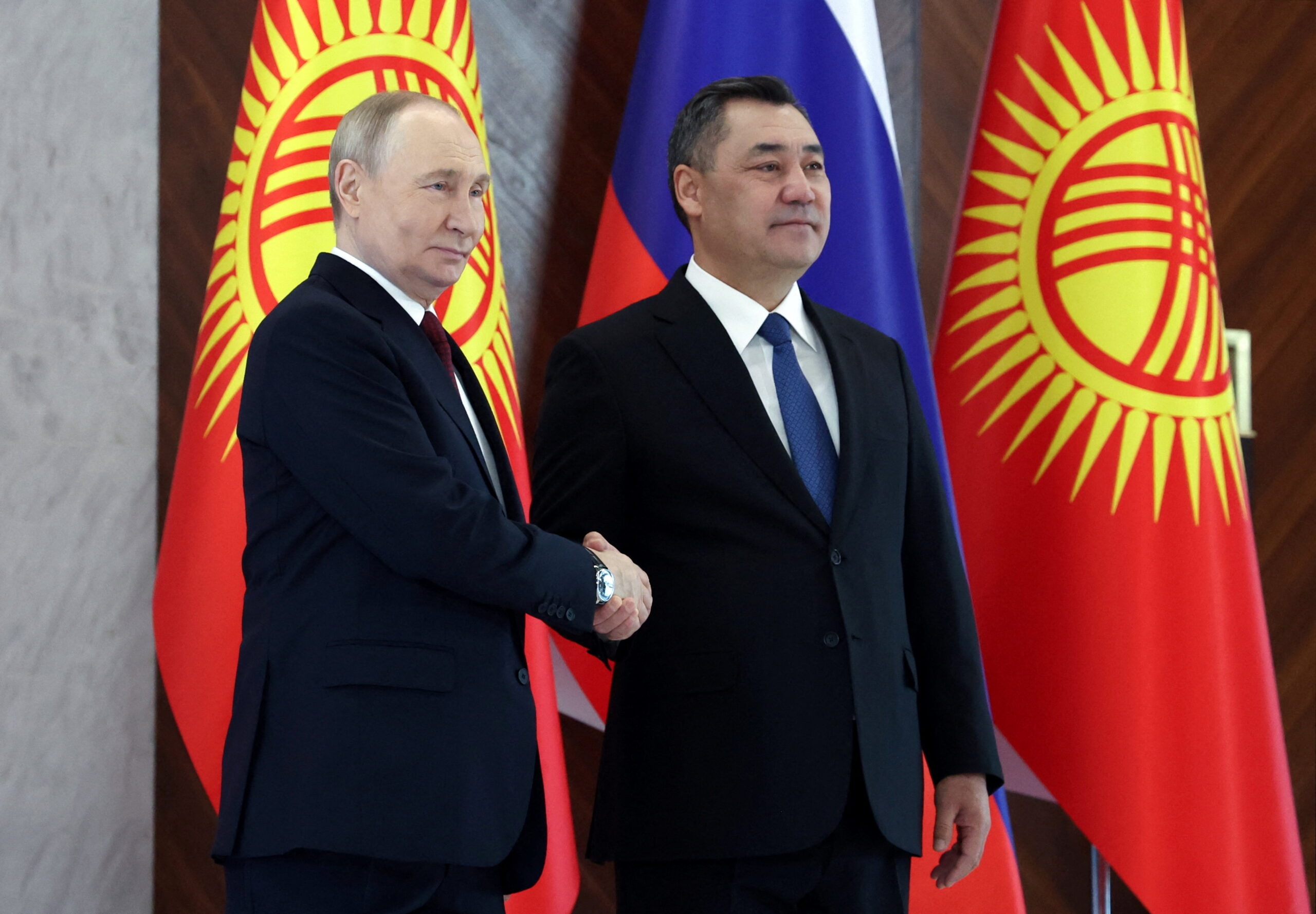
In a landmark shift in its economic statecraft, the European Union has officially activated its "anti-circumvention" toolkit, marking a new phase in the ongoing effort to throttle Russia’s capacity to sustain its war machine. In late April, the EU integrated these measures into its latest sanctions package, specifically targeting Kyrgyzstan. This move represents the first time the bloc has utilized these specialized instruments, which were designed specifically to prevent third-party nations from acting as conduits for restricted Western technologies to reach the Kremlin.
As the conflict in Ukraine drags into its third year, the reliance of the Russian military on sophisticated Western components—often found in the wreckage of missiles and drones recovered on the battlefield—has become a focal point of Western policy. The EU’s decision to penalize Kyrgyzstan is not merely a regional policy adjustment; it is a signal that the era of "passive compliance" by transit countries is coming to an end.
The Evolution of EU Sanctions: From Direct Bans to Anti-Circumvention
For years, the European Commission struggled with the "whack-a-mole" nature of sanctioning Russia. While the EU banned the direct export of critical dual-use goods—items with both civilian and military applications, such as computer numerical control (CNC) machines, advanced semiconductors, and radio equipment—to Russia, supply chains proved remarkably resilient. Moscow’s procurement networks simply shifted to transshipment hubs in Central Asia, the Caucasus, and the Middle East.
Recognizing this, the European Commission unveiled its "anti-circumvention" tools in June 2023. At the time, officials described the framework as a "last resort measure." The logic was clear: if diplomatic engagement and warnings failed to stop a third country from facilitating the re-export of sanctioned goods, the EU would be forced to restrict the sale, supply, and export of those specific goods to the country in question.
By April 2026, after months of mounting intelligence and public pressure, the EU reached the threshold for action against Kyrgyzstan. The ban on the export of CNC machines to the country serves as the first concrete application of this power, setting a legal and political precedent that other nations, currently under EU scrutiny, will ignore at their own peril.
A Chronology of Escalation: From Diplomacy to Sanctions
The road to the April 2026 sanctions was paved with escalating warnings and high-level diplomatic visits.
- June 2023: The European Commission formalizes the legal framework for "anti-circumvention" tools, aiming to bridge the gap in its existing sanctions regime.
- Late 2024 – Early 2025: Western intelligence agencies begin identifying a surge in "ghost trade"—goods originating in Europe, arriving in Bishkek, and subsequently disappearing into the Russian market.
- November 2025: An international investigation involving the US, UK, and EU uncovers a massive money-laundering network linked to the funding of the Russian war effort, involving entities with ties to the Kyrgyz financial sector.
- February 2026: EU Sanctions Envoy David O’Sullivan travels to Bishkek. In meetings with local officials, O’Sullivan presents evidence that European dual-use technologies are entering Kyrgyzstan with the explicit intent of being re-exported to Russia.
- April 2026: Following the failure of the Kyrgyz government to sufficiently address these concerns, the EU includes Kyrgyzstan in its twentieth sanctions package, imposing a specific ban on the export of CNC machines.
Data Points: The Scale of the Transshipment Surge
The statistical evidence presented by the European Commission provides a stark illustration of why Kyrgyzstan was singled out. Since the inception of the full-scale invasion of Ukraine in 2022, the trade flow between the EU and Kyrgyzstan has undergone a radical, and highly suspicious, transformation.
According to EU trade data, the export of dual-use technologies from the European Union to Kyrgyzstan has spiked by nearly 800 percent since 2022. Even more telling is the flow of those same goods from Kyrgyzstan to Russia, which has seen an staggering 1,200 percent increase. This volume cannot be explained by local economic demand within Kyrgyzstan; it is fundamentally a trade in transit, designed to bypass the European "Iron Curtain" established around the Russian economy.
These figures are compounded by broader intelligence reports. Bloomberg and other investigative outlets have highlighted that Russia currently relies on China for approximately 90 percent of its sanctioned technology imports. However, the Central Asian corridor serves as a vital secondary artery, particularly for high-end European industrial machinery that is difficult to source elsewhere.
Official Responses and Diplomatic Friction
The reaction to the EU’s decision has been a mixture of defiance, strategic distancing, and damage control.

Daniyar Amangaeldiev, the first deputy cabinet chair of Kyrgyzstan, has voiced significant concern regarding the reputational and economic fallout of these measures. Amangaeldiev acknowledged that the "consequences for our image" could be severe, potentially deterring legitimate foreign investment if the country is perceived as a "sanctions-dodging hub."
Conversely, the Kremlin has attempted to shield its partner. Russian Press Secretary Dmitry Peskov characterized the re-export of dual-use technologies as a "legitimate" exercise of Kyrgyzstan’s national interest. This narrative—that Kyrgyzstan is merely engaging in normal trade and that the EU is overstepping its bounds—is a core part of Moscow’s effort to maintain its procurement channels.
However, this argument has found little purchase in Brussels or Washington. The legal reality is that the goods in question are subject to strict "end-user" certification. By facilitating their transit to a known aggressor, the Kyrgyz authorities are viewed not as neutral traders, but as active participants in the circumvention of international law.
Broader Implications: A Blueprint for Future Action
The decision to target Kyrgyzstan serves as a bellwether for the future of Western sanctions policy. If these tools successfully disrupt the flow of CNC machines—which are essential for the production of precision military hardware—the EU will likely expand the list of restricted goods and, potentially, the number of countries subject to such measures.
This is not happening in a vacuum. British Members of Parliament are currently pushing for broader sanctions against high-ranking Kyrgyz officials, including the head of the Central Bank and the prosecutor general, citing their alleged roles in facilitating the financial structures that underwrite Russia’s war. If these individuals are eventually sanctioned, it would signal a move from targeting the trade of goods to targeting the individuals who manage the infrastructure of evasion.
The Road Ahead: Challenges and Efficacy
The effectiveness of this new strategy remains to be seen. The primary challenge is that the global economy is vast and interconnected. If the EU closes a door in Kyrgyzstan, the Kremlin may simply move its operations to another jurisdiction—be it in the Caucasus, Southeast Asia, or elsewhere.
Furthermore, there is the risk of "diplomatic blowback." The EU must balance its security imperatives with the need to maintain a presence in Central Asia, a region where Russia and China are aggressively competing for influence. Over-sanctioning could drive regional powers deeper into the arms of the Kremlin, potentially creating a geopolitical outcome that undermines the long-term strategic interests of the West.
Nevertheless, the moral and practical argument for closing these loopholes remains compelling. As long as Western-made components are found in Russian missiles striking Ukrainian hospitals and infrastructure, the pressure to cut off those supply lines will continue to mount.
The EU’s action against Kyrgyzstan is a definitive moment in the economic war. It demonstrates that the European project is no longer satisfied with merely imposing sanctions on paper; it is now committed to the rigorous enforcement of those sanctions at the borders of its trading partners. Whether this "blueprint" becomes the new standard for international sanctions enforcement will depend on the resolve of European leaders to maintain this pressure in the face of political and economic headwinds. For now, the message to any country acting as a bridge for the Russian war machine is clear: the cost of compliance has just become significantly higher.