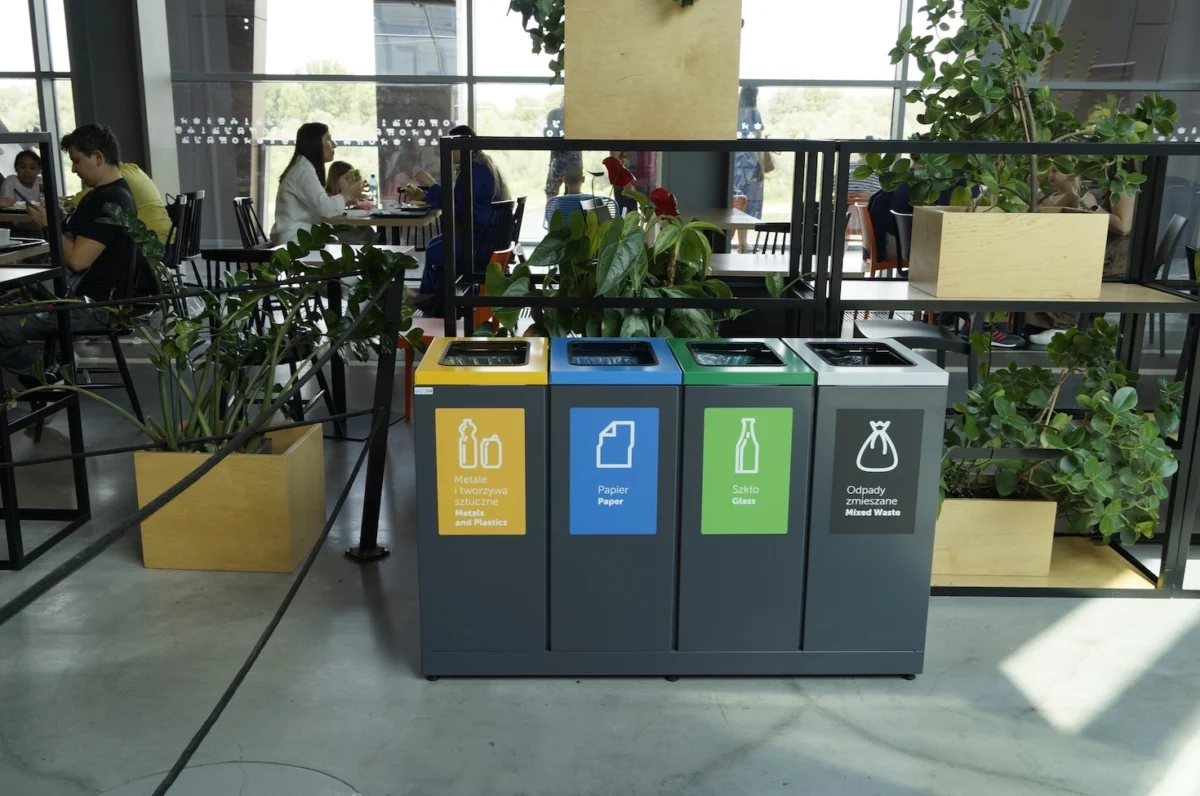
“Can I put a stapled document in the recycling bin?”
“Don’t even think about touching those K-cups—the CEO will lose his mind.”
“Can we actually acknowledge the existence of climate change in this meeting?”
For those tasked with leading corporate sustainability initiatives, these questions are all too familiar. They represent the daily friction between well-intentioned environmental advocacy and the complex, often idiosyncratic realities of corporate culture. Whether it is navigating a senior leader’s attachment to single-serve coffee pods or debating the carbon footprint of reusable water bottles versus paper cups, the role of an internal sustainability champion is fraught with nuance.
Drawing from six years of experience in the power industry—spanning roles at Green Mountain Energy and later at NRG, where I spearheaded employee engagement pillars across office and power-plant environments—it is clear that the path to a greener workplace is rarely a straight line. While these grassroots initiatives are vital, they often teeter on the edge of irrelevance. When sustainability is reduced to a game of "what goes in which bin," it risks becoming little more than an elementary school project, potentially damaging the credibility of sustainability teams and fostering widespread employee apathy.
The Tension Between Grassroots and Materiality
The fundamental challenge for any sustainability professional is balancing the “soft” side of engagement—recycling programs, beach cleanups, and green-office committees—with the “hard” side of business materiality. If sustainability teams focus exclusively on surface-level projects, they lose their mandate to influence strategic levers such as sustainable procurement, supply chain emissions, or business travel policies.
When engagement is disconnected from the business’s core mission, leadership begins to view it as a peripheral "nice-to-have" rather than a strategic imperative. This misalignment can lead to burnout among internal champions and, worse, the perception that the organization’s commitment to climate action is merely performative.
However, abandoning employee engagement entirely is not the answer. Data from the sustainability consultancy Kite Insights suggests that over 80 percent of employees desire to take meaningful action on climate change within their professional lives. The goal, therefore, is not to stop engaging employees, but to evolve the strategy to align with the company’s material sustainability goals.
Chronology of an Engagement Evolution
For many companies, the journey toward mature sustainability engagement follows a distinct trajectory:
- The Awareness Phase: Early efforts are often centered on individual habits. These are the “recycling bin” conversations. While these are necessary for building a culture of mindfulness, they rarely move the needle on a company’s carbon inventory.
- The Alignment Phase: Companies begin to realize that individual habits are less impactful than systemic changes. Teams begin to bridge the gap between “green office” initiatives and departmental KPIs.
- The Integration Phase: Sustainability becomes embedded in the organizational structure. This is the stage where compensation is tied to environmental targets, and sustainability teams are integrated into procurement and strategy meetings.
Strategic Frameworks for Meaningful Engagement
To move beyond the trivial, organizations must employ structural changes that treat sustainability with the same rigor as financial performance. Here are five replicable strategies to align your workforce with your organization’s broader environmental objectives.
1. The Power of Dedicated Events
Hosting an annual, company-wide event dedicated solely to sustainability provides a focal point that is often missing from fragmented, year-round efforts. According to Lydia Perez Poole, sustainability director at the herb and spice giant McCormick, a one-day dedicated event ensures that the topic receives undivided attention from leadership and staff alike. It forces the issue onto the calendar and ensures that executives are present to articulate why sustainability is vital to the company’s long-term competitive advantage.
2. Executive Sponsorship and Radical Honesty
The presence of a CEO is not just ceremonial; it is a signal of institutional priority. During a recent engagement session at a major logistics firm, the CEO addressed the workforce with a level of transparency that caught many off guard. He explicitly stated that the company’s sustainability strategy was driven by the demands of customers and investors, rather than a moral mandate to "get to heaven." While the sentiment was blunt, it was refreshing. It validated that sustainability is a business imperative, not just a hobby. When leadership treats employees as stakeholders in a business strategy rather than children being lectured on recycling, engagement deepens.
3. Tying Sustainability to Compensation
The most effective way to ensure a goal is taken seriously is to tie it to the bottom line. Implementing organizational scorecards or team-specific Key Performance Indicators (KPIs) that impact compensation is a game-changer. Hannah Black, a 2026 Trellis 30 Under 30 awardee who leads the Global Sustainability Ambassador Network at Trane Technologies, has demonstrated the success of this approach. By creating a function-specific goal guide, Black’s team was able to improve the quality of sustainability goals by 20 percent, ensuring they met the SMART (Specific, Measurable, Achievable, Realistic, and Timely) criteria. When sustainability is a metric in a performance review, it shifts from an “extra” task to a core competency.
4. Curated, Cross-Functional Meetings
Sustainability directors often struggle to penetrate departments like Finance, Operations, or HR. Erin Koch, sustainability director at Prologis, advocates for highly curated meetings. Instead of broad, generic outreach, Koch suggests meeting with specific teams—including their department leads—to present a concise, 15-minute deck on the company’s in-house efforts. By positioning the presentation in the context of that specific team’s daily workflow, you remove the abstraction of “sustainability” and replace it with actionable, relevant information.
5. Expanding the Definition of Sustainability
Not every employee is motivated by carbon accounting or Scope 2 emissions. Sam Gooch of Waymo, an internal advocate for sustainability, notes that leveraging the United Nations Sustainable Development Goals (SDGs) can provide a broader entry point. Issues such as food access, gender equality, and urban mobility are often more tangible and emotionally resonant for employees than technical climate data. By framing sustainability through the lens of human rights and social equity, companies can attract a broader base of internal advocates who may not initially identify as "green."
Measuring Impact and Avoiding Pitfalls
Measuring the success of these initiatives requires a blend of qualitative and quantitative data. Organizations should work closely with HR to integrate sustainability-related questions into employee engagement surveys. Furthermore, one should track the frequency with which sustainability team members are invited to cross-functional projects. If the sustainability team is being brought into the conversation early in the planning process, the engagement strategy is working.
However, leaders must remain vigilant for "red flags." If your engagement strategy only appeals to the "already converted"—those who are already active and educated on climate issues—your strategy is failing to drive cultural change. You are merely preaching to the choir.
The goal is to move the needle for the employees who have never considered the impact of their stapled documents or their office coffee habits. If you find yourself in the position of explaining the intricacies of recycling to a skeptical colleague, take heart. It is a sign that you are on the front lines of a much larger, necessary cultural transition.
Ultimately, the goal is to make sustainability so pervasive that it no longer requires a "team" to champion it. When the conversation moves from "can I recycle this?" to "how does our supply chain impact this community?", the organization has truly arrived. Until then, keep the conversations going, link them to the business, and keep your eyes on the long-term impact.