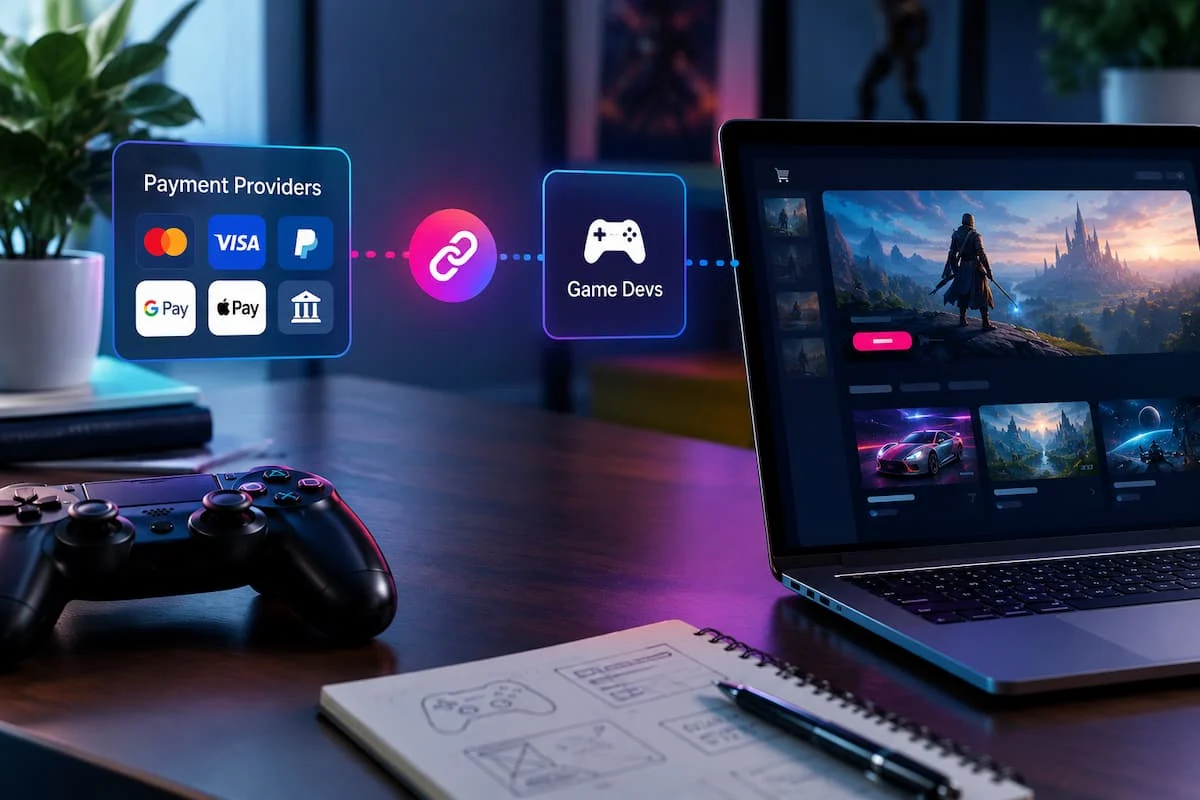
In an era where the digital gaming economy is increasingly fragmented and hyper-competitive, the line between financial services and consumer marketing is blurring. Xsolla, the Los Angeles-based global gaming commerce giant, has officially unveiled its "Co-Marketing Campaigns" feature—a self-serve tool integrated directly into its Business Account platform for payment providers.
This strategic move marks a significant departure from traditional payment processing models. By allowing payment providers to initiate, manage, and launch promotional campaigns—such as cashback incentives—directly with game developers, Xsolla is effectively transforming the payment gateway from a "behind-the-scenes" utility into a high-visibility marketing channel.
The Core Innovation: Closing the Loop
For years, the relationship between payment service providers (PSPs) and video game developers has been transactional. PSPs processed volumes, ensured settlement, and managed risk, but they remained largely invisible to the end-user and disconnected from the game’s promotional ecosystem.
Xsolla’s new tool addresses this systemic gap. It offers a standardized, self-serve interface that allows providers to access granular data regarding which titles or developers generate the most traction for their specific payment methods. By turning this data into actionable marketing, Xsolla is enabling a more symbiotic relationship between those who process the money and those who create the content.
The Four-Step Workflow
The beauty of the Co-Marketing Campaigns feature lies in its simplicity, operating entirely within the provider’s existing Xsolla Business Account:
- Data-Driven Review: Providers first analyze their current performance metrics within the dashboard, identifying specific games where their payment methods are already gaining traction.
- Campaign Configuration: Using the self-serve interface, providers set specific parameters, such as cashback percentages or localized discounts, tailored to a particular game title.
- Developer Collaboration: The request is sent directly to the game developer. This creates a streamlined communication bridge, bypassing the need for third-party intermediaries or lengthy contract negotiations.
- Live Execution: Once the developer approves, Xsolla manages the technical deployment. The promotion is instantly surfaced to players at the checkout stage within the Xsolla Pay Station and on dedicated landing pages.
A Strategic Shift: Why Now?
The timing of this launch is not incidental. The gaming industry is currently facing rising user acquisition costs and a cooling trend in casual spending, forcing developers to look for creative ways to boost conversion rates at the checkout phase.
Chris Hewish, president of Xsolla, highlights the commercial logic behind the initiative: "Payment providers have long competed mostly on rate. Co-Marketing Campaigns give them a way to win on more than that, with promotions built around the video games their customers already play. It turns a payment relationship into a marketing one, and it runs from the account they already have."

By moving beyond simple price-based competition, Xsolla is helping providers secure "wallet share" within the gaming ecosystem. If a provider can offer a player a 5% cashback reward for using their card in a popular title, that payment method suddenly gains a competitive advantage over others, creating a "stickiness" that a standard fee-per-transaction model cannot replicate.
Supporting Data: The Power of Scale
Xsolla’s ability to roll out this feature is rooted in its massive network density. As a merchant of record operating in over 200 geographies with access to more than 1,000 local payment methods, Xsolla sits at the center of a complex web.
- Developer Reach: Xsolla currently services over 1,500 game developers globally.
- Market Penetration: The sheer volume of transactions processed through the Xsolla Pay Station provides the statistical significance required for these campaigns to be effective.
- The "Lift" Factor: The platform’s ability to demonstrate "measurable lift" is the key to its long-term viability. By providing clear analytics on how much a campaign increases checkout conversion, Xsolla provides the empirical evidence that providers need to justify the cost of the promotion.
Future Implications: Banking and Beyond
While the current rollout focuses on payment providers and game developers, Xsolla has hinted at a broader vision. The company is actively developing additional initiatives tailored for banks and traditional financial institutions. These include:
- Loyalty Point Integrations: Allowing players to use bank-issued rewards points for in-game purchases.
- Branded In-Game Stores: Creating customized, branded checkout experiences for financial institutions.
- Cardholder Promotions: Directly targeting gaming audiences with financial product offers tailored to their playstyles.
While Xsolla has remained tight-lipped regarding timelines and potential partners, the trajectory is clear: the gaming sector is becoming a primary battleground for fintech innovation.
Competitive Dynamics: A New Strategic Frame
The introduction of this tool changes the competitive landscape for payment providers. Historically, providers competed on three fronts: acceptance rates, local method coverage, and settlement speed.
By adding a marketing layer, Xsolla is fundamentally shifting the role of the provider. A provider that can drive revenue for a game developer through a successful cashback campaign is no longer just a "vendor"—they become a partner. This shift towards a "performance marketing channel" provides a more defensible market position and, crucially, higher margins.
However, the model is not without its risks. The economics of cashback promotions in gaming require a delicate balance. Developers must ensure that promotions don’t erode their margins to the point of unprofitability, and providers must ensure that the "lift" in transaction volume is sustainable. Xsolla’s bet on a self-serve model suggests they are aiming for "long-tail" scalability—encouraging thousands of smaller, highly targeted campaigns rather than relying on a few massive, one-off partnerships.

The Broader Context: Why Gaming Matters
The gaming industry has evolved from a niche hobby into the world’s largest entertainment medium. As the player base ages and spending power increases, the integration of banking, marketing, and gaming will only intensify.
For the payment provider, the challenge has always been the "silo" effect. They process the payments, but the data—and the customer relationship—often remained locked within the game developer’s environment. Xsolla’s tool effectively shatters these silos. By providing a common language (data) and a common space (the dashboard), they are facilitating a new era of collaborative commerce.
Conclusion
Xsolla’s Co-Marketing Campaigns represent a sophisticated response to a maturing market. By empowering payment providers to act as marketers, the company is not only solving an immediate pain point for developers and providers but is also laying the groundwork for a more sophisticated, data-integrated future.
As the industry waits for the next phase of these initiatives—particularly the rumored integrations with traditional banking institutions—one thing is certain: the era of the "dumb pipe" in gaming payments is coming to an end. In its place, we are seeing the rise of a dynamic, performance-based ecosystem where every transaction is a potential marketing touchpoint.
For developers, the benefit is clear: better conversion and deeper relationships with their payment partners. For providers, it is an opportunity to prove value beyond the bottom line. For Xsolla, it is a masterstroke in platform utility, cementing its role as the indispensable infrastructure of the global gaming economy.