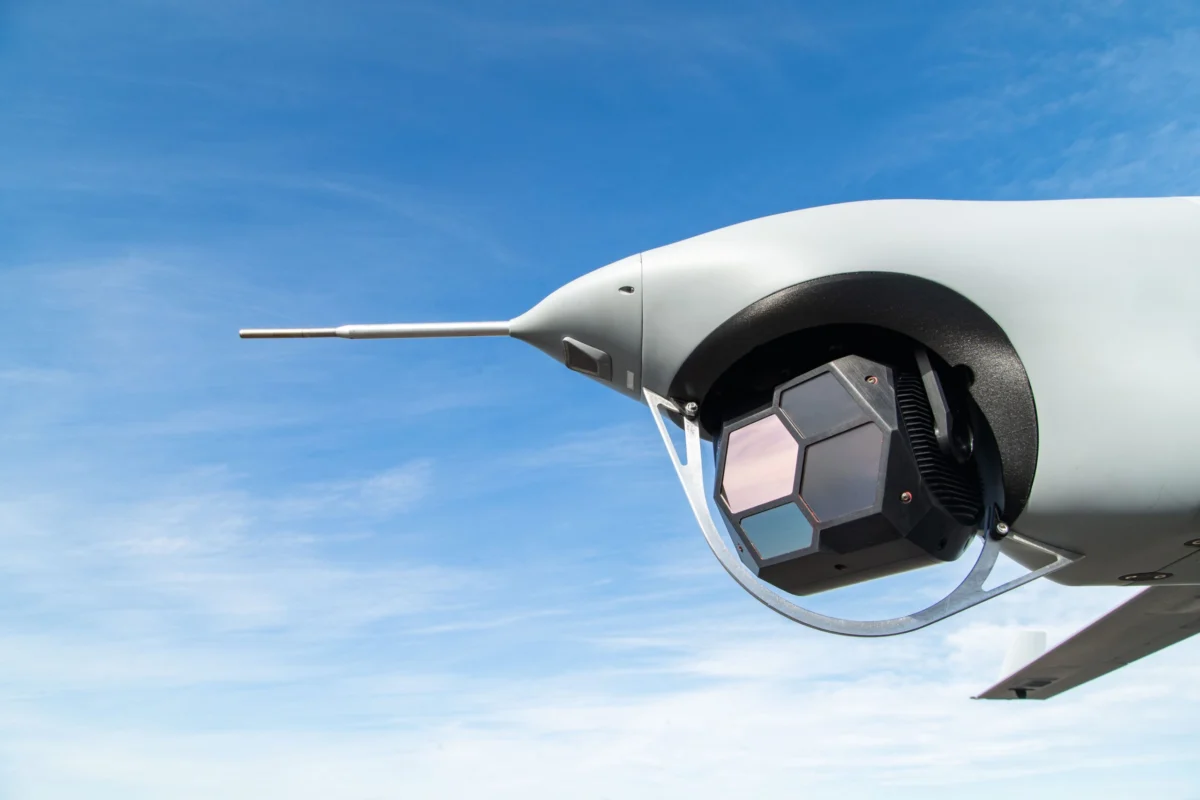
In a significant leap forward for sovereign Australian defense capability, Melbourne-based technology startup Arkeus has successfully secured a contract to supply its cutting-edge Warden hyperspectral optical radar (HSOR) systems to the Australian Army. This strategic acquisition marks a major milestone in the modernization of the Army’s Tactical Uncrewed Aerial System (TUAS) program, promising to provide ground forces with unprecedented visibility in complex operational environments.
The Warden system, which integrates advanced artificial intelligence with multi-modal sensor fusion, is set to be deployed on the Insitu Pacific Integrator—the workhorse of the Australian Army’s long-endurance, tactical surveillance fleet. By equipping these drones with "always-on" wide-area surveillance capabilities that function regardless of light conditions, the Army is effectively transforming its airborne eyes into highly intelligent, autonomous sentinels.
The Technological Edge: What is the Warden?
At the heart of this deal is the Warden system, a proprietary hyperspectral optical radar designed to overcome the limitations of traditional electro-optical and infrared (EO/IR) cameras.
Bridging the Sensor Gap
Conventional drone sensors often struggle with "target fixation." If a camera is zoomed in on a specific object of interest, it inevitably loses track of the wider environment. This creates a significant blind spot, potentially allowing threats to approach from the periphery undetected.
Arkeus has solved this by developing a sensor suite that captures a vast field of view in high-resolution, hyperspectral data. Unlike a standard camera that sees in Red, Green, and Blue (RGB), the Warden system analyzes the electromagnetic spectrum with granular precision. This allows the system to distinguish between objects that might look identical to the naked eye but possess different chemical or physical properties—such as identifying camouflaged assets, detecting subterranean disturbances, or spotting subtle changes in terrain that indicate recent vehicle movement.
AI-Driven Situational Awareness
The "AI" component of the Warden is arguably its most transformative feature. Processing vast amounts of hyperspectral data in real-time is a challenge that would overwhelm a human operator. The Arkeus software utilizes machine learning algorithms to perform "automated change detection."
In practice, this means the Warden system acts as a force multiplier. It can autonomously monitor large areas of interest, flag anomalies to the operator, and maintain a constant track on multiple moving targets simultaneously. This reduces the cognitive load on drone pilots and intelligence officers, allowing them to focus on high-level decision-making rather than manually scanning video feeds.
A Chronology of Progress: From Prototype to Production
The journey of the Arkeus Warden from a startup concept to a frontline military asset has been rapid, reflecting the Australian Defence Force’s (ADF) push toward the "Accelerated Warfare" doctrine.
- Initial Development: Arkeus focused on refining its sensor fusion capabilities, emphasizing the need for a lightweight, power-efficient system that could fit within the limited payload capacity of tactical drones like the Insitu Pacific Integrator.
- November 2025 – The Selection: Following a rigorous vetting process, the Warden system was selected for extensive field trials. This phase was critical, as it required the system to prove its reliability in the harsh, unpredictable environments of the Australian outback. Working closely with Insitu Pacific, the team integrated the sensor into the Integrator’s modular bay.
- Integrated Testing: During the trials, the Warden was put through a series of "stress tests," including low-light operations, dense foliage penetration, and tracking fast-moving targets in cluttered urban simulations. The success of these trials was the catalyst for the current procurement order.
- May 2026 – The Contract Award: The Australian Army officially confirmed the first tranche of the Warden HSOR systems had been acquired, marking the transition from an experimental trial to an operational deployment.
Supporting Data: Why Hyperspectral Matters
To understand the weight of this contract, one must look at the limitations of modern battlefield intelligence. Current surveillance drones rely heavily on visual light. In the "gray zone" of modern conflict, adversaries are increasingly employing sophisticated camouflage, decoys, and night-time maneuvers to hide their movements.
Data from the testing phases suggests that the Warden provides:
- 360-Degree Persistence: While a gimbaled camera looks at one point, the Warden provides a "persistent stare" over a wide area.
- Spectrum Signature Recognition: By identifying the specific spectral signature of materials, the Warden can differentiate between natural vegetation and man-made materials, even if they are covered by camouflage netting.
- Low-Light Superiority: The system’s radar-optical fusion allows for performance that is largely indifferent to traditional "night" conditions, providing clear imagery where infrared cameras might bloom or lose contrast.
The Role of Industry Partners: Insitu Pacific
The partnership with Insitu Pacific is a critical component of this success story. As a subsidiary of Boeing, Insitu Pacific has long been the primary provider of uncrewed systems to the Australian Defence Force. By providing the "Integrator" as a platform, they have created a "plug-and-play" ecosystem for Arkeus.
This modular approach is the future of defense procurement. Rather than building a new drone from scratch every time a new sensor is developed, the Army is opting for an open-architecture model. This allows Australian startups like Arkeus to compete on a global scale, ensuring that the ADF has the latest technology integrated into their existing hardware without the massive lead times associated with bespoke platform development.
Implications for Future Warfare
The acquisition of the Warden system has profound implications for the Australian Army’s operational strategy.
Enhancing Sovereign Capability
Australia has made it a national priority to develop a sovereign defense industry. The Arkeus deal is a testament to the fact that Australian startups can punch well above their weight. By keeping the R&D and manufacturing of these advanced sensors onshore, the ADF ensures it is not reliant on foreign supply chains for its most critical surveillance components.
Tactical Versatility
In the context of the Indo-Pacific region, where the terrain ranges from dense tropical jungles to vast arid deserts, the Warden’s ability to "see through" obstacles is a game-changer. It allows the Army to maintain an "observe, orient, decide, act" (OODA) loop that is significantly faster than any adversary.
The Human-Machine Team
The Army’s shift toward uncrewed systems is not just about replacing soldiers with machines; it is about creating a "Human-Machine Team." The Warden doesn’t make the decision to engage; it provides the intelligence necessary for a human commander to make a fully informed decision. This is a critical distinction in modern defense ethics, ensuring that the final judgment remains with a human operator.
Looking Ahead: What’s Next?
While the initial contract covers the first tranche of systems, industry analysts expect this to be the beginning of a larger rollout. If the Warden performs as expected in active field deployments, it is likely that the Army will look to equip more of its fleet—and potentially other platforms—with similar technology.
Furthermore, the success of Arkeus serves as a signal to the broader Australian tech ecosystem. It demonstrates that the path to defense contracting is open for startups that can solve "hard problems." As the geopolitical landscape continues to shift, the demand for indigenous, AI-driven surveillance solutions will only grow.
Conclusion
The Arkeus-Army deal is more than just a procurement order; it is a signal of maturity for Australia’s defense-tech sector. By integrating the Warden hyperspectral optical radar, the Australian Army is moving into a new era of situational awareness.
As the Integrator drones take to the skies with their new "eyes," they will carry with them the innovation of Australian engineers and the promise of a more secure, informed, and capable force. For Arkeus, the task ahead is to scale production and support the Army in the field, but the foundation has been laid. The Warden is no longer just a prototype—it is a vital part of Australia’s tactical edge.