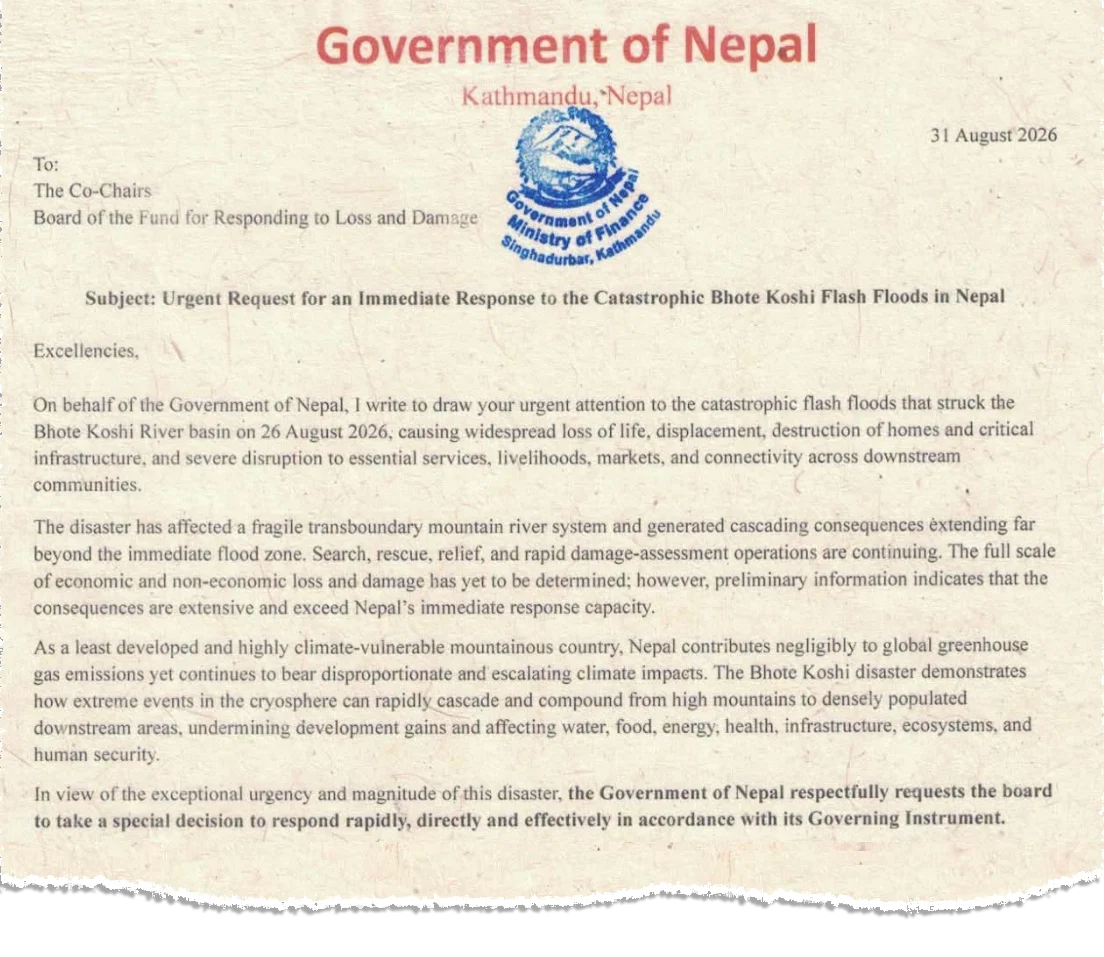
In the wake of the catastrophic late-August floods that devastated Nepal, the Himalayan nation has turned to the international community for a lifeline. The Nepali government has formally requested $20 million from the United Nations’ newly established “Loss and Damage” fund, seeking to mitigate the catastrophic impact of a disaster that has left more than 1,400 people dead and thousands more missing.
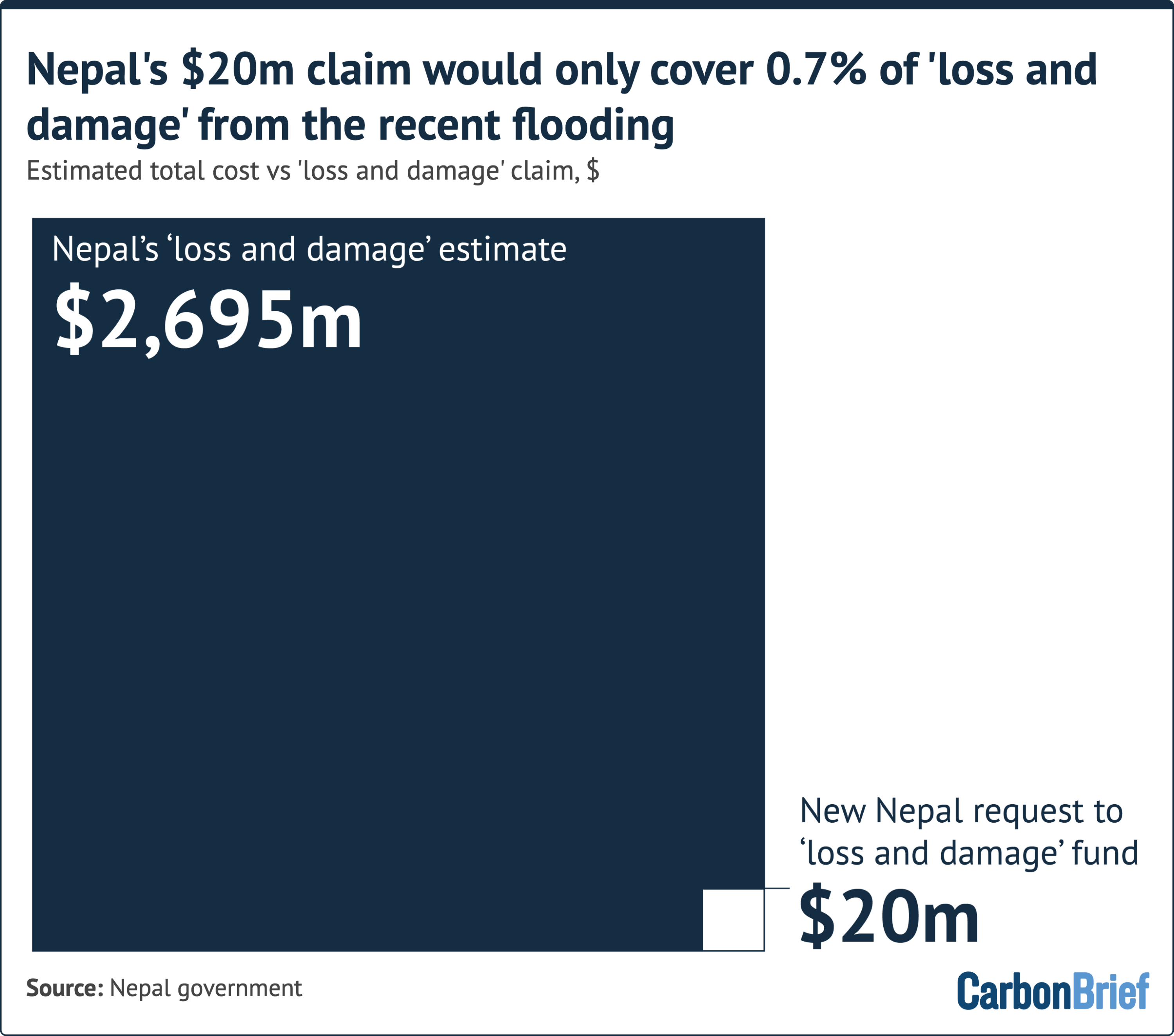
However, this request has become more than just a plea for financial aid; it has evolved into a high-stakes test for the UN’s nascent funding mechanism. With the requested $20 million representing a mere 0.7% of the $2.7 billion in estimated physical damage and economic loss, the move highlights a yawning gap between the reality of climate-driven destruction and the international community’s capacity—or willingness—to respond.
The Scale of the Catastrophe: A Nation Under Water
On August 26, 2026, a massive rock-ice avalanche in the Himalayan border region triggered flash floods of unprecedented intensity. The event, which experts are increasingly linking to the rapid warming of the mountain cryosphere, swept through valleys, obliterating infrastructure, homes, and livelihoods.
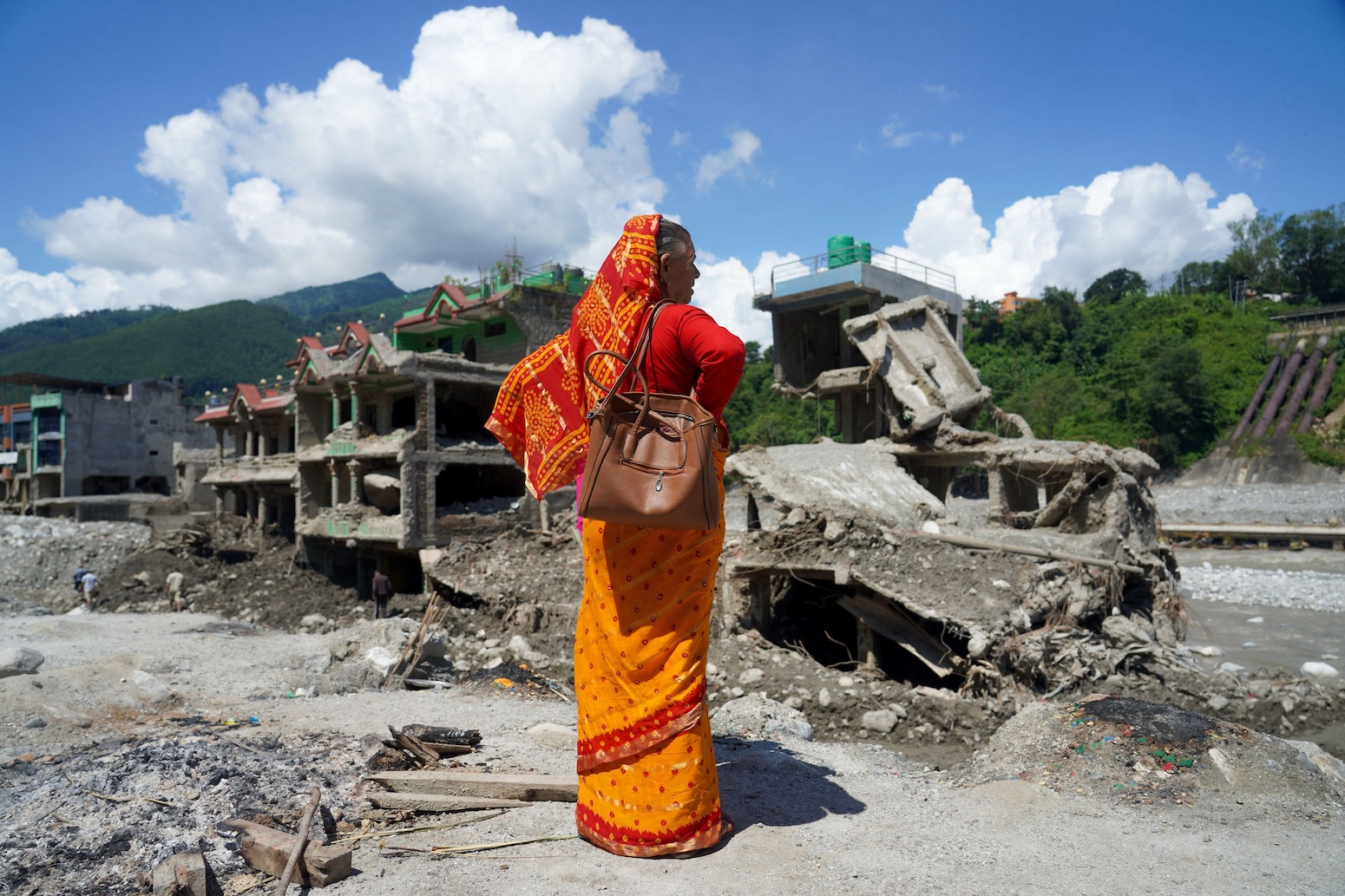
The subsequent preliminary assessment conducted by Nepal’s national disaster management authority paints a harrowing picture. When accounting for immediate physical damage and broader economic losses, the total impact is estimated at $2.7 billion. If the calculation is expanded to include long-term recovery and reconstruction costs—a standard definition of "loss and damage" under international frameworks—the financial requirement jumps to $7.5 billion.
In this context, the $20 million request—the maximum amount currently permitted for a single project under the fund’s guidelines—is, in the words of Nepal’s climate negotiator Raju Pandit Chhetri, "a peanut." Yet, for a nation struggling to stabilize its recovery efforts, it is a critical "rapid response" bridge, not a permanent solution.
Chronology of a Crisis
- August 26, 2026: A catastrophic rock-ice avalanche in the Himalayas triggers devastating flash floods across Nepal.
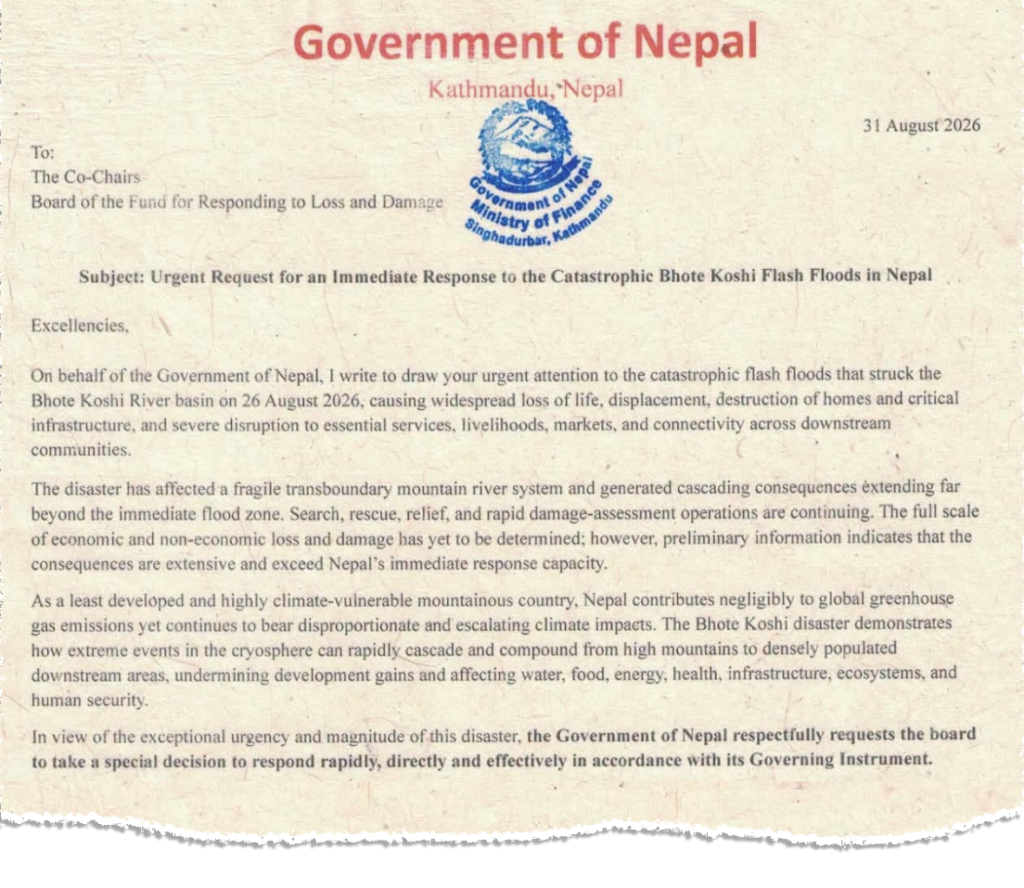
- August 31, 2026: The Nepali government issues an urgent appeal to the UN’s Loss and Damage fund board, requesting financial intervention.
- September 2026: The government submits a formal request for $20 million, citing the urgent need for emergency recovery funds.
- September 14, 2026: Developed-country board members acknowledge the request but offer no concrete funding commitments, suggesting instead a "consultation" process.
- September 24, 2026: Prime Minister Balendra Shah is scheduled to address the UN General Assembly, where he is expected to center his message on climate justice and the specific vulnerabilities of mountain nations.
- December 15, 2026: The next scheduled board meeting for the Loss and Damage fund is slated to occur, two weeks after the conclusion of COP31.
Supporting Data: The Funding Chasm
The friction between Nepal’s request and the fund’s response is emblematic of a broader, systemic failure. Since its inception in 2023, the UN Loss and Damage fund has struggled to reconcile the needs of the Global South with the pledges of the Global North.
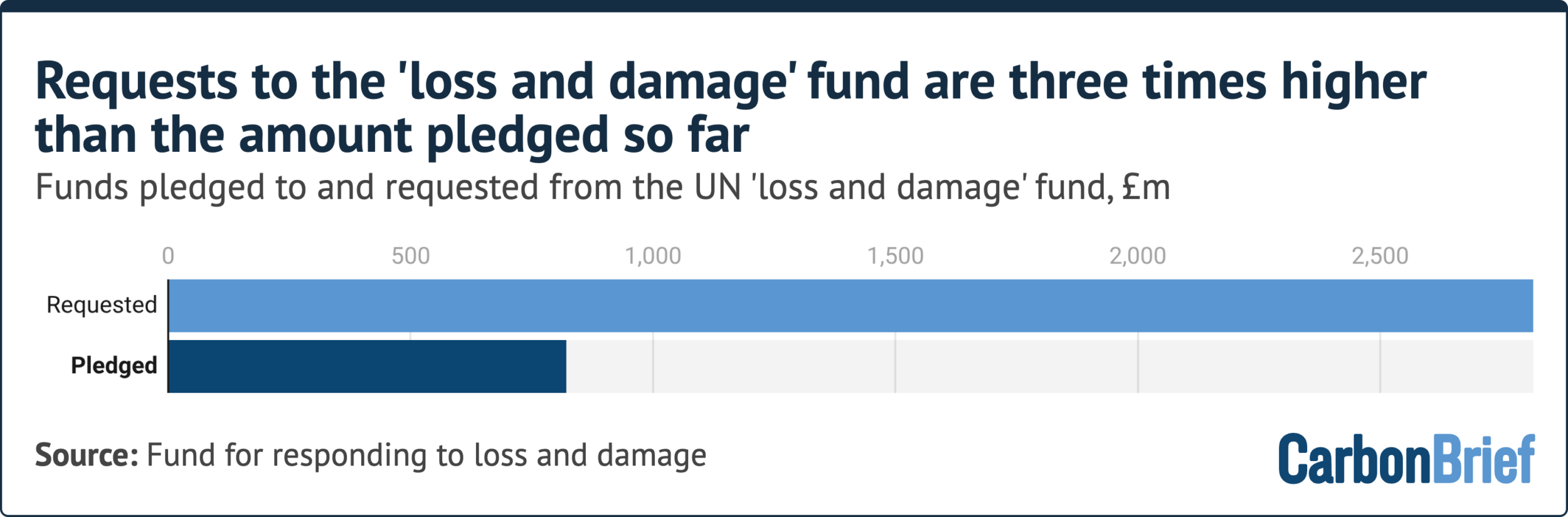
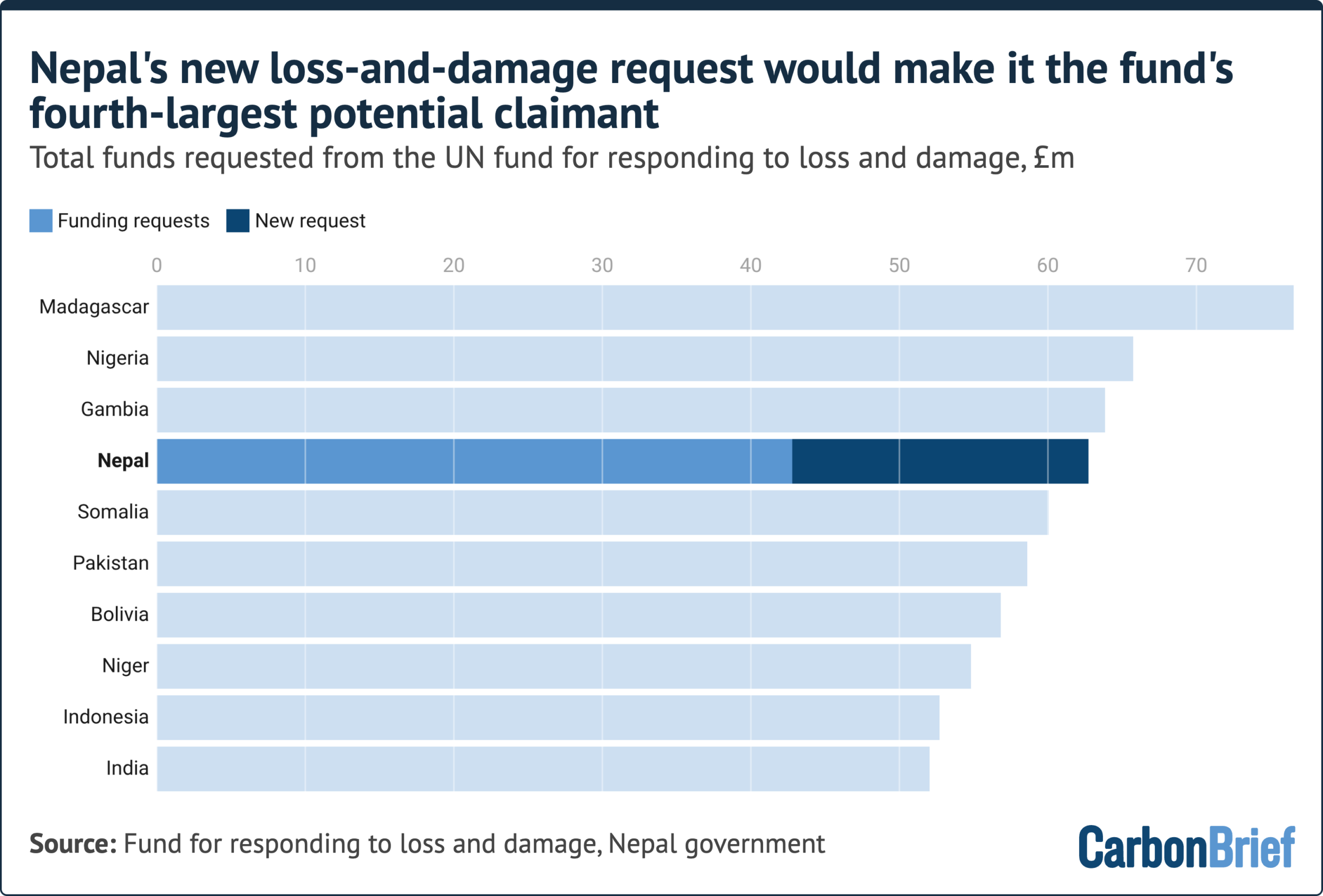
According to data analyzed by Carbon Brief, developing countries have submitted 176 applications to the fund, requesting a total of $2.8 billion. Against this, developed nations have pledged only $822 million. Even more concerning is the fact that only about half of those pledges have actually been deposited into the fund.
Large-scale donors, including France, Italy, and the UAE, have significant outstanding balances, leaving the fund’s coffers—and its credibility—in a precarious state. As of mid-September, despite the fund having $342 million available for its initial round of projects, not a single cent has been distributed to any of the 118 countries currently facing climate-induced disasters.
The breakdown of requests reveals that more than 60% of applications come from Least Developed Countries (LDCs) and small-island states. These nations, which have contributed the least to global carbon emissions, are now effectively paying the price for the world’s failure to curb warming.
The Politics of Delay: Official Responses
The response to Nepal’s application has been characterized by diplomatic caution, a stance that has drawn sharp criticism from climate justice advocates. While board members from Asia-Pacific and African nations have rallied to support Nepal, urging a "provisional set-aside" of funds, their counterparts from developed nations have been notably non-committal.
Harjeet Singh, a veteran loss-and-damage expert and global convener of the Fill the Fund campaign, describes the response as "cold."
"Developed countries have not addressed it because they know that if this happens once, they are going to be under pressure all the time," Singh notes. "They are treating this as a regular development project application rather than an emergency. It is an unacceptable way to handle a crisis of this magnitude."
The reluctance is rooted in the long-standing fear among wealthy nations—the United States, in particular—that acknowledging liability for "loss and damage" could open the floodgates to perpetual legal and financial obligations. By keeping the fund’s processes slow and bureaucratic, donor nations essentially ensure that it functions as a voluntary aid mechanism rather than a system of accountability.
Implications for Climate Justice
The situation in Nepal is a microcosm of the global climate struggle. The scientific evidence is increasingly clear: climate change is no longer a distant threat but a present, destructive reality. Rapid attribution studies have linked the Himalayan disaster to glacial retreat and permafrost thaw—phenomena driven by global temperature rise.
The "Test" for the Fund
For the UN Loss and Damage fund, the Nepal case is a definitive test. If the mechanism cannot provide rapid, flexible support to a country facing a sudden-onset catastrophe, its core mission is fundamentally compromised.
Negotiator Raju Pandit Chhetri puts it bluntly: "If the fund cannot respond in a crisis like this for a country like Nepal—when you have this massive destruction—then what is the use of the fund itself?"
The Role of Attribution
Nepal’s strategy of utilizing climate attribution studies to bolster its claim marks a shift in how vulnerable nations approach international diplomacy. By providing scientific evidence that links local disaster events to global warming, nations are attempting to move the conversation from "charity" to "climate justice." This scientific backing makes it harder for developed nations to dismiss the claims as merely "unfortunate natural events."
Future Outlook
As Prime Minister Balendra Shah prepares to take the podium at the UN General Assembly, the eyes of the climate-vulnerable world will be on the international community. The upcoming December board meeting will be the next major hurdle.

If the fund remains paralyzed by bureaucracy, it risks losing the trust of the very nations it was designed to protect. If it succeeds, it could set a precedent for how the world manages the inevitable losses of a warming planet. For now, however, the silence from the fund’s board, contrasted with the noise of the rebuilding efforts in the Himalayas, serves as a stark reminder that while the climate is changing rapidly, the institutions meant to protect us remain trapped in the glacial pace of old-world politics.
The world is watching to see whether the Loss and Damage fund will be a mechanism for genuine solidarity or another broken promise in the history of international climate negotiations. For the victims in Nepal, the answer cannot come soon enough.