Peja, Kosovo – A chilling premonition became a tragic reality in the village of Vitomirica, Peja, sending shockwaves across Kosovo and reigniting urgent calls for justice and institutional accountability. Arlinda Zekaj, a woman who explicitly warned state institutions that they might only act after her life was taken, was brutally murdered on the evening of October 25. The primary suspect in this heinous crime is her brother-in-law, who remains at large, compounding the grief and outrage surrounding the case.
The murder of Arlinda Zekaj is not merely a singular act of violence but a stark indictment of a system that, despite repeated pleas and warnings, allegedly failed to protect a vulnerable life. Her death has transcended the bounds of a local crime, evolving into a national symbol of the pervasive issue of femicide and the critical gaps in Kosovo’s mechanisms for preventing domestic violence and ensuring the safety of its citizens.
Main Facts: A Predictable Tragedy
The grim discovery was made inside Arlinda Zekaj’s home in Vitomirica. Initial reports from law enforcement and sources close to the investigation suggest that the victim was attacked with an axe, a weapon indicative of the brutal nature of the crime. The alleged perpetrator, Arlinda’s brother-in-law, fled the scene immediately after the incident and has since evaded capture, triggering an extensive manhunt by Kosovo Police.
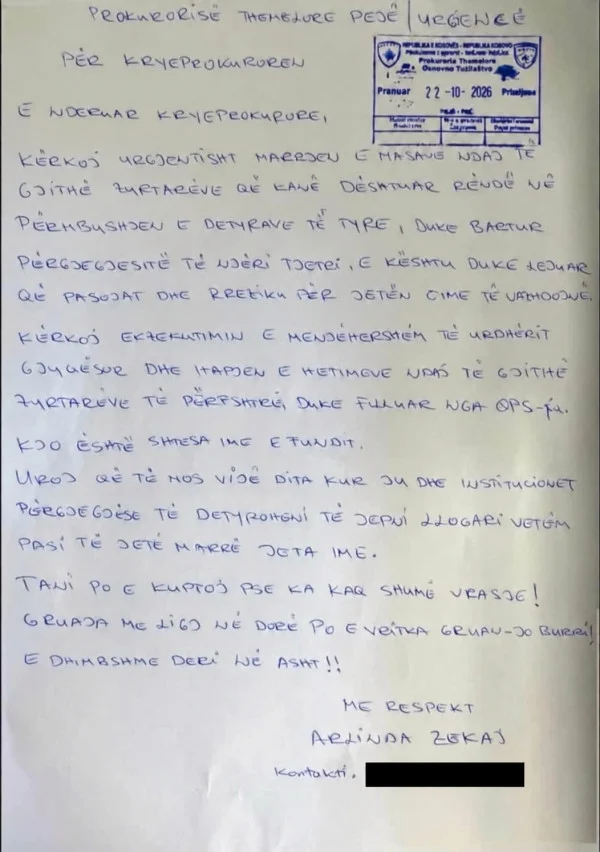
However, the raw facts of the murder itself only scratch the surface of a deeply disturbing narrative. Just three days prior to her death, on October 22, Arlinda Zekaj had submitted a formal complaint to the Chief Prosecutor of the Basic Prosecution in Peja. In this desperate plea, she not only detailed her precarious situation but also leveled serious accusations against state institutions, claiming they had failed to fulfill their official duties in her case. Most hauntingly, she articulated a fear that proved tragically prophetic, writing, "I hope you won’t be forced to account only after my life is taken." This phrase, now echoing with tragic irony, underscores the profound sense of abandonment Arlinda must have felt in her final days.
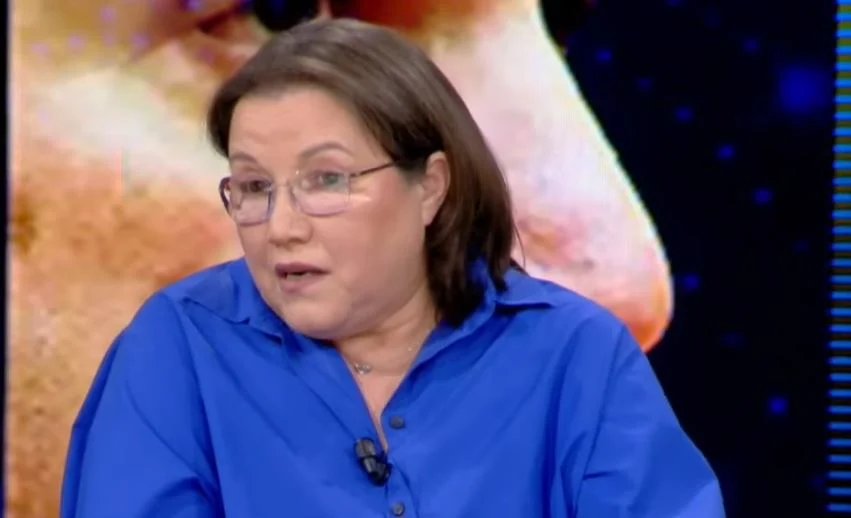
Adelina Hoxha, Arlinda Zekaj’s lawyer, has been vocal in her condemnation, asserting that the responsibility for Arlinda’s death extends far beyond the direct perpetrator. In a powerful statement that captured the national sentiment, Hoxha declared, "Tonight Arlinda was killed by her brother-in-law with an axe. But no, Arlinda was killed by the state." This grave accusation highlights a widespread perception of systemic failures that allowed a woman, who actively sought protection, to fall victim to the very violence she had warned against.
A Desperate Plea Ignored: The Chronology of Neglect
The timeline leading up to Arlinda Zekaj’s murder paints a harrowing picture of a woman caught in a cycle of violence, desperately seeking intervention from the very institutions designed to protect her.
A History of Violence and Unanswered Calls
Sources indicate that Arlinda Zekaj had a documented history of reporting domestic violence. These prior instances, though not fully detailed in initial reports, establish a pattern of abuse that should have triggered a heightened level of vigilance and proactive measures from relevant authorities. Victims of domestic violence often face immense psychological and practical barriers in seeking help, and Arlinda’s repeated attempts to engage the police suggest a persistent threat to her safety that was seemingly underestimated or inadequately addressed. Each report filed, each call made, represented a cry for help that, in retrospect, appears to have been met with insufficient action.
The Final Warning: October 22, 2023
The most critical turning point in this tragic chronology occurred on October 22. With a profound sense of urgency, Arlinda Zekaj delivered a formal submission to the Chief Prosecutor of the Basic Prosecution in Peja. This was not a mere complaint but a comprehensive petition demanding immediate and decisive action. In her letter, which bore the official stamp of receipt, Arlinda articulated her deep concern and the imminent danger she perceived. She expressed her fear that institutions would only react once a human life had been lost – a chilling forecast of her own demise.
Within this poignant document, Arlinda characterized her request as her "last hope," a testament to the emotional and psychological toll her ordeal had taken. She sought a thorough investigation into institutional responsibilities, specifically accusing officials of failing to perform their duties. Furthermore, she demanded concrete actions to address her situation, including the execution of a judicial decision pertaining to the equal utilization of her home, suggesting complex property or residency disputes contributing to her vulnerability. Her direct appeal for help with domestic violence issues, relayed to the police on earlier occasions, underscored the multi-faceted nature of the threats she faced.
The Day of the Murder: October 25, 2023
Just three days after her final, desperate plea, tragedy struck. On October 25, at approximately 7:00 PM, authorities were alerted to another incident of domestic violence involving Arlinda Zekaj. According to police statements, Arlinda was escorted to the police station for an interview, and her husband was subsequently arrested and detained for 48 hours.
What transpired next, as recounted by the police, is a point of considerable contention and controversy. Police stated that Arlinda, "with her own free will," was then transported back to her home in Vitomirica village. This assertion raises critical questions, particularly in light of her prior warnings and the subsequent events. For a victim who had explicitly feared for her life and accused institutions of negligence, the decision to return her home – allegedly voluntarily – rather than ensuring her placement in a safe house or alternative secure accommodation, is under intense scrutiny.
Later that same evening, Arlinda Zekaj was found murdered inside her residence, allegedly by her brother-in-law using an axe. The suspect managed to escape the scene, plunging the community into despair and igniting a national debate about the efficacy of protection mechanisms for victims of domestic violence. The sequence of events, from her final desperate warning to her return home and eventual murder, paints a picture of systemic failure that critics argue is tantamount to state complicity in her tragic demise.
Systemic Failures: Supporting Data and Context
Arlinda Zekaj’s murder cannot be viewed in isolation. It is a grim reflection of deeper, systemic issues plaguing Kosovo’s response to gender-based violence, particularly femicide and domestic abuse.
The Shadow of Femicide in Kosovo
Kosovo, like many countries in the Western Balkans, grapples with a persistent and alarming prevalence of violence against women. Femicide, the gender-related killing of women and girls, remains a grave concern, often representing the horrific culmination of long-term domestic abuse. While specific statistics may vary, reports from local and international organizations consistently highlight that domestic violence is a widespread issue, frequently underreported and inadequately addressed. Cultural norms, patriarchal structures, and societal tolerance for certain forms of violence contribute to an environment where women are disproportionately at risk. Arlinda’s case, with its chilling premonition, serves as a stark reminder that many victims live in constant fear, often knowing their abusers and anticipating the worst, yet finding insufficient refuge in state protections.
Legal Framework and Its Gaps
Kosovo has made strides in establishing a legal framework to combat domestic violence. The Law on Protection Against Domestic Violence provides for protective measures, and Kosovo has ratified international instruments such as the Istanbul Convention, which mandates comprehensive measures to prevent violence, protect victims, and prosecute perpetrators. These legal instruments, on paper, offer robust protections.
However, the critical challenge lies in the implementation of these laws. Activists and experts frequently point to several gaps:

- Inadequate Risk Assessment: The ability of institutions to accurately assess the level of danger a victim faces is often compromised, leading to inappropriate decisions, such as returning a victim to a dangerous environment.
- Lack of Coordination: Effective protection requires seamless cooperation between police, prosecutors, courts, social services, and NGOs. Gaps in communication, information sharing, and joint action plans can leave victims vulnerable.
- Insufficient Training and Resources: Frontline responders, including police officers, prosecutors, and judges, may lack specialized training in handling domestic violence cases, understanding trauma, and applying gender-sensitive approaches. Furthermore, safe houses and support services are often underfunded and overstretched.
- Enforcement Deficiencies: Even when protection orders are issued, their enforcement can be lax, allowing perpetrators to continue threatening victims with impunity.
Arlinda’s complaint about "abuse of official position or authority" directly implicates these systemic deficiencies, suggesting a failure not of law, but of its diligent and effective application.
The Role of Institutions in Preventing Violence
State institutions are entrusted with the solemn duty to prevent violence and protect citizens. In cases of domestic violence, this responsibility is multi-faceted:
- Police: To respond promptly, investigate thoroughly, document incidents, arrest perpetrators, and ensure the immediate safety of victims.
- Prosecution: To review cases, initiate criminal proceedings, and ensure that perpetrators are brought to justice.
- Courts: To issue protection orders, impose penalties, and ensure the fair and timely administration of justice.
- Social Services: To provide psychosocial support, temporary shelter, and assistance in rebuilding lives away from abusive environments.
When a victim like Arlinda Zekaj explicitly flags institutional shortcomings and predicts her own demise, it signals a profound breakdown in this protective chain. Her case underscores that merely having laws is not enough; their consistent, competent, and compassionate application is paramount to saving lives.
Official Responses and Mounting Pressure
The immediate aftermath of Arlinda Zekaj’s murder has been marked by a flurry of official statements and actions, alongside intensifying public scrutiny and demands for accountability.
Pre-Murder Institutional Engagement: A Record of Action, or Inaction?
Following the murder, the Basic Prosecution in Peja confirmed that Arlinda Zekaj’s complaint, filed on October 22, had indeed been received by the Chief Prosecutor. They stated that, upon receipt and review, the Chief Prosecutor had ordered its registration for "treatment by the competent prosecutor." The stated purpose was to evaluate the claims in terms of criminal responsibility, specifically focusing on the criminal offense of "Abuse of Official Position or Authority."
Furthermore, the Prosecution announced that Arlinda’s submission was forwarded with urgency to several pertinent institutions: the Regional Police Directorate in Peja, the Basic Court in Peja, the Directorate for Social Welfare, and the Center for Social Work. These institutions were tasked with reviewing the claims and verifying any potential omissions or actions by relevant officials within their institutional responsibilities.
Regarding Arlinda’s request for the execution of a judicial decision concerning the equal use of her home, the Prosecution asserted that this decision "was executed with the mediation of the on-duty prosecutor, in cooperation with the Kosovo Police." This claim suggests that at least one of Arlinda’s specific demands for legal enforcement had been addressed prior to her death. However, the timing and efficacy of this execution, particularly in relation to her overall safety, remain critical questions.
Post-Murder Official Statements: Promises Amidst Outrage
In response to the murder itself, the Peja Prosecution confirmed the incident, stating that "officials of the Kosovo Police, with all relevant units, as well as the Chief Prosecutor and the Prosecutor of Serious Crimes, arrived at the scene." They emphasized that "all circumstances of the case, including the claims of the deceased and the actions of the responsible institutions, will be treated with seriousness and professionalism, in accordance with legal procedures." This commitment to a thorough investigation is a standard procedural response, but it now carries the heavy weight of Arlinda’s pre-murder accusations.
The police, for their part, reiterated their account of the events of October 25. They confirmed receiving a report of domestic violence around 7:00 PM, the victim’s interview at the police station, and the arrest and 48-hour detention of her husband. Crucially, they maintained their controversial claim that "the victim, with her own free will, was escorted to her home in Vitomirica village." Police also confirmed that the alleged perpetrator of the murder remains at large. This statement, particularly the "voluntary escort" claim, has drawn significant criticism from civil society and legal experts, who question the judgment and protocol followed given Arlinda’s documented fears.
The Voice of the Advocate: "Killed by the State"
The most searing condemnation came from Arlinda’s lawyer, Adelina Hoxha, whose words encapsulate the profound sense of betrayal felt by many. Beyond accusing the brother-in-law, Hoxha’s direct indictment of "the state" resonates deeply within a society grappling with persistent issues of institutional accountability. She revealed a poignant detail from her interactions with Arlinda, stating, "A woman who swore to me to do everything, that life was meaningless to her without her son." This glimpse into Arlinda’s personal anguish highlights her desperation and the stakes involved, suggesting that her fight for justice was intrinsically linked to her desire to secure a future with her child. Hoxha’s promise to reveal "all the evidence" signals her intent to pursue accountability vigorously, suggesting that there is more to be uncovered regarding the alleged institutional failings. Her statement transforms Arlinda’s case from a mere crime report into a national reckoning over the state’s fundamental duty to protect its citizens.
Implications and the Call for Accountability
The tragic death of Arlinda Zekaj has ignited a fierce debate across Kosovo, bringing to the forefront critical questions about institutional integrity, victim protection, and the pervasive issue of gender-based violence.
A Crisis of Trust
Arlinda’s murder, particularly given her prophetic warning, has severely eroded public trust in the justice system and state institutions responsible for protecting victims of domestic violence. For many, it confirms a deeply held fear: that the system is broken, bureaucratic, and ultimately incapable or unwilling to safeguard those most vulnerable. This crisis of trust has far-reaching implications, potentially deterring other victims from seeking help, fearing that their pleas, too, will fall on deaf ears or even lead to greater danger. It sends a chilling message that even when a victim follows all prescribed procedures, the ultimate protection cannot be guaranteed.
The Imperative for Accountability
The calls for accountability are multifaceted. Firstly, there is the immediate demand for the swift apprehension and prosecution of Arlinda’s alleged murderer. This is a fundamental step in ensuring justice for the victim and her family.
Secondly, and perhaps more profoundly, there is an urgent demand for a thorough, independent, and transparent investigation into the alleged institutional failures. This investigation must not only examine the processing of Arlinda’s October 22 complaint but also scrutinize the actions taken (or not taken) in response to her prior reports of domestic violence, including the controversial decision to return her home on the day of her murder. The charge of "Abuse of Official Position or Authority," initially raised by Arlinda herself, must be pursued rigorously. If officials are found to have neglected their duties, shown negligence, or acted improperly, there must be clear and decisive consequences, ranging from disciplinary actions to criminal charges, to send a strong message that such failures will not be tolerated.
Towards a Safer Future: Systemic Reforms
Arlinda Zekaj’s death must serve as a catalyst for fundamental systemic reforms. These reforms should include:
- Enhanced Risk Assessment Protocols: Implementing standardized, evidence-based risk assessment tools across all relevant institutions to accurately gauge the danger faced by victims and inform protection strategies.
- Improved Inter-Institutional Coordination: Establishing clearer lines of communication, mandatory information sharing protocols, and joint action plans between police, prosecution, courts, social services, and victim support organizations.
- Specialized Training and Resources: Providing continuous, specialized training for all personnel involved in domestic violence cases, focusing on trauma-informed care, gender sensitivity, and effective intervention strategies. Allocating adequate resources to safe houses, counseling services, and long-term support programs for survivors.
- Robust Enforcement of Protection Orders: Ensuring that protection orders are strictly enforced and that any breaches are met with immediate and severe consequences for perpetrators.
- Public Awareness Campaigns: Launching sustained public awareness campaigns to challenge patriarchal norms, educate the public about the dynamics of domestic violence, and encourage reporting.
The tragedy of Arlinda Zekaj is a painful reminder that the fight against femicide and domestic violence is not merely a legal battle but a societal one. Her desperate last words, now etched into the collective consciousness, serve as a powerful and enduring plea for a future where no woman’s life is sacrificed to institutional apathy or neglect. Her death must not be in vain, but rather a turning point that compels Kosovo to build a justice system truly capable of protecting its most vulnerable citizens.