In the contemporary digital economy, the traditional boundaries between retailers and their suppliers are dissolving. No longer viewed merely as transactional entities, marketplace partners are increasingly becoming the architects of a brand’s long-term success. As consumer expectations shift toward hyper-personalized experiences, seamless delivery, and curated assortments, the imperative for deep, strategic collaboration has never been greater.
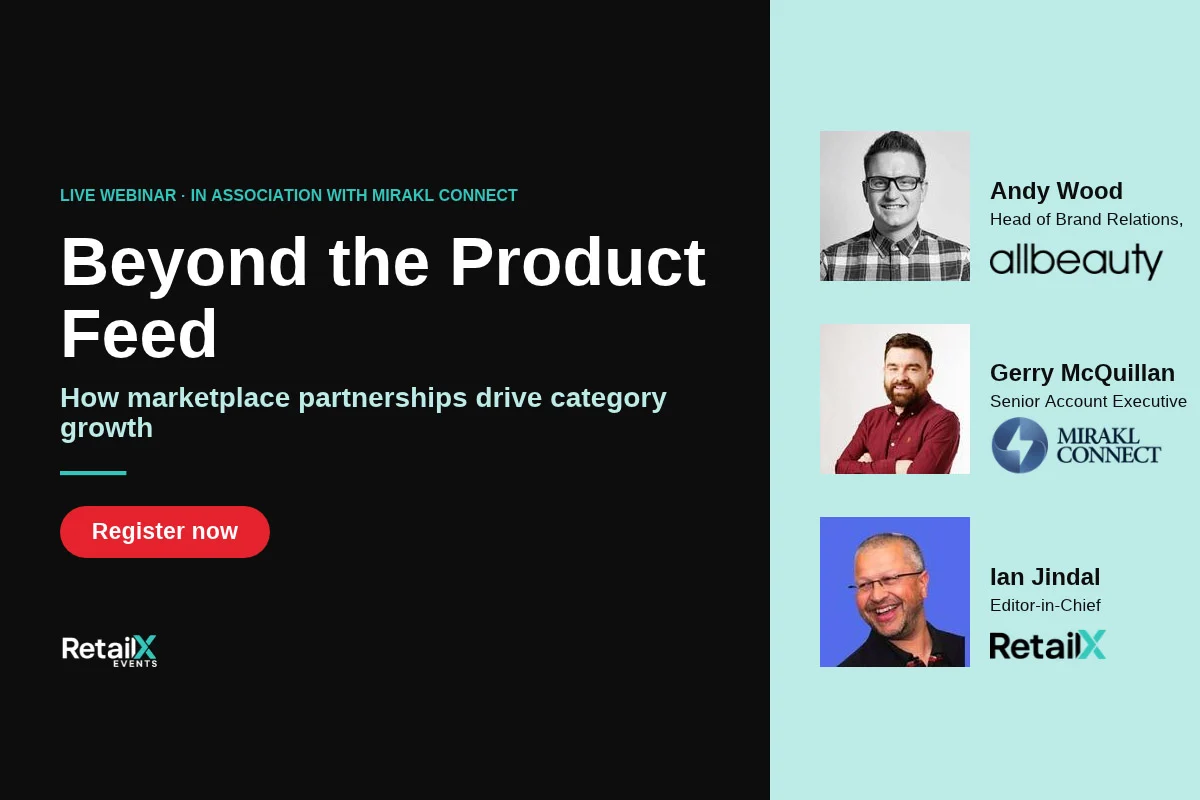
On Wednesday, 18 November 2026, at 14:00 UK Time, industry leaders will convene for an exclusive RetailX webinar to dissect the mechanics of these high-stakes partnerships. Featuring Andy Wood, Head of Brand Relations at Allbeauty, and Gerry McQuillan of Mirakl Connect, the session—moderated by RetailX Editor-in-Chief Ian Jindal—promises to redefine how retailers and partners navigate the complexities of the modern marketplace ecosystem.
Main Facts: The Evolution of the Retail Ecosystem
The premise of the upcoming webinar is rooted in a fundamental shift in retail strategy. For decades, the retail-supplier relationship was characterized by a push-and-pull dynamic: the retailer demanded goods, and the supplier provided them at a cost. Today, this relationship is increasingly defined by "shared success" models.
Strategic alliances now encompass shared data pools, integrated marketing strategies, and co-developed category roadmaps. The upcoming discussion will focus specifically on how a marketplace partner can transcend the role of a product supplier to become an extension of the retailer’s internal team. This includes:
- Category Strategy: Collaborative planning to identify market gaps and emerging trends.
- Assortment Optimization: Data-driven decisions on product listings to maximize conversion.
- Creative Assets: The synchronization of brand messaging to ensure a consistent customer journey.
- Operational Execution: Real-time problem solving and logistical agility.
The webinar aims to move beyond theoretical benefits, providing a blueprint for achieving these outcomes in the volatile, high-speed beauty sector, where trends shift as quickly as social media algorithms.
Chronology: The Journey Toward Integrated Retail
To understand the urgency of this webinar, one must look at the timeline of digital retail transformation over the past decade.
- 2015–2018: The Marketplace Awakening. Retailers began to realize that inventory-heavy models were prone to stagnation. The rise of the "platform economy" saw early adopters integrating third-party sellers to diversify their offerings.
- 2019–2021: The Pandemic Catalyst. The global health crisis forced an unprecedented acceleration in digital maturity. Retailers who had failed to cultivate strong relationships with their digital partners found themselves unable to pivot during supply chain disruptions.
- 2022–2024: The Era of Specialization. As digital noise increased, generalist marketplaces faced a challenge from niche players. Brands began prioritizing "curated marketplaces"—platforms that offer specialized expertise and high-quality, verified assortments.
- 2025–2026: The Partnership Maturity Phase. We are currently in a period where "partnership" is the key competitive differentiator. Retailers are now leveraging AI-driven insights from partners to predict demand, reduce waste, and enhance the end-to-end customer experience.
The November 18 session represents a maturation of these trends, focusing on the human element—the "Brand Relations" function—that keeps these digital ecosystems functioning smoothly.
Supporting Data: Why Strategic Alignment Matters
While qualitative benefits like "brand consistency" are often cited, the quantitative impact of strong retail-marketplace partnerships is significant. Market data consistently shows that businesses prioritizing partner integration outperform their peers in several key performance indicators (KPIs):
1. Conversion Rates and Customer Loyalty
Data from recent industry reports indicates that marketplaces utilizing deep-integrated partner strategies see a 15–20% higher conversion rate. This is attributed to more accurate product information and superior creative assets provided by the partners themselves, who know their products best.
2. Agility in Supply Chain Management
In categories like beauty, shelf-life and trend-sensitivity are critical. Partnerships that allow for real-time inventory visibility and automated order routing reduce out-of-stock incidents by an average of 25%. This "operational readiness" is a central theme of the upcoming RetailX discussion.
3. Customer Acquisition Costs (CAC)
When partners and retailers align on creative assets and marketing spend, the redundancy of effort is reduced. Co-branded initiatives have been shown to lower CAC by approximately 12%, as the marketing reach of both entities is combined to target specific customer personas.
Official Perspectives: Expert Insights
In preparation for the event, we look at the core philosophies of the speakers. Andy Wood, representing Allbeauty, has long championed the idea that "the brand is the product, but the experience is the partnership."
The Allbeauty Philosophy
For Allbeauty, the beauty category is particularly sensitive. It is not enough to simply list a fragrance or a skincare serum; the customer requires education, visual verification, and assurance of authenticity. Wood’s approach involves empowering the partner to curate their own digital "shop-in-shop," giving them the tools to maintain the brand’s integrity while benefiting from the retailer’s traffic and logistics infrastructure.
The Mirakl Connect Perspective
Gerry McQuillan of Mirakl Connect provides the technological backbone for these relationships. Mirakl’s perspective is that the "marketplace model" is a technology-enabled business strategy. According to McQuillan, the technology is only as good as the human processes built on top of it. He emphasizes that "operational readiness"—the ability to scale, pivot, and respond—is the primary factor that separates successful marketplaces from those that merely act as digital flea markets.
Implications: The Future of the Retail Landscape
The implications of this webinar extend far beyond the beauty industry. As retailers look to survive in an environment dominated by mega-platforms, the strategy discussed by Wood and McQuillan provides a blueprint for resilience.
The Death of the "Vendor" Model
The most significant implication is the obsolescence of the term "vendor." If a company is merely a vendor, they are replaceable by the next lowest bidder. If they are a "strategic partner," they become an essential pillar of the retailer’s value proposition. Businesses that fail to integrate their partners will likely find themselves at a disadvantage, unable to match the speed and quality of those who have embraced the collaborative model.
Sustainable Commercial Results
The webinar also addresses the "sustainable commercial results" aspect. In an age where ESG (Environmental, Social, and Governance) goals are paramount, strategic alignment reduces overproduction, improves logistics efficiency, and ensures that the right products are in the right markets at the right time. This is not just a commercial win; it is an environmental one.
The Human Element
Despite the focus on AI and digital infrastructure, the session underscores that at the heart of every successful marketplace is human relationship management. The ability of a Brand Relations lead to communicate with a marketplace partner, negotiate effectively, and align creative visions is a skill that cannot be automated.
Conclusion: How to Participate
The RetailX webinar, "Strategic Synergy: The Future of Retail-Marketplace Partnerships," is a must-attend for category managers, retail executives, and brand partners looking to future-proof their operations.
By attending, participants will gain:
- Actionable frameworks for fostering deeper partner relationships.
- A deeper understanding of how to manage category strategy in a high-speed digital environment.
- Insights into balancing quality and relevance while maintaining operational agility.
Event Details:
- Date: Wednesday 18 November 2026
- Time: 14:00 UK Time
- Platform: RetailX Webinar Series
To ensure your organization is positioned for the next phase of digital retail evolution, registration is essential. Do not miss the opportunity to hear from the leaders who are currently setting the standard for the industry. Scroll down on the official RetailX site to access the registration form and secure your spot in this critical conversation.
The future of retail is not solitary; it is collaborative. As Andy Wood and Gerry McQuillan will illustrate, the retailers of tomorrow are those who understand that when you help your partners succeed, you build an ecosystem that is, by definition, unstoppable.