By Mark Segal | October 8, 2026
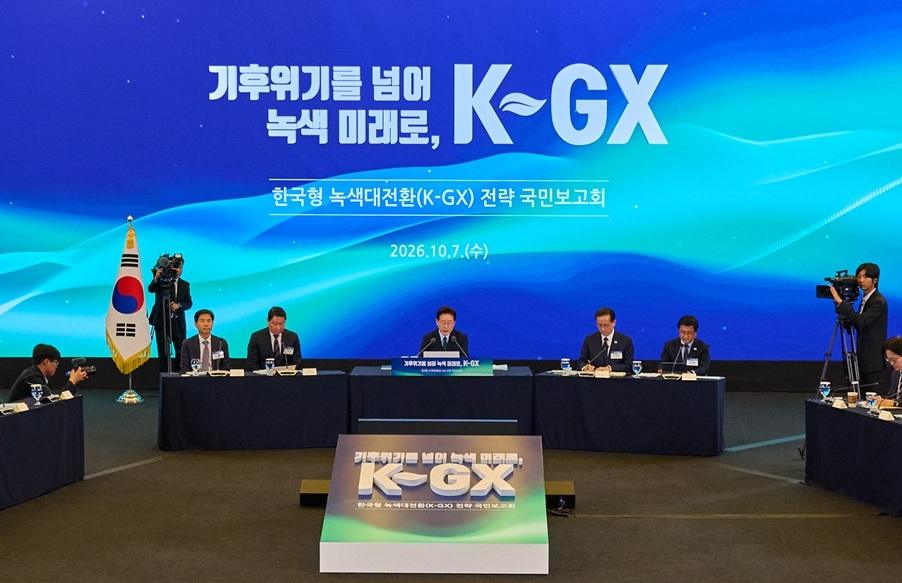
In a landmark policy shift that signals a fundamental transformation of its industrial engine, the South Korean government has officially unveiled the “Korean Green Transformation (K-GX)” Strategy. This ambitious ten-year roadmap aims to mobilize 1,000 trillion won (approximately USD $747 billion) to accelerate the nation’s transition toward a carbon-neutral economy. By systematically decoupling economic growth from greenhouse gas emissions, Seoul intends to secure its competitive edge in the burgeoning global green market while fulfilling its mid-to-long-term climate pledges.
The K-GX Strategy represents arguably the most significant economic restructuring effort in the nation since its rapid industrialization in the late 20th century. It seeks to bridge the gap between traditional manufacturing prowess and the urgent necessity of a net-zero future.
The Strategic Core: Decoupling Growth from Carbon
At its heart, the K-GX Strategy is designed to resolve a long-standing tension in the South Korean economy: the reliance of its massive manufacturing sector—including steel, semiconductors, and petrochemicals—on carbon-intensive energy sources.
The government’s primary objective is to demonstrate that climate action is not a cost-center, but a catalyst for modernization. By investing heavily in R&D and infrastructure, the administration aims to modernize the nation’s industrial backbone, ensuring that South Korean products remain compliant with tightening international environmental standards, such as the European Union’s Carbon Border Adjustment Mechanism (CBAM).
"The K-GX Strategy is not just an environmental policy; it is an absolute structural rebirth of Korea’s industrial landscape," said Finance Minister Lee Hyoung-il. "By combining aggressive fiscal backing with regulatory relief, we are giving our core manufacturing sectors the predictability and capital they need to lead the global green economy."
A Multi-Tiered Financing Framework
The sheer scale of the $747 billion mobilization requires a sophisticated financial architecture. The government has structured the funding into three distinct pillars to maximize efficiency and crowd in private investment.
1. Direct Government Investment (200 Trillion Won)
The government will commit 200 trillion won directly from the state budget. These funds are earmarked for critical green infrastructure, foundational research and development (R&D) into breakthrough technologies like green hydrogen and carbon capture, and public-sector energy transitions.
2. State-Backed Climate Finance (570 Trillion Won)
To lower the cost of capital for private firms, the state will leverage its creditworthiness to provide 570 trillion won in low-interest loans, green bond issuances, and strategic credit guarantees. This pillar is designed to de-risk green projects, making them more attractive to institutional investors and commercial banks.
3. Private Sector Mobilization (230 Trillion Won)
The final 230 trillion won is expected to come from private-sector projects. This segment will be supported by a suite of regulatory incentives, tax credits, and public-private partnership (PPP) frameworks, ensuring that private capital is directed toward national priority sectors.
Chronology of the Transition
The rollout of the K-GX Strategy is planned as a phased integration to ensure market stability:
- Phase 1 (2026–2028): The Foundation Phase. Focus will be on regulatory reform, the expansion of green bond markets, and initial R&D funding for high-emitting industries like steel and cement.
- Phase 2 (2029–2032): The Scaling Phase. Massive deployment of renewable energy infrastructure, the completion of national ultra-fast charging networks for electric vehicles, and the commercialization of pilot carbon-capture programs.
- Phase 3 (2033–2036): The Integration Phase. Full-scale adoption of zero-emission technologies across the manufacturing supply chain, achieving the milestone of 70% zero-emission vehicle sales and solidifying grid modernization.
Priority Sectors: Industrial and Energy Transformation
The K-GX Strategy targets three specific domains where the impact of decarbonization will be most profound:
Industrial Decarbonization
South Korea’s status as a global manufacturing hub makes industrial decarbonization the most significant challenge. The strategy prioritizes the "hard-to-abate" sectors:
- Steel: Transitioning to hydrogen-based reduction processes.
- Petrochemicals and Refining: Shifting toward circular economy models and bio-feedstocks.
- Semiconductors & Displays: Implementing ultra-low energy manufacturing processes and renewable energy sourcing for energy-hungry fabrication plants.
Renewable Energy Expansion
The strategy sets a firm target of 100 GW of domestic renewable energy capacity. The government acknowledges the geographical constraints of the peninsula and is prioritizing offshore wind—leveraging the nation’s world-class shipbuilding expertise—and utility-scale solar installations. Parallel to this, massive grid modernization is planned to manage the intermittency of renewable energy.

Clean Mobility
The transition to clean mobility is a cornerstone of the strategy. The government aims for zero-emission vehicles (ZEVs) to account for over 70% of all new vehicle sales by 2035. This will be achieved through:
- Subsidy Reform: A systematic phase-out of tax subsidies for internal combustion engines.
- Infrastructure: A rapid, national rollout of ultra-fast charging networks to eliminate "range anxiety" and facilitate widespread EV adoption.
Official Responses and Stakeholder Implications
The Ministry of Climate, Energy and Environment has been explicit in its messaging: this is about survival and self-reliance. In a formal statement, the ministry emphasized that the framework serves as a guarantee of the country’s adherence to global carbon neutrality milestones, while simultaneously securing the next generation of energy self-reliance and creating high-value green jobs.
Industry leaders have generally welcomed the policy, noting that the combination of "predictability and capital" mentioned by Minister Lee is exactly what companies have been seeking. However, some analysts warn that the success of the 230 trillion won in private sector investment depends heavily on how effectively the government executes its regulatory reform agenda.
For the international community, South Korea’s move serves as a bellwether for how export-oriented economies can manage the transition to net-zero. By aligning fiscal policy with climate goals, Seoul is attempting to demonstrate that a heavy industrial base is not a liability in the age of climate change, but rather an opportunity for technological leadership.
Broader Economic Implications
The K-GX Strategy carries significant weight for global markets. As South Korean companies occupy dominant positions in the global supply chains for semiconductors, electric vehicle batteries, and ships, their transition to green production will have ripple effects across the global economy.
Global Competitiveness
By investing in green manufacturing, South Korea is hedging against the risk of carbon tariffs. As the United States and the European Union tighten their environmental requirements for imports, South Korean firms that adopt K-GX standards will gain a distinct competitive advantage over peers in regions with slower decarbonization timelines.
Energy Security
A recurring theme in the K-GX Strategy is "energy self-reliance." Currently, South Korea is heavily dependent on imported fossil fuels. By expanding renewable energy capacity to 100 GW, the nation is essentially moving toward a model of energy independence, which reduces vulnerability to geopolitical volatility in global oil and gas markets.

Social and Labor Impact
The government has explicitly committed to creating "green jobs." This implies a major retraining and upskilling program for the workforce currently employed in traditional automotive and power-generation sectors. The success of the strategy will be measured not only in CO2 reduction but in the government’s ability to manage this labor transition without triggering social unrest or regional economic decline.
Conclusion: A New Chapter for South Korea
The launch of the $750 billion K-GX Strategy is a defining moment for South Korea. It reflects a clear-eyed assessment of the risks associated with the global climate crisis and a proactive decision to treat those risks as a mandate for innovation.
While the scale of the investment is vast, the economic, geopolitical, and environmental stakes are higher. Over the next decade, the world will be watching to see if South Korea can successfully transform its industrial identity. If successful, the K-GX model may well become the blueprint for other developed nations seeking to reconcile high-tech industrial growth with the absolute necessity of a sustainable, low-carbon future.
As the government begins the task of rolling out these initiatives, the focus will now shift to the implementation phase—where the interplay between state funding, regulatory reform, and private enterprise will determine whether South Korea can truly achieve its vision of a green industrial rebirth.