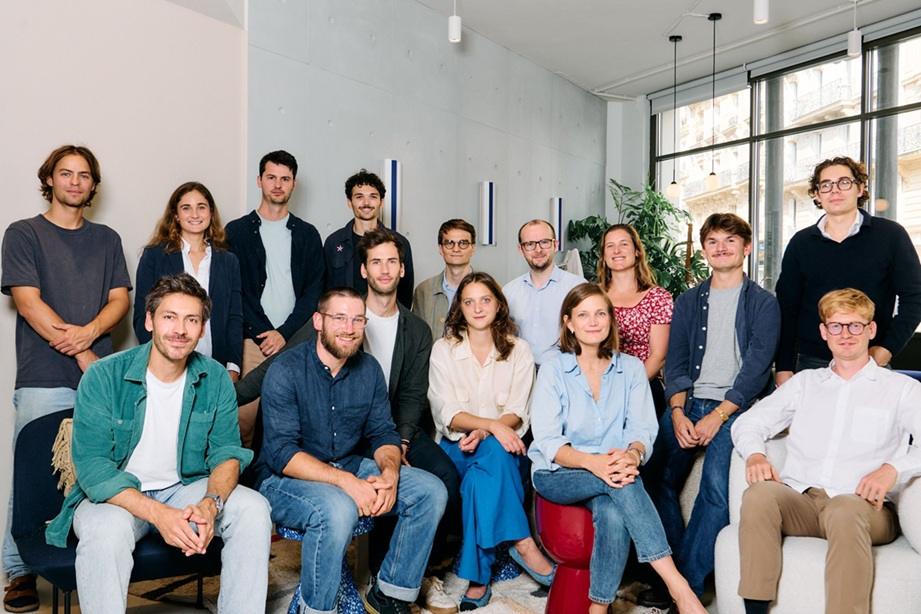
Epyr Secures €15 Million to Decarbonize European Industry Through Thermal Energy Storage
In a significant move toward the industrial decarbonization of Europe, Paris-based energy tech startup Epyr has successfully closed a €15 million (USD$16.8 million) Series A funding round. This infusion of capital marks a critical milestone for the two-year-old company, which is positioning itself at the vanguard of the transition from fossil-fuel-reliant industrial heat processes to advanced, grid-integrated electric alternatives.
As industrial heat consumption accounts for approximately 20% of global energy usage—much of which remains tethered to volatile natural gas markets—Epyr’s technology arrives as a timely solution for European manufacturers seeking to decouple their production lines from fossil fuels while optimizing energy costs.
The Core Mission: Transforming Industrial Heat
Founded in 2024 by visionaries Léa Dardenne and Bastien Oggeri, Epyr was built on the premise that the path to net-zero manufacturing lies in the intelligent electrification of high-temperature thermal processes. The company provides a vertically integrated suite of services, encompassing thermal storage technology, system integration, energy management, and a specialized "Heat-as-a-Service" (HaaS) financing model.
At the heart of Epyr’s hardware is a robust thermal storage system that acts as a buffer between the volatile electricity grid and the steady, high-temperature requirements of industrial manufacturing. During periods when electricity prices are low—or even negative, a trend increasingly common in the French energy market—Epyr’s system activates electric heating elements. These elements superheat air, which in turn transfers energy to a core of specialized firebricks. This thermal mass acts as a "battery," capable of storing heat at high temperatures for extended periods until the industrial facility requires it for production processes.
A Chronology of Growth and Strategic Milestones
Epyr’s journey from a nascent startup to a venture-backed innovator reflects the rapidly accelerating timeline of Europe’s energy transition.
2024: The Foundation: Léa Dardenne and Bastien Oggeri launch Epyr in Paris, identifying a critical bottleneck in the industrial energy supply chain: the reliance on natural gas for high-heat manufacturing processes.
2025: Proof of Concept: The company focuses on developing its proprietary firebrick storage technology, securing early-stage partnerships to validate the technical feasibility of its Heat-as-a-Service model.
Early 2026: Market Volatility: The French power market sees a record number of hours featuring near-zero or negative electricity prices, providing the perfect economic environment for Epyr’s storage-led model to thrive.
October 2026: The Series A Breakthrough: Epyr raises €15 million led by SlateVC, with support from a roster of climate-focused investors including AENU, Daphni, OVNI, WEPA Ventures, and Aurum Impact.
Late 2026/2027: Scaling Operations: The company shifts its focus toward the execution of its flagship project with hygiene paper manufacturer Papeco.
Supporting Data: The Economic and Environmental Case
The shift toward thermal electrification is not merely an environmental imperative; it is a defensive economic strategy for European industry. The current industrial heat market in Europe is estimated at approximately €100 billion, a massive sector that remains heavily exposed to geopolitical shifts in natural gas pricing.
By leveraging electricity when it is most abundant and cheapest, Epyr’s clients effectively insulate themselves from gas price spikes. The technical efficacy of the system is best demonstrated by the company’s upcoming deployment at the Papeco site in Orval-sur-Sienne. This installation will utilize a 35 MWh thermal energy storage unit, intended to replace the site’s entire natural gas consumption.
The data suggests that the "Heat-as-a-Service" model is a key driver for adoption. By removing the high upfront capital expenditure (CAPEX) associated with industrial plant retrofits, Epyr enables traditional manufacturers to transition to green energy without disrupting their balance sheets. The company’s model essentially turns the industrial plant into a flexible, grid-responsive asset that supports the stability of the regional electrical grid.
Official Responses and Strategic Vision
The funding round has drawn significant attention from the European venture capital ecosystem. Sébastien Léger, co-founder and General Partner at SlateVC, expressed confidence in the company’s scalability:
"Epyr has the potential to become a European leader in electrifying the €100bn industrial heat market. We are delighted to enable their growth in France and beyond. Their combination of high-tech thermal storage and a customer-centric financing model is exactly what the industry needs to move beyond fossil fuels."
Founders Léa Dardenne and Bastien Oggeri emphasized that their strategy is deeply rooted in the current reality of the energy market:
"In France, there have already been more hours of near-zero or negative power prices this year than in 2025. That electricity is the cheapest, cleanest energy source European industry has. Our mission is to harness it, and this Series A lets us do it at scale."
Broader Implications for the Industrial Landscape
The success of Epyr highlights several transformative trends within the ESG and energy sectors:
1. Grid Flexibility as a Commodity
As Europe integrates more intermittent renewable energy—such as wind and solar—the electrical grid faces significant challenges regarding supply and demand matching. Epyr’s technology acts as a "demand-side response" tool. By storing electricity as heat, the company helps stabilize the grid, effectively preventing the curtailment of renewable energy during peak production periods. This positions industrial clients not just as energy consumers, but as essential partners in national grid stability.
2. The End of "Business as Usual" for Heat
For decades, high-temperature industrial processes (such as those used in paper manufacturing, glass production, and chemicals) were considered "hard-to-abate" sectors. The assumption was that high-heat requirements could only be met through combustion. Epyr’s success in securing major industrial partners like Papeco challenges this status quo, proving that thermal batteries can reach the temperatures and storage durations required for heavy industrial applications.
3. Strengthening European Energy Sovereignty
The European Union has made energy independence a cornerstone of its legislative agenda. By reducing dependence on imported natural gas, Epyr’s technology directly supports the EU’s broader geopolitical goals. As more industrial sites adopt electric thermal storage, the aggregate reduction in natural gas demand will significantly diminish Europe’s exposure to external energy shocks.
4. The Rise of "Heat-as-a-Service" (HaaS)
The HaaS model is gaining traction as a preferred financial vehicle for ESG-focused infrastructure. By shifting the burden of technology maintenance and energy procurement to specialized firms like Epyr, industrial manufacturers can focus on their core competencies while simultaneously hitting their sustainability targets. This model effectively lowers the barrier to entry for small-to-medium enterprises (SMEs) that might otherwise be intimidated by the technical and financial complexity of a green transition.
Looking Ahead
The €15 million investment is earmarked for the rapid expansion of Epyr’s project pipeline. With the Papeco installation serving as a proof-of-concept for industrial-scale deployment, the company is expected to look toward international expansion in the coming years.
While the challenges of retrofitting aging industrial infrastructure remain significant, the convergence of cheap renewable electricity, sophisticated storage tech, and supportive capital from firms like SlateVC suggests that the electrification of industrial heat is no longer a speculative dream—it is an active, market-driven reality. Epyr’s trajectory in the coming 18 months will likely serve as a bellwether for the broader European industrial decarbonization effort. As the company scales, the focus will likely remain on enhancing storage density, lowering the cost of system integration, and continuing to prove that the path to a green economy is built on the foundation of smart, efficient thermal storage.
The figures surrounding the expansion of artificial intelligence infrastructure are, by any historical measure, staggering. Capital expenditure on AI-ready data…