For years, the automotive industry has been locked in a "digital-first" arms race. Minimalism was the mandate, and physical buttons were increasingly treated as relics of a bygone era. Volkswagen, perhaps more than any other manufacturer, bore the brunt of consumer frustration as it pushed touch-capacitive sliders and screen-heavy cockpits across its ID. range.
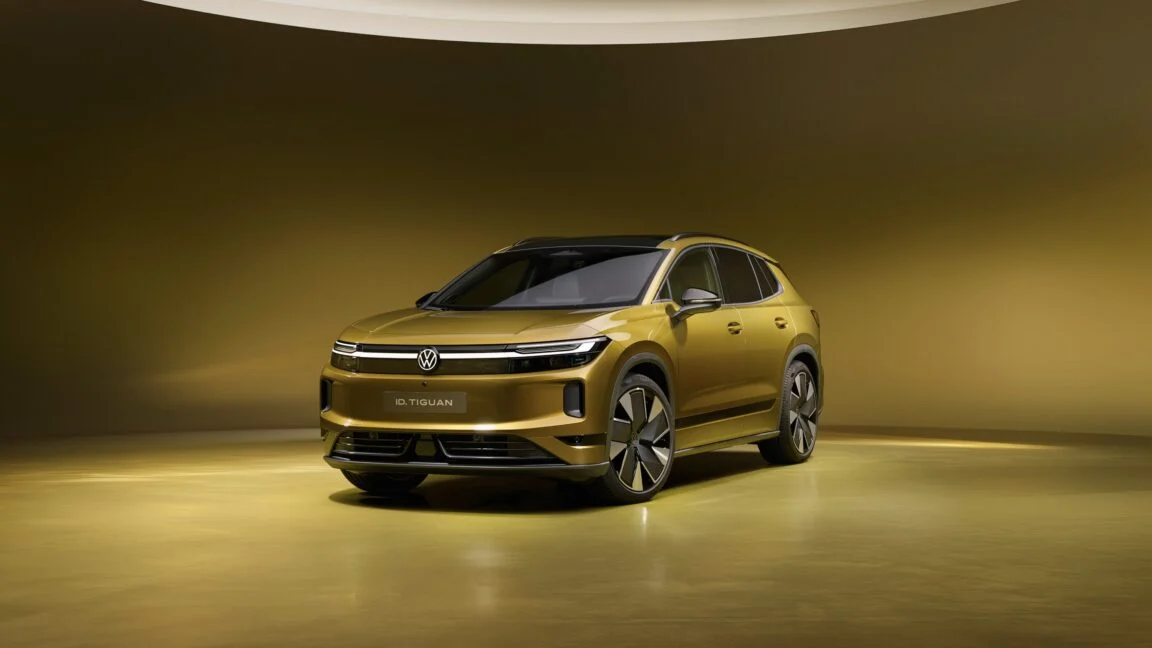
However, a sea change has arrived. With the unveiling of the new electric Tiguan, Volkswagen is signaling a profound shift in its design philosophy—one that prioritizes tactile ergonomics and nostalgic connection over pure, sterile digital minimalism. Based on the latest press materials, it appears VW has finally heard the collective plea of its customer base: function must once again precede form.
Main Facts: A Return to Tactile Engineering
The new electric Tiguan marks a significant turning point in Volkswagen’s modular electric drive matrix (MEB) evolution. The most striking departure from the brand’s recent history is the aggressive reinstatement of physical controls.
Gone are the controversial touch-capacitive sliders that haunted the steering wheels and climate control panels of previous ID models. In their place, Volkswagen has reintroduced genuine, tactile buttons. The steering wheel now features physical switches, providing the haptic feedback that drivers require to operate vehicle functions without diverting their gaze from the road. Furthermore, the climate control and window switches have returned to their traditional, intuitive layouts.
Perhaps most refreshing is the reversal of the "computer-controlled air vent" trend. The new Tiguan returns to manual, physical vents, allowing drivers to physically direct airflow rather than navigating nested menus on a touchscreen. This shift is accompanied by a new 15-inch infotainment display, which serves as the centerpiece of the dashboard. While the screen size is impressive, the success of this interface will hinge entirely on the processing speed and responsiveness of the underlying software—a point where VW has previously stumbled.
Chronology: How the Industry Shifted
To understand the gravity of this change, one must look at the recent timeline of automotive interior design:
- 2019–2022: The Peak of Minimalism: During this period, manufacturers—led by Tesla and followed closely by VW—raced to eliminate physical buttons. The rationale was twofold: cost reduction and the pursuit of a "smartphone-on-wheels" aesthetic.
- 2023: The Backlash Begins: Consumer reports and automotive journalists began citing "usability fatigue." Studies indicated that complex touch-screen tasks increased cognitive load and distracted driving incidents.
- 2025: Regulatory Intervention: As documented by Ars Technica, the landscape shifted fundamentally when Chinese vehicle regulators moved to ban retractable door handles—a hallmark of "minimalist" design—due to safety concerns regarding emergency egress.
- 2026: The VW Pivot: Realizing that the market and regulators were moving in lockstep against "over-digitization," Volkswagen began accelerating the integration of legacy controls back into its vehicle architecture.
- Early 2027 (Projected): The official European market launch of the electric Tiguan, marking the first time these "reverted" design choices hit the showroom floor in a high-volume production vehicle.
Supporting Data: Nostalgia as a Feature
One of the most compelling aspects of the new Tiguan is the 10-inch digital instrument cluster. While digital displays often feel cold and disconnected, VW has chosen to lean into its rich heritage.
The company has introduced a "Retro Dials" theme, allowing owners to customize their instrument binnacle to replicate the aesthetic of legendary models. The list of available themes is a tour through Volkswagen’s history:
- Mk1 Golf: The icon that defined the hot hatch segment.
- Mk2 Golf Country: Tapping into the current off-road enthusiast zeitgeist.
- Mk4 Golf: A nod to the era that arguably set the gold standard for interior quality.
- First-Gen Tiguan: Celebrating the birth of the brand’s most successful modern SUV.
- Racing Touareg: Providing a high-performance, Dakar-inspired aesthetic.
- The Beetle: A tribute to the most recognizable silhouette in automotive history.
This feature is more than just a digital skin; it is a psychological bridge. By allowing users to project the past onto the present, Volkswagen is acknowledging that for many, a car is not merely a utility—it is a repository of memories.
Official Responses and Market Strategy
The economic stakes for this launch are substantial. Pre-sales for the electric Tiguan are scheduled to open in Europe next week, with a starting price of 42,695 euros ($44,716). This pricing strategy places the vehicle in the highly competitive mid-size electric SUV segment, challenging both legacy European rivals and aggressive new entrants from the East.
When pressed on the North American availability of the vehicle, a Volkswagen spokesperson provided a measured, albeit vague, response: "While the ID. Tiguan is confirmed for the US market, we have not yet announced specific North American timing. Following the European launch in early 2027, the company will share market-specific details regarding offer structures and pricing in due course."
This suggests that while the platform is global, the rollout is being staged to ensure that the production capacity matches the expected demand. By focusing on Europe first, VW can fine-tune the software and hardware integration based on real-world feedback before scaling to the North American market, where consumer preferences regarding infotainment and size often differ from their European counterparts.
Implications: The End of the "Screen-Only" Era?
The pivot in the Tiguan’s design philosophy has broader implications for the industry. Volkswagen’s decision to backtrack on touch-capacitive controls serves as a tacit admission that the "Tesla-fication" of the interior was not the universal panacea it was once thought to be.
The Safety Argument
The pushback against retractable door handles and screen-only controls is fundamentally about safety. When a door handle requires an electrical signal to deploy, a power failure during an accident can trap occupants. Similarly, when a climate control system is buried in a sub-menu, the driver’s eyes remain off the road for seconds longer than is safe. By returning to physical buttons, VW is prioritizing human-machine interface (HMI) standards that favor cognitive ease.
The Passenger Display Debate
However, not all trends are being reversed. The inclusion of an optional 12-inch passenger display continues to divide opinion. While some argue that it provides essential entertainment for long-distance travel, others—rightfully—see it as a gimmick that adds cost and complexity without enhancing the core driving experience. For those of us who believe that the driving experience should be focused on the road, the "passenger screen" feels like an attempt to turn the car into a mobile living room, potentially further distancing the driver from the mechanical task at hand.
Brand Identity vs. Innovation
The inclusion of the "Retro Dials" suggests that Volkswagen has realized that being "modern" does not require being "alien." For years, manufacturers have tried to make cars look like futuristic pods. VW’s decision to celebrate the Mk1 Golf and the Beetle suggests a new, more confident path: utilizing the best of modern technology (EV powertrains, advanced sensors) while keeping the user interface grounded in the history that made the brand a household name.
Conclusion
The new electric Tiguan represents a rare "correction" in the automotive industry. It is a vehicle that recognizes that technology is best when it serves the user, rather than forcing the user to serve the technology.
By restoring physical buttons and vents, Volkswagen is effectively ending the "experiment" of total digitalization. Whether this change is driven by regulatory pressure in China or the loud, persistent feedback of their global customer base, the result is the same: a more functional, more usable, and arguably more charming vehicle.
As we look toward 2027, the success of the ID. Tiguan will likely serve as a litmus test for the entire industry. If it sells well, we can expect a rapid return to buttons across all major manufacturers. If it fails, the industry may double down on the digital-only path. For the sake of drivers everywhere, let us hope that the market rewards Volkswagen for listening—and for remembering that sometimes, a simple physical button is the most advanced piece of technology a car can have.