Published: October 9, 2026
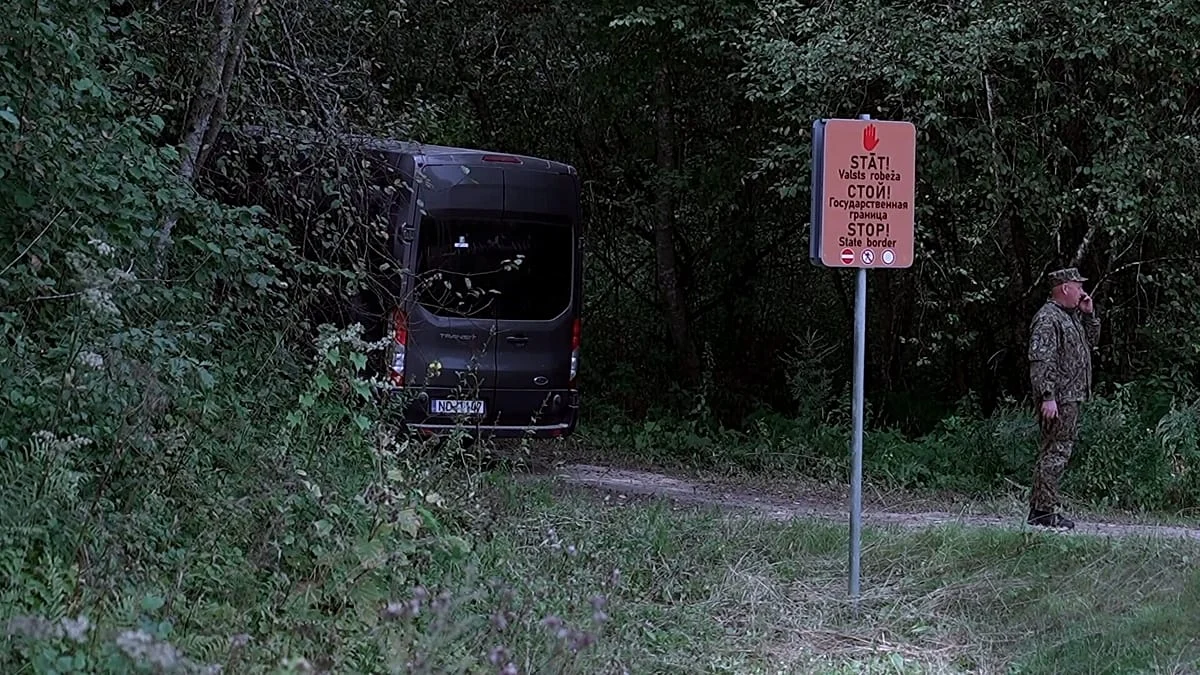
The geopolitical landscape along the eastern flank of the European Union has reached a boiling point. On October 5, an incident involving a group of 20 migrants entering Latvia via makeshift ladders has shattered the relative, albeit fragile, stability of the border region. While the Baltic nation has been grappling with irregular migration orchestrated by the Belarusian regime since 2021, this recent breach was marked by a chilling escalation: the presence of armed, masked escorts who openly threatened Latvian soldiers.
This event is no longer being viewed by Riga as a mere humanitarian or migration management challenge. Instead, it is being categorized by high-ranking officials as a sophisticated "hybrid security threat" designed to test the resolve of the North Atlantic Treaty Organization (NATO) and the European Union (EU) on their most vulnerable frontier.
A Chronology of Escalation: From Migration to Sabotage
The crisis, which began in the summer of 2021, was initially characterized by the Belarusian government’s decision to facilitate the passage of thousands of asylum seekers from the Middle East and Africa toward the borders of Latvia, Lithuania, and Poland. The objective, according to intelligence analysts and EU officials, was to weaponize migration to destabilize the social and political fabric of the Baltic states and Poland.
Over the past five years, the nature of these incursions has evolved from passive attempts to cross the "Green Border" to calculated, aggressive operations.
- 2021-2022: The early phase saw large, disorganized groups of migrants pushed toward the border, forcing Latvia to declare a state of emergency in border municipalities.
- 2023-2024: Latvia invested heavily in defensive infrastructure, completing a 173-kilometre high-security fence and integrating state-of-the-art thermal imaging and motion-detection systems.
- Late 2025 – October 2026: As the border became physically more difficult to cross, facilitators—reportedly operating with the backing of Belarusian security services—shifted tactics. The recent incident on October 5 represents a shift toward active sabotage. Following the crossing of the 20 migrants, the escorts engaged in the deliberate destruction of surveillance equipment. By disabling cameras and sensors, the perpetrators created "blind spots," effectively blinding the Latvian border guards and reducing their situational awareness.
The Strategic Shift: Sabotage as a Weapon
Latvian Interior Minister Jānis Dombrava has been unequivocal in his assessment of the October 5 incident. Speaking to reporters, he emphasized that the tactical coordination displayed by the masked escorts suggests a level of military-grade training.
"The combination of armed intimidation and targeted sabotage raises the risk of a violent confrontation," Dombrava stated. "It is a deliberate test of our defenses and our willingness to respond. This is not about seeking asylum; this is a calculated security threat."
Guntis Pujāts, the head of the State Border Guard, echoed these concerns. He noted that as the physical barriers become more effective, the desperation of the facilitators manifests as increased aggression. "They are trying to be more aggressive, throwing stones and brandishing items that appear to be weapons to intimidate our personnel," Pujāts explained. "This latest incident shows that the situation is not de-escalating; it is moving in the opposite direction."
Official Responses and the Quest for New Powers
In response to the deteriorating security situation, the State Border Guard has formally submitted a proposal to the Interior Ministry requesting an urgent expansion of their operational powers. The proposal, tabled on Thursday, seeks to modernize the legal framework under which border guards, police, and military personnel operate during incursions.
Currently, Latvian law permits the use of firearms in specific, legally prescribed circumstances, such as responding to life-threatening situations or acts of sabotage. However, the proposed amendments seek to remove the ambiguity that often plagues personnel during high-stress, split-second decisions.
Key Provisions of the Proposed Legislation:
- Removal of Warning Requirements: Under the new proposals, border guards would be granted the authority to use force—and in extreme cases, firearms—without the prior obligation to issue a verbal or warning shot if the threat is deemed immediate.
- Neutralization of Saboteurs: The legislation aims to explicitly permit the use of all available tools to "stop and neutralize" individuals actively damaging state infrastructure. This is aimed specifically at the groups destroying surveillance cameras and cutting through border fencing.
- Legal Indemnity for Security Personnel: A critical component of the proposal is the assurance that border guards, soldiers, and supporting officials will not be subject to criminal prosecution for the lawful and proportionate use of force during these operations.
Minister Dombrava has voiced his full support for these changes, arguing that those protecting the nation’s sovereignty must feel confident that they have the full weight of the law behind them. "We must provide our border guards with clearer powers and greater discretion," he said. "They should not have to hesitate when facing armed provocateurs on our territory."
When asked for a timeline on the implementation of these measures, the frustration of the border guard leadership was palpable. Guntis Pujāts, when questioned on how quickly he wanted the changes to take effect, replied with a somber, "Yesterday, or the day before yesterday."
Implications for Regional Security and EU Relations
The implications of Latvia’s pivot toward a more militarized border posture are significant, both internally and internationally.
Domestic Stability and Political Will
The Latvian government is currently walking a fine line. On one hand, there is a clear imperative to ensure the physical integrity of the border. On the other, the government must manage the optics of a militarized border within an EU member state. However, the current consensus among the Latvian political elite is that the security threat posed by the Lukashenko regime in Belarus is an existential concern that outweighs standard administrative concerns.
The NATO-EU Nexus
The developments in Latvia are being closely monitored by NATO, particularly as the Baltic states remain the most exposed members of the Alliance. By treating the border crisis as a hybrid security threat, Latvia is signaling to its NATO partners that the events on the Belarus border are not isolated local incidents but part of a broader, regional campaign of destabilization directed at the West.
The Humanitarian Dilemma
Critics of the proposed legislative changes raise concerns about the potential for human rights violations. The "neutralization" of individuals, even those engaged in sabotage, risks blurring the line between security enforcement and the protection of vulnerable migrants who may be caught in the middle of these geopolitical power plays. Humanitarian organizations have warned that granting border guards the power to use force without warning could lead to tragic outcomes, particularly if the groups being intercepted include families or individuals seeking legitimate asylum.
Conclusion: A Border Under Siege
As the sun sets on the Latvian-Belarusian border, the tension remains palpable. The installation of physical fences and high-tech cameras has undeniably increased the cost of entry for those seeking to cross, but it has also triggered a dangerous evolution in the tactics employed by the state-backed facilitators.
The proposed legal changes, intended to provide the State Border Guard with the "teeth" necessary to counter these threats, mark a defining moment in Latvia’s response to hybrid warfare. Whether these measures will serve as a deterrent to future sabotage or lead to a further escalation of violence remains to be seen.
For now, the message from Riga is clear: the era of viewing border incursions as a routine administrative burden is over. In the face of masked escorts and targeted infrastructure destruction, Latvia is shifting to a posture of active defense, signaling that the security of its frontier is not a matter for negotiation, but a core component of its national survival. As the government moves to fast-track the new legislation, the world watches to see if this tougher stance will restore order to one of Europe’s most volatile borders.