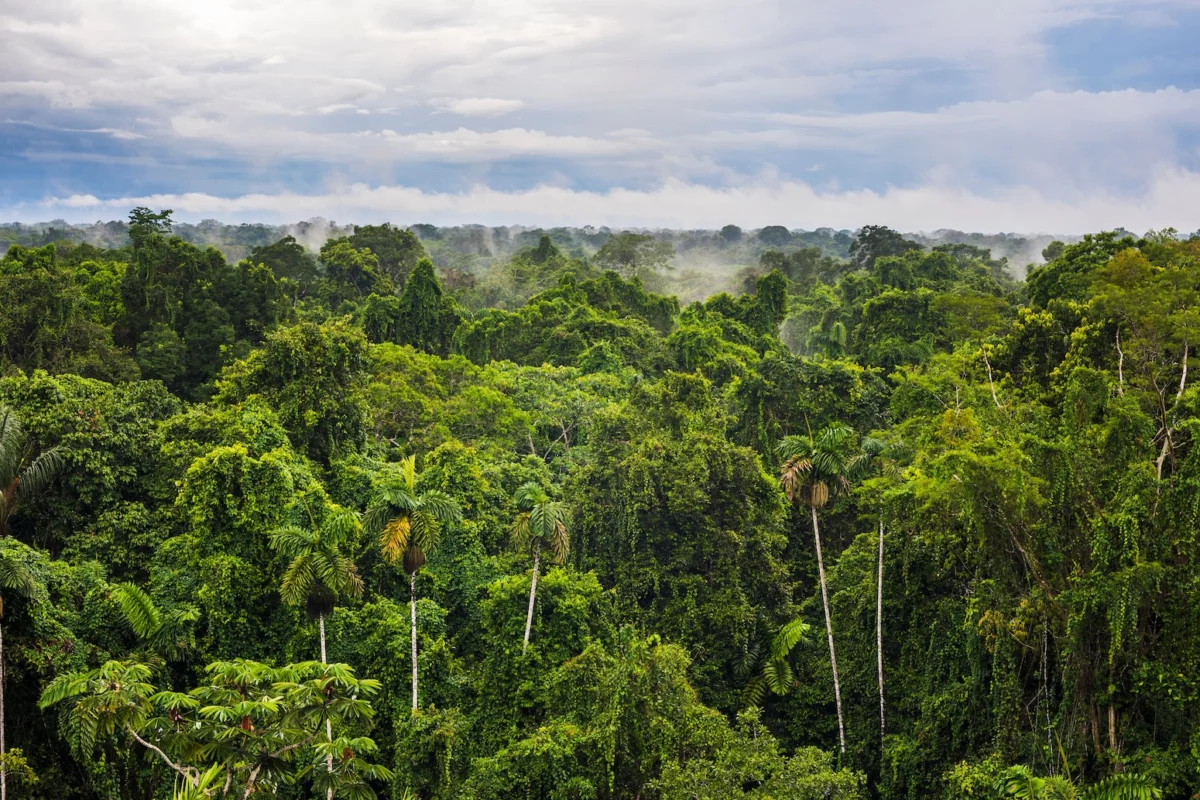
As the world looks toward a critical juncture in environmental governance, the future of the Amazon rainforest—a vital organ for the planet’s climate stability—hinges on the outcome of Brazil’s upcoming presidential election. A new analysis from Carbon Brief reveals that the leadership of President Luiz Inácio Lula da Silva has been instrumental in preserving at least 20,000 square kilometers of the Amazon, an area roughly equivalent to the size of the U.S. state of New Jersey.
This finding highlights a sharp divergence between the conservation-focused administration of Lula and the deregulatory, anti-environmental stance championed by his predecessor, Jair Bolsonaro. As Brazil prepares to head to the polls on October 4, the race remains a dead heat between Lula and Flávio Bolsonaro, the son of the former president, setting the stage for a referendum on the country’s ecological future.
Main Facts: A Tale of Two Administrations
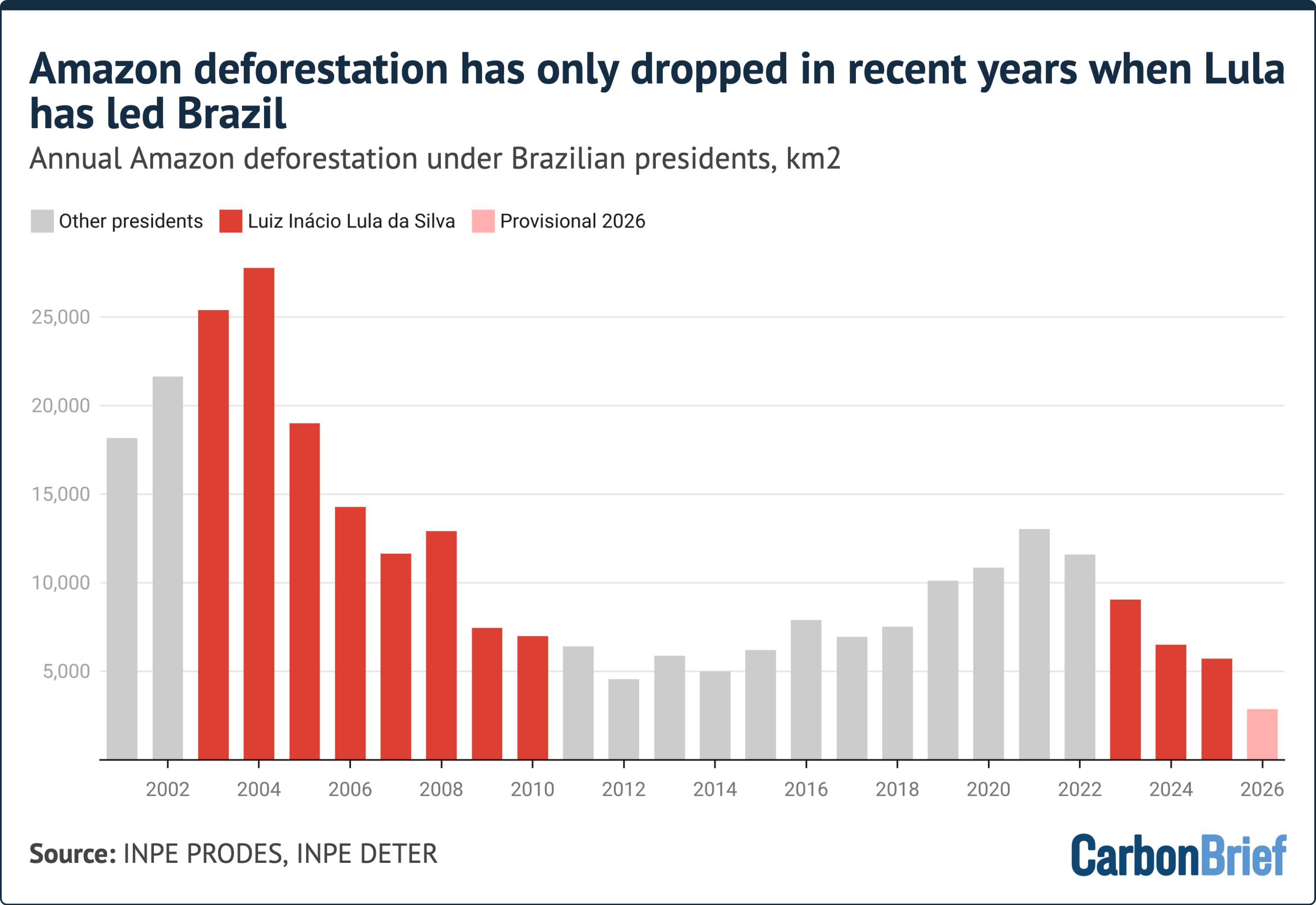
The Amazon holds nearly 60% of the world’s largest tropical rainforest, making Brazil’s domestic policies a matter of global security. Under Jair Bolsonaro’s far-right tenure (2019–2022), the Amazon faced unprecedented degradation. His administration systematically weakened environmental regulations, slashed the budgets of federal oversight agencies like IBAMA, and openly encouraged the expansion of agribusiness into protected lands.
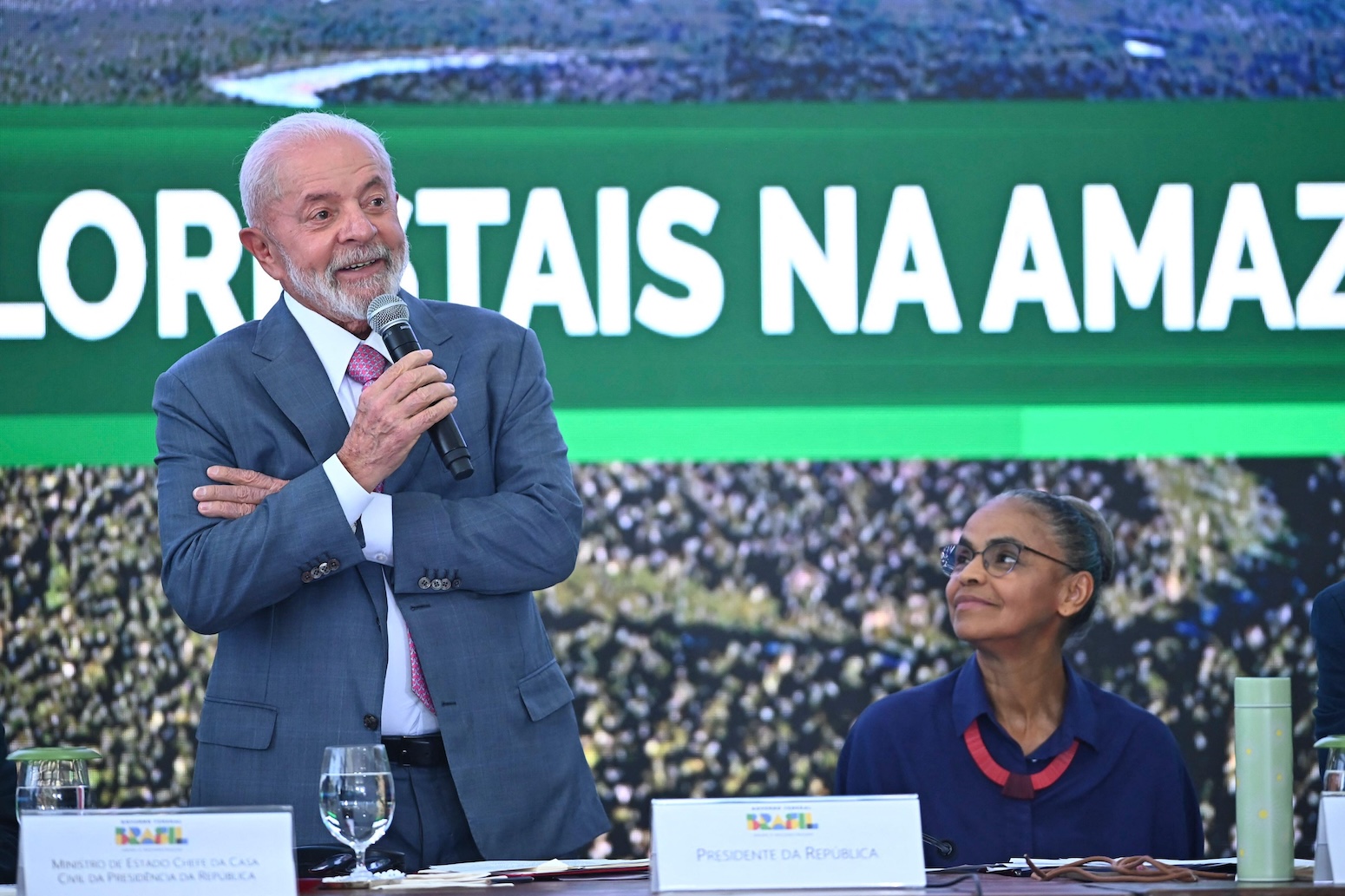
Conversely, since returning to office in 2022, President Lula has prioritized the protection of the biome. By reinstating the "Action Plan for the Prevention and Control of Deforestation in the Legal Amazon" (PPCDAM) and empowering environmental authorities, his administration has overseen a dramatic reduction in forest loss. Annual deforestation rates have plummeted from 11,594 km² in 2022 to 5,731 km² in 2025. Preliminary satellite data suggests that 2026 may record the lowest level of deforestation since tracking began in 1988.
Chronology of Conservation and Contention
The trajectory of the Amazon over the last decade is a testament to the speed with which political willpower can alter environmental outcomes.
- 2019–2022: The Bolsonaro era marked a period of systemic "deconstruction" of environmental protections. By attacking Indigenous groups and incentivizing land clearing, his government created a "wild west" atmosphere for illegal mining and logging.
- 2022: The presidential election became a pivotal moment for global climate goals. Lula’s victory signaled a shift toward "zero deforestation by 2030."
- 2023–2025: Under the leadership of Environment Minister Marina Silva, Brazil began the arduous task of rebuilding enforcement mechanisms. Despite a hostile, right-leaning Congress, the administration successfully reduced forest loss by more than half.
- Late 2025: Major grain traders withdrew from the Amazon soy moratorium, a voluntary pact that had protected forests from industrial-scale soy farming for nearly two decades. This move has introduced a new, significant threat to the region.
- 2026: As the country approaches another election, the political climate remains polarized. Jair Bolsonaro is currently imprisoned for his role in plotting a coup following his 2022 loss, yet his son, Flávio, has emerged as the primary challenger to Lula, pledging to continue his father’s platform.
Supporting Data: Modelling a Different Future
The estimate of 20,000 km² of "saved" forest is derived from sophisticated modelling using the GLOBIOM-Brazil framework. Researchers from the University of Oxford, the International Institute for Applied Systems Analysis (IIASA), and Brazil’s National Institute for Space Research (INPE) compared the current reality against a "no-enforcement" baseline—a scenario modeled on the weak governance seen during the Bolsonaro years.
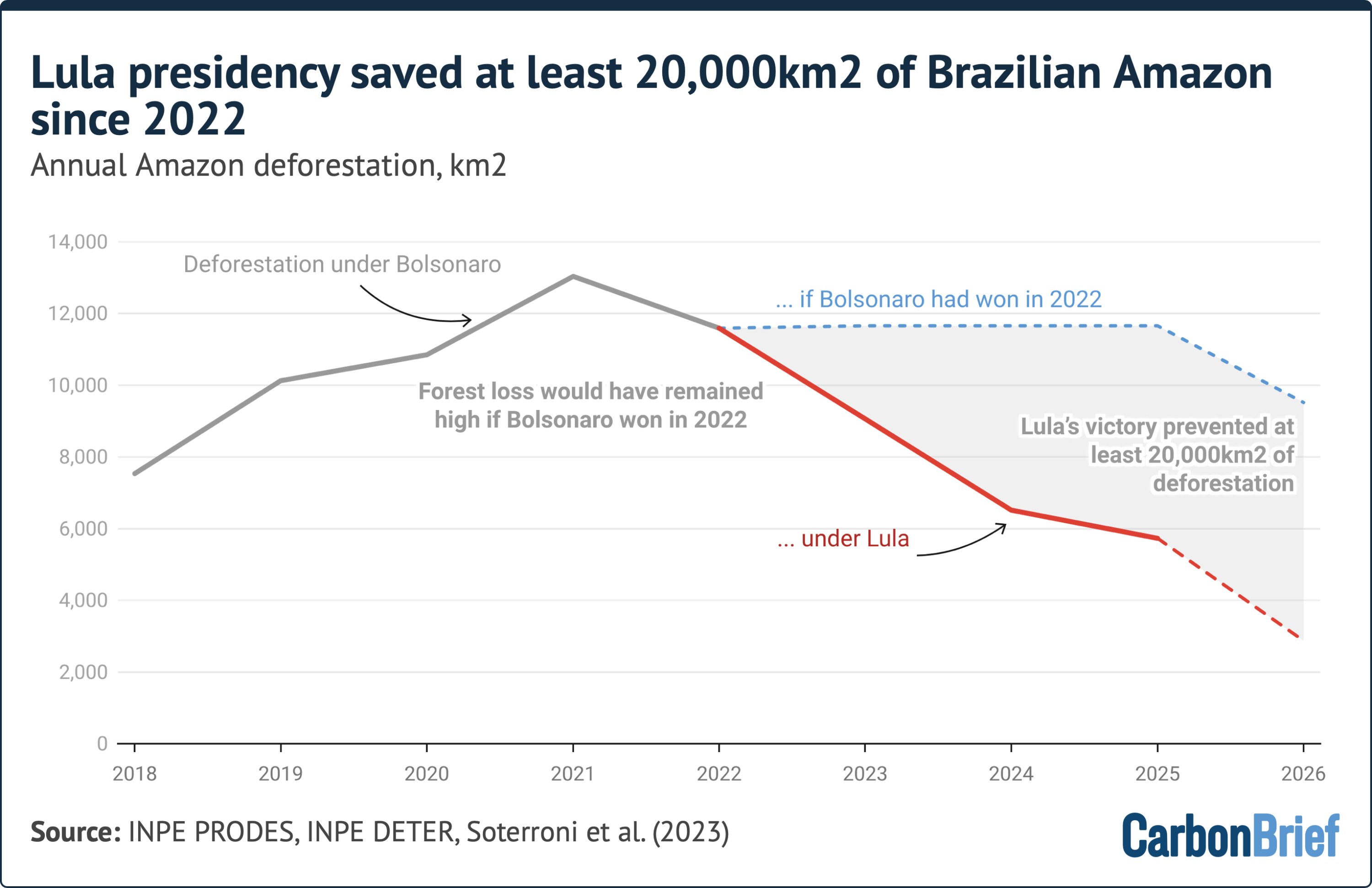
Dr. Aline Soterroni, who led the 2023 analysis, notes that this figure is likely "conservative." While the model accounts for the enforcement of the Forest Code—legislation requiring landowners to maintain native vegetation—it does not fully quantify the secondary impacts of "wildcat mining" or the emboldened illegal activities that flourish when the rule of law is absent.
"The key message from our modelling is the contrast between these trajectories," says Dr. Soterroni. "Weak environmental governance keeps deforestation substantially higher, whereas active enforcement creates a clear, measurable divergence in forest cover."
Official Responses and Political Stances
The ideological chasm between the two frontrunners is stark. Lula’s platform is anchored in the "zero deforestation by 2030" goal and a commitment to maintain the 2035 climate pledges of reducing emissions by 59–67% compared to 2005 levels. His campaign is widely regarded as the "greenest" among the top-polling candidates.
In contrast, Flávio Bolsonaro has positioned himself as a climate skeptic. His platform favors the expansion of agribusiness and mining, echoing the policies that led to the surge in deforestation under his father. Claudio Angelo, international policy coordinator at Brazil’s Climate Observatory, warns that a Bolsonaro victory would be catastrophic. "At the risk of sounding alarmist, I’ve been saying that Lula’s re-election is the only thing standing between us and a wide destruction of the Amazon," Angelo states.
Other observers, such as Dr. Patricia Pinho of the Amazon Environmental Research Institute, point out that the legislative environment is equally precarious. With right-wing parties holding half the seats in Congress, even a victory for Lula would face "devastating" obstructionism, particularly after the legislature recently bypassed his vetoes on bills that environmentalists describe as "devastation bills."
Global Implications: A Regional Shift
The stakes extend beyond Brazil’s borders. If the right-wing coalition wins, it could result in up to 95% of the Amazon being under the jurisdiction of governments that prioritize industrial extraction over conservation. Neighboring nations like Bolivia, Colombia, Ecuador, and Peru have all seen a recent political tilt toward administrations that favor similar policies.

This regional shift could effectively erase the gains made in the last three years. The collapse of the Amazon soy moratorium further complicates this, as researchers project that the lack of private sector oversight could lead to an additional 14,000 km² of deforestation by 2036.
The Human and Ecological Cost
Beyond the satellite imagery and political maneuvering lies the human cost. The Amazon is home to millions, including Indigenous communities whose territories have been repeatedly encroached upon by illegal loggers and miners. Experts like Dr. David Lapola argue that the current election cycle has largely sidelined the environment in favor of economic and security debates, a dangerous oversight given the existential threat of climate change.
"Land pillage, destruction of precious biodiversity, and the scorning of Indigenous peoples simply cannot be a nation’s project in the 21st century," Dr. Lapola asserts. "We have got to be smarter than that."
As the October 4 election approaches, the electorate is essentially choosing between two incompatible visions for the future. One path leads to the potential restoration of a vital global ecosystem, while the other risks accelerating the point of no return for the world’s most critical carbon sink. The result of this vote will likely be felt far beyond the borders of Brazil, shaping the global climate agenda for decades to come.
Summary of Key Indicators
| Year | Deforestation (km²/year) | Administrative Climate |
|---|---|---|
| 2022 | 11,594 | End of Bolsonaro era |
| 2023 | 8,200 (approx.) | Start of Lula restoration |
| 2025 | 5,731 | Strengthened enforcement |
| 2026 (Prelim) | 2,874 (alerts) | Potential record low |
Note: The 2026 figures are based on real-time satellite alert data (DETER), which are subject to adjustment in final reports.