As we navigate the final stretch of the work week, the landscape of artificial intelligence continues to evolve at a breakneck pace. From the democratization of professional-grade design to the integration of persistent agents into our daily workflows, the barriers to entry for high-level creative and administrative tasks are rapidly dissolving. Whether you are a small business owner looking to scale your content production or a developer navigating the shifting tides of model ecosystems, the current wave of innovation offers unprecedented opportunities.
This report synthesizes the latest industry developments, providing a strategic look at how these tools are reshaping the professional world.
The Democratization of Creative Production
The paradigm of "doing it all yourself" is undergoing a structural change. Historically, small business owners and marketers were forced to balance strategy with technical execution—graphic design, video editing, and complex copywriting. Today, AI is bridging that gap.
Design at Scale: The ChatGPT-Canva Workflow
A significant shift is occurring in how print materials are generated. By treating ChatGPT as a collaborative partner rather than a mere text generator, professionals are achieving high-fidelity results. The methodology is precise:
- The Brief: Approach the AI with the same rigor you would a human designer. Provide specific brand guidelines, document dimensions, and essential copy.
- Iterative Art Direction: Use ChatGPT’s visual tools to refine layouts. Mark areas for deletion, adjust background elements, and utilize iterative feedback loops to hone the aesthetic.
- The Canva Hand-off: Once the draft is finalized, porting the asset into Canva’s "Magic Layers" allows for surgical precision. This allows users to decouple elements for final font adjustments and spacing, resulting in a print-ready asset that retains human-led brand consistency.
Video Production: The Gemini Omni Shift
Technical barriers in video production are effectively disappearing. With tools like Google’s Gemini Omni, creators no longer require a film crew or an editing suite to produce professional-grade content. Strategy, rather than technical proficiency, is now the primary driver of quality.
Current best practices involve:
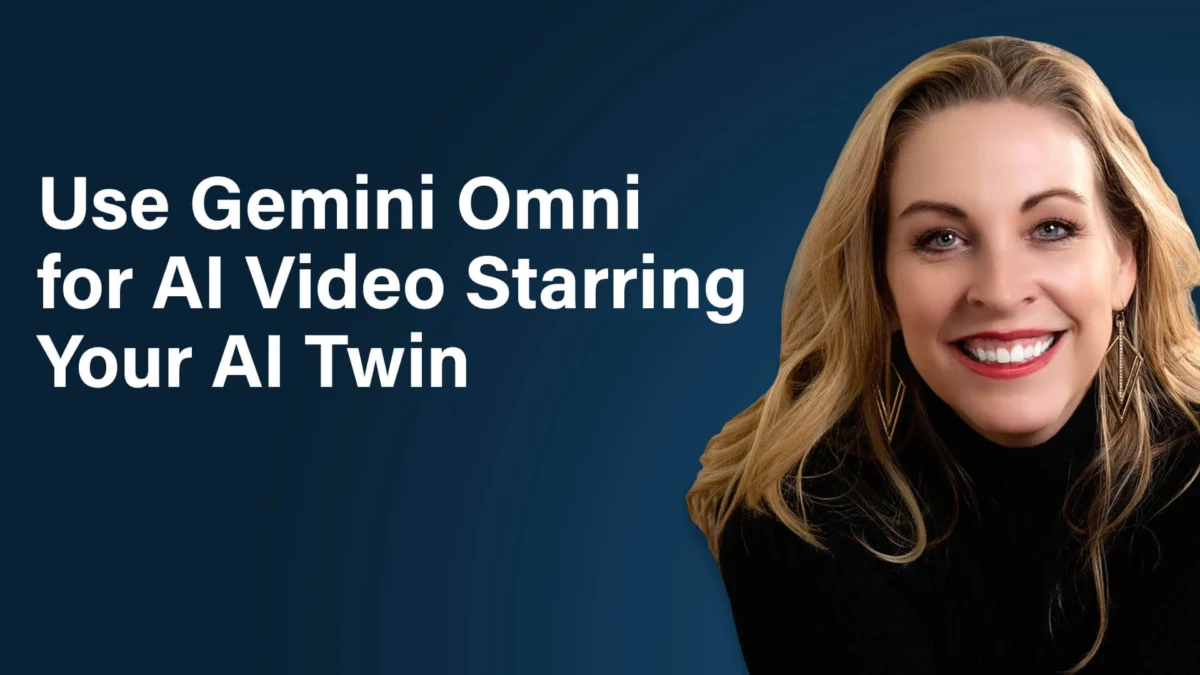
- The "Twin" Strategy: Creating realistic AI avatars that mirror your likeness. The key lies in avoiding common recording errors that lead to "uncanny valley" artifacts, ensuring the AI maintains the nuances of your delivery.
- Directorial Prompts: Moving beyond basic text-to-video prompts, creators are learning to apply "director-level" logic, focusing on camera placement and emotive framing to influence audience engagement.
- Post-Production Flexibility: Gemini Omni enables users to modify existing footage—changing backgrounds, seasonal lighting, or even attire—without the need for costly reshoots.
Chronology of Major Industry Developments (October 2026)
The past week has seen a cascade of announcements that signal a pivot toward agentic AI and multi-platform interoperability.
- October 1st: Anthropic releases Claude Sonnet 5.5, focusing on speed and cost-efficiency.
- October 2nd: Google launches Gemini 3.8 Live, introducing real-time interactive avatars for the enterprise sector.
- October 3rd: OpenAI hosts DevDay 2026, unveiling a suite of "always-on" agent tools and an expanded marketplace for third-party integrations.
- October 4th: OpenAI rolls out the GPT-6 "Sol" and "Luna" models, marking a 50% reduction in API costs for high-scale enterprise applications.
Supporting Data: Efficiency and Integration
The industry is moving toward a "portable workflow" model. Nicole Leffer, an AI strategist, recently highlighted the necessity of platform-agnostic systems. During a live demonstration, Leffer showcased a seamless transition from Claude to ChatGPT when a technical outage occurred. This highlights a critical takeaway: Tools are ephemeral, but systems are permanent.
Building an AI-driven workflow that is not tied to a single vendor is no longer a luxury—it is a competitive necessity. By utilizing standard prompt frameworks and modular data structures, businesses can insulate themselves from the volatility of individual platform downtime.
Performance Benchmarks
- Claude Sonnet 5.5: Generates responses 30% faster than its predecessor, with significantly lower token consumption, making it the new standard for high-volume content operations.
- GPT-6 "Sol" and "Luna": These models have successfully cut API costs by 50% while improving factual reliability and computer-use capabilities, allowing developers to scale their AI agents with a smaller overhead.
Official Responses and Strategic Positioning
The Agentic Turn: OpenAI’s Vision
At DevDay 2026, OpenAI executives framed the future of the company not as a chatbot provider, but as a platform for persistent, autonomous agents. By introducing "Dots" agents—always-on assistants that can work in the background—OpenAI is aiming to integrate ChatGPT into the very fabric of enterprise software. The goal is to move from "chatting" to "doing," with agents capable of executing complex, multi-step tasks across third-party applications.
The Enterprise Expansion: Google’s Multimodal Approach
Google’s strategy remains focused on the "Connected App" ecosystem. By integrating Gemini 3.8 directly into platforms like Airtable, Linear, and Adobe, Google is positioning its AI as a central nervous system for productivity. The addition of "Live Avatars" for enterprise suggests that Google is betting heavily on the humanization of AI agents, making them more approachable and effective for customer-facing roles.
Implications: The Road Ahead
The integration of these technologies suggests three major shifts in the professional landscape over the coming year:
1. The Death of the "Technical Barrier"
As AI takes over the execution phase of creative work, the value proposition for professionals shifts from "how to build" to "what to build." The ability to direct AI, curate its output, and maintain a consistent brand voice will be the defining skill set of the next decade.
2. The Rise of "Agentic Workflow"
We are moving away from interactive, prompt-response cycles toward autonomous workflows. Companies that successfully implement "always-on" agents—such as the new tools announced by OpenAI—will likely see significant gains in operational speed. These agents can handle routine data entry, project management, and cross-platform communication, freeing human talent for high-level strategic oversight.
3. Vendor Agnosticism
As seen in the recent updates from Anthropic, OpenAI, and Google, the competition for model dominance is fierce. Prices are dropping, and performance is converging. The most successful organizations will be those that build systems capable of swapping between these models based on the task at hand, rather than becoming locked into a single proprietary stack.

Final Thoughts
Whether you are exploring the nuances of Gemini’s voice-replication features or optimizing your workflow to be platform-transferable, the common thread is clear: the pace of change is not slowing down. The practitioners who thrive will be those who treat AI not as a static tool, but as a dynamic component of their professional infrastructure.
For those looking to deepen their expertise, platforms such as the AI Business Society and dedicated conferences like AI Business World remain critical venues for hands-on learning. As we look toward the future, remember that while tools will inevitably change, the systems you build today—based on agility, strategy, and continuous learning—will remain the foundation of your long-term success.
Michael Stelzner is the founder of Social Media Examiner and a leading voice in the integration of AI for small business growth. For more insights on scaling your operations, subscribe to our newsletter and stay ahead of the curve.