
Tirana, Albania – October 17, 2023 – A significant rift has emerged between Albania’s highest judicial bodies and the legislative branch, as the Supreme Court and the General Prosecutor’s Office have vehemently opposed a new draft law governing the salaries of magistrates. The proposed legislation, scheduled for a parliamentary vote on October 17th, has been criticized for allegedly disregarding constitutional mandates and a prior ruling by the Constitutional Court. This clash underscores a deepening institutional tension over judicial remuneration and the independence of the judiciary.
The controversy centers on a new salary formula that proposes a 2% increase to a reference salary. Both the Supreme Court and the General Prosecutor’s Office argue that this formula falls short of the standards set by the Constitution and the Constitutional Court’s February decision, which invalidated the previous salary structure. This proposed law, which passed through parliamentary committees with the backing of socialist lawmakers, is now at the heart of a significant institutional dispute, raising questions about the government’s commitment to judicial integrity and the separation of powers.
Background: The Constitutional Court’s Mandate and the Legislative Response
The current impasse stems from a pivotal decision by the Constitutional Court in February of this year. The Court ruled that the previous salary framework for magistrates was unconstitutional, invalidating it and compelling the legislature to establish a new, compliant system. The Court provided a deadline for this legislative action, hinting at a fallback mechanism involving judicial self-governance bodies if Parliament failed to act.
Following the Court’s ruling, the High Judicial Council and the High Prosecutorial Council, the self-governing bodies of the judiciary, developed their own salary formula. This formula proposed a reference base salary of 222,000 Albanian Lek (ALL) with an additional 14,000 ALL for qualification. Crucially, it also included provisions for compensating what they deemed a "hidden reduction" in salaries from the previous framework for the period between April 2023 and July 2026.
However, the Ministry of Finance reportedly refused to implement this calculation. This refusal, coupled with the subsequent legislative proposal, has ignited the current institutional conflict. Magistrates, feeling their constitutionally guaranteed rights were being infringed upon, initiated legal actions, including criminal complaints filed with the Special Anti-Corruption Prosecution Office (SPAK) and administrative lawsuits. The Administrative Court ultimately ruled in favor of the judges and prosecutors, supporting the payment of salaries according to the formula determined by the high councils.
Despite these legal challenges and the judiciary’s own proposed solution, the parliamentary majority has pushed forward with its own draft law. This has led to sharp rebukes from the Supreme Court and the General Prosecutor’s Office, who view the legislative process and the content of the proposed law as problematic and potentially punitive.
Supreme Court’s Scathing Condemnation: A Betrayal of Consultation and Constitution
The Supreme Court, in a strongly worded statement, did not mince words in its criticism of the proposed draft law and, more pointedly, the manner in which the parliamentary consultation process was conducted. The Court described the process as more than just a "flawed consultation" but an "open contempt" for institutional consultation and the representatives of a constitutional power.
"What happened was not merely a flawed consultation. It was an open contempt for the meaning of institutional consultation and the representatives of a constitutional power, summoned by the Assembly itself to be heard," the Supreme Court declared.
The Court highlighted the severe lack of adequate notice and information provided to its representatives. They were informed of their appearance before the Committee on Legal Affairs, Public Administration, and Human Rights with less than two hours’ notice. Furthermore, they were expected to provide opinions without having access to all the amendments that were shaping the draft law they were meant to review.
"Without full information on the Government’s financial opinion and without the possibility to provide an opinion on the text that was actually taking shape for voting. You cannot summon a constitutional power for consultation and, at the same time, keep unknown the elements on which you will make a decision. This seriously undermines the seriousness and integrity of the parliamentary procedure," the Supreme Court emphasized, deeming the treatment of judicial representatives unacceptable.
The Supreme Court also expressed concern that the parliamentary hearings did not demonstrably reflect the arguments presented by the judiciary and other stakeholders regarding the draft law’s incompatibility with constitutional standards. The Court asserted that magistrates should not be summoned to Parliament merely to fulfill a procedural formality. They should not be asked for an opinion on a text without their arguments being considered and without the opportunity to comment on any subsequent changes.
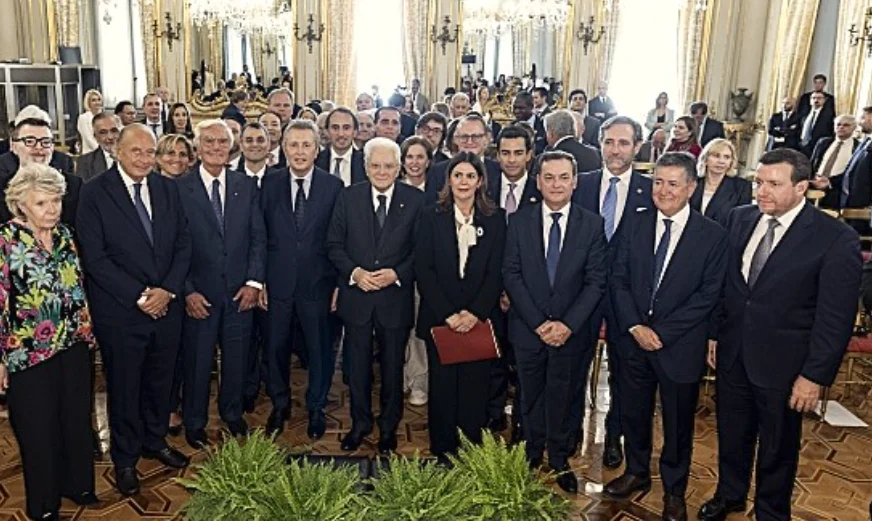
The Court drew a stark contrast between the institutional respect shown to Albanian justice internationally and its treatment domestically. It cited the reception of justice leaders in Rome by the President of Italy, Sergio Mattarella, in the context of the World Congress on Law 2027 being organized in Tirana, as an example of external recognition that is not mirrored by domestic treatment.
The core of the Supreme Court’s objection lies in how the draft law addresses the Constitutional Court’s decision. The Court contends that the new formula does not reflect the binding reasoning of that decision. "The Constitutional Court has spoken clearly. It has defined the constitutional boundaries within which the legislator can intervene in the magistrate’s salary and the consequences related to the annulment of the previous formula. The legislator has the right to find the normative solution, but not to behave as if the decision of the Constitutional Court does not exist," the Court stated.
The Supreme Court clarified that respect for Constitutional Court decisions is demonstrated not merely by referencing them but by implementing their constitutional content and reasoning. The Court also pointed out that the legislative intervention occurred after the judiciary publicly opposed the freezing of salaries and demanded the implementation of the Constitutional Court’s decision. The lack of full transparency and genuine consultation in this legislative process, the Court suggested, raises questions about the draft law’s punitive nature.
"The judiciary does not accept anyone’s arrogance in exercising power as if it were unlimited and uncontrolled. In the Republic of Albania, there is no power above the Constitution and no power to exclude itself from constitutional limits and control. The Supreme Court does not seek superiority over the Assembly, but it also does not accept the subordination of the judiciary to it. The separation of powers knows no hierarchy among them. It knows competencies, limits, and constitutional control," the statement concluded.
Ultimately, the Supreme Court implored the Assembly not to proceed with the draft law in its current form during the upcoming plenary session. "The Assembly approves laws, but it cannot relativize the Constitution. It can choose the legal solution, but it cannot bypass a final decision of the Constitutional Court. It can invite the judiciary for consultation, but it cannot use its presence to legitimize a consultation that has not actually taken place," the Court declared.
General Prosecutor’s Office Echoes Concerns: Unjustified Disparities and Constitutional Non-Compliance
The General Prosecutor’s Office has also officially communicated its opposition to the draft law. On the same day the Supreme Court issued its statement, the General Prosecutor’s Office announced that it had submitted its objections to the Assembly.
According to the institution, the proposed salary formula fails to guarantee the full and effective implementation of the Constitutional Court’s decision and the constitutional standards it established. A key concern raised by the General Prosecutor’s Office is the potential for the new law to create "unjustified and disharmonious differences between different levels of courts and prosecutor’s offices." This suggests that the proposed salary structure may not only be unconstitutional but also create internal inequities within the justice system itself, further undermining its efficiency and fairness.
Implications: A Test of Judicial Independence and Constitutional Supremacy
The escalating conflict between the judiciary and the legislature over judicial salaries carries profound implications for Albania’s democratic framework.
- Judicial Independence: The judiciary’s strong stance highlights concerns about potential legislative overreach and attempts to exert undue influence over the judicial branch through financial means. The principle of judicial independence is a cornerstone of the rule of law, and any perceived threat to it can undermine public trust and the impartiality of justice.
- Constitutional Supremacy: The dispute is fundamentally about adherence to the Constitution and the binding nature of Constitutional Court decisions. The Supreme Court’s insistence that the legislature cannot act as if the Constitutional Court’s ruling "does not exist" underscores the critical role of constitutional review in a democratic society. If legislative bodies can disregard such rulings, it erodes the authority of the highest constitutional interpreter and weakens the entire legal order.
- Transparency and Consultation: The Supreme Court’s critique of the consultation process raises serious questions about legislative accountability and democratic practice. Genuine consultation is vital for building consensus and ensuring that laws are well-informed and equitable. The perception that the judiciary was merely invited for a perfunctory appearance, rather than a substantive dialogue, damages the legitimacy of the legislative process.
- Public Trust: The ongoing institutional conflict, played out in public statements and media reports, can erode public confidence in the justice system. When the very institutions responsible for upholding justice are engaged in such profound disagreements, citizens may question their ability to function effectively and impartially.
- International Scrutiny: Albania’s progress in its European Union accession journey is often tied to reforms in the justice sector and the fight against corruption. Such high-profile institutional disputes can attract negative attention from international partners and could potentially impact Albania’s integration aspirations.
The upcoming plenary session of the Assembly, where the draft law is slated for a vote, is poised to be a critical juncture. The Supreme Court’s plea for the Assembly to reject the bill in its current form suggests that the judiciary is prepared to continue its opposition, potentially through further legal challenges or by appealing to higher constitutional principles. The outcome of this legislative battle will undoubtedly shape the future relationship between Albania’s judicial and legislative branches and its commitment to the rule of law. The tension between the executive’s legislative power and the judiciary’s constitutional mandate is a recurring theme in many democracies, but the current intensity of this dispute in Albania signals a significant challenge that requires careful navigation to preserve the integrity and independence of its justice system.