
In a move that signals a cooling of corporate climate ambition across the retail sector, Target Corporation—the retail giant operating over 2,000 stores nationwide—has officially downgraded its long-term emissions targets. The announcement, tucked away in the company’s latest annual sustainability report, marks a significant departure from the aggressive timelines set during the height of the post-2020 corporate environmental push.
Target is now aiming for net-zero emissions by 2050, a timeline pushed back by up to a decade from its previous commitments. Perhaps more critically, the company has delayed its interim goal for reducing Scope 3 emissions—the indirect greenhouse gas emissions produced across its massive, global supply chain—by five years, shifting the deadline to 2035.
This recalibration is not an isolated incident. It reflects a broader, industry-wide trend where retail titans, once eager to pledge radical climate action, are now grappling with the harsh realities of global logistics, energy infrastructure limitations, and the sheer complexity of decarbonizing the consumer goods lifecycle.
The Scope 3 Conundrum: A Supply Chain Gordian Knot
To understand the weight of Target’s decision, one must look at the math. Scope 3 emissions—which encompass everything from the raw materials used to manufacture private-label apparel to the transportation of goods from overseas factories and the eventual end-of-life disposal of products—account for a staggering 98.5 percent of Target’s total carbon footprint.
For years, sustainability experts have argued that corporate climate pledges are essentially performative unless they address these "value chain" emissions. However, the mechanism for cutting them is vastly more difficult than reducing direct emissions (Scope 1) or those associated with purchased electricity (Scope 2). Controlling Scope 3 requires influencing thousands of suppliers, upgrading international shipping fleets, and fundamentally altering consumer behavior—variables that often lie outside a retailer’s direct control.
Target’s decision to move the goalposts underscores the friction between internal sustainability desires and external economic reality. In its report, the company cited the need for a "broader transformation in energy systems, technology and infrastructure," acknowledging that the path to decarbonization is not merely a matter of corporate willpower, but of systemic market shifts.
A Chronology of Retraction: From Ambition to Realignment
The story of Target’s climate pivot is best understood as a two-act play.
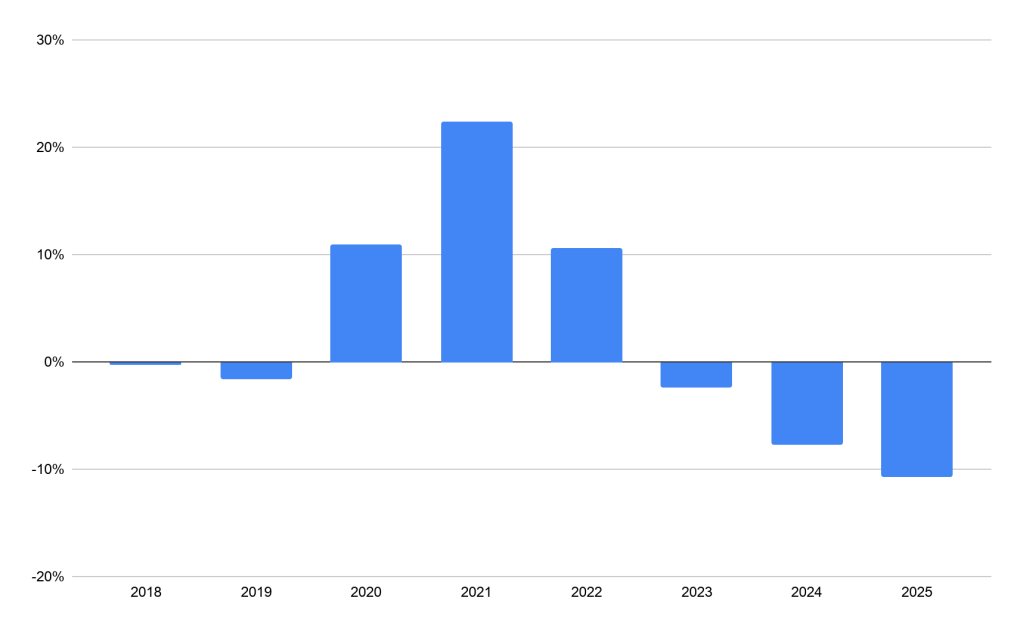
The Momentum Phase (2020–2023): During this period, Target appeared to be one of the success stories of the corporate sustainability movement. Following a 2017 baseline, the company achieved consistent, year-over-year reductions in its Scope 3 footprint. The pace was robust, and as of 2023, analysts noted that the company was comfortably on track to hit its original 2030 target. During this phase, sustainability was integrated into procurement strategies, and the company seemed to be successfully incentivizing vendors to lower their own carbon outputs.

The Stagnation Phase (2024–2025): The trajectory shifted noticeably in 2024. As the global economy faced inflationary pressures and supply chain volatility, the aggressive rate of decarbonization observed in previous years began to plateau. Internal data suggests that the "low-hanging fruit"—the easiest operational efficiencies—had been harvested. The remaining work, which involves deep structural changes to manufacturing and logistics, proved more costly and complex than initially projected. By 2025, it became clear that the 2030 deadline was no longer mathematically feasible under existing market conditions.
Supporting Data: The Renewable Energy Bright Spot
While the Scope 3 news is sobering, it is important to contextualize the retreat within Target’s broader energy performance. The company reported a significant victory in Scope 2 emissions: it achieved 100 percent renewable energy usage in 2025, hitting its goal five years ahead of the original 2030 schedule.
This achievement serves as a vital case study in what is possible when a company controls the levers of its own energy procurement. Through a combination of on-site solar installations at its store locations, direct utility purchases, and two major new virtual power purchase agreements (VPPAs), Target successfully decoupled its store operations from fossil-fuel-heavy grids.
The contrast between the Scope 2 success and the Scope 3 delay is stark. It highlights the difference between "controllable" emissions and "value chain" emissions. For investors and environmental groups, the success in Scope 2 proves that Target has the operational capacity to execute, but the struggle with Scope 3 serves as a reminder that the retail sector’s biggest climate challenge remains largely untethered from the company’s direct control.
The Ripple Effect: Is the "Net Zero" Era Losing Steam?
Target is far from alone in this reassessment. The retail and food service landscape is currently undergoing a collective "re-calibration" of expectations.
- PepsiCo: In May 2025, the beverage giant announced it was pushing its net-zero target back from 2040 to 2050, citing the exact same "broader transformation" hurdles as Target.
- Coca-Cola, McDonald’s, and Starbucks: These industry behemoths have either formally downgraded their Scope 3 reduction targets or have publicly warned shareholders that they are likely to miss their 2030 benchmarks.
This suggests that the 2020-era pledges were perhaps built on an optimistic assumption that global technology and policy would evolve at a faster rate than they actually have. By moving these targets, these companies are attempting to align their public relations with their actual operational projections, thereby avoiding the reputational damage of missing their targets as the deadlines approach.
Official Responses and Strategic Pivot
In a statement to Trellis, a spokesperson for Target defended the decision, framing it not as a failure of ambition, but as a maturation of strategy.
"We remain confident in our long-term climate ambition and have greater clarity today on what it will take to achieve it," the spokesperson said. "After five years of operationalizing sustainability efforts, we have better visibility into the technology, policy, and market conditions required for Scope 3 reductions."
Essentially, Target is arguing that they have moved from a phase of "aspirational goal-setting" to "pragmatic execution." They suggest that the previous targets were established with less data on the viability of deep-decarbonization technology, and that the new, later deadlines reflect a more accurate, data-driven understanding of the required energy and policy shifts.
Implications: The Road Ahead for Investors and Consumers
The implications of these delays are significant for several stakeholders:
1. For Investors: The delay signals that climate risk management will take longer than expected to mature. ESG (Environmental, Social, and Governance) investors will likely scrutinize the company’s capital expenditure plans to see if the delay in targets translates to a delay in investment into sustainable infrastructure.
2. For Consumers: While most shoppers prioritize price and convenience, the move away from aggressive sustainability targets may diminish the brand loyalty that Target has cultivated among environmentally conscious demographics. However, as the trend becomes industry-wide, the "competitive disadvantage" of missing these goals is lessened.
3. For Supply Chain Partners: Suppliers may breathe a sigh of relief, as the immediate pressure to meet aggressive 2030 sustainability requirements is now extended. However, this could also lead to a slowing of innovation in sustainable manufacturing, as the urgency to upgrade to cleaner technologies may dissipate.
4. The Packaging Dilemma: Beyond emissions, Target continues to struggle with waste reduction and packaging circularity. Mirroring failures seen at Walmart—which also missed all of its 2025 packaging goals—Target’s inability to meet these targets highlights the massive hurdle of post-consumer waste management in a retail economy that relies on high-volume consumption.
Conclusion
Target’s decision to delay its climate goals is a sobering indicator of the difficulty inherent in the energy transition. While the company has proven its ability to lead in renewable energy procurement, the daunting scale of Scope 3 emissions remains a formidable barrier.
As we look toward 2035 and 2050, the question for Target—and for the rest of Corporate America—is whether these revised timelines represent a genuine "re-calibration" or a permanent retreat from the promises made during the climate-conscious fervor of the early 2020s. For now, the message from the retail sector is clear: the road to a sustainable future is far steeper, and much longer, than once anticipated.