In an era where generative artificial intelligence has made content creation faster and more accessible than ever, the professional social networking landscape is undergoing a significant identity crisis. LinkedIn, the world’s primary hub for career development and B2B networking, has found itself inundated with a tidal wave of low-effort, automated content—colloquially dubbed "AI slop."
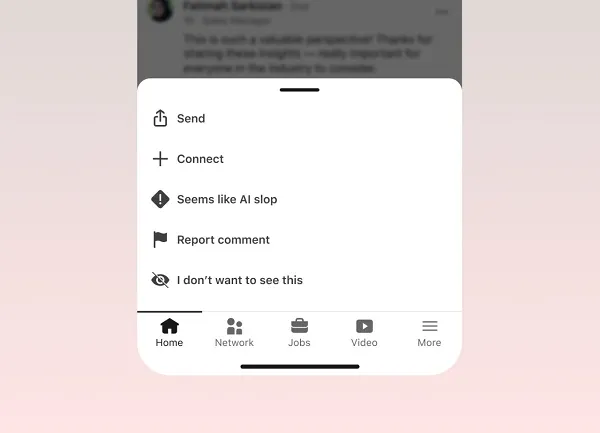
In response to this growing trend of synthetic noise, LinkedIn recently introduced a new "Seems like AI slop" reporting option. The feature, which provides users with a direct mechanism to flag hollow, automated content, has already triggered a massive behavioral shift on the platform. As the company navigates the delicate balance between embracing helpful AI tools and maintaining the integrity of human professional discourse, it has provided a window into how the platform plans to manage the next generation of social media engagement.
The Rise of "AI Slop": A Chronology of the Crisis
The proliferation of AI-generated content on LinkedIn did not happen overnight. Following the public release of advanced Large Language Models (LLMs) like GPT-4, users quickly realized that AI could draft "thought leadership" posts, summarize industry news, and even simulate personal anecdotes with startling speed.
A Rapid Escalation
By early 2024, LinkedIn feeds were increasingly cluttered with posts that followed a predictable, repetitive structure: hyperbolic hooks, bulleted lists devoid of actual experience, and generic corporate platitudes. This content—often characterized by a "polished but hollow" aesthetic—began to drown out the nuanced, expert-driven insights that LinkedIn was historically designed to host.
The Introduction of the Reporting Tool
Earlier this month, LinkedIn officially rolled out the "Seems like AI slop" feature. The move was a recognition that existing reporting categories—such as "Spam" or "Harassment"—did not capture the specific frustration users felt regarding AI-generated content that was technically compliant with terms of service but intellectually barren.
Immediate Adoption
The response was instantaneous. According to LinkedIn Chief Product Officer Hari Srinivasan, the reporting option was utilized by over one million users within the first two weeks of its launch. This staggering figure serves as a proxy for the level of user dissatisfaction regarding the state of their feeds. The sheer volume of reports indicates that the "AI slop" issue was not merely a niche grievance but a widespread phenomenon affecting a significant portion of the platform’s user base.
Defining the "Slop": What Constitutes Low-Effort AI?
To understand why LinkedIn is taking this stance, one must look at how the company defines the problem. Sam Corrao Clannon, LinkedIn’s Creator Product Lead, has been instrumental in clarifying the distinction between helpful AI assistance and destructive "slop."
The "Substance" Benchmark
According to Clannon, "AI slop" is defined as content that presents itself with professional polish but lacks any core substance. It is characterized by:
- A lack of personal experience: The absence of unique perspectives or "real-world" lessons.
- Empty rhetoric: Content that uses high-level jargon without providing actionable insights.
- Volume over value: Posts designed specifically to "game" the algorithm, taking up feed space without contributing to professional discourse.
LinkedIn has been careful to emphasize that this tool is not an anti-AI stance. "We are not targeting all AI," Clannon noted. "Using AI to refine language, check grammar, or structure a complex thought is perfectly acceptable. The tool is specifically aimed at junk posts—the kind of repetitive, vapid content that provides no value to the community."
The Mechanics of Feedback: How LinkedIn Manages "Slop"
A common misconception among users is that clicking the "Seems like AI slop" button acts as an immediate "kill switch" for a post’s visibility. However, LinkedIn’s architecture is far more nuanced.
Individual Feed Control vs. Global Distribution
The primary function of the report is to empower the individual user. When a user flags a post as "AI slop," the platform immediately adjusts that user’s feed preferences to show less content from that specific creator. It is, in essence, a personalized content filter.
Crucially, the feature is not a direct path to platform-wide censorship or policy enforcement. LinkedIn has clarified that no single report determines the fate of a post. "We look at many signals together," explained CPO Hari Srinivasan. "We have built safeguards to prevent individual feedback from being used to unfairly target or ‘dogpile’ other members."
The "Nudge" Approach
Rather than immediately banning or penalizing creators, LinkedIn is taking a proactive, educational approach. Users who consistently receive a high volume of "AI slop" reports are now being sent internal notifications. These alerts serve as a "nudge," warning creators that their content is failing to resonate with the audience and is being flagged as low-quality. This strategy attempts to change user behavior by providing transparency, encouraging creators to shift toward higher-value, more authentic content.
Supporting Data and Early Impacts
The data suggests that the implementation of this tool is already yielding measurable results. LinkedIn reported that, following the introduction of the feature and the accompanying awareness campaign, content identified as "AI slop" has seen a 40% reduction in views compared to just a few weeks prior.
This drop is attributed to a combination of factors:
- Algorithmic Downranking: As more users flag specific content, the platform’s recommendation engine naturally deprioritizes that content for other users with similar professional interests.
- Creator Modification: The new notification system has prompted some creators to alter their content strategy, moving away from mass-produced, automated posts to avoid the reputational risk associated with the "slop" label.
- Shift in Consumption Patterns: Users are becoming more discerning, and the "AI slop" tag acts as a social signal that validates their desire for more authentic engagement.
Implications for the Future of Professional Networking
LinkedIn’s war on "AI slop" is a microcosm of a larger battle being fought across the internet: the quest for human authenticity in a synthetic age.
The Value of Human Verification
As the platform continues to combat automated noise, it is leaning heavily into its verification programs. By encouraging users to confirm their identity through official verification processes, LinkedIn is creating a "tier" of trust. The ability for users to filter replies by verified accounts is a powerful tool in ensuring that discussions remain grounded in human experience.
The Evolution of Personal Branding
For professionals and creators, the takeaway is clear: automation is a tool, not a strategy. If a post reads like it was written by a machine, it is increasingly likely to be filtered out of the professional ecosystem. Future success on LinkedIn will rely on the "human touch"—personal anecdotes, subjective analysis, and professional vulnerability—qualities that current AI models still struggle to replicate convincingly.
A Balanced Future
LinkedIn’s leadership acknowledges that they have a long road ahead. "Despite the progress, we know we have more to do to ensure LinkedIn remains a place where you can find real people and real perspectives," Srinivasan stated.
The platform’s strategy—balancing user control, algorithmic safeguards, and educational nudges—represents a middle-ground approach. It avoids the heavy-handedness of total AI bans while preventing the degradation of the platform’s utility. As the digital landscape continues to evolve, LinkedIn’s ability to maintain this equilibrium will determine whether it remains the premier professional network or descends into a sea of automated, meaningless noise.
Ultimately, the "AI slop" button is more than a UI update; it is a declaration of values. It signals that in the professional world, human insight is a commodity that cannot be faked—and that the platform is willing to invest significant resources to ensure that those who provide real value remain visible.