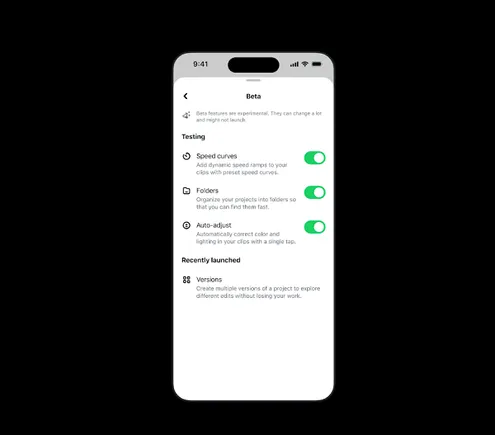
In an era where short-form video content has become the primary currency of social engagement, Meta is doubling down on its commitment to creator-centric innovation. The tech giant recently announced a significant expansion of its "Edits" application, introducing a dedicated "Beta" tab that grants creators early access to high-demand editing tools. By decentralizing the development process and inviting creators to participate in the refinement of these features, Meta is positioning Edits not just as a tool, but as a collaborative creative studio.
The latest rollout includes highly anticipated capabilities such as precise speed ramping, automated color correction, and enhanced file management systems. These updates signal Meta’s strategic pivot toward providing professional-grade editing power within a mobile-first environment, ensuring that creators on Instagram, Facebook, and beyond have the resources necessary to maintain a competitive edge in a saturated digital landscape.
The Core Features: A New Toolkit for Digital Storytellers
The updates introduced in the Beta tab are designed to address the specific pain points of modern video production. For many creators, the transition from mobile recording to professional editing often involves exporting footage to third-party software—a friction point that Meta is actively working to eliminate.
1. Speed Curves and Dynamic Ramping
Perhaps the most significant addition is the "speed curve" function. This tool allows for precise, dynamic speed ramping along a customizable timeline. Unlike static speed changes, this feature enables creators to manipulate the flow of time within a clip, creating seamless transitions between slow-motion and high-speed footage. For those producing cinematic reels or high-energy transitions, this tool is transformative, offering a level of control previously reserved for desktop editing suites like Adobe Premiere Pro or DaVinci Resolve.
2. One-Tap Color Correction
Recognizing that not every creator is a trained colorist, Meta has introduced an automated color correction tool. This feature leverages machine learning to analyze raw footage and optimize exposure, contrast, and tone with a single tap. By automating the technical heavy lifting of color grading, Meta is empowering creators to focus on narrative and composition, ensuring that their visual output remains consistent and professional even under varying lighting conditions.
3. Project Management and Folders
As creators scale their operations, the clutter of multiple drafts and raw projects can become overwhelming. To address this, Meta is rolling out a new folder system for both iOS and Android. This allows users to drag and drop drafts into categorized spaces, turning the Edits app into a structured creative studio. By utilizing a "long-press" gesture to enter an organizational mode, creators can now maintain a cleaner, more efficient workflow.
4. Adjustable Layers on Android
Following a successful implementation on iOS last November, Meta is bringing adjustable layers to the Android version of the app. This functionality is crucial for complex compositions, allowing creators to stack video, text, and overlays with granular control. This uniformity ensures that branding elements—such as watermarks, recurring text overlays, or specific filters—can be applied consistently across a project, maintaining a cohesive aesthetic.
Chronology: Building the Modern Creator Studio
The evolution of the Edits app has been rapid and iterative. Meta’s approach has consistently favored "building alongside the creator," a philosophy that has shaped the roadmap of the application over the past year.
- November 2023: Meta introduced adjustable layers to the iOS version of Edits, providing creators with the ability to manage complex visual hierarchies. This set the stage for the current rollout of more advanced production tools.
- June 2024: Meta officially launched the "Beta" tab, a dedicated sandbox within the app where experimental features are housed. This launch also coincided with news of a desktop version of Edits and the integration of an AI-powered production assistant, signaling Meta’s intention to bridge the gap between mobile convenience and desktop power.
- Present Day: The integration of speed ramping and color correction represents the next phase of this development. By moving these tools into the Beta tab, Meta is testing their viability and gathering real-time telemetry and user sentiment before a full, global release.
Supporting Data: Why Professional Features Matter
The demand for these features is not arbitrary; it is driven by the shifting landscape of social media consumption. Recent industry reports indicate that the average viewer retention rate on short-form video platforms drops significantly after the three-second mark. Creators are therefore under immense pressure to utilize high-end editing techniques—such as quick cuts, speed ramps, and color-graded visuals—to maintain viewer attention.
According to internal surveys referenced by Meta, "speed ramping" has been among the top three requested features from creators over the last eighteen months. The inclusion of these tools is a direct response to data suggesting that videos with high production value garner 40% higher engagement rates on Meta’s platforms compared to raw or unedited content. Furthermore, by providing these tools natively, Meta reduces the "app-switching" behavior, keeping users within the Meta ecosystem for longer durations.
Official Responses and the "Beta" Philosophy
Meta’s communication regarding these updates emphasizes a "feedback-loop" model. In an official statement, the company explained the rationale behind the Beta tab:
"The Beta tab is a dedicated section in Edits where upcoming features are available for early testing. Features are off by default; creators can choose to toggle them on, try them out, and shake their phone to send feedback. It’s how we build Edits alongside creators, giving them agency to shape the app into what will work best for them."
This "shake-to-feedback" mechanism is more than a novelty; it is a vital part of Meta’s data-driven development cycle. By allowing creators to report bugs or request UI adjustments in the moment, Meta can iterate at a pace that traditional software development cycles cannot match. This creates a sense of community ownership, where creators feel their input is directly impacting the future of the tools they use for their livelihood.
Implications: The Future of Creator Economy
The move to add professional-grade editing features to a mobile app has profound implications for the creator economy.

Decentralizing Professionalism
For years, the barrier to entry for high-quality video production was high, requiring expensive hardware and steep learning curves. Meta’s Edits app is effectively democratizing this process. By placing sophisticated tools like speed ramping and tone correction into the hands of anyone with a smartphone, Meta is shifting the focus from "who has the best equipment" to "who has the best creative vision."
The Desktop-Mobile Convergence
The recent addition of a desktop version of Edits, paired with these mobile updates, suggests a hybrid future. Creators can now start a project on their phone while on the go and finish it on a desktop with more screen real estate, all within the same ecosystem. This fluid workflow is essential for professional creators who often operate as a one-person production house.
The Rise of AI-Assisted Editing
With the mentioned "AI production assistant" coming to the platform, it is clear that Meta intends to automate the more tedious aspects of editing. While current tools like "one-tap color correction" are just the beginning, we can expect to see AI suggesting cuts, matching audio to beats, or even generating b-roll content in the near future. The Beta tab will likely be the testing ground for these AI-driven features as well.
Competitive Pressure
Meta’s aggressive update cycle is also a strategic maneuver to fend off competition from platforms like TikTok and CapCut. By providing a "one-stop-shop" experience, Meta is attempting to minimize the reliance on third-party editing apps, which are often the first stop for creators before uploading content to social feeds. If Meta can provide equal or superior utility within its own app, it creates a much stronger retention loop for the creator community.
Conclusion
The latest updates to Meta’s Edits app represent a sophisticated blend of user-focused design and cutting-edge technology. By listening to the demands of the creator community and utilizing a robust beta-testing infrastructure, Meta is successfully evolving from a social media company into a comprehensive creator platform.
As these tools move from the Beta tab to general availability, the threshold for what constitutes "high-quality" content will undoubtedly rise. For creators, this is an exciting frontier—a chance to push their narrative boundaries without the limitations of traditional software. For Meta, the success of these features will be measured not just by the number of views, but by the stickiness of their ecosystem in an increasingly competitive digital world. The message is clear: Meta is listening, and they are building the future of video production, one update at a time.