
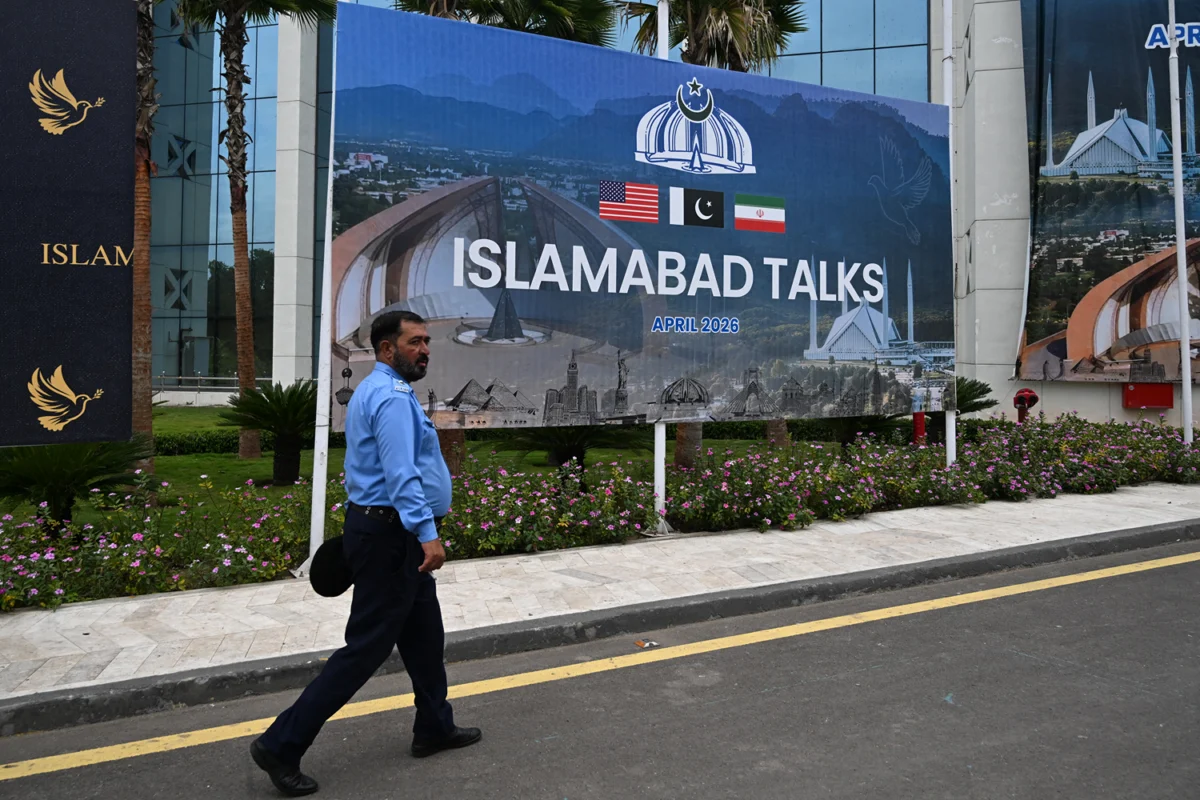
The collapse of the Hormuz cease-fire agreement represents a textbook case of how the intersection of diplomatic hubris, linguistic ambiguity, and a fundamental disregard for technical precision can ignite a regional crisis. What began as a high-stakes effort to stabilize one of the world’s most critical maritime chokepoints has disintegrated into a series of retaliatory strikes, leaving the Strait of Hormuz more volatile than before.
Observers in Washington and Tehran now point to a singular, damning reality: the White House, either through a lack of understanding or a strategic indifference to the fine print, effectively sabotaged the accord. By treating a complex security document with the flippancy of a press release, the U.S. administration inadvertently provided Iran the legal cover it needed to assert control over the strait, while simultaneously creating the friction that led to the agreement’s ultimate dissolution.
The Chronology of a Failed Accord
The timeline of the agreement is characterized by rapid, almost reckless, negotiation followed by an agonizingly slow realization of its structural inadequacies.
- Pre-Agreement Tension: For months, the Strait of Hormuz served as a flashpoint for U.S.-Iran hostilities. Increased naval posturing and the tightening of U.S.-led maritime coalitions created a climate where a miscalculation could trigger a broader conflict.
- The Signing (May 2026): In a ceremony in Islamabad, President Donald Trump and President Masoud Pezeshkian signed a bilateral memorandum intended to de-escalate tensions. The document, totaling just over two pages in its English version, was lauded as a breakthrough.
- Initial Implementation (June 2026): Iran began implementing "arrangements" for commercial transit, including the mandate for transit permits via the Persian Gulf Strait Authority (PGSA).
- The Breakdown (Late June 2026): The U.S. Office of Foreign Assets Control (OFAC) maintained sanctions on the PGSA, while the U.S. military advised ships to ignore Iranian-approved corridors. Iran responded with force against vessels failing to comply with its "arrangements."
- Total Collapse (July 2026): After Washington initiated strikes against targets inside Iran, both sides abandoned the agreement, effectively returning the Strait to a state of open, albeit low-intensity, conflict.
The Fatal Flaws: Why Details Matter
In the realm of international law, particularly regarding armed conflict, "details matter." Unlike civil litigation, where judges can interpret the intent of the parties, peace agreements rely entirely on the integrity of the signed text.
The Linguistic Trap
The agreement was signed in both English and Farsi. While both are technically "official," the lack of a rigorous, cross-verified translation process left massive gaps in interpretation. If the Farsi version contains nuances regarding "sovereignty" that are absent in the English, the parties were effectively operating under two different sets of rules from the start.
The "Memorandum" Misnomer
The document was labeled a "memorandum of understanding," which generally implies a non-binding framework. However, the substance of the text dealt with existential issues of security and territorial transit. By failing to clarify the legal standing of the document, the signatories created a situation where each side could claim the other was acting in "bad faith" whenever a disagreement arose.
Omissions of Oversight
Perhaps most damning is the total absence of a neutral dispute resolution mechanism. There is no commission, no third-party arbiter, and no monitoring group mentioned in the text. In the absence of an enforcement body, the agreement relied entirely on the goodwill of two adversaries—a fundamental failure of diplomatic design.
Analysis: The "Managerial Control" Gambit
The most critical passage of the accord, Paragraph 5, states: "The Islamic Republic of Iran will make arrangements using its best efforts for the safe passage of commercial vessels, with no charge for 60 days only."
On its face, this looks like a concession from Iran. However, the language is deceptively broad. It does not define what those "arrangements" must look like. Iran, seizing this opportunity, formalized the Persian Gulf Strait Authority (PGSA) as the gatekeeper of the strait.
By requiring transit permits and restricting ships to specific corridors within its territorial waters, Iran claimed it was simply fulfilling its duty to "make arrangements for safe passage." Because the agreement failed to place parameters on these arrangements, Iran’s enforcement—including the use of force against non-compliant vessels—became, at least under a literalist reading of the text, arguably consistent with the agreement.
The United States, conversely, viewed these actions as a violation of freedom of navigation. By instructing vessels to bypass the PGSA and by maintaining sanctions against the authority itself, the U.S. undermined the very arrangements it had ostensibly agreed to permit.
Official Responses and Strategic Miscalculations
The U.S. position has been one of contradictory signaling. While the White House promoted the agreement as a diplomatic victory, the Treasury Department continued its campaign of "maximum pressure" via OFAC sanctions. This duality suggests that the U.S. negotiating team either failed to coordinate with domestic financial regulators or sought to maintain a "have-it-both-ways" policy that Iran was never going to accept.
Iran, for its part, has utilized the agreement as a strategic tool to frame its maritime aggression as "legal enforcement." By pointing to specific paragraphs of the signed text, Tehran has successfully messaged to the international community that it is the United States that has acted in bad faith. This has provided Iran with a rare diplomatic high ground, complicating Washington’s efforts to build a coalition against Iranian actions in the gulf.
Implications for Regional Security
The collapse of the Hormuz agreement carries profound implications for the future of maritime security:
- The Erosion of Trust: Any future attempt to negotiate a cease-fire will be met with extreme skepticism. Both parties now have concrete evidence that the other will use vague text to justify escalation.
- The Rise of "Gray Zone" Conflicts: Because the agreement failed to provide a framework for the use of force, the region has transitioned into a "gray zone" where violence is justified through legalistic interpretation rather than open war.
- The Necessity of Professionalism: The incident serves as a grim reminder that amateurism in diplomacy is a luxury the world cannot afford. The failure to include subject-matter experts—maritime lawyers, regional linguists, and military logistics planners—in the drafting process was the primary driver of this failure.
Conclusion: The Long Shadow Over the Strait
The "Hormuz Agreement" will likely be studied by future historians as a cautionary tale. It was an agreement born of a desire for a quick political win, stripped of the tedious but necessary work of defining boundaries, monitoring mechanisms, and dispute protocols.
As the shadow of this failure stretches over the Strait of Hormuz, the path to a stable resolution remains blocked by the debris of a broken text. For any future negotiations to succeed, the parties must abandon the pretense of "quick fixes." They must return to the table with a commitment to exhaustive, clause-by-clause scrutiny. Until then, the Strait will remain a high-stakes arena where the lack of a comma or the ambiguity of a verb can—and will—result in the deployment of naval fire. The lesson is clear: in the high-stakes theater of international diplomacy, if you do not understand what you are signing, you have already lost.