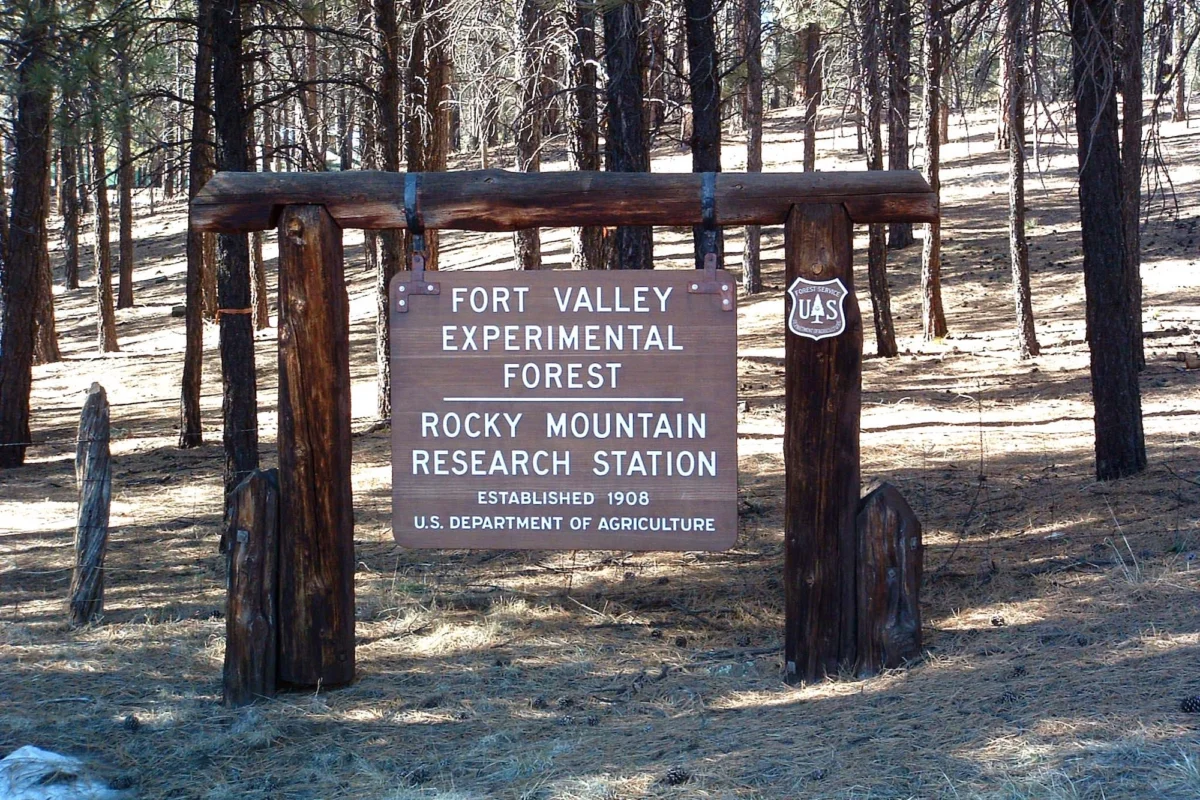
In a move that has sent shockwaves through the environmental and outdoor recreation communities, the U.S. Department of Agriculture (USDA) recently announced a radical restructuring of the U.S. Forest Service. Without prior congressional approval or public consultation, the agency is embarking on a decentralization effort that critics argue is less about "common sense reform" and more about systematically dismantling the agency’s conservation mandate to favor private industrial extraction, particularly within the lumber sector.
This administrative overhaul—which includes the relocation of the agency’s headquarters, the slashing of research divisions, and a shift toward state-level management—has ignited a fierce confrontation between the Trump administration and a powerful, newly formed coalition of conservationists, outdoor brands, and legislative skeptics.
The Architecture of the Overhaul
The USDA’s plan, spearheaded by Secretary of Agriculture Brooke L. Rollins, seeks to move 260 core staff positions from Washington, D.C., to Salt Lake City, Utah. Simultaneously, the agency plans to eliminate nine existing regional offices, replacing them with 15 state-based leadership teams.
According to the USDA, the goal is to "move the Forest Service closer to the forests we manage," thereby cutting red tape and boosting efficiency. Secretary Rollins has framed the move as a return to productive land management, asserting that a "healthy and productive forest system" is essential for providing affordable domestic lumber. However, critics point out that the USDA Forest Service is not merely a logging agency; it manages 193 million acres of national forests and grasslands with a legislative mandate that emphasizes sustainable practices, ecological diversity, and public recreation.
A Chronology of Institutional Erosion
To understand the gravity of the current situation, one must look at the recent history of federal land management.

- 2019: The BLM Precedent: During the first Trump administration, the Department of the Interior relocated the Bureau of Land Management (BLM) headquarters to Grand Junction, Colorado. The move resulted in the loss of roughly 90 percent of the agency’s D.C.-based staff, effectively gutting its institutional knowledge. The relocation was later reversed by the Biden administration, but as former BLM head Tracy Stone-Manning noted, the effort to "reassemble" the agency was a monumental task that significantly hampered federal operations.
- 2025: The Roadless Rule Rescinded: In June 2025, Secretary Rollins took the first step in this broader agenda by rescinding the "Roadless Rule," a long-standing protection that prevented road construction and timber harvesting in millions of acres of protected wilderness.
- Early 2026: Leadership Controversies: The appointment of software billionaire and Idaho landowner Michael Boren as Under Secretary for Natural Resources and Environment drew immediate condemnation. Boren’s history of personal land-use disputes, including the construction of unauthorized structures on public land, has led critics to label his appointment a "walking conflict of interest."
- March 31, 2026: The USDA officially announced the headquarters relocation to Utah and the transition to a state-based organizational model.
- April 2026: The immediate backlash from the outdoor industry, led by The Conservation Alliance and groups like SaveUSFS, began to gain momentum, forcing the issue into the national spotlight.
Supporting Data: The Cost of "Efficiency"
The administration’s plan carries a heavy toll for the agency’s scientific capabilities. The Forest Service currently operates 77 local research offices that serve as the backbone for fire mitigation, pest control, and forest health monitoring. The new plan calls for the closure of 57 of these facilities.
Forest Service Chief Tom Schultz has admitted under congressional questioning that the reorganization could lead to the elimination of up to 1,100 research positions. For an agency already struggling with the aftermath of a 16 percent workforce reduction—nearly 5,900 employees lost during the previous budget-cutting cycles—this further contraction threatens to leave the nation’s forests vulnerable to catastrophic wildfire seasons and unchecked ecological decay.
The selection of Salt Lake City as the new headquarters is viewed by many as a calculated political signal. Utah has long been the center of the "land transfer" movement—a push by right-wing legislative groups like the American Legislative Exchange Council (ALEC) to transfer federal land ownership to the states, where it would be more susceptible to privatization and industrial exploitation.
Official Responses and Political Friction
The official rhetoric from the USDA maintains that these changes are necessary to streamline the agency. "Proper forest management means a healthy and productive forest system," Rollins stated in her press release. The department characterizes the new "state directors" as national leaders who will have the autonomy to respond to local needs more effectively than a centralized D.C. office.
However, the political response has been anything but unified. Even some Republican members of Congress have expressed skepticism regarding the legality of the move. Critics argue that the Forest Service’s structure is codified by federal law and that such a sweeping reorganization requires formal Congressional approval—a step the administration has bypassed entirely.

"What this actually is, stripped of the Orwellian window dressing, is the largest forced purge of a federal land management agency in American history," said Jim Pattiz, co-founder of the public lands advocacy group More Than Just Parks.
The Outdoor Industry Fights Back
Perhaps the most significant development in this crisis is the mobilization of the private sector. Traditionally, outdoor brands have been hesitant to engage in partisan political battles, but the threat to the public lands that underpin their business models has changed the calculus.
More than 70 outdoor companies, including industry titans such as Patagonia, REI Co-op, Columbia Sportswear, and Black Diamond Equipment, signed a joint letter demanding a halt to the reorganization. Their argument is clear: the health of the outdoor economy—which contributes billions of dollars annually to the U.S. GDP—is entirely dependent on the conservation and accessibility of federal forests.
The Outdoor Alliance, a coalition of nine major advocacy groups, has been particularly vocal, warning that the agency has pivoted away from the public interest toward "extraction and development." These organizations argue that the reorganization is designed to silence career scientists and land managers who might oppose the rapid deregulation of logging and mining interests.
Implications: The Long-Term Impact on American Wilderness
The implications of this reorganization are profound and potentially irreversible. By gutting the scientific and research branches of the Forest Service, the administration is effectively removing the "guardrails" that prevent the over-exploitation of natural resources.

The removal of public participation requirements for environmental reviews, combined with the loss of thousands of expert personnel, suggests a future where logging projects are approved with minimal oversight. For the millions of Americans who utilize the Hiawatha National Forest, the Rockies, and the national grasslands for recreation, the consequences include the potential for degraded trails, restricted access, and long-term environmental damage.
Furthermore, the "war on science" narrative—mirrored by the recent firing of the National Science Foundation’s board—suggests that this is not a localized management issue but part of a broader ideological agenda. By centralizing power and marginalizing independent research, the administration is creating an environment where policy is dictated by industry priorities rather than ecological reality.
Conclusion: A Turning Point
The battle for the Forest Service is currently at a stalemate, with legal challenges mounting and bipartisan concern growing in Congress. The outcome of this struggle will determine whether the United States maintains a commitment to the "conservation ethic" that has defined the Forest Service for over a century, or if it will sacrifice its public heritage on the altar of short-term industrial gain.
As the coalition of outdoor brands and conservationists continues to grow, the administration faces a challenge that may prove more difficult to overcome than a simple bureaucratic shuffle. The "chainsaw in broad daylight," as Pattiz described it, has drawn the attention of a massive, diverse constituency that recognizes the inherent value of America’s public lands. Whether they can force a reversal of this policy remains to be seen, but the fight to preserve the soul of the Forest Service has only just begun.