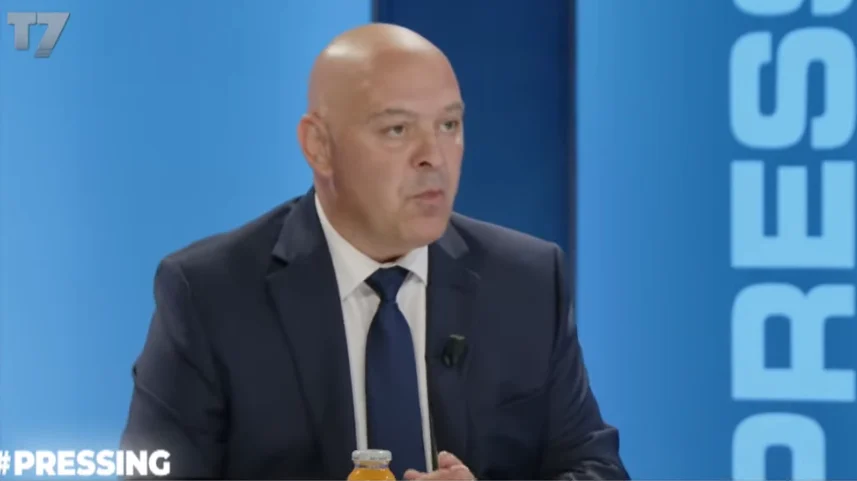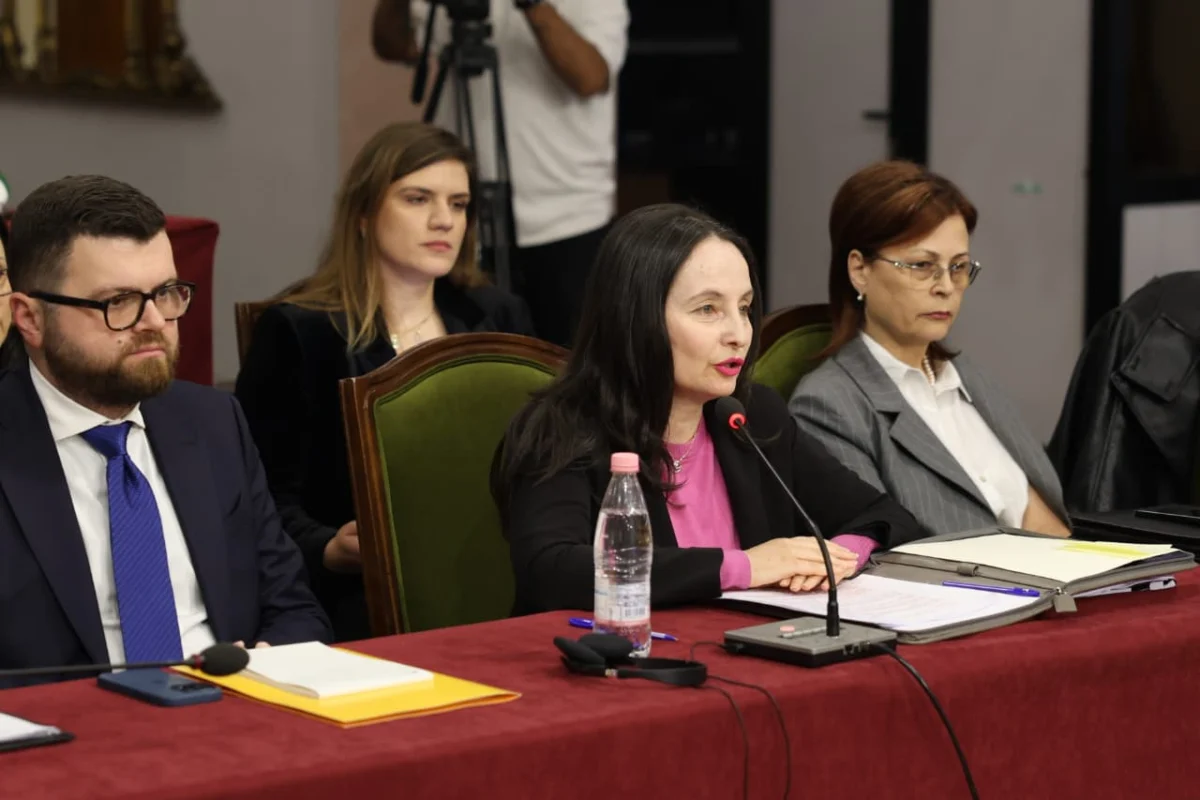
Tirana, Albania – Albania’s journey towards European Union membership remains a central focus of the nation’s political agenda. In a recent, highly technical report to the Foreign and European Policy Committee of the Albanian Parliament, Chief Negotiator Majlinda Dhuka outlined the government’s strategic approach to fulfilling the extensive requirements for accession, while also facing pointed criticism from the opposition regarding transparency and the tangible impact of reforms.
Dhuka, presenting a detailed account of the nation’s progress, revealed that the Albanian government has submitted comprehensive work plans designed to address numerous identified gaps across a majority of the EU accession chapters. The overarching goal, she emphasized, is to align Albania’s legal and institutional frameworks with the acquis communautaire, the body of EU law. However, a significant hurdle remains as member states are expected to set new, potentially stringent conditions for the fundamental chapters pertaining to justice and security – areas critical for both Albania’s internal development and its standing within the EU.
Navigating the Labyrinth of Accession Chapters
The path to EU membership is structured around 35 chapters, each representing a distinct policy area that candidate countries must fully adopt and implement. Albania has been actively engaged in this rigorous process, working to close legislative and administrative gaps. Dhuka’s report indicated an ambitious target: to conclude negotiations on 10 out of the 33 chapters by the end of the current year. This aggressive timeline underscores the government’s commitment to accelerating the accession process.
Crucially, Albania awaits a pivotal decision from EU member states regarding the assessment of its reforms to date. This assessment is framed within a mechanism known as the Interim Assessment Report (IBAR), often described as a "trial run" for the progress of accession negotiations. The IBAR serves as a critical checkpoint, evaluating whether candidate countries have met the necessary benchmarks before moving forward with more substantive discussions.
Key Progress and Areas of Focus
According to the government’s claims, Albania has technically fulfilled all conditions for three chapters, and is now awaiting the European Commission’s evaluation. For an additional seven chapters, the work is reported to be in an advanced stage. This suggests a targeted approach, with significant resources and political will directed towards specific areas to demonstrate tangible progress.
The core of the government’s efforts, as detailed in the report submitted to Parliament, has been dedicated to addressing "92 critical gaps" that were agreed upon with the European Commission. These gaps, identified across 24 conditions, represent the necessary institutional actions and measures required to achieve approximation with EU legislation and to demonstrate effective implementation in practice. The report explicitly highlights key areas of focus: the fight against crime and corruption, the consolidation of justice sector reforms, the protection of human rights, and the promotion of equality.
The Crucial Chapters: Justice and Security
Among the 35 chapters, Chapters 23 and 24, titled "Judiciary and Fundamental Rights" and "Justice, Freedom, and Security" respectively, are considered the most significant and challenging. These chapters were among the first to be opened and are expected to be among the last to be closed, due to their fundamental nature and the deep-seated reforms they necessitate.
Dhuka delved into the technical intricacies of justice sector reform, detailing the legislative acts adopted by the High Judicial Council and the High Prosecutorial Council aimed at improving the justice system. These acts, according to the minister, have enhanced the organization of the judicial system, standardized decision-making, and strengthened legal service structures within courts. Furthermore, they have established integrity standards, with the overarching objective of ensuring that the vetting process – a critical element of judicial reform in Albania – remains functional and continuous.
Despite these legislative advancements, Albania is still awaiting the final conditions to be determined by EU member states for these two crucial chapters. The government has also announced the submission of further legislative packages, including amendments to the Penal Code, which are intended to align with EU directives on financial fraud. This demonstrates an ongoing commitment to legislative harmonization, even as the overarching conditions for these chapters remain fluid.
Opposition’s Scrutiny and Calls for Transparency
The Chief Negotiator’s report, however, did not escape the sharp critique of the opposition. Members of Parliament voiced significant concerns regarding the perceived lack of transparency in the negotiation process and the government’s focus on a purely technical approach, overlooking the broader impact of legal reforms.
Jorida Tabaku, a Member of Parliament from the Democratic Party (PD), articulated a common sentiment among the opposition, stating, "Integration is not a list of laws and propaganda, but real reform." She argued that the report presented was more a compilation of legal acts than a concrete analysis of the impact of these reforms. Tabaku further emphasized a significant deficit in transparency, asserting that the opposition and civil society have been excluded from these crucial discussions.
Concerns were also raised about the effectiveness of the justice system and the fight against corruption. Tabaku pointed out that while the report provided statistics on investigations and indictments, there were no final convictions at the highest levels. She also presented statistics highlighting delays in the processing of cases within the judicial system, suggesting that the reforms have not yet yielded the desired tangible results.
Albana Vokshi, another PD MP, echoed these sentiments, posing a series of critical questions and accusing the government of keeping the integration process "top secret." She directly challenged the responsible minister, asking, "Why do you keep the integration process top secret and why don’t you share with the public and the opposition information about the negotiations and the real progress of the process?" This highlights a fundamental disagreement over the methodology and inclusivity of Albania’s EU accession journey.
Broader Implications and Future Outlook
The ongoing dialogue between the government and the opposition, as exemplified by this parliamentary reporting session, underscores the complex and multi-faceted nature of EU accession. While the government emphasizes its commitment to legislative alignment and technical progress, the opposition’s concerns about transparency and the real-world impact of reforms highlight the need for a more holistic and inclusive approach.
The IBAR assessment and the eventual setting of final conditions by EU member states will be critical determinants of Albania’s future trajectory. The nation’s ability to effectively address the challenges in the justice sector, combat corruption, and uphold fundamental rights will be under intense scrutiny. The success of these reforms will not only pave the way for membership but also fundamentally shape the quality of governance and the rule of law within Albania itself.
As Albania navigates this crucial phase, the tension between the government’s drive for progress and the opposition’s calls for accountability and transparency is likely to persist. The ultimate success of the accession process will depend not only on legislative achievements but also on building broad-based public trust and ensuring that the reforms translate into tangible improvements in the lives of Albanian citizens. The coming months and years will be pivotal in determining whether Albania can effectively bridge the gaps and meet the expectations of both its own citizens and the European Union.