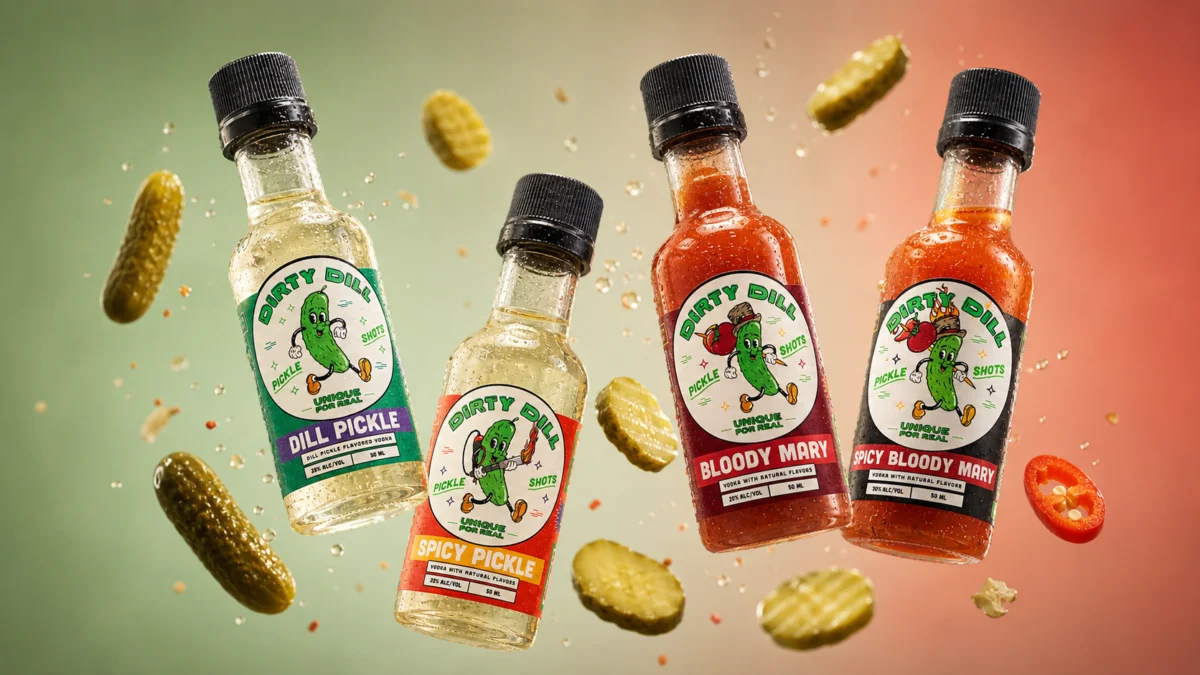
In the ultra-competitive landscape of the modern spirits industry, where heritage brands often dominate through massive advertising budgets and legacy shelf space, breaking through the noise requires more than just a catchy label. It requires a product that defies expectations and creates its own category. Enter Dirty Dill, a brand that has successfully turned a polarizing, non-traditional flavor—pickle—into one of the most compelling breakout stories in the spirits sector.
What began as a daring experiment in flavor profile has, in less than five years, matured into a sophisticated, high-growth beverage company. With a massive 260% year-over-year growth rate and a footprint spanning nearly 4,000 retail locations, Dirty Dill is no longer just a "pickle trend" participant; it is a platform brand. Now, as the company prepares for its next phase of rapid expansion, it is bypassing traditional venture capital gatekeepers in favor of a community-driven approach, launching a crowdfunding campaign to invite its loyal consumer base to own a stake in its future.
The Chronology of a Breakout Brand
To understand the trajectory of Dirty Dill, one must look at the timeline of its evolution. Founded in 2020, the brand entered the market during a period of massive disruption in the alcohol industry. Consumers were increasingly moving away from traditional brown spirits and mass-market vodkas, seeking novelty, authenticity, and experiences that translated well to social media.
- 2020: The Inception: Dirty Dill is formed with a singular, bold vision: to prove that the savory, briny profile of a pickle is not just a garnish, but a viable, primary flavor for a high-quality vodka shot.
- 2021–2023: Proof of Concept: The brand begins the arduous process of securing distributor partnerships. By focusing on the "shot" category—a segment often ignored by premium brands—Dirty Dill finds a receptive audience in bars and liquor stores looking for high-velocity, impulse-buy items.
- 2024: The Inflection Point: The brand hits its stride. Retail demand skyrockets as the "pickle flavor" trend migrates from niche cocktail menus to mainstream consumer awareness.
- 2025: Exponential Growth: The company reports a staggering 260% year-over-year increase in revenue. The focus shifts from proving the product’s viability to scaling its operational infrastructure.
- 2026: The Platform Expansion: Dirty Dill announces a pivot from a single-product company to a diversified beverage platform, introducing canned ready-to-drink (RTD) cocktails, tequila-based shots, and THC-infused beverages.
Real Demand: The Data Behind the Hype
In the beverage world, hype is cheap; reorder rates are the only currency that matters. Many spirits brands see initial success through curiosity-driven purchases, only to vanish from shelves when the "novelty" wears off. Dirty Dill’s data suggests a different narrative: one of sustainable, repeat-purchase loyalty.
The company’s growth is anchored in a 260% year-over-year performance increase, a figure that is significantly higher than the industry average for craft spirits. This growth is supported by a distribution network that now touches 25 states. However, the most telling metric is not the number of doors opened, but the performance within those doors. According to internal reports, the brand has seen a consistent increase in reorder rates, indicating that Dirty Dill has successfully transitioned from a "try it once" curiosity to a "buy it again" staple for its core demographic.
"Getting into stores is one thing," notes CEO Dan Graves. "Staying there is where the separation comes. For us, the repeat purchase behavior has been the foundation of our growth and excitement into this next chapter."
The Pivot to a Platform Brand
The secret to Dirty Dill’s longevity lies in its refusal to be defined by a single SKU. While the original pickle vodka put the company on the map, the leadership team has recognized that the brand’s true value lies in its identity as a "bold" alternative to traditional spirits.
The company is currently diversifying its portfolio to capture adjacent segments of the beverage market:
- RTD (Ready-to-Drink) Line: Tapping into the booming canned cocktail market, providing convenience without sacrificing the brand’s signature bold flavor.
- Agave-Based Innovation: Recognizing the meteoric rise of tequila, the brand is expanding its shot lineup to include a pickle-infused tequila, capturing the premiumization trend.
- The Cannabis Frontier: Perhaps the most ambitious move is the launch of its THC-infused product line. Early preorder data for this segment has already exceeded internal projections, suggesting that the brand’s consumer base is eager to follow them into the world of alternative, non-alcoholic, or cannabinoid-enhanced beverages.
This diversification effectively transforms Dirty Dill from a "flavor novelty" into a "platform brand," capable of sustaining growth across multiple categories and consumption occasions.
Official Perspective: Why Crowdfunding?
With such strong momentum, many analysts might ask why the company would turn to crowdfunding rather than traditional private equity or institutional venture capital. For Dan Graves and his team, the answer is philosophical as much as it is financial.
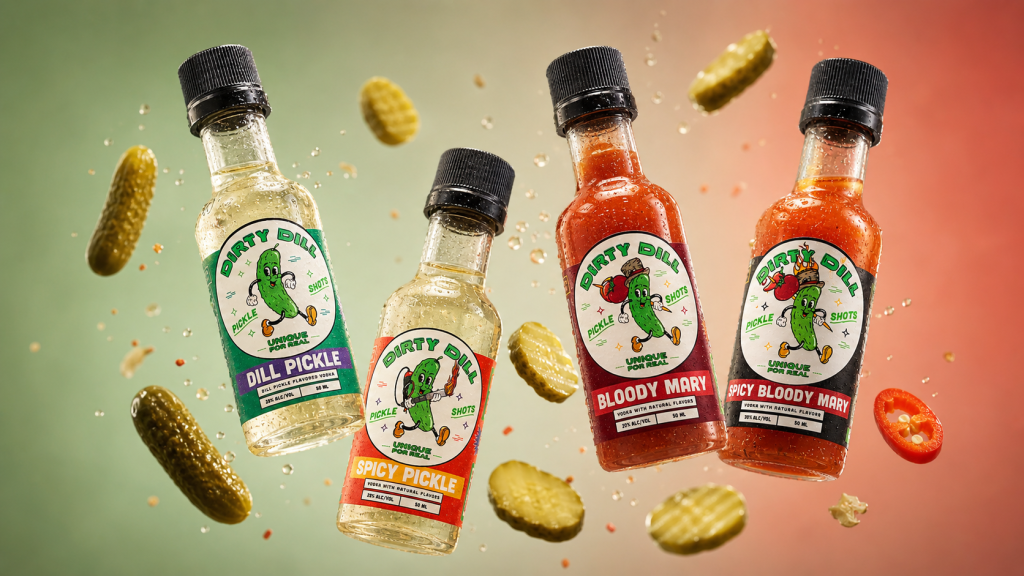
"When people already believe in what you’re building, giving them the opportunity to be part of it just makes sense," Graves explains.
Crowdfunding serves a dual purpose for Dirty Dill:
- Capital Efficiency: The funds raised will be directed toward increasing production capacity, strengthening in-market execution, and enhancing brand awareness—all essential steps to move from a regional player to a national powerhouse.
- Community Advocacy: By allowing customers to become shareholders, the company turns passive drinkers into active brand evangelists. In an industry where word-of-mouth remains the most effective marketing tool, having thousands of "investor-fans" is a competitive advantage that money cannot buy.
Implications for the Future of Spirits
The success of Dirty Dill sends a clear message to the broader beverage industry: the barrier to entry has shifted. Success in the 21st-century spirits market is no longer dictated solely by massive marketing budgets or century-old pedigrees. It is driven by agility, community connection, and the ability to identify and scale niche trends before they become commodities.
As the brand eyes another year of 100% year-over-year growth, the stakes are high. Scaling production while maintaining the quality that drove the initial surge in demand is the primary challenge for the coming year. However, if the brand’s history is any indication, the company’s ability to pivot—from a vodka brand to a platform brand—suggests it has the operational maturity to handle this scale.
For the consumer, the evolution of Dirty Dill offers a front-row seat to the changing nature of the alcohol business. The company is not just selling a shot; it is selling a community-led experiment that has proven to be, quite literally, a big dill.
Moving Forward: The Next Phase
As the crowdfunding campaign at invest.highlander.ai/dirtydill gains traction, the company is looking toward a future defined by expanded distribution and deeper market penetration. The foundation is set, the product-market fit is proven, and the infrastructure is being reinforced.
The question remains: can Dirty Dill maintain its "rebel" spirit as it scales to a national level? If the commitment to its core community remains as central to its business model as the flavor profile itself, the brand is well-positioned to cement its status as a permanent fixture in the American spirits industry.
For those interested in the intersection of disruptive consumer goods and modern finance, Dirty Dill’s current trajectory offers a compelling case study. It is a brand built on a bet, sustained by demand, and now fueled by the very people who made its success possible.
To learn more about the investment opportunity and to review the details of the campaign, visit invest.highlander.ai/dirtydill.