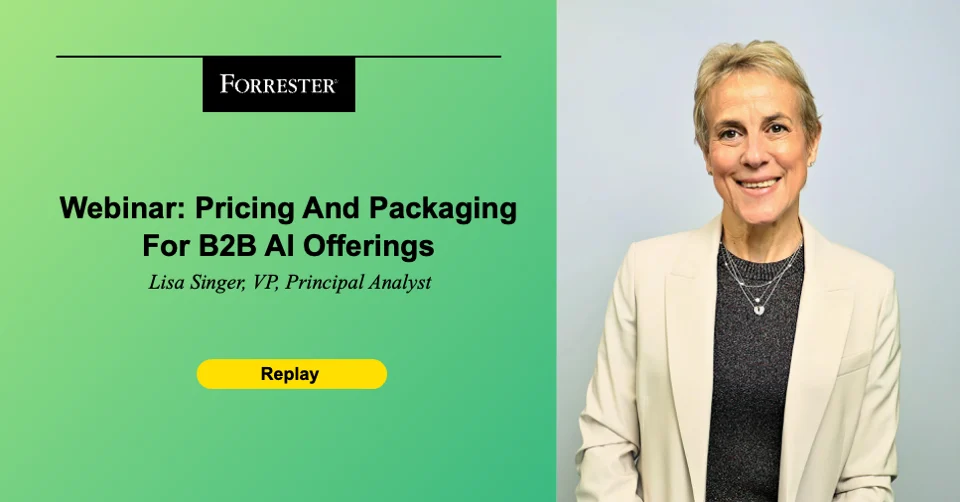
In the current B2B landscape, the rapid proliferation of Artificial Intelligence has created a paradoxical challenge for product leaders: how do you capture the value of a technology that fundamentally defies traditional pricing models? As AI transitions from a "nice-to-have" feature to an autonomous agentic force, the age-old reliance on seat-based licensing is beginning to crumble. For modern enterprises, the race to monetize AI is no longer just about software—it is about recalibrating the entire economic relationship between vendor and buyer.
The Death of the Seat-Based Model
For decades, the software-as-a-service (SaaS) industry thrived on the predictability of seat-based or user-based pricing. It was simple: one employee, one license. However, the rise of agentic AI—systems capable of performing tasks, executing workflows, and generating outputs independently of human intervention—renders this model obsolete.
When an AI agent performs the work of ten employees, billing for a single user license creates a misalignment between the value delivered and the revenue collected. If a customer is achieving massive efficiency gains via automated workflows, charging them based on the number of human "seats" is not just archaic—it is a missed opportunity for the provider and a potential bottleneck for the buyer.
Chronology of the AI Pricing Evolution
The evolution of AI monetization has occurred in three distinct waves over the past 24 months:
- The "Add-On" Phase (Early 2024): Initially, AI was treated as a premium "feature layer" atop existing software suites. Vendors tacked on a 20-30% surcharge for access to generative AI assistants.
- The Consumption/Token Phase (Mid 2025): As the computational costs of Large Language Models (LLMs) became clearer, companies shifted toward consumption-based models. Enterprises began paying by the token, the query, or the API call. This aligned costs with usage but introduced volatility into corporate budgeting.
- The Outcome-Based Era (2026–Present): We are now entering the era of "Value-Based Pricing." Companies are moving toward hybrid models that measure success through outcomes—such as the number of tickets resolved by an autonomous agent or the volume of code successfully debugged.
Supporting Data: Why Alignment Matters
Market research indicates that organizations failing to adapt their pricing structures are facing significant churn. According to recent industry analysis, firms that utilize a hybrid pricing strategy—combining a predictable subscription base with usage-based variables—report a 15% higher retention rate compared to those stuck in legacy models.
The challenge is multi-dimensional. Pricing must balance three conflicting forces:
- Customer Outcomes: Ensuring the buyer feels the price is proportional to the value gained.
- Supplier Sustainability: Covering the high compute and infrastructure costs of training and running LLMs.
- Predictability: Allowing enterprise procurement teams to forecast spending without the fear of "token-burn" shocks.
Implications for the C-Suite: The New Economics of AppSec
The shift in pricing has direct, tangible implications for Chief Information Security Officers (CISOs) and CIOs. Consider the recent shift in the Application Security (AppSec) sector. As OpenAI’s Daybreak and similar agentic systems gain traction, the industry is witnessing a trend toward "line-item inflation."
Because these systems operate on token-heavy multi-agent workflows, the cost of securing an application is scaling with the complexity of the security threats themselves. For a CISO, this means the traditional budget model—where AppSec spend remained relatively flat—is being disrupted. Security leaders must now budget for "work-unit inflation." The paradox is that while the quality of security improves, the cost per unit of work rises, requiring a shift in how IT budgets are structured and justified.
Regulatory and Security Constraints
Pricing strategy is no longer just a financial decision; it is increasingly a matter of governance. The publication of "Careful Adoption of Agentic AI Services" by the Five Eyes intelligence alliance (CISA, NSA, and others) on May 1, 2026, marks a pivotal moment. This guidance dictates how agentic systems should be audited and secured.
For vendors, this means that their pricing must now incorporate the cost of compliance. A secure, audited agentic workflow is inherently more expensive to maintain than a "black-box" model. Vendors who ignore these governance requirements in their pricing models risk legal exposure, while those who bake them into their service tiers are finding a willing market among highly regulated enterprises.
Structuring the Successful AI Pricing Framework
To move forward, organizations must abandon the "one-size-fits-all" mentality. Success lies in the following framework:
1. The Hybrid Model
The most effective strategy currently involves a "Base + Variable" approach. A core subscription fee covers the platform and administrative access, while usage-based tiers (tasks, tokens, or digital workers) account for the heavy lifting. This provides the predictability finance teams crave while allowing for the scalability businesses need.
2. Cross-Functional Alignment
Pricing AI is not just a job for the Finance department. It requires a "Pricing Task Force" involving:
- Product: To define what constitutes a "unit of value."
- Engineering: To track usage and provide transparency to the customer.
- Customer Success: To educate users on how to optimize their workflows to manage costs.
- Sales: To move away from selling "seats" and toward selling "outcomes."
3. The Proof-of-Value (PoV) Motion
Because AI pricing is new and often opaque, buyers are skeptical. Strong PoV motions are mandatory. This includes pilot programs with capped costs, clear usage-visibility dashboards that show the customer exactly how their credits are being burned, and expansion playbooks that outline how the price will scale as the AI’s impact grows.
The Road Ahead: Transparency as a Competitive Advantage
As we look toward the remainder of 2026 and into 2027, the winning vendors will be those who prioritize pricing transparency. When a customer understands why a workflow costs a certain amount—and can see the direct correlation between that cost and their own productivity gains—trust is established.
The transition from human-centric pricing to agent-centric pricing is one of the most significant shifts in the history of the software industry. It is a transition from selling access to selling performance. Organizations that treat their pricing model as a core feature of their product—rather than an afterthought—will be the ones that define the next decade of B2B innovation.
Summary for Leadership
- Audit current models: Determine if your current pricing captures the value of agentic outputs or if you are leaving money on the table.
- Budget for inflation: CISOs should pivot from fixed-cost planning to variable-cost forecasting to account for agentic AI usage.
- Prioritize visibility: Implement dashboards that allow your customers to monitor their AI consumption in real-time; transparency is the best antidote to pricing friction.
- Regulatory Readiness: Ensure your pricing tiers account for the increased costs associated with meeting the new global standards for secure AI deployment.
The future of B2B AI is not about who has the best algorithm; it is about who has the most sustainable, transparent, and outcome-aligned economic model. As the market matures, the vendors who can successfully quantify their contribution to the bottom line will thrive, while those clinging to the "seat-per-user" model will find themselves locked out of the next generation of enterprise value.