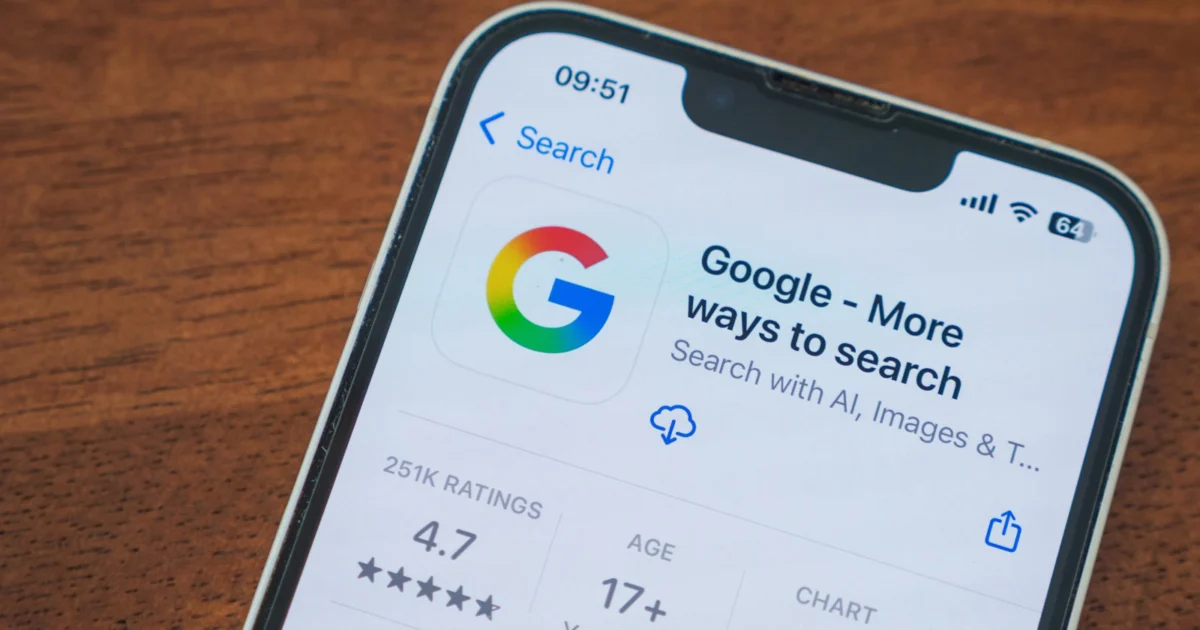
In a development that highlights the delicate balance Google must maintain between integrating generative AI and preserving traffic for publishers, the search giant has confirmed that the recent loss of functionality within its Discover feed was the result of a software error rather than a permanent design shift.
For several days, users and SEO researchers noted that tapping the "sources" icons within AI-generated summary cards on Google Discover—a feature typically designed to lead users to a feed of relevant articles—failed to produce any action. Following widespread concern from the digital publishing community, Google confirmed the issue was an unintended consequence of an internal experiment.
The Chronology of the Discovery
The issue first came to light on October 23, when Damien Andell, a researcher specializing in Google Discover’s interface, flagged the behavior on X (formerly Twitter). Andell observed that the "Sources" section—which usually allows users to drill down into the specific domains contributing to an AI-generated summary—had become unresponsive.
Andell’s investigation revealed a specific backend flag labeled disable_aio_sources_button_tap. As the name suggests, this flag effectively severed the link between the AI summary and the underlying source material. By toggling this, the interface prevented users from navigating to the news outlets that provided the information for the summary, essentially isolating the user within the AI-generated card.
The observation gained traction when SEO expert Lily Ray quote-posted the finding, drawing attention to the potential implications for publisher traffic. For many news organizations, the traffic driven by Google Discover is a critical component of their digital strategy. The idea that Google might be testing a feature that keeps users within an AI-generated summary while cutting off the "click-through" path to the original publisher sparked immediate alarm.
Official Clarification from Google
The silence regarding the change was broken on Monday evening when Rajan Patel, Vice President of Engineering for Search at Google, responded directly to the concerns raised by the SEO community.
Addressing Lily Ray on X, Patel stated: "Hey Lily — this was a bug in a Discover experiment. We’ve turned off the experiment, and the experience works as intended again."
While this response provided immediate relief to publishers, it remained brief. Patel’s statement did not elaborate on the intent of the experiment, why a flag was created to specifically disable source taps, or the duration for which the experiment had been active. Furthermore, Google has not disclosed the scale of the rollout, leaving it unclear how many users were impacted by the bug during the window of time it was active.
The Evolution of the Experiment
Following Patel’s intervention, the technical landscape of the Google Discover interface shifted again. On October 27, Andell reported that the initial experiment had been completely removed. In its place, he observed a new, mysterious internal flag labeled aio_tap_falls_through_to_hero.
This indicates that Google’s product teams are actively iterating on how users interact with AI-generated content. While the specific mechanics of this new "hero" flag remain under investigation, it suggests that Google is looking for ways to streamline the transition between AI summaries and source websites.
The rapid removal of the bug-ridden experiment and its subsequent replacement underscores the complexity of Google’s "Search Generative Experience" (SGE) and Discover AI integration. These features are in a constant state of flux as Google attempts to balance the convenience of AI-summarized content with the necessity of sending traffic to the websites that fuel its ecosystem.
The Significance for Publishers and SEOs
The "bug" incident has reignited a broader conversation about the role of generative AI in search and discovery. For publishers, the ability to track how users engage with their content is paramount.
The Role of Search Console
Currently, the Google Search Console provides a "Discover generative AI report," which tracks impressions for links surfaced through these AI capabilities. However, the metrics provided are limited. According to Google’s support documentation, the primary metric is "Impression," which counts when a user views a link to a website via generative AI, rather than when a user actually clicks through to the site.
Because the data is limited to impressions, publishers already struggle to gauge the true conversion value of AI-driven traffic. If a bug or a design experiment removes the ability for users to tap through to a site, the traffic pipeline effectively dries up, even if the "impression" count remains steady.
Implications for Traffic Attribution
If Google were to move toward a model where AI summaries provide answers without encouraging (or allowing) users to click through to the original source, it would represent a fundamental shift in the web’s economic model. Publishers rely on click-throughs to drive ad revenue and subscription conversions. A "closed-loop" experience, where the user stays within the Google ecosystem, poses a direct threat to the traditional web advertising model.
While Google maintains that its goal is to drive traffic to the open web, incidents like this—even when attributed to a "bug"—serve as a reminder that the interface is highly malleable. SEOs and site owners are naturally sensitive to any changes that threaten the visibility of their links.
A Technical Deep-Dive into the Experimentation Process
To understand why a "bug" like this happens, one must look at how Google tests new interface components. When deploying new features in products as massive as Discover, Google often uses "feature flags" to enable or disable specific UI behaviors for small, randomized subsets of users.
In this instance, the disable_aio_sources_button_tap flag appears to have been an internal control for testing how users would react if the AI summary were the "destination" rather than the "gateway." Whether this was intended to test user satisfaction with a more concise feed or to experiment with retention metrics is not publicly known. However, the fact that such a flag existed suggests that the internal engineering teams at Google are at least exploring scenarios where source-link interaction is minimized.
How Publishers Can Monitor Future Changes
For SEO professionals and content creators, the incident serves as a vital lesson in vigilance. Relying solely on official announcements from Google can lead to a lag in understanding how one’s traffic is being affected.
- Monitor User Behavior: If you see a sudden, anomalous drop in referral traffic from Google Discover, it may not be a ranking penalty. It could be a UI experiment or a bug in how Google displays your site.
- Use Community Resources: Follow independent researchers like Damien Andell and industry analysts who monitor code-level changes and flag behaviors in real-time.
- Check Your Own Feeds: As recommended in the wake of this event, test the functionality of your own site’s AI summaries. When you see your content in a Discover AI summary, click the links. If they don’t function, document it immediately.
- Leverage Search Console: While it doesn’t give real-time UI data, keeping an eye on the "Discover Generative AI" report in Search Console can help correlate dips in traffic with broader platform updates.
Conclusion: The Path Forward
Google’s swift acknowledgement and correction of the bug are positive signs of transparency. By confirming that the disabled links were an error, the company has reassured the publishing community that it is not, at this time, intentionally trying to suppress the ability of users to navigate to source websites.
However, the event serves as a warning for the future. As Google continues to experiment with AI-driven summaries in Discover, the "source" link—the primary bridge between the AI summary and the publisher—remains the most critical element of that relationship. Whether the next experiment is a bug or a permanent feature update, the publishing industry will be watching closely to ensure that the bridge remains open.
For now, the experience is back to "as intended," but the incident has left the industry with a heightened sense of caution, proving once again that in the world of SEO, the only constant is change.