Tirana, Albania – October 25, 2026 – In a scathing commentary that has reverberated through Albania’s political landscape, veteran journalist Fatos Mahmutaj has launched a series of severe accusations against former Prime Minister Sali Berisha. Mahmutaj unequivocally condemned the recent removal of a memorial plaque dedicated to Ziver Veizi, one of the victims of the tragic January 21, 2011 protest, on the "Martyrs of the Nation" Boulevard in Tirana, labeling it a "miserable attempt" by Berisha to tarnish the legacy of that pivotal day. Furthermore, Mahmutaj asserted that Berisha has been the orchestrator of recent violent protests in the capital, linking these actions to a broader strategy of discrediting historical events and undermining political discourse.
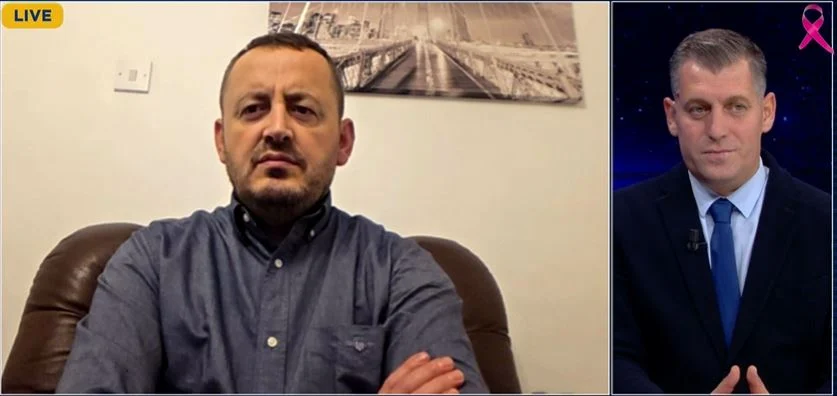
Speaking on ABC News’s "Ora e Fundit," Mahmutaj’s remarks cut deep into the ongoing political feuds that continue to shape Albania. His accusations are particularly weighty given his personal experience, having himself been injured during the January 21, 2011 protest, an event that remains a raw wound in the nation’s collective memory. The journalist painted a grim picture of calculated political maneuvering, alleging that Berisha’s current actions aim to equate legitimate historical grievances with recent acts of violence, thereby distorting public perception and evading accountability.
A Journalist’s Grave Accusations
Fatos Mahmutaj did not mince words when discussing the motivations behind the plaque’s removal. "It is one of Berisha’s last attempts to tarnish the January 21 protest," Mahmutaj stated, his voice reflecting a deep sense of indignation. "It is among his miserable attempts to attack the purity of the January 21 hero, Ziver Veizi. He tries to devalue January 21 and equate it with the violent protest he organized in Tirana." This act of desecration, in Mahmutaj’s view, is not merely vandalism but a deliberate political statement intended to rewrite history and diminish the significance of a day etched in the public consciousness as a moment of profound governmental overreach and civilian sacrifice.
The journalist extended his accusations beyond the symbolic act, directly implicating Berisha in the recent wave of unrest that has gripped the capital. "It is Berisha’s responsibility as the man who orchestrated the recent violence in Albania," Mahmutaj declared, asserting a direct causal link between the former Prime Minister’s influence and the escalation of protests into confrontation. He further elaborated on the alleged modus operandi: "By trying to equate this [recent violence], he tries to devalue the January 21 protest. Berisha tried to steal the students’ protest and take it to the institution of violence, to the DP headquarters." This suggests a cynical manipulation of legitimate public grievances, particularly those of students, for political ends, diverting them towards confrontation and association with a party headquarters often seen as a focal point of opposition-led demonstrations.
Mahmutaj underscored his claims by referencing what he described as "proven" elements: "It is proven that he is the organizer of the violence, we have his political lexicon, it is proven that the perpetrators came out of the DP [Democratic Party] and returned again to arm themselves. He is responsible for the violence and must be held accountable for this." These assertions, if substantiated, point to a pattern of behavior that crosses the line from political activism to the alleged incitement and organization of civil unrest.
The Shadow of January 21, 2011: A Chronology of Controversy
The January 21, 2011, protest remains one of the darkest chapters in post-communist Albania’s history, and its memory continues to fuel political divisions.
The Day Albania Held Its Breath
The protest, organized by the Socialist Party (then in opposition) against the government of then-Prime Minister Sali Berisha, initially began as a peaceful demonstration against alleged corruption within the government. Thousands gathered on "Martyrs of the Nation" Boulevard, demanding the resignation of the Prime Minister and early elections. However, the situation rapidly escalated into violent clashes between protesters and the Republican Guard, the security force responsible for protecting government institutions.
As the day wore on, the protests turned deadly. Four unarmed civilians lost their lives: Ziver Veizi, Hekuran Deda, Faik Myrtaj, and Aleks Nika. They were shot during the confrontations near the Prime Minister’s office. Ziver Veizi, a 35-year-old father, became a symbol of the victims, killed at the very spot where his memorial plaque was recently erected and subsequently removed. The images of the violence, including tear gas, rubber bullets, and ultimately, live ammunition, shocked both the nation and the international community. Fatos Mahmutaj himself was among those injured, a stark personal reminder of the day’s brutality. The government, led by Berisha, maintained that the Guard acted in self-defense against attempts to storm the Prime Minister’s office, while the opposition condemned the use of lethal force against unarmed citizens.
A Legacy of Unresolved Justice
In the aftermath of January 21, 2011, numerous investigations were launched, both domestically and internationally. However, justice for the victims and accountability for those responsible, particularly at the highest levels, have remained elusive. Several members of the Republican Guard faced charges, but convictions for the actual killings or for ordering the use of lethal force against protesters have been minimal, and often overturned or delayed through lengthy legal processes. The political implications were immense, deepening the chasm between the ruling Democratic Party and the opposition Socialist Party, a division that persists to this day. The event has been consistently invoked in political rhetoric, serving as a powerful symbol of government repression for one side and a warning against violent protest for the other. The lack of comprehensive resolution has ensured that the memory of January 21, 2011, continues to haunt Albanian politics, often resurfacing during periods of heightened tension or public dissent.
The Memorial Plaque: A Symbol Under Attack
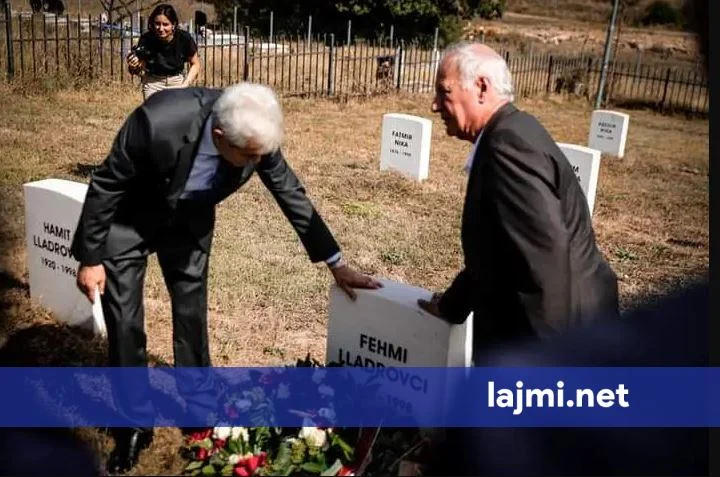
The memorial plaque for Ziver Veizi was more than just a piece of stone; it was a potent symbol of remembrance, a physical embodiment of a nation’s unresolved trauma and a constant reminder of the human cost of political conflict. Placed on the "Martyrs of the Nation" Boulevard, at the precise spot where Veizi fell, it served as a silent witness, demanding reflection and accountability.
The Act of Desecration and Its Political Message
Mahmutaj’s description of the plaque’s removal as a "miserable attempt" to "tarnish" and "devalue" January 21 speaks to the profound symbolic weight of the act. Desecrating a memorial is not merely an act of vandalism; it is an attempt to erase history, to silence memory, and to deny the legitimacy of a past grievance. In the context of Mahmutaj’s accusations, the removal of Veizi’s plaque becomes a calculated move within a larger political strategy. By physically removing the reminder of a tragic event, Berisha’s alleged aim, according to Mahmutaj, is to weaken the narrative surrounding January 21, making it easier to reframe or dismiss it, especially when drawing parallels to more recent unrest.
The timing and nature of the removal suggest a deliberate effort to control historical memory. It signifies a struggle over who gets to define the past and how those definitions shape contemporary political discourse. For the victims’ families and those who view January 21, 2011, as a state crime, the plaque was a small but significant victory in the fight for remembrance. Its removal is therefore perceived as a deep insult and a direct assault on their pursuit of truth and justice.
Recent Unrest and Allegations of Orchestrated Violence
The "recent developments in Tirana" to which Mahmutaj refers are likely a series of protests and demonstrations that have periodically rocked the Albanian capital, often characterized by confrontations between protesters and law enforcement. While the original article is vague on the precise nature of these recent events, it implies a pattern of politically charged gatherings, potentially student-led or opposition-backed, that have sometimes devolved into disorder.
The Accusation of Orchestration
Mahmutaj’s core claim is that Sali Berisha has "orchestrated" this violence. This suggests a deliberate, organized effort to instigate or escalate confrontations rather than merely participating in or supporting peaceful protest. The journalist’s assertion that Berisha’s motive is to "devalue" the January 21, 2011, protest by equating it with current violence is critical. If recent protests are seen as politically manipulated and violent, then, in Berisha’s alleged strategy, the memory of January 21 could also be framed as merely another instance of "violent protest" rather than a unique event of state-sanctioned killings. This narrative shift would serve to dilute the gravity of the 2011 events and potentially deflect past accusations against Berisha’s government.
Hijacking Student Protests
The specific allegation that "Berisha tried to steal the students’ protest and take it to the institution of violence, to the DP headquarters" points to a controversial tactic. Student protests, often driven by genuine socio-economic grievances and a desire for better governance, are generally perceived as having a higher degree of legitimacy and public support. By attempting to co-opt these movements and redirect them towards the Democratic Party headquarters – a traditional site for opposition rallies that have at times turned confrontational – Berisha is accused of exploiting student idealism for partisan political gain and, critically, of steering them towards potential violence. This tactic, if true, not only undermines the authenticity of student activism but also risks further polarizing public discourse by associating youth movements with political factions often accused of employing confrontational tactics.
Political Lexicon and Accountability: Supporting Data and Claims
Mahmutaj’s claims regarding Berisha’s alleged role in orchestrating violence are not presented as mere conjecture but are backed by what he describes as "proven" elements. While the article does not provide specific evidence, it outlines the types of evidence Mahmutaj refers to, which are common points of contention in Albanian political discourse.
The "Political Lexicon" of Incitement
When Mahmutaj speaks of Berisha’s "political lexicon," he alludes to the former Prime Minister’s rhetoric and public statements. Sali Berisha is known for his fiery speeches, often employing strong, confrontational language against his political opponents. In Mahmutaj’s interpretation, this lexicon extends beyond mere criticism to include language that allegedly incites supporters to aggressive action or encourages a confrontational stance towards state institutions. This could involve direct or indirect calls for resistance, accusations of tyranny, or declarations that only direct action can bring about change. For a seasoned journalist like Mahmutaj, who has witnessed decades of Albanian politics, such a "lexicon" can be interpreted as a precursor to or justification for violent acts, especially when delivered to an impassioned base.
Perpetrators from DP Headquarters
The assertion that "the perpetrators came out of the DP and returned again to arm themselves" is a serious charge. It implies a direct organizational link between the Democratic Party headquarters and individuals involved in violent acts during protests. This suggests that the headquarters might serve not just as a rallying point but potentially as a logistical base for those engaging in confrontations, and even a place where they could "arm themselves" – a phrase that could imply anything from protective gear to projectiles or other means of aggression. Such a claim, if verifiable, would directly implicate the party leadership in the planning or facilitation of violence, moving beyond mere political rhetoric to actionable offenses. This specific detail highlights the direct responsibility Mahmutaj attributes to Berisha and the DP.
A Call for Accountability
Ultimately, Mahmutaj’s statements culminate in a forceful demand for accountability. "He is responsible for the violence and must be held accountable for this," the journalist stated. This call for accountability extends beyond moral responsibility to legal and political consequences. In a country where impunity for political violence has often been a recurring issue, such a demand from a respected journalist, especially one personally affected by past political violence, carries significant weight. It underscores the public’s desire for a political culture where leaders are held to account for the actions of their supporters and for the consequences of their rhetoric and alleged organizational involvement in unrest.
Official Responses and Political Rebuttals
In the highly polarized political environment of Albania, accusations of this magnitude rarely go unanswered. While the original article does not provide a direct rebuttal from Sali Berisha or his political camp at the time of publication, it is almost certain that such claims would be vehemently denied.
Typically, Berisha and his allies, particularly those within the Democratic Party’s Re-establishment Commission (the faction he leads), would dismiss Mahmutaj’s accusations as politically motivated attacks, part of a broader campaign to discredit the opposition. Common counter-arguments would likely include:
- Political Persecution: Alleging that the accusations are engineered by the current government or its allies to silence dissent and undermine the opposition’s efforts to hold power accountable.
- Freedom of Protest: Arguing that any "violence" is a natural consequence of police brutality or the government’s refusal to address legitimate public grievances, framing the opposition’s role as merely supporting the democratic right to protest.
- Fabricated Evidence: Denying any involvement in orchestrating violence, dismissing claims about "perpetrators from DP" or "arming themselves" as baseless fabrication or smear campaigns.
- Distraction Tactics: Suggesting that the accusations are a deliberate attempt to divert public attention from the current government’s own failures or corruption scandals.
- Historical Revisionism: Counter-accusing Mahmutaj and others of attempting to rewrite the history of January 21, 2011, to suit a particular political narrative, often maintaining that the government at the time acted legitimately to protect institutions.
As of the publication of Mahmutaj’s comments, no immediate official response from Sali Berisha or his representatives was made available. Journalists typically seek comments from all parties involved to ensure balanced reporting, and it is standard practice to note when such comments were sought but not received. The absence of a direct rebuttal in the original piece highlights the immediate impact of Mahmutaj’s statements in setting the news agenda.
Implications for Albanian Politics and Historical Memory
Fatos Mahmutaj’s forceful statements carry significant implications for the future of Albanian politics, the preservation of historical memory, and the ongoing struggle for accountability.
Deepening Political Polarization
The accusations will undoubtedly further deepen the already entrenched political polarization in Albania. The narrative battle over January 21, 2011, and the interpretation of recent protests are central to the ideological divide between the current ruling party and the opposition. Mahmutaj’s comments, coming from a respected journalistic voice with a personal connection to the 2011 events, will likely be embraced by Berisha’s opponents as validation of their long-held suspicions and criticisms. Conversely, Berisha’s supporters will likely view them as yet another biased attack, fueling their sense of victimhood and further entrenching their loyalty. This cycle of accusation and denial makes constructive political dialogue incredibly challenging.
The Battle Over Historical Narratives
The removal of Ziver Veizi’s plaque and the attempt to equate January 21, 2011, with recent violence represent a direct assault on historical memory. In a young democracy like Albania, where historical truth is often contested and manipulated for political gain, such actions are particularly dangerous. They undermine the collective understanding of significant national events and make it harder for society to learn from its past. The struggle over who controls the historical narrative has profound implications for national identity, reconciliation, and the ability to build a shared future. Journalists like Mahmutaj play a crucial role in defending historical integrity against revisionist efforts.
The Challenge of Reconciliation and Justice
The continued re-opening of wounds from January 21, 2011, through acts like the plaque removal and allegations of ongoing violence, underscores the persistent failure of Albania’s justice system to provide full accountability for past abuses. Without a clear and undisputed resolution to such events, true national reconciliation remains elusive. The cycle of political violence, real or alleged, and the manipulation of public sentiment perpetuate an environment of mistrust and antagonism, making it difficult for the country to move beyond its troubled past.
The Role of Media and Journalists
Mahmutaj’s willingness to speak out so directly and forcefully highlights the critical role of independent journalism in holding power accountable and safeguarding historical truth. His personal experience in 2011 lends particular weight to his words, demonstrating how journalists, often at great personal risk, act as watchdogs in societies striving for democratic maturity. However, the intensity of the political climate also places immense pressure on media outlets, with accusations of bias frequently leveled from all sides, making the pursuit of objective truth a constant challenge.
Conclusion
Fatos Mahmutaj’s accusations against Sali Berisha are a stark reminder of the deep-seated tensions and unresolved issues that continue to plague Albanian politics. The alleged attempt to desecrate the memory of January 21, 2011, through the removal of Ziver Veizi’s memorial plaque, coupled with claims of orchestrating recent violence, paints a disturbing picture of political maneuvering aimed at manipulating historical narratives and undermining legitimate dissent. As Albania navigates its democratic path, the struggle for truth, justice, and accountability for past and present actions remains paramount. The gravity of Mahmutaj’s statements, rooted in his personal experience and journalistic insight, ensures that these accusations will continue to fuel intense debate, underscoring the enduring challenge of confronting a complex and often painful political history. The demand for leaders to be held responsible for their actions and rhetoric resonates deeply, echoing the aspirations of a society striving for genuine democracy and a future free from the shadows of its past.