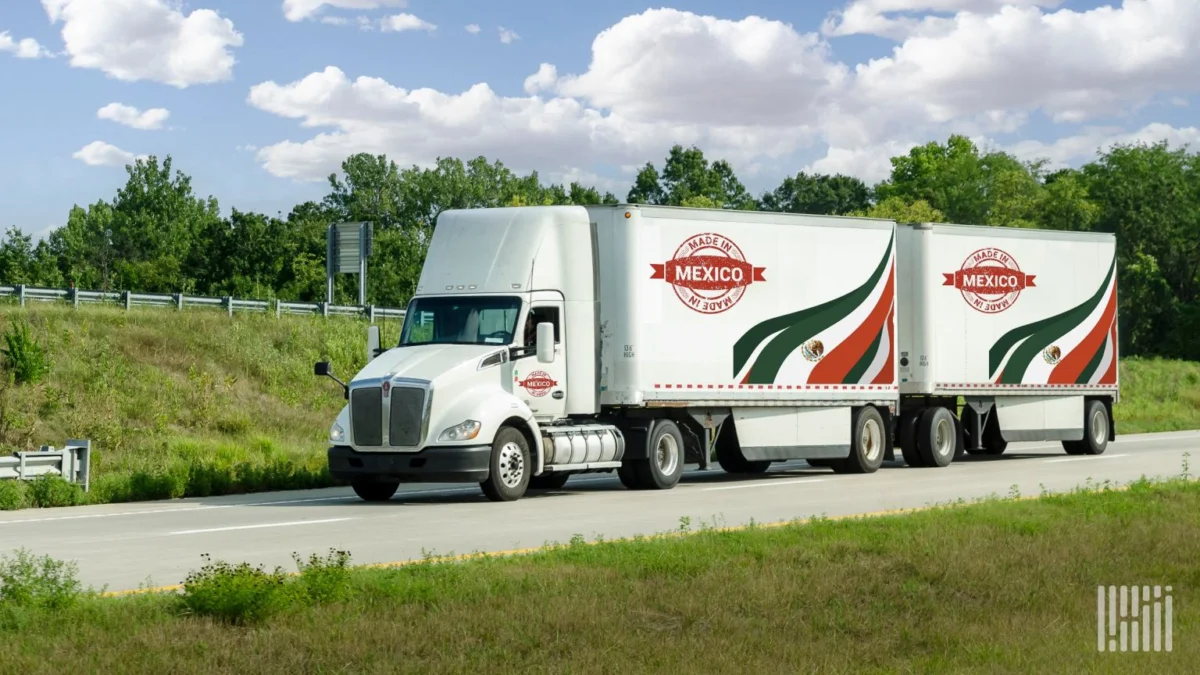
In the rapidly evolving landscape of North American supply chains, the nexus between the United States and Mexico continues to serve as a primary engine for industrial and agricultural prosperity. This week’s Borderlands Mexico provides a comprehensive look at the symbiotic relationship between cross-border trade and domestic logistics infrastructure. From the massive economic footprint of Mexican Hass avocado imports to the strategic expansion of parcel and heavy-haul networks, the data underscores a clear trend: the integration of these two economies is deepening, necessitating more sophisticated and resilient logistics solutions.
1. The Multi-Billion Dollar Avocado Pipeline
The movement of Mexican Hass avocados into the United States is far more than a simple agricultural transaction; it is a complex, high-stakes logistics operation that sustains thousands of jobs and generates billions in economic activity.
A landmark report released this week by the Avocado Institute of Mexico, featuring research from Texas A&M University, has quantified the immense impact of this trade. For the 2025-26 fiscal year, the importation of Mexican Hass avocados was responsible for an estimated $7.1 billion in total U.S. economic output. This massive figure represents the cumulative effect of the supply chain—from the moment the fruit crosses the border until it reaches the end consumer’s plate.
The Role of Texas as a Logistics Hub
Texas serves as the undisputed gateway for this agricultural powerhouse. According to the USDA, nearly 98% of all Mexican avocados imported into the U.S. in 2024 traversed through Texas land ports. The Port of Pharr leads the nation in this capacity, handling 58.2% of the volume, followed closely by Laredo, which accounts for 39.4%.
This concentration of trade has necessitated the rapid development of specialized cold-chain infrastructure. Refrigerated trucking and sophisticated warehousing facilities have proliferated along the Texas border, creating a high-velocity distribution network. The Texas A&M study noted that in the 2025-26 fiscal year alone, these logistics activities generated $641.5 million specifically in U.S. transportation and warehousing, supporting over 4,150 specialized jobs.
2. Chronology of Economic Integration
The current state of U.S.-Mexico trade is the result of decades of strategic investment and policy alignment. To understand the current economic impact, one must look at the developmental milestones of this cross-border corridor:
- The Foundation (2000s): Initial expansion of NAFTA (now USMCA) provisions allowed for a broader range of agricultural imports, setting the stage for Mexico to become the primary supplier of Hass avocados to the U.S.
- Infrastructure Surge (2015-2020): Significant investments in cold-storage hubs along the border—specifically in Laredo and Pharr—enabled the logistics industry to handle higher volumes without compromising the shelf life of highly perishable produce.
- The Post-Pandemic Pivot (2021-2024): A shift in sourcing strategies saw U.S. companies double down on "nearshoring." This accelerated the demand for domestic trucking companies to provide consistent, reliable refrigerated freight services to meet the growing consumer demand for fresh produce year-round.
- The 2025-26 Fiscal Horizon: Recent data confirms that the integration has matured into a $7.1 billion economic contributor, proving that the infrastructure built over the last two decades is now a critical component of the national GDP.
3. Supporting Data: The Economic Ripple Effect
The economic influence of Mexican avocado imports extends well beyond the borders of Texas and California. While these two states act as the initial point of entry and the largest consumption market respectively, the benefits are distributed nationwide.
National Economic Impact Breakdown (FY 2025-26):
- Total Economic Output: $7.1 billion.
- Contribution to U.S. GDP: $4.4 billion.
- Total Jobs Supported: 37,163 positions across multiple sectors, including retail, transportation, food service, and wholesale.
- Labor Income Generated: $2.4 billion.
- Tax Revenue: Approximately $1 billion in combined federal, state, and local taxes.
Regional Case Studies
- Texas: With $245.1 million in direct import value, the state generated $428.9 million in economic output and supported 2,402 jobs, highlighting the efficiency of the Texas logistics corridor.
- California: As the nation’s largest consumer, California benefited from $968.2 million in economic output and 5,325 associated jobs, illustrating that even downstream consumption drives massive logistics and retail employment.
The study emphasizes that the supply chain is deeply interconnected. Every truckload of avocados requires fuel, equipment, maintenance, and administrative support, creating a multiplier effect that sustains small and large businesses alike across the United States.
4. Official Responses and Industry Sentiment
Industry leaders view these figures as a validation of the "integrated supply chain" model. Ron Campbell, executive director of the Mexican Hass Avocado Import Association, noted that the data proves how deeply intertwined the two nations have become.
"This report demonstrates the value of a deeply integrated North American supply chain built over decades between Mexico and the U.S.," Campbell stated. "Mexican avocados don’t simply cross the border; they generate economic activity throughout the U.S. economy, supporting transportation and distribution networks, retailers, restaurants, and communities across the country."
This sentiment is echoed by the logistics firms that handle the freight. As the volumes continue to grow, the industry is responding with increased capacity and specialized services, as evidenced by the recent expansions in the parcel and heavy-haul sectors.
5. Strategic Logistics Expansions
While agricultural trade drives volume, industrial demand is pushing logistics firms to innovate. Two notable expansions this week highlight the growth in parcel delivery and heavy-haul industrial transportation.
GLS US Targets the Border Market
On Oct. 20, parcel delivery provider GLS US announced its expansion into El Paso, Texas. This move is strategic, placing the company at one of the most vital gateways for U.S.-Mexico trade. By providing first-, middle-, and final-mile delivery services, GLS is catering to the surge in e-commerce and manufacturing activity in the Ciudad Juárez-El Paso corridor. This expansion follows a series of regional growth efforts in Houston, Austin, San Antonio, and Dallas, cementing the company’s footprint in the Western U.S.
Jetco Capitalizes on the Gulf Coast Industrial Boom
In Houston, Jetco has launched a specialized cargo division to address the growing demand for heavy-haul transportation. As the Gulf Coast sees an influx of projects related to data centers, power generation, and infrastructure, the need for moving oversized and overweight components has skyrocketed.
Jetco President Kyle Kristynik explained the timing of this move: "Three years ago, we started positioning ourselves to capitalize on the accelerated growth of domestic power, manufacturing, and infrastructure, specifically data centers." By integrating specialized heavy-haul trailers—including units capable of handling up to 180,000 pounds—with a robust freight brokerage, Jetco is positioning itself as a vital partner for the industrial expansion of the American South.
6. Implications for the Future
The findings of the Texas A&M report, combined with the strategic expansions by companies like GLS and Jetco, point toward a future defined by increased logistics density.
- Supply Chain Resilience: The integration of the Mexican and U.S. markets is no longer just about volume; it is about resilience. The ability to move perishable goods and heavy industrial equipment seamlessly across the border is a competitive advantage that directly impacts the U.S. cost of living and industrial output.
- Infrastructure Investment: As the volume of cross-border trade grows, the pressure on border infrastructure—bridges, customs facilities, and highway access—will continue to mount. Future economic success will depend on continued investment in these bottlenecks to ensure that the $7.1 billion avocado economy and the broader industrial sector remain frictionless.
- Job Creation Beyond Borders: The data proves that logistics is a primary driver of domestic employment. By supporting over 37,000 jobs through a single commodity, it becomes clear that policies promoting cross-border trade are, in effect, policies that promote domestic labor growth.
In conclusion, the state of the U.S.-Mexico border is robust. From the cold-storage docks handling millions of pounds of produce to the specialized trailers hauling massive infrastructure components, the logistics sector is the silent engine driving North American growth. As we move further into 2026, the collaboration between Mexican producers and U.S. logistics providers will likely serve as the blueprint for future cross-border economic integration.