Editor’s Note: This article was produced in collaboration with our sister publication, GlobalPost.
The political landscape of Brazil, the largest nation in Latin America, is once again defined by a seismic divide. Following the conclusion of the first round of the presidential election, thousands of demonstrators flooded the streets of Rio de Janeiro earlier this month, signaling a deep-seated apprehension regarding the potential return of Bolsonarismo to the executive branch. The protests, characterized by a mix of rhythmic drumming, fireworks, and impassioned chants of “Never Again Bolsonaro,” highlighted the stark reality of a country fractured by competing visions of democracy, governance, and social justice.
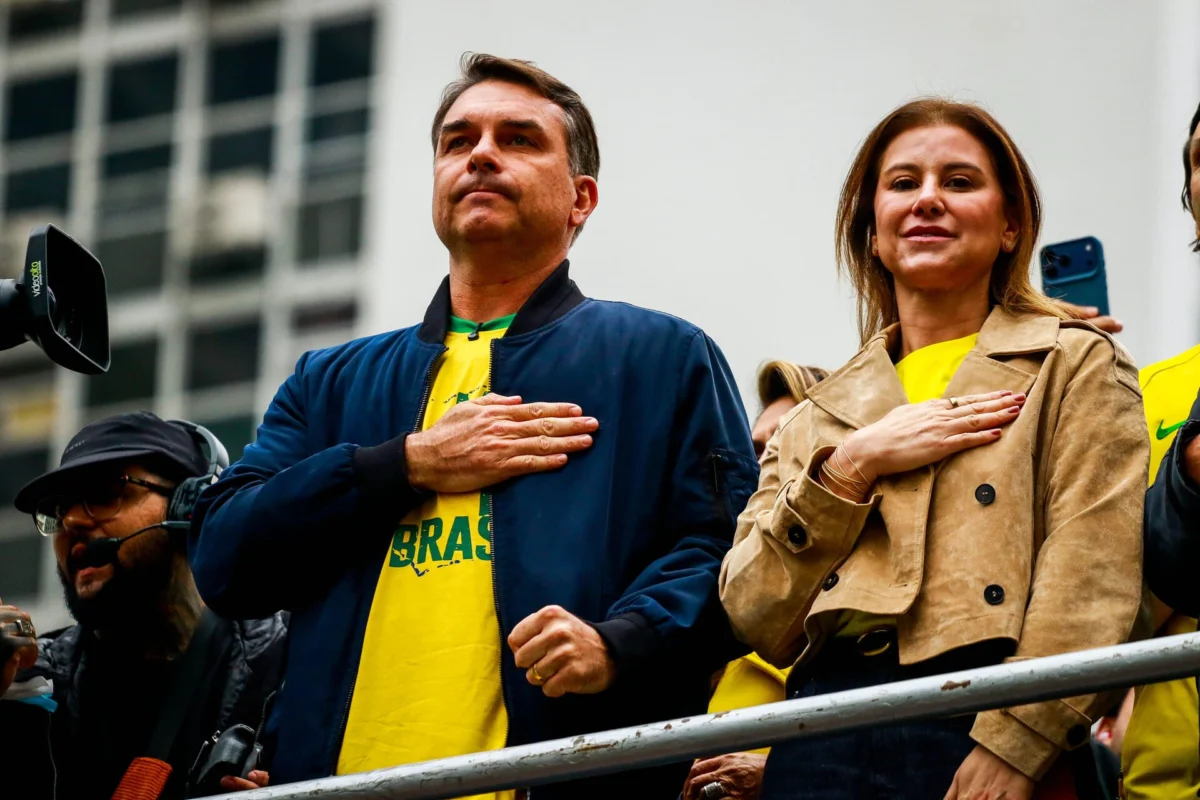
At the center of this firestorm is Senator Flávio Bolsonaro, the son of the former president, whose unexpected surge in the first-round polls has revitalized the far-right movement. As he stands poised to challenge the incumbent, President Luiz Inácio Lula da Silva, the nation finds itself holding its breath, awaiting the outcome of a runoff that promises to define Brazil’s trajectory for the next decade.
Main Facts: The Battle for the Presidency
The electoral landscape has shifted dramatically over the past several weeks. While President Lula, a veteran of the political left, secured a plurality of votes, he failed to achieve the absolute majority required to avoid a runoff. This has handed a powerful narrative momentum to Senator Flávio Bolsonaro.
The protests in Rio were not merely displays of partisan support; they were manifestations of a broader anxiety regarding the stability of Brazil’s democratic institutions. Demonstrators argued that a victory for the younger Bolsonaro would signify a return to the isolationist, polarizing rhetoric that defined the administration of his father, Jair Bolsonaro. Conversely, supporters of the Senator argue that the incumbent’s economic policies have stagnated, citing inflation and a perceived lack of structural reform as primary catalysts for their movement.
The electoral map reveals a country bifurcated: the industrial and urban centers, which have historically leaned toward Lula’s Workers’ Party (PT), are now being contested by a mobilized right-wing base that has mastered the art of digital campaigning and grassroots populist mobilization.
Chronology of the Crisis
To understand the current tension, one must look back at the trajectory of the campaign over the last six months:
- Early 2026: Speculation mounts regarding the candidacy of the Bolsonaro family. Flávio Bolsonaro announces his bid, framing it as a “restoration of conservative values.”
- May 2026: President Lula officially declares his intent to seek reelection, focusing his campaign on poverty alleviation programs and international climate diplomacy.
- August 2026: The first televised debates take place. The atmosphere is toxic, with personal attacks overshadowing policy discussions. The rhetoric on social media reaches a fever pitch, with both sides accusing the other of threatening the electoral process.
- October 2026 (First Round): The election results are announced. Lula takes the lead, but the margin is narrower than exit polls predicted. Flávio Bolsonaro secures a strong second-place finish, galvanizing the conservative vote.
- Post-Election Week: Thousands take to the streets in Rio and São Paulo. The protests, while largely peaceful, reflect a volatile public mood.
Supporting Data: The Economic and Social Divide
The data suggests that the divide in Brazil is as much about economic policy as it is about ideology. According to recent reports from the Brazilian Institute of Geography and Statistics (IBGE), the cost of living index has risen by 7.2% over the past year.
- Income Inequality: While the incumbent’s administration has successfully implemented the Bolsa Família expansion, critics point to the “middle-class squeeze.” Those earning between three and ten minimum wages feel they have been left behind by the current tax structure.
- Digital Engagement: Analytics from social media tracking firms indicate that the Bolsonaro campaign has seen a 40% increase in organic reach on platforms like Telegram and WhatsApp since the first-round results were posted. This digital dominance has allowed the Senator to bypass traditional media, which he labels as “part of the systemic elite.”
- Voter Turnout: The 2026 election has seen record-breaking voter turnout, particularly among the 18–24 demographic. This suggests that the polarization is not just a legacy issue, but one that is actively being inherited by a new generation of Brazilians.
Official Responses and Political Maneuvering
The reaction from the political establishment has been one of extreme caution. The Superior Electoral Court (TSE) has issued multiple warnings regarding the spread of disinformation, particularly concerning the integrity of the electronic voting machines—a recurring theme in the Bolsonaro campaign’s rhetoric.
The Incumbent’s Stance:
President Lula has urged his supporters to remain calm and focus on the “positive agenda” of his administration. In a recent press conference, he stated, “We are not fighting against a person, but against a project that seeks to dismantle the progress we have made in social rights and environmental protection.” He has focused his efforts on securing endorsements from centrist parties that were eliminated in the first round.
The Challenger’s Stance:
Senator Flávio Bolsonaro, in turn, has doubled down on his “law and order” platform. He has characterized the protests in Rio as “the dying breath of a failed socialist model.” His campaign has effectively pivoted to framing the runoff as a referendum on “freedom vs. state control,” a message that continues to resonate with a segment of the population disillusioned by bureaucracy and high taxation.
Implications for Brazil’s Future
The implications of this election extend far beyond the borders of Brazil. As the world’s largest tropical democracy and a key player in the BRICS coalition, the outcome will significantly impact global environmental policy, particularly the protection of the Amazon rainforest.
Environmental Policy
The international community remains apprehensive about the potential for environmental deregulation. Under the previous Bolsonaro administration, deforestation rates reached decadal highs. A victory for the Senator could see a return to policies that prioritize agricultural expansion over conservation. Conversely, a victory for Lula would likely see Brazil reasserting itself as a leader in climate negotiations, potentially leveraging its natural assets for carbon credits and international aid.
Institutional Integrity
Perhaps the most significant implication is the long-term health of Brazil’s democratic institutions. The current cycle of protests and counter-protests, fueled by aggressive rhetoric, places immense pressure on the judiciary and the electoral system. If the results of the upcoming runoff are contested, the risk of civil unrest increases significantly. The ability of the Brazilian government to ensure a peaceful transition of power will be the ultimate test of its democratic resilience.
Economic Stability
Investors are currently in a “wait-and-see” mode. The uncertainty surrounding the runoff has led to volatility in the real and the Brazilian stock market. Economists warn that regardless of who wins, the next administration will face the daunting task of fiscal consolidation. The new president will need to balance the demands of a population clamoring for social spending with the need to keep inflation in check and maintain investor confidence.
Conclusion: A Nation on Edge
As the runoff approaches, the streets of Rio de Janeiro serve as a microcosm of the entire nation. The drums and fireworks are not just sounds of protest; they are the sounds of a society in the midst of a difficult self-reckoning. Brazil is a country defined by its diversity and its vast potential, but it is currently caught in a cycle of binary opposition that threatens to obscure the middle ground.
Whether the country leans toward the continuity of the left or the disruptive potential of the far-right, the mandate will be clear: Brazil is hungry for change. The task for the eventual winner will be to mend the social fabric, address the economic grievances of the populace, and restore a sense of national unity in a country that currently feels like two distinct nations living in the same territory. The world will be watching, not just for the winner of the vote, but for the stability of the democracy that holds the election in the first place.